
Translated material
"I was deported virtually illegally." The United States deported a resident of Bashkortostan who sought political asylum
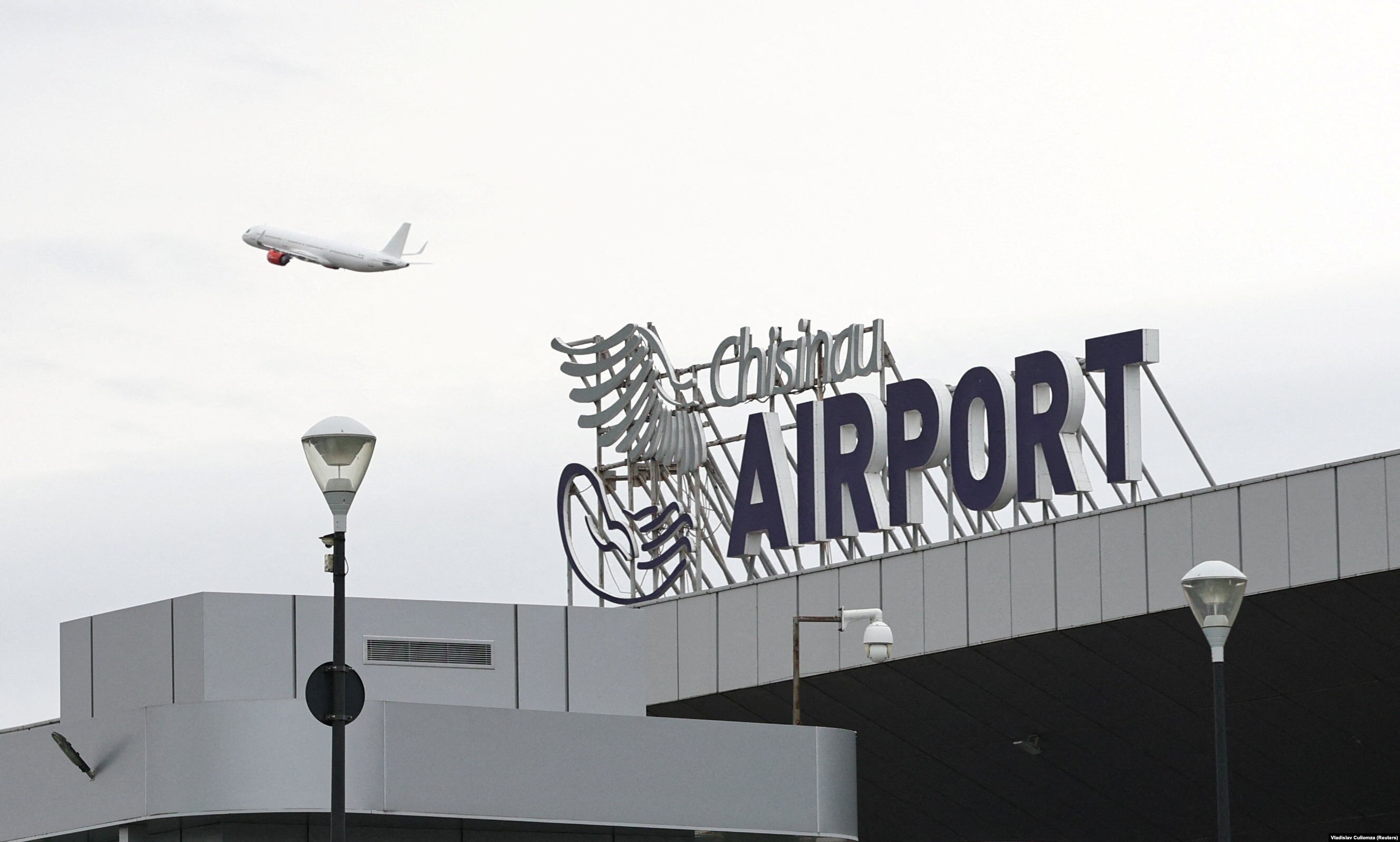
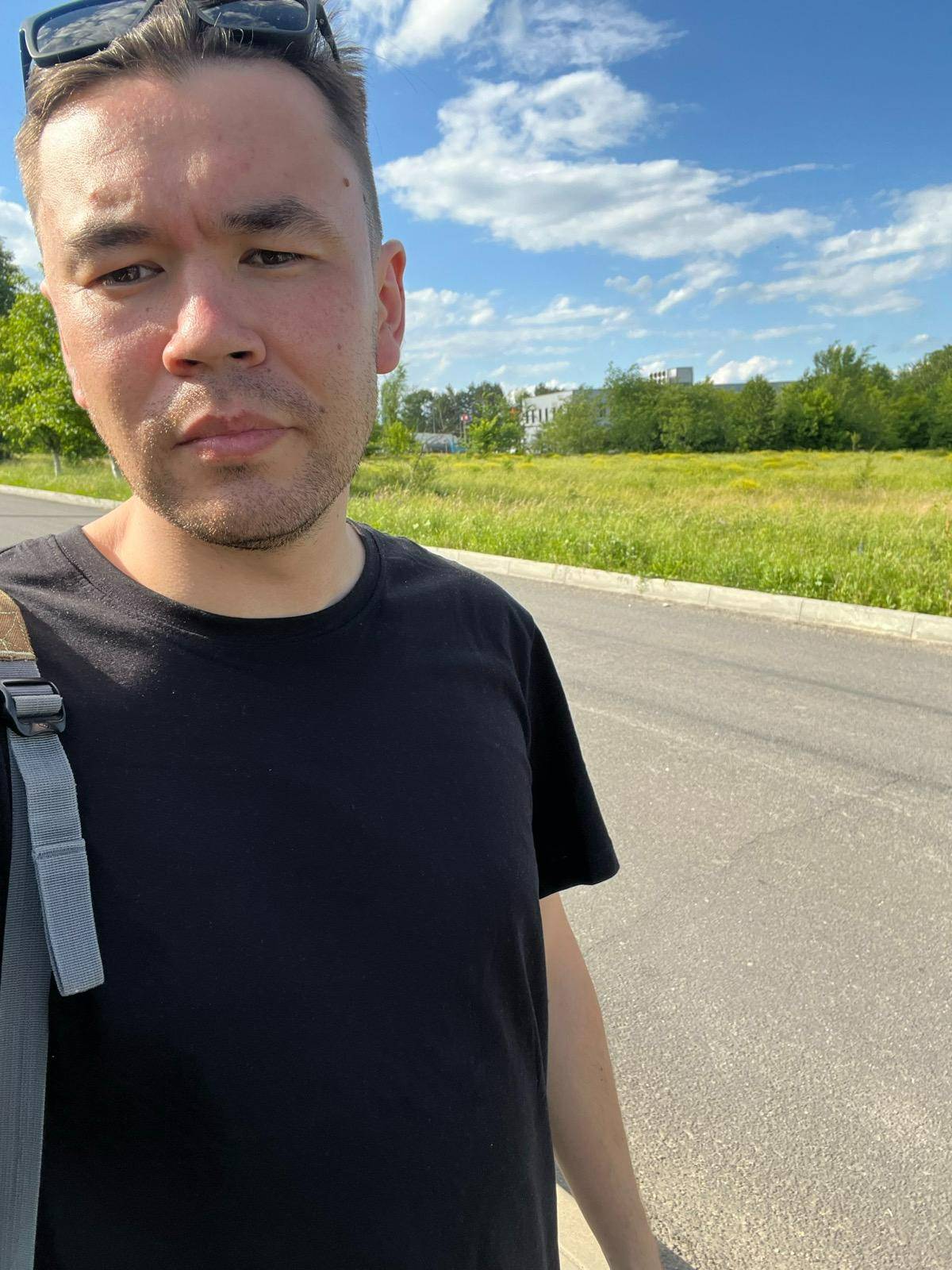
The US authorities deported to Moldova a 28-year-old resident of Bashkortostan, a participant in the protests in Baymak, Zagir Mukhamedyarov. Before that, he spent two years in an immigration prison in Louisiana seeking political asylum. In a conversation with Idel.Realii, the activist spoke about the circumstances of the expulsion and stated that he intends to try to return to the United States. Experts note that recently, American authorities have increasingly begun to deport to third countries Russians who have received judicial protection in the United States from deportation to their homeland. At the same time, according to them, under the new administration, statistics on deportations of Russian citizens “have not changed very much.”
"ICE officers decided to get ahead of the curve"
Bashkir activists abroad told Idel.Realii about the impending expulsion of Zagir Mukhamedyarov last week.
“ICE ( US Immigration and Customs Enforcement ) officers came to him at the immigration prison and said that the next day he would be deported to Moldova,” said one of the activists ( he asked not to be named ). - According to the law, he had to give his consent to this, but no one asked him for this consent. He could not be deported to Russia, since he has judicial protection (withholding of removal) against such deportation. Therefore, they decided to deport him to a third country and chose Moldova.
The interlocutor added that the actions of ICE officers “came as a complete surprise to Zagir” and his friends:
“We were already waiting for the ICE office in Louisiana to receive a recommendation from a federal judge for the immediate release of Zagir. He and many other Russian emigrants wrote such an appeal to the court, pointing out that they had been held illegally for a long time. Such cases have already happened - and many emigrants were released. In this case, ICE officers, apparently seeing that too many people were starting to leave immigration prisons, so to speak, became fussy and decided to get ahead of events.
Escaped from pursuit
In September 2024, in an interview with Idel.Realiya, Zagir Mukhamedyarov spoke in detail about the reasons that forced him to leave his homeland, as well as about the conditions of detention in Louisiana and hopes for the future.
He left Russia in March 2024, fearing detention and arrest due to his participation in protests in Baymak in January. Mukhamedyarov flew to Mexico through Turkey and Cuba. He illegally crossed the American border, after which he was placed in the River Correctional Center immigration prison in Ferriday, Louisiana. There he asked for political asylum.
In September 2024, an immigration court in Louisiana granted Mukhamedyarov status with holding of removal (refusal of removal) - this is one of the forms of political protection for refugees in the United States, along with the provision of political asylum. According to Bashkir activists, after this Mukhamedyarov was supposed to be released within 90 days, but due to the sharp tightening of immigration policies in the United States, he remained in prison until June of this year.
On June 10, the American organization ICE Flight Monitor, which monitors deportation flights from the United States, reported that “an ICE deportation flight arrived in the capital of Moldova, Chisinau, via Romania, where, apparently, citizens of Russia and, possibly, citizens of other countries were forcibly transported from the United States.”
“This is the third such flight to Moldova after flights that took place in March and April 2026,” the organization indicated.
In the spring of 2026, human rights organizations documented the practice of US Immigration Enforcement (ICE) sending deportation flights with complex routes.
Thus, on March 10 and April 30, the United States carried out deportation flights to Moldova. Not only citizens of Moldova were expelled, but also citizens of other Eastern European countries, including Russia.
During this same period, multi-day ICE deportation flights were recorded making consecutive stops to disembark deportees in several countries in Europe and Asia, including Poland, Moldova, Armenia and Uzbekistan.
“These ICE flights show that the system operates in secret,” said Savi Arvey , director of research and analysis for refugee and immigrant rights at Human Rights First. “People are disappearing, being deported to countries where they face persecution, or sent to places where they have never lived - all without any transparency or due process.
As reported by Russian America for Democracy in Russia, during another ICE deportation flight at the end of March 2026, Russian citizens were brought to Louisiana, collecting them from five or six immigration detention centers located throughout the United States. Thanks to the intervention of human rights activists, numerous appeals and the involvement of lawyers, some Russians were removed from the flight and left in the United States.
The publication Russian America for Democracy in Russia also reported that the conditions for transporting people from detention centers to the airport were extremely difficult: “Many hours of stages in shackles, sometimes the inability to sit down for many hours, spending the night on the floor, grueling waits in crowded rooms.”
According to Russian America for Democracy in Russia, as of the end of March 2026, there were about 700-800 Russians remaining in US immigration prisons.
20 hours of flight in shackles
Idel.Realii managed to contact Zagir Mukhamedyarov on June 11, when he had already arrived in Moldova.
He told what happened to his case after the court granted him withholding of removal status in 2024.

“Unfortunately, this status did not protect me,” said Mukhamedyarov. — The prosecutor's office appealed this court decision with success. As a result, the Board of Immigration Appeals sent my case back to the court, which, in early 2025, confirmed the previous decision. And at that moment, the Donald Trump administration was already in power, a strong tightening of the entire immigration policy began - and people with the status of withholding of removal were no longer released from prison. So I continued to sit there.
According to Mukhamedyarov, recently “only a few Russian emigrants were able to be released from the River Correctional Center prison”: “Probably only 5% were released, and were eventually granted political asylum.”
The Bashkortostan resident said that during almost two years of his imprisonment, the conditions of detention remained virtually unchanged.
— The staff was quite correct, the staff treated us not like some kind of criminals or suspects, but simply like ordinary people, because they understood: we are ordinary emigrants. In this regard, American people from the south are more good-natured. Of course, this is a prison, this is unfreedom. “I was sometimes in a depressed mood, but, in principle, I didn’t take any antidepressants, I didn’t need them,” Mukhamedyarov clarified.
He said he had a conversation with ICE officers after the trial, which took place in early 2025. They told him that he had to wait another six months for the final decision.
“They said, 'If we don't deport you within these six months to a third country, you'll have to go to federal court and file a Habeas Corpus petition. A writ of habeas corpus is typically a court order requiring law enforcement agencies to produce a prisoner in their custody and justify the need for his continued detention. , because we ourselves are not going to do anything." These six months passed in December 2025.
After this period, Zagir Mukhamedyarov filed a petition in federal court for unlawful detention. The court, according to the Bashkortostan resident, in turn asked the ICE office in Louisiana for information on his case.
“The ICE response that came at the end of April did not say anything about the possibility of my deportation to any third country. “I calmed down,” Mukhamedyarov noted. “But in early June, I learned that one Georgian citizen, who also filed a Habeas Corpus petition, was first released from our prison, and five days later he was sent back to prison. Then I realized that, most likely, I would also be deported soon, but I still continued to hope for a successful outcome. There was just total silence from ICE; they didn’t tell me anything or promise me anything.
The Bashkortostan resident added that he never received the federal judge’s recommendation for his release, which he had hoped for.
“At nine o’clock in the evening on June 6th I was called and told that the next day I was being sent to the airport in Alexandria. I already knew that there was a hub there for the collection of deportees from various immigration prisons in Louisiana. I realized that they were going to expel me from the country. They didn’t give me any documents about the deportation, where exactly they were going to deport me - they didn’t say either, but from rumors I already knew that it would be Moldova - there had already been deportations there. They announced to me that I would fly there only two hours before departure.

The Bashkortostan resident explained that he had no opportunity to cancel or even suspend the deportation.
— ICE employees, in organizing this deportation, violated, I believe, all the rules of the law. They should have given me a timely and formal warning, they should have notified the federal judge who was handling my case, they should have made sure I got to a safe country. They didn't do any of this. At the Alexandria airport, I tried to talk to them, but could not find exactly my ICE officer in charge of our flight. I tried to call a senior officer, a supervisor, but no one came to me. In the end, they just put me on the plane and we flew off. And it turns out that I was deported from the United States actually illegally.
According to Mukhamedyarov, flying with him were deported citizens of Uzbekistan, Kyrgyzstan, Israel, Romania, Armenia, Georgia, as well as Palestinians and two Russian women, who also spent about two years in immigration prison.
During the entire flight, the Bashkortostan resident said, those expelled were in handcuffs and so-called police shackles - shackles. They were removed from Mukhamedyarov only upon arrival in Chisinau.
— The entire flight lasted about 20 hours. We refueled in Baltimore and Bulgaria, and dropped off deportees in Tel Aviv and Bucharest. It was very tiring. Of course, they fed us, but only sandwiches,” he clarified.
Upon arrival in Chisinau, Moldovan border guards told Mukhamedyarov and other deported Russians that they would not receive a residence permit in Moldova and could only stay in the country for 90 days.
— According to US law, if American authorities deport someone not to their homeland, but to a third country, they are obliged to negotiate with the authorities of that country to provide the deportee with protection, at least a residence permit. But the American authorities did not do this. And the Moldovan authorities simply said: “These are US laws, not ours, so go to all four directions.”
A pleasant surprise for Mukhamedyarov and other deportees was that local human rights activists met them at the airport.
“We didn’t have any money with us—nothing except documents and personal belongings.” We were provided with housing - we now live in premises belonging to the Baptist church; That's where they feed us. Bashkir activists who live abroad are already helping me. So I’m not left in the lurch, thank God,” he said.
According to Zagir Mukhamedyarov, he is determined to achieve the opportunity to return to the United States.
— Obtaining political asylum in Moldova, as we were told, is unrealistic - Russians are rejected in 100% of cases. There is no place to do the so-called visa run ( short-term departure from the country followed by return to extend the period of legal stay or obtain a new permit - "Idel.Realii" ) - to enter Romania a Schengen visa is required, Russians will not be allowed into Ukraine, and to fly for a few days, say, to Serbia or Turkey, there is simply no money for it. Therefore, we are now considering the option of appealing our deportation in an American court. The federal court can issue an order that I be returned to the United States and that upon arrival I will not be sent back to immigration prison,” Mukhamedyarov concluded.
Expert: “Statistics on deportations of Russians from the United States have not changed very much under the new American administration”
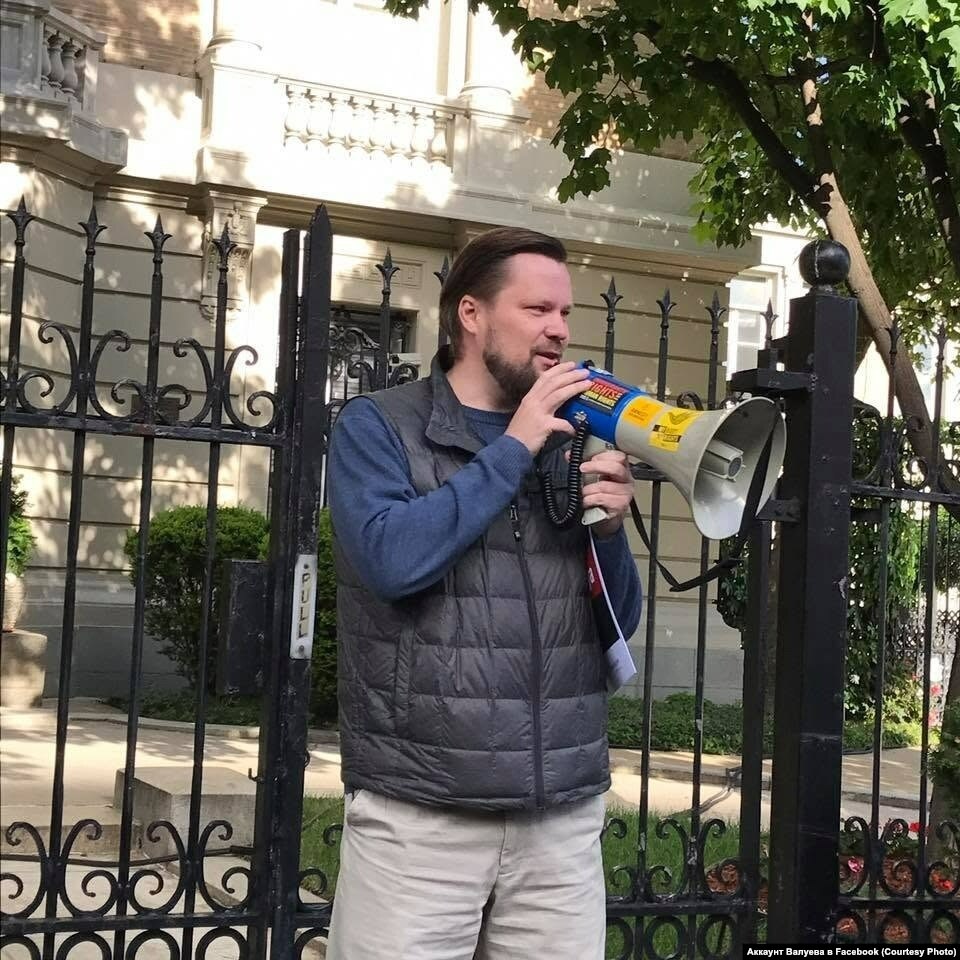
The head of the organization Russian America for Democracy in Russia , Dmitry Valuev, noted that recently the US authorities have increasingly begun to deport Russians with holding of removal status to third countries.
— When the American authorities expelled Russians who did not have such status to their homeland, they did it through Cairo, sometimes through Istanbul. Deportations to Moldova became possible, I believe, because we have been working for a long time to ensure that America does not deport Russians to their homeland - especially those who are threatened with criminal prosecution in Russia under political charges. We asked the American authorities that, if they decided to deport our compatriots, they would deport them to a third country where their safety would not be threatened. Against this background, such flights to Moldova became possible; there were already at least three of them,” Valuev clarified.
According to him, ICE is expelling Russians to Moldova “because it obviously considers this country safe for Russians.” Valuev noted that the deportation “could have been suspended if the emigrant, for example, had time to go to court.”
“If the court decided to suspend the deportation, then ICE would certainly be obliged to comply.” The human factor of the ICE officers themselves could also play a role; such cases have happened. In general, ICE officers have quite broad powers: they can release a person, they can suspend deportation, and so on. And therefore, certain inquiries and requests in this case can also play a role - for example, appeals to members of Congress, publications in the media.
Regarding the possibility of challenging an ICE deportation decision after already being deported, the expert stated that “legally, this is quite possible.”
— There are several such stories that we worked on. People were deported, but they still had open petitions to reopen their immigration case. These petitions are pending, and there is a chance that if the appellate body that hears these applications decides in the affirmative, they could return and continue their immigration story here. They will have a legal opportunity, a legal basis to re-enter the United States and continue to seek asylum,” Valuev said.
He added that statistics on deportations of Russians from the United States “have not changed very much under the new American administration.”
“We cannot yet say unequivocally that 2025, when the Donald Trump administration came to power, was different from 2024.” As you know, in 2024, under the Biden administration, there were also quite high numbers of deportations - about four hundred plus Russians were expelled from the country. The number of deportations in 2025, under Trump, may be close. But we don’t know this for sure, since we tracked charter deportation flights, and there were also deportations on regular commercial flights. According to our data, in 2025, about 250 Russians were deported from the United States on charter flights. Probably, approximately the same number of our compatriots were deported over the past year on commercial flights,” concluded Dmitry Valuev.
Subscribe to our channel on Telegram .
-

Idel.Realities
We are not disclosing the name of the author of this publication due to the threat of criminal prosecution under the law on undesirable organizations in Russia.