
Translated material
Disaster and inaction of the authorities. New flood in Kuban
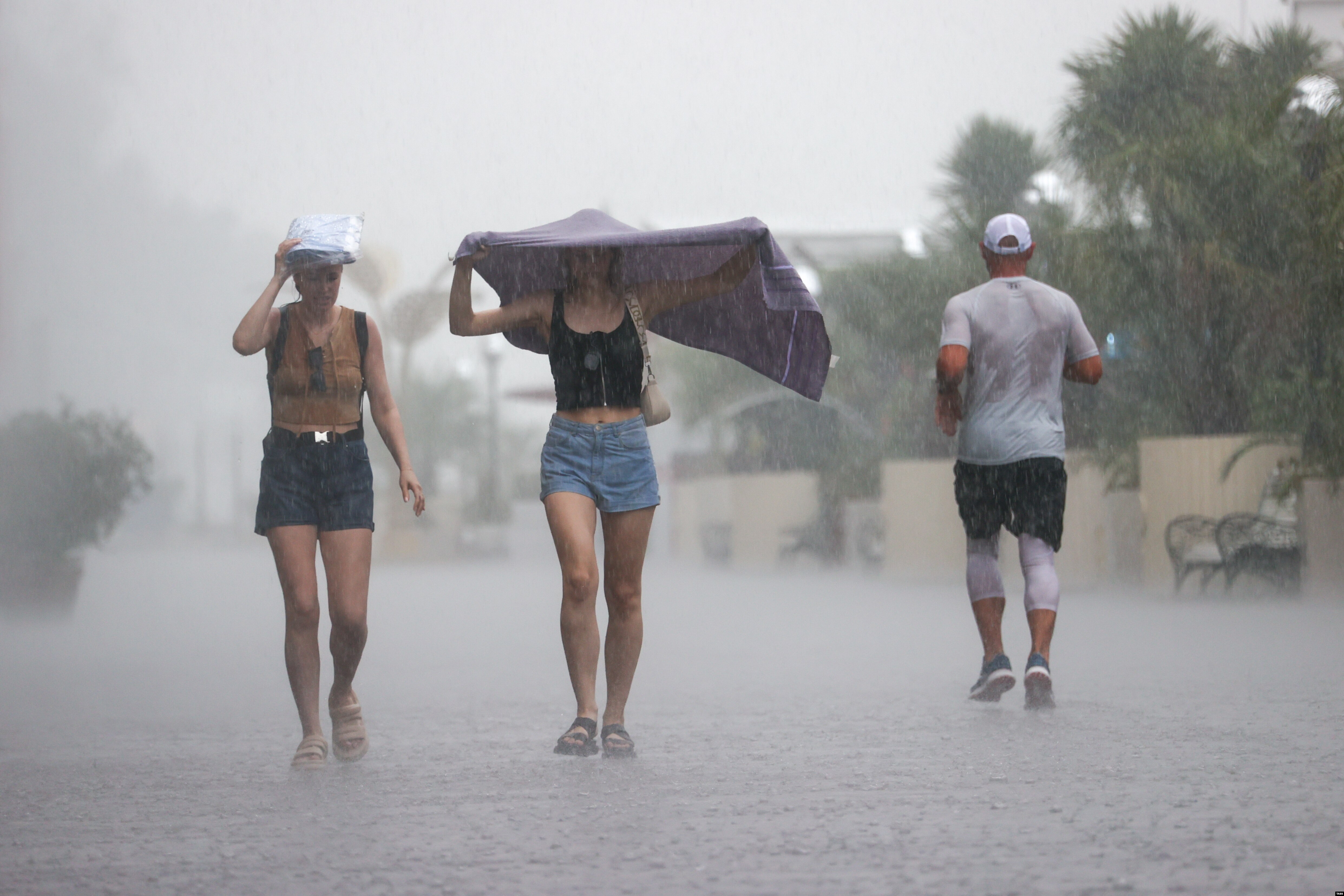
In the Krasnodar Territory, due to heavy rainfall, another natural disaster has occurred - dozens of private houses and thousands of hectares of agricultural land are flooded. In the regional capital, a number of streets were blocked by floods: people blocked the road, demanding that water be pumped out of their yards. Why does this situation repeat itself from year to year and how is the inaction of the authorities related to corruption?
After the rains on June 11 and 12, a number of areas in Krasnodar were flooded, the worst of all - the 9th kilometer microdistrict. According to local residents, the store on Yaroslavskaya Street could only be reached by swimming. In a private house on Kolkhoznaya Street, water entered 30-40 centimeters from the floor level.
“We have been struggling with the consequences of the disaster for three days. Unfortunately, the administration is inactive, and this is probably a video of my despair. I don’t know what to do next. It’s unclear how this will end. Due to the rains, our yards on Kolkhoznaya Street were flooded. This happened because the storm drain was flooded and the collector on Sadovaya Street was being repaired. We have repeatedly contacted the administration, the water utility, and the Ministry of Emergency Situations. All we hear in response is just the word: “wait.” It’s not very clear what to expect,” says a local resident in a video published on the Krasnodar Teletype telegram channel.
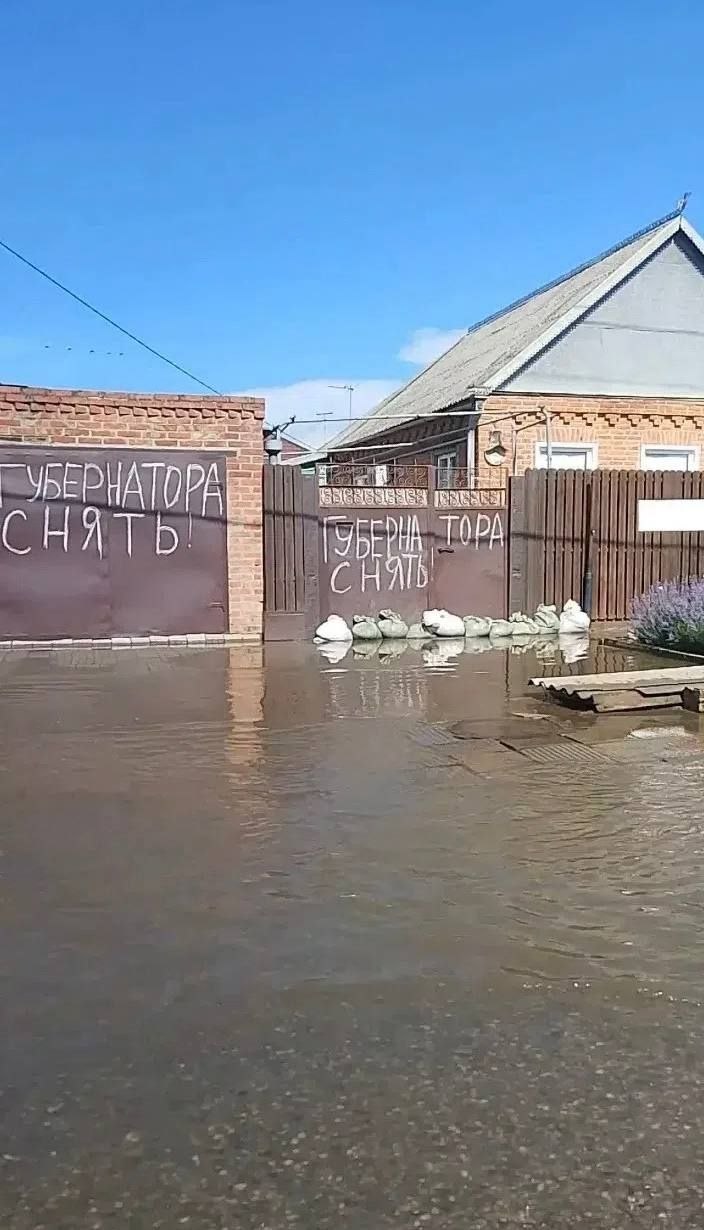
On June 14, residents of the 9th kilometer blocked the street: they demanded the arrival of the mayor and other officials. In the video they chanted : “Administration.” According to them, the day before the equipment arrived, stood there and left without pumping out anything. There, signs appeared on the fences demanding the resignation of the Governor of the Krasnodar Territory, Veniamin Kondratyev.
The police rushed to the scene and only then a “minor official” - the head of the Kubansky district, who does not have the ability to solve the problem, a resident of Krasnodar told the editor ( due to repressive Russian legislation, we quote his words anonymously - Ed .).
“Neither the mayor of Krasnodar Naumov nor the governor Kondratiev met with the townspeople all these days, did not declare a local state of emergency due to flooding, did not even comment on it on social networks. The position of the city and regional authorities is to pretend that there is no large-scale problem. As with the shortage of gasoline at gas stations, the consequences of an oil spill in the Black Sea and attacks on oil refineries,” the interlocutor complains.
The next day, residents of the neighborhood signed a collective appeal to the mayor of the city, the heads of the Ministry of Emergency Situations and the prosecutor's office with a request to declare a local emergency.
“This will allow people to claim at least some compensation,” said city deputy from the Communist Party of the Russian Federation Alexander Safronov in his Telegram channel.
Flooding also affected other parts of the city. In the courtyards between houses on Klinicheskaya and Yunnatov streets, water mixed with sewage flowed into the basement with the electrical panel and washed away the children's football field, reports the Kuban Anti-War Committee. Residents also complain about the regular flooding of the underground passage near the Kuban stadium - in videos published in local telegram channels it is completely filled with water.
Problems were also encountered outside of Krasnodar. After the dam broke in the Crimean region, more than four thousand hectares of agricultural land were flooded: a quarter of this was sown with wheat. The next day, June 15, the breach in the dam increased to 90 meters. Temporary accommodation centers were set up for residents, and authorities warned of a possible evacuation. As the press service of the district administration reported , the emergency regime is in effect in the territory of Troitsky, Kievsky, Yuzhny and Keslerovsky settlements.
A disaster every time
During three days of prolonged rains, residents of Krasnodar turned to the Ministry of Emergency Situations 850 times with requests to pump out the accumulated water. In total, the authorities reported using 18 units of special equipment and 16 motor pumps for these purposes.
This situation repeats itself every year - and each time it turns into a disaster, comments former deputy of the Council of Deputies of the Yeisk District of Kuban, Alexander Korovayny: “Everyone understands perfectly well: as soon as it starts to rain, and instead of taking a bus, you can ride a boat. But everyone also understands that the authorities either cannot or do not really want to fix everything - apparently, they consider other tasks a priority: propaganda, “SVO” and corruption. Now in all Kuban telegram channels there are a lot of videos with a flood, and in Governor Kondratiev’s channel there is zero, not a single comment. Everything should be beautiful and positive there.”
The authorities' response to emergencies usually develops according to a predictable scenario, agrees the Kuban Anti-War Committee.
“After a rainstorm, emergency services are sent to the most problematic areas. Water is pumped out, traffic is limited. Warnings about adverse weather conditions are published. When the water subsides, plans are announced to reconstruct individual sections of the network. But reacting to the consequences and preventing them are two different things,” says one of the activists.
It's unlikely that another flood will spark a large-scale communal protest, says North Caucasus analyst Harold Chambers: "In cases like these, the focus is on getting the government to respond to the disaster. Some attempts to get government attention may be perceived as protest, but that depends on the intentions behind the action. If the government's failures are severe enough and the disaster is widespread, there may be some risk of larger protests, but such cases have been relatively rare in recent years."
Storm failure
The main reason for the flooding of streets in Krasnodar, the interlocutors of the editorial office associated with the region call the failure of the storm drainage system. The company "Rustem", registered in Tuapse, is responsible for it in the city, writes Kuban journalist Andrei Koshik. For 2026, it received 120 million rubles for “ensuring the proper condition and functioning of storm sewers,” 40 million for pumping out storm drains and another 80 million for maintaining the storm sewers of Krasnodar.
The key problem of modern Krasnodar is that, thanks to the corrupt connections of officials, courts and developers, ghettos of high-rise buildings have grown in the city, not provided with either social or communal infrastructure, a city resident comments on condition of anonymity: “Since the late 2000s, Krasnodar has been experiencing a construction boom. What did small developers do? On the site for individual housing construction, they built five-six-story buildings, which were legalized through the court. The administration did not attend meetings. came or behaved passively, and the developer provided an examination done by a commercial company that the building complied with all the standards. As a result, the court legalized it, and the apartments were sold. This is how hundreds of multi-storey buildings appeared, often without even connections to water supply and sewerage - they “pirated” into city networks and drained wastewater into them. In the Musical Microdistrict there are high-rise buildings with cesspools or septic tanks for collecting waste."
It is impossible to simply clean out all the storm drains or make a normal storm drain in Krasnodar
The development of the capital of Kuban has long been ahead of the modernization of engineering infrastructure, adds an interlocutor from the Anti-War Committee: “Flooding is an indicator of how much the city manages to adapt the infrastructure to its own growth. That is why, after each major downpour, public discussion again returns not to the rain itself, but to the quality of urban planning policy and the state of utility networks. And, unfortunately, no conclusions are drawn in the administration.”
A significant part of the stormwater system was designed for much smaller volumes - for that Krasnodar, where about half a million people lived. Now the city's population is about 1.8 million.
“Over the past twenty years, the building area and the number of residents have grown exponentially, and the modernization of utility networks has been noticeably slower. New residential complexes, parking lots and roads are covered with asphalt and concrete. The land that previously absorbed water disappears. As a result, almost the entire volume of precipitation ends up on the surface and at the same time rushes into the storm network, which is not designed for such loads. In addition, the city has practically no special reservoirs, storage ponds and underground chambers for temporary storage of rainwater. Add to this the clogging of collectors, garbage, silt, lack of timely cleaning of individual areas - all this also reduces the efficiency of the system,” notes a representative of the movement.
Officials cannot function in the urban planning system without corruption, and it, in turn, leads to ineffective decisions, explains former deputy Korovayny: “It is impossible to simply clean out all the storm drains or make a normal storm drainage system in Krasnodar: this requires a lot of money. And if anyone does, it’s their own contractors, who in any case will sign the act. It doesn’t matter what quality the work turns out to be. When everything is done with violations, officials close eyes on it because they got money for it.”
In order to now remake all the storm drains from scratch, large funds are also needed - but they are not there, the ex-deputy continues: “Especially now, with a huge budget deficit in many regions, including Kuban, and throughout the country.”
"Direct responsibility of the authorities"
This week, not only Kuban experienced the consequences of heavy rainfall. In Dagestan, rains in the mountains caused mudflows in the Botlikh district and the flooding of ten houses in Tabasaran. Showers, thunderstorms and gusty winds on June 14 left some residents of Magas, Nazran and Sunzhensky district of Ingushetia without electricity. In North Ossetia, the Fiagdon River overflowed its banks, and in the Stavropol region, mudflows washed away a road in the Kursk District.
It’s much easier to say that this happens once every hundred years - how could you prepare? But you can prepare for anything.
This spring, the main natural disaster in the North Caucasus was the flood that occurred at the end of March: its severity was a record for the last 107 years. Then Dagestan and Chechnya suffered the most. Due to abnormal rainfall in Dagestan, a state of emergency was introduced in Makhachkala, Khasavyurt and dozens of other settlements: streets turned into rivers, electricity and drinking water were lost in Makhachkala. At the beginning of April, the second wave of disaster arrived. Then, in the Derbent region, the dam of the Gedzhukh reservoir burst due to overflow - water flooded the village of Mamedkala, and a bridge collapsed on the Caucasus federal highway. Eight people died in the flood.
The tragic consequences of the flood, ecologist, co-chairman of the Ecodefense! Vladimir Slivyak calls it the direct responsibility of the authorities: “They must monitor this, they must prepare the infrastructure - dams, sewers and other important objects - for natural disasters. There are no other options at all. This is entirely the responsibility of the authorities, and this is their failure. This is not the first time that floods have occurred in these areas, they have happened more than once. Consequently, there was time to strengthen the dams, and to assess whether they will withstand or not. There was time to see what is happening with the sewerage: whether it can be strengthened or even need to be rebuilt."
The ecologist associates the increase in the number of floods with climate change, one of its consequences is the increase in the frequency of catastrophic natural phenomena: “Somewhere there will be droughts, somewhere there will be floods, mudflows, landslides and whatever. Everything that happened before will be repeated, only more often and stronger. Officials are completely unwilling to prepare for this: it is much easier for them to say that this happens once every hundred years - how could one prepare? But one can prepare for anything, their job is precisely to prepare for such things."
Citizens quite rightly make complaints to the authorities, but officials will not listen to anything, the ecologist adds: “In Russia there is an undeclared martial law, and during such a state of affairs the population does not listen to the authorities. If someone starts shouting too loudly, they are simply sent to prison.”
- The former head and chief specialist of the housing and communal services department in Makhachkala are suspected of fraud in the repair of storm drains. The Kirov District Court sent them to a pre-trial detention center. The arrests took place in early April after flooding throughout the republic due to heavy rainfall - Makhachkala was one of the first to introduce a state of emergency.
- Severe flooding at the end of March forced the Chechen authorities to urgently evacuate the villages of Kundukhovo and Braguny. There was not enough special equipment to evacuate about 900 people: people were rescued from the disaster zone in police paddy wagons and military trucks. Last spring, Ramzan Kadyrov promoted the local automobile plant "Chechenavto" as a promising supplier of vehicles needed in such situations for the federal Ministry of Emergency Situations.
- Dagestani MMA fighter and champion of the Kazakh NAYZA league Ramazan Gasanov complained about the lack of help from the authorities in restoring a house destroyed by a mudslide. The property is registered according to the laws, he emphasized. Previously, the Dagestan authorities explained problems with payments by the lack of property documents among the owners.