
Translated material
“An imaginary conversation with Boris Pasternak”: how Shalamov’s letters began to live separately from the author
Dmitry Nich
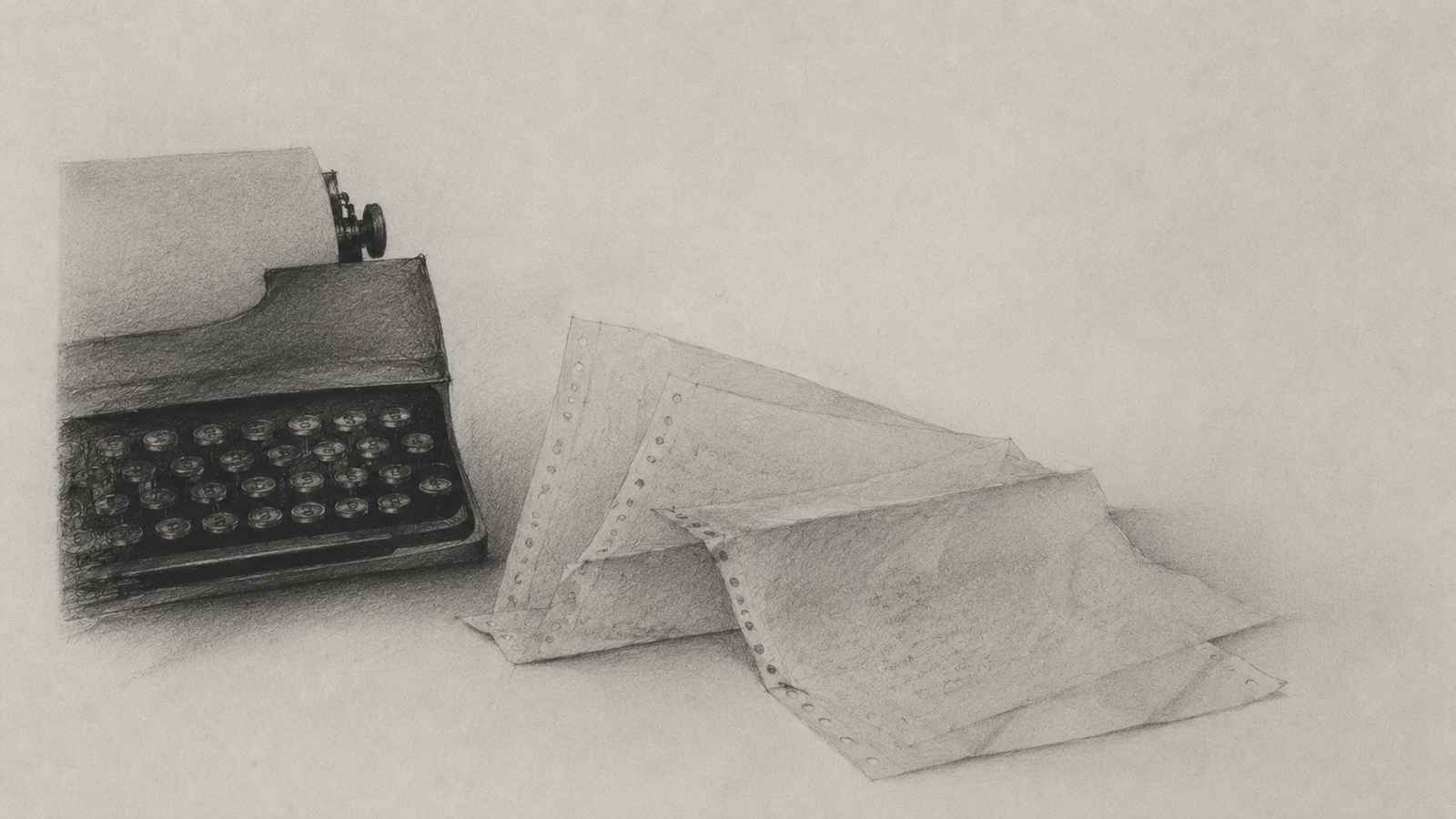
Pasternak does not answer. Shalamov speaks alone. Seven typewritten pages from the archives of Novosibirsk collector Gennady Abolyanin turn Varlam Shalamov’s letters to Boris Pasternak into a strange literary monologue, where the interlocutor is present only in the title - “A Conceivable Conversation with Boris Pasternak.” The text is based on letters from Shalamov to the poet, written in 1953 and published many years later, but the compilation itself probably originated in the first half of the 1960s. It has not yet been possible to establish who turned the private letters into an independent work—Shalamov himself, Evgeny Pasternak, or someone from their inner circle. Dmitry Nich publishes the found manuscript with a preface and shows a rare case when samizdat turned out to be more accurate than an academic publication.
Dmitry Nich. The manuscript and its creators
Opening a list
At one time, I came across on the Internet an inventory of the archive of the Novosibirsk surveyor and passionate admirer of Silver Age poetry Gennady Abolyanin, and in it - a storage unit called “Varlam Shalamov. A imaginary conversation with Boris Pasternak." Naturally, I became interested - Shalamov doesn’t have anything with that name. I asked the philosopher Mikhail Nemtsev, who lived in Novosibirsk, to find out more about this text and, if possible, photograph it or scan it. He expressed his readiness to help, for which he was very grateful. At his request, the curator of the cultural center Tsvetaeva House at the Novosibirsk Regional Scientific Library, where the collection of materials on the Silver Age collected by Abolyanin is stored, Larisa Gelshert, to whom I am also very grateful, sent scans of the text, and Nemtsev sent them to me with a note that a miracle did not happen, and in front of us, obviously, are extracts from the already known letters of Shalamov to Pasternak.
Yes, this is clear at first glance. But at first glance it is clear that this is a samizdat list, which appeared long before the publication of these letters in legal Soviet publications. This obvious circumstance, however, requires proof, which I will give below.
So, what is this ancient text of seven typewritten pages?
“A Conceivable Conversation...” is a compilation of excerpts from Shalamov’s letters to Pasternak dated December 24, May 25, December 20 and 27, 1953, in essence, Shalamov’s stormy monologue in the first person: “I saw you once in my life...”, “I agree with all my heart...”, “I have long believed in the terrible power of art,” - the repeatedly repeated “I” makes this conversation flowing in the direction of intense spiritual community, without a real interlocutor who would answer, object, clarify, very personal, bordering on confession. Shalamov reports a lot of details about himself, from his aesthetic preferences to family circumstances determined by the difficult fate of a camp inmate and exile separated from his relatives. A modern reader can read all this through the eyes of a reader of Soviet samizdat, who breathed, in Mandelstam’s words, “stolen air” (for a Russian reader of the Internet era, such self-identification requires, at least for now, some internal effort).
“Varlam Shalamov. A conceivable conversation with Boris Pasternak” , scans of typewritten text in PDF on the Internet Archive portal, source: cultural center Tsvetaeva House NGONB
About the samizdat origin of the list.
For the first time, Shalamov’s letters to Pasternak were published in fairly full volume in the magazine Yunost, 1988, No. 10 . Needless to say, the idea of typing out text from a magazine that was then selling 3,100,000 copies could only have occurred to a madman. But there is also direct evidence that the Novosibirsk list is in no way connected with this magazine selection. “A Thoughtful Conversation...” includes an excerpt from Shalamov’s letter dated December 27. 1953, and this particular letter is not in the magazine collection; it first appears in the book “Correspondence of Boris Pasternak”, compiled by Evgeny and Elena Pasternak, M. ed. Fiction, 1990.
So, the material for the text was letters stored in Shalamov’s archive - in the form of copies and versions, at that time apparently not yet discovered by the copyright holder due to employment - and in the archive of Pasternak’s son Evgeniy.
At one time, V.T. Shalamov introduced us to Pasternak’s letters that he had received and allowed us to make copies of them. […] Shalamov’s letters are kept in [our] family collection and were provided by us to Sirotinskaya for publication
- this is how the compilers of the collection of correspondence write about this in the preface . In other words, Shalamov and Evgeniy Pasternak have identical texts of letters.
Who is the author?
The creators of the text could have been Shalamov himself, Evgeny Pasternak, or someone from a narrow circle who had access to his father’s archive. Shalamov’s authorship, if not refuted, is, it seems to me, quite easy to prove. According to Sergei Neklyudov, Shalamov acquired a typewriter in the early sixties. Surely a lot of materials are printed on it. First of all, it would be worth trying to determine by the characteristics of the font whether “A Contemplative Conversation ...” was printed on Shalamov’s typewriter. If yes, then the question of authorship resolves itself.
If the text was compiled by Evgeny Pasternak or someone from his circle, then, without a doubt, it is authorized by the author of the letters - it is very difficult to imagine that Evgeny Pasternak, who deeply respected Shalamov and was scrupulous in such matters, would use other people’s epistles without permission to create a samizdat, that is, text intended for prying eyes. Sooner or later, this would have reached Shalamov, and a scandal could have broken out, which, as we know, did not break out.
So, the text, in my understanding, was created by Shalamov or Yevgeny Pasternak with the knowledge and consent of the former, and I do not rule out that it was being prepared for publication abroad - such a selection of letters obviously could not be published in the Soviet press.
Unfortunately, we were able to find out very little about the time of creation and circulation of this text in samizdat. In the article by Anatoly Sokolov “About Gennady Abolyanin”, magazine “Siberian Lights”, 2010, No. 3, Abolyanin’s words are quoted:
In the process of this “gathering,” I had the opportunity to meet and talk with many people who were interesting to me, here is not a complete list of their names: Mikhail Gasparov and Sergei Averintsev, Sergei Yursky and Innokenty Smoktunovsky, Andrei Sinyavsky and Yuliy Daniel, [...] Evgeniy Rein and Anatoly Naiman, Varlam Shalamov and Nadezhda Mandelstam...
If Abolyanin met with Shalamov, then almost certainly in the sixties - it is difficult to imagine that in the seventies, the semi-deaf hermit Shalamov, who had cut off his liberal acquaintances, would begin to accept a stranger, while regularly refusing meetings with such good friends as Yuliy Schrader and Elena Lopatina. In addition, Abolyanin could only meet some people from the list in the sixties, when they were alive - Frida Vigdorova, Alexey Kruchenykh, Korney Chukovsky.
I asked in a letter to Larisa Gelshert whether there were any catalogs made by Abolyanin about the receipt of materials for his collection with dates and names of donors? She turned to Gennady Mikhailovich’s widow, Tatyana Ivanovna, and she said that her husband
was friends and communicated (corresponded) with Evgeniy Pasternak, the son of Boris Pasternak from his first marriage to the artist Evgenia Lurie. This manuscript most likely came from him.
As for the catalogue, I kept both a catalog and a diary, but alas, nothing has survived. According to Tatyana Ivanovna,
it seems that G.M. for some reason destroyed part of his archive.
Let’s hope that, firstly, this text is (or will be found) in Shalamov’s collection in the Russian State Archive of Literature, which has not been completely sorted out, and will make it possible to somehow date it, and secondly, it will show up in someone else’s samizdat collection or will be mentioned in the diary of one of his contemporaries. Purely intuitively, I determine the time of its creation as the first half of the sixties. During this period, the name of Pasternak in connection with “Doctor Zhivago” and the story of the Nobel Prize had not yet left the lips, and by the middle of the decade he was gradually pushed aside by the new idol of the liberal intelligentsia - Solzhenitsyn. The Pasternak-Shalamov combination worked very successfully and justifiably at that time on Shalamov’s reputation, distinguishing him from the bearers of a purely Soviet mentality, such as Solzhenitsyn and his peers, and rooting the artistic pedigree of the author of “Kolyma Tales” in the very core of Russian Athens of the modern era. Let me remind you that Shalamov’s reputation in the Moscow liberal and dissident world of the mid-sixties was high, and he did not neglect to strengthen it.
And finally. As I looked through the list, a curious thing came to light. It turns out that the letters - or at least one letter, I did not compare the others - published by Irina Sirotinskaya in the New Book (2004), and then in the six-volume collected works (2013) are not the letters of Shalamov that Pasternak read. The letters received by Pasternak were kept in the archive of his son, were provided by him to Sirotinskaya and were published in the magazine Yunost, 1988, the collection “Correspondence of Boris Pasternak”, 1990, and in the fourth volume of the collected works of Shalamov, 1998. In subsequent editions, starting with “Novaya Kniga”, 2004, at least one letter is published in a different version. For comparison.
From a letter received by Boris Pasternak:
Now about what torments me, what is so disharmonious in the book, what for some reason exists along with the most important thoughts, with the most subtle and wonderful observations of nature, conquered and subordinated to the moods of the heroes, with the unity of the moral and physical world, brilliantly achieved and realized many times in the novel. About a rude phenomenon, sharply screaming, falling out of the entire musical key of the novel. I'm talking about the language of the common people in your novel. It is about the language, and not the psychological justification of the actions of these people. Your people's language - it doesn't matter whether they are workers, peasants or city servants, your people's language is lubok, nothing more. In addition, for you it is the same for all these groups, which cannot be the case even now, and even more so before, given the greater disunity of these population groups.
I know this language and I know it too much.
From a letter published by Sirotinskaya in the 2000s:
Now let’s come to the question that torments me, which is so disharmonious with the book, which, along with the most important thoughts, with the most subtle and wonderful observations of nature, tightly linked with the moods of the heroes, with the unity of the “moral and physical world”, most brilliantly achieved and realized in the novel, is a rough, sharply screaming phenomenon that falls out of the entire structure of the novel, and from which I feel pain for you, the artist.
I'm talking about the language of the common people in your novel.
It is about the language, and not the psychological justification for the actions of these people. Your people’s language makes no difference whether they are workers, peasants, or city servants. In addition, it is the same for all these groups, which cannot be the case even now, much less earlier, given the greater disunity of these population groups. Your vernacular language is a popular language, nothing more. I know this language, and I know it too much.
The publisher did not deign to explain how the discrepancies were explained.
A comparison of the samizdat “Myslymoye Conversation” with the above excerpts shows that “Mysmologie Conversation” used the text of letters received by Evgeniy Pasternak from Shalamov, and not texts of unclear origin published in the “New Book” (2004) and collected works (2013).
Varlam Shalamov. A imaginary conversation with Boris Pasternak
... I saw you once in my life. It’s not that in 1933 or 1932 in Moscow at the Moscow State University club you read “The Second Birth”, and I sat huddled in a corner in the darkness of the hall, and thought that happiness - here, now - is that I see a real poet and a real person - the same as I had imagined since I became acquainted with poetry. In just a few years I was taken aback and depressed by the lines:
February.
Get some ink and cry.
Write about February sobbingly.
etc. I was worried and did not understand what kind of strength and eye one must have to write such poetry. And from that time on, every line of yours that was in print attracted and worried me. ...
... Later, when I met Annensky’s poems and they became another revelation for me, it was clear to me that Annensky’s poetic ideas were close to yours. You write about influences. I never somehow trusted this concept. It seemed to me that in a number of cases (and in mine as well) it was not a matter of influence, but of professing the same faith. Influence is enslavement, and common faith is freedom.
I wholeheartedly agree with you that writing poetry as an end in itself is nonsense. But how it was born and grew: a game in which you feel the power, the voice of the old masters, listening to which takes your breath away, the stomping of poems in your brain - so persistent that it becomes easier only when you write them down, a world that every year lies more and more obediently on paper.
And then - after all, from my youth I thought about how to serve people, to bring at least some benefit, to live my life well, to do something to make people better, to make life warmer and more humane. And if you feel the power to do this in poetry, in art, then all other paths are lost in the fog and everything becomes unimportant, sometimes even life itself. So much is lost, abandoned, killed, not achieved, and only the most precious things are carried through my whole life: love for my wife and poetry.
In addition, I have long believed in the terrible power of art, a power that defies any measurement and yet a powerful, incomparable power. The eternity of these Giocondas and Infantes, where everyone finds their own vague, unconscious and exciting, and the artist, who died many centuries ago, educates people with the power of his art - what could be more enviable than such power and what happiness could be felt by the one who laid his stone in this eternal building. I don’t compare anyone with anyone, I remove the concept of scale.
And no matter how grandiose the power of another poet is, it will not silence me. Even if what I saw is expressed a thousand times less clearly, this is the first time it has been said. I am happy because I understand, I feel how this picture was painted, I understand the artist’s excitement and envy him, I understand his soul, I understand how he spoke to life and how life spoke to him. And more than that: I am deeply convinced that art is the immortality of life. Something that art has not touched will die sooner or later.
Maybe you find it funny to read these naive lines. I don't understand anything about the theoretical side of things. I’m simply explaining to you why I write poetry. Moreover, I can no longer do anything with myself - what makes me take a pencil and paper is stronger than me. Moreover, I dare to hope that everything I have written is, least of all, literature.
I write and see no end to everything I want to say and tell you. I see thousands of shortcomings in myself, besides those indicated by you, but still what I wrote - poetry, and communication with life on this road - is justified.
You say a lot of things that are true, but there are some things I can’t agree with you about. And above all, about crossing out the past, your past works. This motive fills your latest collections, and, therefore, I knew this before your letter. Isn't this renunciation too cruel? I understand that the strict master grows and lives, denying and destroying himself, but I remember, I know something else. After all, I know people who lived and survived thanks to your poems, thanks to the feeling of peace that was conveyed by your poems - precisely those that are now being burned. Have you ever thought about this? About people who remained human only because your words, your drawings and thoughts were with them? That the poems were read like prayers. The point is not that the “disciples” are abandoned: the poems live on without you. Moreover, these are not students at all. But there was such life and strength in these verses that, I repeat, kept people human. ...
... This correspondence has affected such a large part of my life that I cannot help but write to you, although I feel how I am bursting into your peace, into your health and strength and too greedily and shamelessly taking advantage of your attention, delicacy and cordiality. I feel somehow guilty before you. And yet I write.
I have been cut off from public life and cultural life for too long to regret it. And to desire anything other than to clarify all these questions for oneself.
I continue the probably endless list of questions that I began to unfold to you in previous letters.
There are no words with the same meaning for everyone, with the same semantic content. Even such a seemingly universal word as “death” is by no means perceived by all people in the same way. In our question, poetic intonation imparts semantic shades to the word (which has a concept behind it). This circumstance, the indisputability of which is obvious to the poet (and not only to the poet), determines that the poet writes for himself, wants, according to Flaubert, to “please himself,” seeks clarity of sensation in himself, finds it and captivates others with his own feeling of a word, event, theme. True poetry, of course, is always earthly poetry. Но не арифметическая поэзия. Подлинная поэзия предстает как некий алгебраический ряд, алгебраическая задача, куда каждый читатель может вносить свою арифметику, делать свои жизненные, арифметические подстановки.
Именно эти находки — теоремы и формулы — делают гениев, и в этом одна из главнейших причин вечности, скажем, Шекспира.
Есть другая поэзия — оперирующая арифметическими величинами, когда читательской работы не требуется и приводится цифровая выкладка, дается однократное и тем самым не вечное, а временное решение задачи. Примеров этой второй, арифметической поэзии приводить не надо.
Алгебраическими величинами поэт может сделать любые слова, ибо поэтических слов, как таковых, нет. Но есть поэтический ряд, расположение слов. Зачем ходят в театр смотреть Шекспира? Зачем (почему) его читают? Почему «Ромео и Джульетта» даже в кино, искусстве, по сравнению с театром, второсортном, волнует до слез людей, которым, казалось бы, вовсе и всячески чужда жизнь Вероны, итальянского города, о котором написал англичанин, никогда не видевший ни ее, ни ее людей в глаза? Не быт же хотят изучать по Шекспиру? Я еще не видел в исторических музеях плачущих людей, я видел их только в художественных галереях. (...)
«Алгебра» в поэзии — это, конечно, не «символы» русских поэтов начала двадцатого века. Она трижды, четырежды земная, из земли родившаяся, но не возвратившаяся в землю, а продолжающая жить на земле.
Это касается ощущений «Гефсиманского сада» — я горжусь Вашей внутренней свободой и благоговею перед ней.
Удивительно и больно то, что слишком часто люди принимают за стихи вовсе другое. Стихи эти, поэтически безупречные, полны необычайной силы, прелести и задушевности. А книга эта — родник чистоты, и кто обойдется без образов этого мира? И кем бы был, например, Толстой (весь от ранних вещей до последних) без нее? ...
… Сердечно поздравляю Вас и Вашу жену с Новым годом. Хочу, чтобы Ваш Новый год был творчески сильным, чтобы в новом году была открыта Вам дорога к свободному общению с читателем. Чтобы Вы попрежнему были совестью нашего времени, чтобы не пришлось снова писать Магдалин. Чтобы Вы хранили верность своему великому искусству — с той неподкупной чистотой, как Вы это делали всю жизнь…
… Я прочел Ваш роман. Я никогда не думал, не мог себе даже в самых далеких моих чаяниях последних пятнадцати лет представить, что я буду читать Ваш ненапечатанный, неконченный роман, да еще получаемый в рукописи от Вас самих. Всего два месяца назад, чужой всем окружающим, затерянный в зиме, которой вовсе и нет дела до людей, вырвавших у нее какие-то уголочки с печурками, какие-то избушки среди неизбывного камня и леса, среди чужих пьяных людей, которым нет дела ни до жизни, ни до смерти, я пытался то робко, то в отчаянии стихами спасти себя от подавляющей и растлевающей душу силы этого мира, мира, к которому я так и не привык за семнадцать лет.
Затерянный, но не забытый. Я вернулся и пришел в Лаврушинский. Встретился с Вами. Поймите, чем это было для меня. Поймите даже мою немоту. Ведь от встречи после разлуки с городом можно плакать на подъезде вокзала, а тут была встреча с моей женой, женщиной, подвиг которой я не могу поставить в ряд ни с чем слыханным или читанным. Ведь ожидание мужей с войны (…) — ребячество, даже по времени ребячество. Когда все искусство, все газеты, доклады — все кричат на каждом шагу, увязывая ее с мужем и провозглашая ее героизм, и совсем, совсем другого масштаба дело, когда все ей кричат: «Твой муж — преступник, порви с ним, и ты будешь свободна от дискриминации», ее лишают службы, ей мстят всей силой государства. Она годами бедствует и плакать уже разучилась. На руках ее полуторагодовалый ребенок. И какую нужно иметь душевную силу и веру в человека, чтобы семнадцать лет писать по сто писем в год, встретить его на вокзале. Вот на другой день после этой встречи я и был у Вас впервые. И эту встречу, зная, чем она является для меня, она подготовила.
И встреча с дочерью, второе ее для меня рождение, а меня для нее — первое — я ведь оставил ее ребенком полутора лег, а сейчас ей 18, и она студентка второго курса.
И, наконец, в эти же два дня — эта необыкновенная встреча с Вами. Кем Вы были для меня, чем были Ваши стихи для меня целых двадцать лет — об этом надо и рассказывать и писать отдельно.
Не правда ли — не слишком ли много событий для двух дней одного человека. Простите меня, что я пишу не о романе, это тоже о романе, впрочем — это состояние, созданное его чтением, это фразы, подсказываемые Вашими героями, — так что они толкнули меня на исповедь.
Видите ли, Б. Л., я никогда не выступал в роли литературного критика. И никогда не пробовал писать роман. Это казалось мне каким-то первовосхождением на какой-то Эверест, восхождением, к которому я вовсе не подготовлен. Но рассказы я писал и даже лет 18 назад печатал — рассказы плохие. Я напряженно работал тогда над коротким рассказом, лет пять, кажется, учился понимать, как сделан рассказ Мопассана «Мадемуазель Фифи», а потом понял, что вовсе не это знание нужно для писателя.
Я понял, что писателя делает поэтический напор прочувствовать впечатление, как будто слова спасаются от пожара, возникшего от случайной причины где-то внутри, и вырываются, выбегают на бумагу.
Я не задаю вопроса, для чего роман написан, и не отвечаю на этот вопрос. Он написан потому, что нечто тревожащее Вас требует выхода на бумагу, требует записи, и притом не стихотворной. Сильны какие-то чувства, которые поэт не вправе или не в силах выполнить в стихах и не вправе удержать в себе. Они живут рядом со стихами, они в сущности своей то же самое, что стихи. Остаются идеи, требующие трибуны не стихотворной.
Ваш роман поднимает много вопросов, слишком много — для того, чтобы перечислить и развить их в одном письме. И первый вопрос — о природе русской литературы. У писателей учатся жить. Они показывают нам, что хорошо, что плохо, пугают нас, не дают нашей душе завязнуть в темных углах жизни. Нравственная содержательность есть отличительная черта русской литературы. Это осуществимо лишь тогда, когда в романе налицо правда человеческих поступков, т. е. правда характеров. Это — другое, нежели правда наблюдений. Я давно уже не читал на русском языке чего-либо русского, соответствующего адекватно литературе Толстого, Чехова и Достоевского.
«Доктор Живаго» лежит, безусловно, в этом большом плане.
And guess what? Я могу следить за организацией, за композицией романа, обращать на нее внимание только тогда, когда у автора оказывается мало силы, чтобы увлечь меня своими ощущениями, мыслями, образами, словарем. Но когда мне хочется с автором, с его героями спорить, когда их мысли я могу противопоставить свою — или, побежденный ими, согласиться, пойти за ними или их дополнить, — я говорю с его героями как с людьми у себя в комнате — что мне за дело до архитектуры романа. Она, вероятно, есть, как эти «внутренние своды» в «Анне Карениной», но я встречаюсь с писателем, как бедный читатель лицом к лицу с его мыслями и чувствами, — без романа, забывая о художественной ткани произведения.
Вот почему нет мне дела — роман ли «Д. AND." или картины полувекового обихода, или еще что. Там много таких мыслей (высказанных Веденяпиным, Ларой, самим Живаго), о которых мне хочется думать, и все это отдельно от романа живет во мне, и душевная тревога, поднятая этими мыслями.
Обратили ли Вы внимание (конечно, Вы ведь все видите и знаете), что в сотнях и тысячах произведений нет думающих героев ! Мне кажется, это потому, что нет думающих авторов . This is the best case scenario.
К мыслям Веденяпина. Лары, Живаго я буду возвращаться много раз, записывать их, вспоминать ночью. (...)
Но уж лучше по порядку, от страницы к странице.
Великолепен рыдающий мальчик на свежем могильном холме, протягивающий руки в повествование.
Сейчас отвыкли от такой прозы, весомой, требующей внимания. Это я не о мальчике, а обо всем романе.
Никем вслух не уважается то, что тысячелетиями волновало человеческую душу, что отвечало на самые сокровенные ее помыслы. Выработан, м. б., лучшими умами человечества и гениальными художниками язык общения человека со своей лучшей внутренней сущностью — всеми этими апостолами и позднее таким писателем, как Иоанн Златоуст, умевший управлять всеми тайнами человеческой души. (...)
Я читывал когда-то тексты литургий, тексты пасхальных служб и богослужения Страстной недели и поражался силе, глубине, художественности их — великому демократизму этой алгебры души. А в корнях своих она имела Евангелие. Толстой понимал всеконечность Христа хорошо, стремясь со своей страшной силой поднять из той же почвы новые гигантские деревья жизни. А Лютер?
И как же можно любому грамотному человеку уйти от вопросов христианства?
И как можно написать роман о прошлом без выяснения своего отношения к Христу. Ведь такому будет стыдно перед простой бабой, идущей ко всенощной, которую он не видит, не хочет видеть и заставляет себя думать, что христианства нет.
А как же быть мне, видавшему богослужения на снегу, без риз, среди тысячелетних лиственниц, с наугад рассчитанным востоком для алтаря, с черными белками, пугливо глядящими на таежное богослужение. (...)
Так что же такое роман, да еще доктор Живаго, которого долго-долго, до половины романа, нет, нет еще и тогда, когда во весь рост и во весь роман развернулась подлинная героиня первой половины картины — во всем своем обаянии (только отчасти — тургеневско-достоевском) — чистейшая, как хрусталь, сверкающая, как камни ее свадебного ожерелья, — Лара Гишар. Очень Вам удался портрет ее, портрет чистоты, которую никакая грязь никаких комаровских не очернит и не запачкает. Я таких Лар, ну не таких, а поменьше, помельче, знавал. Она живая в романе. Она знает что-то более высокое, чем все другие герои романа, включая Живаго, что-то более настоящее и важное, чем она ни с кем не умеет поделиться (хотя бы и хотела).
Имя Вы ей дали очень хорошее — это лучшее русское женское имя. Это имя женщин русской горестной судьбы — имя Бесприданницы, героини удивительной пьесы, необычайной для Островского, и в то же время имя женщины, героини моей юности, женщины, в которую я по-мальчишески был влюблен без памяти, и эта влюбленность очищала, поднимала меня — если можно влюбиться, раза два видев ее издали на улицах, сотни раз перечитывая каждую строку, которую она написала, и видеть, как ее в гробу выносят из Дома печати. На похороны Ларисы Михайловны Рейснер я не имел силы идти. Но обаяние ее и теперь со мной — оно сохраняется не памятью ее физического облика, не ее удивительными книгами, начисто изъятыми давно из всех библиотек, не ее биографией, короткой, блестящей и стремительной, — оно сохраняется в том немногом хорошем, что все-таки, смею надеяться, еще осталось во мне противу всяких естественных законов. Вы-то знали ее, Вы даже стихотворение о ней написали.
Но я не о ней, а о Ларисе Гишар. Все, все правдиво в ней. И труднейшая сцена падения Лары не вызывает ничего, кроме ощущения нежности и чистоты (61 стр.). И даже в воспоминании о мерзком она «шагает, словно по воздуху, гордая, воодушевляющая сила». (...)
Женщины Вам удаются лучше мужчин — это, кажется, присуще самым большим нашим писателям. (...)
Теперь подойдем к вопросу, который мучает меня, который так дисгармоничен книге, который наряду с важнейшими мыслями, с тончайше-чудесными наблюдениями природы, плотно увязанными с настроениями героев, с единством «нравственного и физического мира», наиблестящим образом достигнутого, осуществленного в романе, представляет собой грубое, резко кричащее, выпадающее из всего строя романа явление, и от которого мне больно за Вас, художника.
Я говорю о языке простого народа в Вашем романе.
Именно о языке, а не психологическом оправдании поступков этих людей. Ваш язык народа — все равно — рабочий ли это, крестьянин ли или городская прислуга. Кроме того, он одинаков для всех этих групп, чего не может быть даже сейчас, а тем более раньше, при большей разобщенности этих групп населения. Ваш народный язык — это лубок, не больше. Я знаю этот язык, и знаю слишком. Словарь там беден, бедность словаря компенсируется преимущественно интонациями за счет пересыпания речи матерщиной, а без нее он не представляет никаких «блезиров». В крестьянском быту больше поговорок, обыкновенных, широко известных, язык городской прислуги скуден, но в общем чист, рабочие тоже говорят обыкновенным языком и даже не любят словесных узоров, всяких художественных расцветок. (...)
Может быть, лучшее место книги — это кусок на 59 стр. о Риме и Христе — дневник Веденяпина. Я переписал себе этот чудесный кусок и, может быть, его выучу.
И вот еще что: когда солдатчина, военщина начинает править миром, мне кажется, что если это пойдет так дальше — будет третье пришествие и начнется история нового, второго христианства. (...)
В христианстве все дело в пришествии, в перемещении в быт.
Не палка, а музыка, сила безоружной истины — правильно.
Вот обо всем таком и надо говорить, думать, писать романы. Я раньше, до знакомства с Вами, поражался, случайно встречаясь с кем-либо из печатающихся, — никто не интересовался таким вопросом, как что такое искусство. Я думал, они притворяются, должны же они хотя бы хотеть понимать такое.
Еще один момент важный, отличающий со всей положительностью «Д. Ж.», — это спокойствие повествования. Оно иного характера, чем библейский язык или, скажем, военные отчеты, и далеко от того и другого — при обилии мест высокой лиричности голос никогда не повышается. Это я считаю огромным достоинством и драгоценной особенностью языка, знакомого мне и по «Детству Люверс». (...)