
Translated material
“News” for the main viewer
Revelations of the former editor-in-chief and “35 thousand couriers alone”
AUDIO VERSION
This material has an audio version on Youtube. Read by Irina Petrovskaya.
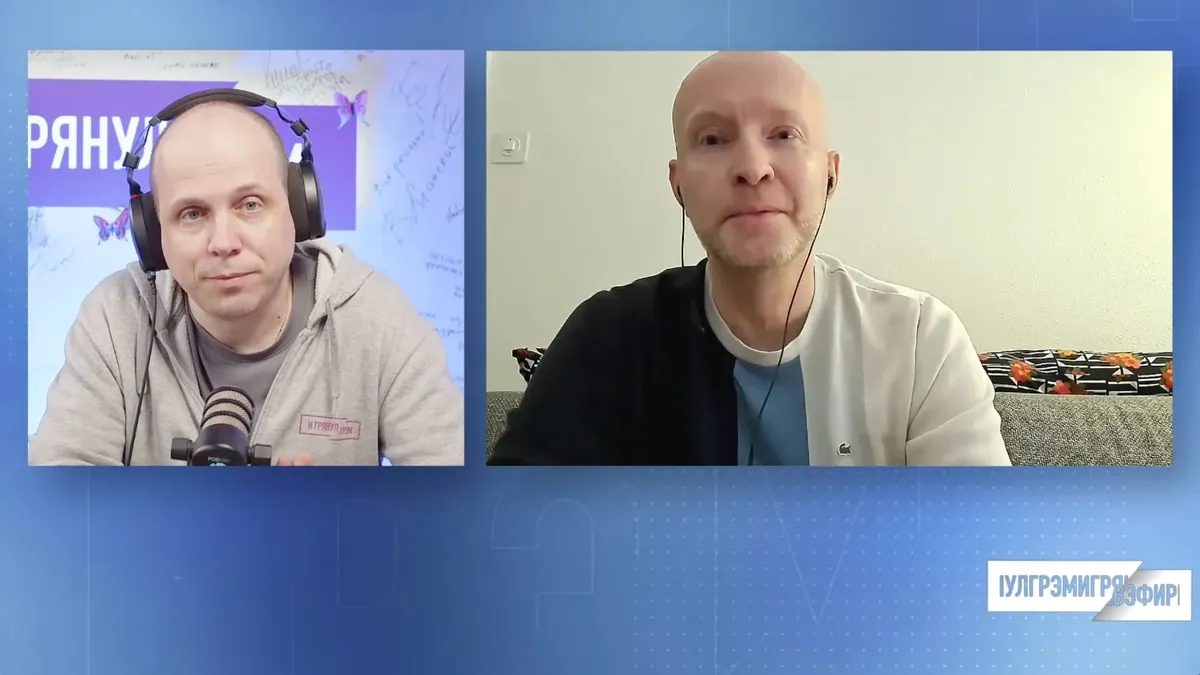
A little-known character appeared on the “And Graham Shot” channel - the former editor-in-chief of the “Vesti” program, and now (according to him) a political refugee in Switzerland, Dmitry Skorobutov. Vadim Radionov, one of the best interviewers on the Russian-language YouTube space, had two large conversations with him at once, which, like the choice of a “hero,” is also not quite typical for “Graham” - usually “first-timers” come to Radionov: famous political scientists, journalists, scientists, cultural figures. Right there, literally out of nowhere - Skorobutov, he, as it turned out already during the second interview, asked himself and, if not immediately, he did give out a real sensation, which was instantly picked up by other bloggers and YouTubers: allegedly, since 2011, a special edition of Vesti has been recorded and edited for Putin in a single copy! For what? For what?
Let's listen.
“Do you know what they called him? "Chief Spectator" Putin went to VGTRK under the code name “main viewer”. It was like that. Let’s say that at 20 o’clock VGTRK broadcast a regular episode of Vesti. After which the release team remained. We had the appropriate instructions - what news to leave in this issue, what to add, where to embellish what, where to remove what, so that Putin would then be shown an ideal picture of the beautiful Russia of the present. That is, he is such a good president and on TV, look how well they talk about you. This means, indeed, everything you do is right. And this is how they recorded it... Alexey Gromov and Dmitry Peskov played it for him... And it was such an illusory idea of reality. And this started around 2011, probably. They were all shocked by Bolotnaya. And they tried to begin isolating him from real events, from the information environment, not to mention contacts with the outside world... This amazed me... I got one issue like this, it was an exception. This was mainly done by my colleagues Andrei Kondrashov, Ernest Matskevichyus, those whom you still see at 20.00.”
I rummaged through my memory and my own publications of that time. The first Bolotnaya took place in Moscow on December 10, 2011. It was agreed upon with the Moscow authorities, went off peacefully, and it’s unlikely that even then it “shocked them” all that much, especially since federal television channels did not say or show anything at all about the largest protest rally in the history of Russia, and when bits of information did break through to the airwaves, the number of protesters was reduced significantly, and they themselves were called a pitiful bunch of outcasts.
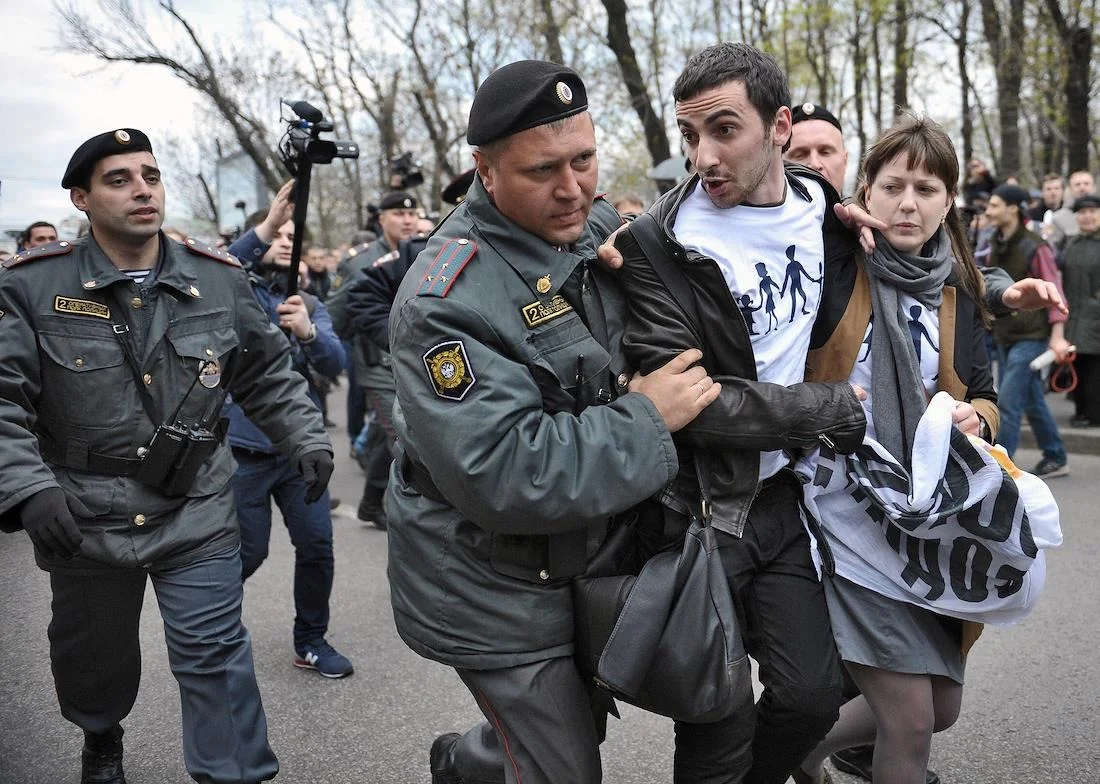
This continued to happen until the final suppression of protest activity. It’s a little strange that the chief editor of the news program has been talking about the “shock of Bolotnaya” since 2011, when, by the way, the “main viewer” was not even the president, but headed the government, while the current president generally proclaimed the advantage of freedom over lack of freedom. Well, okay, let’s say my memory failed...
Vadim Radionov, having noticed some inconsistencies in his interlocutor’s speeches, logically asked: why not show Putin the Moscow editions, which had already been sufficiently censored? Why make separate ones, even more varnished? “To further varnish reality, to embellish it even more, to show him even more how Russia is prospering and how much the West is rotting,” Skorobutov was not embarrassed. “And what I see now is a nightmare.” He doesn’t know anything at all.”
Skorobutov’s revelation about special news for Putin recalled the story of the Portuguese dictator Salazar, for whom for several years a single copy of the country’s main newspaper was printed every day, in which there was no bad news - only articles about the stability and prosperity of Portugal.
True, there is a nuance. After a stroke in 1968, Salazar actually ceased to govern the state, and those around him until the death of the dictator in 1970 misled him so as not to upset him. And he had no other sources of information, which cannot be said about Putin in 2011. Even if we assume that the news was filtered or falsified for him, 15 years ago he was quite capable, active, energetic and professionally suspicious to rely entirely on the television picture and take the word of the television people.
I decided to conduct my own fact-checking by privately contacting people who worked at VGTRK in the years designated by Skorobutov. These people no longer work there either; some have left Russia and have an extremely negative attitude towards the ruling regime here, towards Putin, towards TV and propaganda. And here is their collective opinion: “We know (knew) this one. We didn’t work personally, but we heard about him... he was fired due to a conflict with some colleague. We saw this fragment of an interview on Graham, where he says that a separate episode was recorded for Putin. The dude is talking nonsense. It seems that he is simply lying, or at least fibbing. Why is it unclear? Perhaps he lost his mind. Or maybe I just wanted fame and attention.”
This question is “Why did you decide to give us an interview?” — Vadim Radionov couldn’t help but ask Skorobutov at the end of the second interview. “...I was silent for a very long time ( I was not silent, I gave several interviews after leaving Russia, but I saved the main “sensation” for Graham. - I.P. ). Now, since I was silent for so long and I know so much, as they say, it broke through, and I wrote to you.”
By the way, there are a lot of other funny things there: stop lists in A4 format (“I have them, I’ll show you another time”), outdoor surveillance that followed on his heels, the FSB and the Ministry of Internal Affairs with threats to “roll him into asphalt” because “Dima, you know too much,” and “if I had published the documents that I have, Elvira Nabiullina wouldn’t be under house arrest now ( that’s right! he has his own sources everywhere. - I.P. ), and Oleg Dobrodeev.” Plus “they called me from Brussels: Dima, what do you think ( who should be sent under sanctions - I.P. )? I say: this, that and that.”
Why not Khlestakov’s notorious “35 thousand couriers alone”... And further in the text: “The State Council itself is afraid of me... I go to the palace every day. Tomorrow I will be promoted to field marshal... ( He slips and almost falls on the floor, but is respectfully supported by the officials. )
AUDIO VERSION
This material has an audio version on Youtube. Read by Irina Petrovskaya.
Petrovskaya recommends
“Psychiatric hospital as a punishment. Investigation into torture."
A very scary film about what is happening behind the walls of Interregional Tuberculosis Hospital No. 19. In it, the authors collected testimonies from victims and their relatives about how the victims ended up in the psychiatric department of MTB-19 and what punitive psychiatric practices they use there as a tool of pressure or isolation of patients.
Andrey Zvyagintsev about “Minotaur”: a long interview with Anton Dolin and exclusive photos from the filming
The first big interview between director Andrei Zvyagintsev and film critic Anton Dolin* after his triumphant victory at the Cannes Film Festival. The conversation, however, is not only about his triumphant film “Minotaur” and his speech at the presentation of the Grand Prix, but broader: about the role of art, work in exile, catharsis and creative plans.
Kevin Spacey: Cancel Culture, Epstein, Trump and the Oscars
The most unexpected hero of the latest episode of the channel “Beware: Sobchak” is Hollywood superstar Kevin Spacey, who became a victim of the so-called cancel culture. Nine years ago, he was accused of sexual harassment and violence, after which all Hollywood studios terminated their contracts with him. After many years of legal proceedings, all charges against the actor will be dropped, but he is still forced to start his life almost from scratch, because, alas, cancel culture has no way back.
"Alphonse, seducer, destroyer." Russian director on Broadway about Oscar, Odessa and love in spite of
And here is a victim of cancel culture in the Russian version, so to speak: one of the most interesting and promising directors in Russia, Alexander Molochnikov, the hero of Irina Shikhman’s new release* “Should we talk?” It was canceled in his homeland, first by removing the director’s name from the posters of the Moscow Art Theater and the Bolshoi Theater, and then by removing the performances themselves that he staged. Molochnikov started life from scratch in New York. He is 35 years old. Achievements in three years - a play on Broadway, a film on the Oscar shortlist, a relationship, as they now say, with producer Odessa Ray and creative plans in which, alas, Russia no longer appears.
"Old Believers". Film three
In 2020, the Editorial Board spoke about the descendants of Russian Old Believers peasants who moved to the Far East from Brazil. In 2022, she made a second film about how the Old Believers settled in their historical homeland. And now, four years later, a new film: what is happening in their lives now? What do Old Believers think about political life in the country? Has anyone returned to South America? Do they regret moving?