
Translated material
Decommissioned people
What made the president talk about the “schism” again and why the authorities are trying to separate more and more social groups from society

Illustration: Petr Sarukhanov / Novaya Gazeta
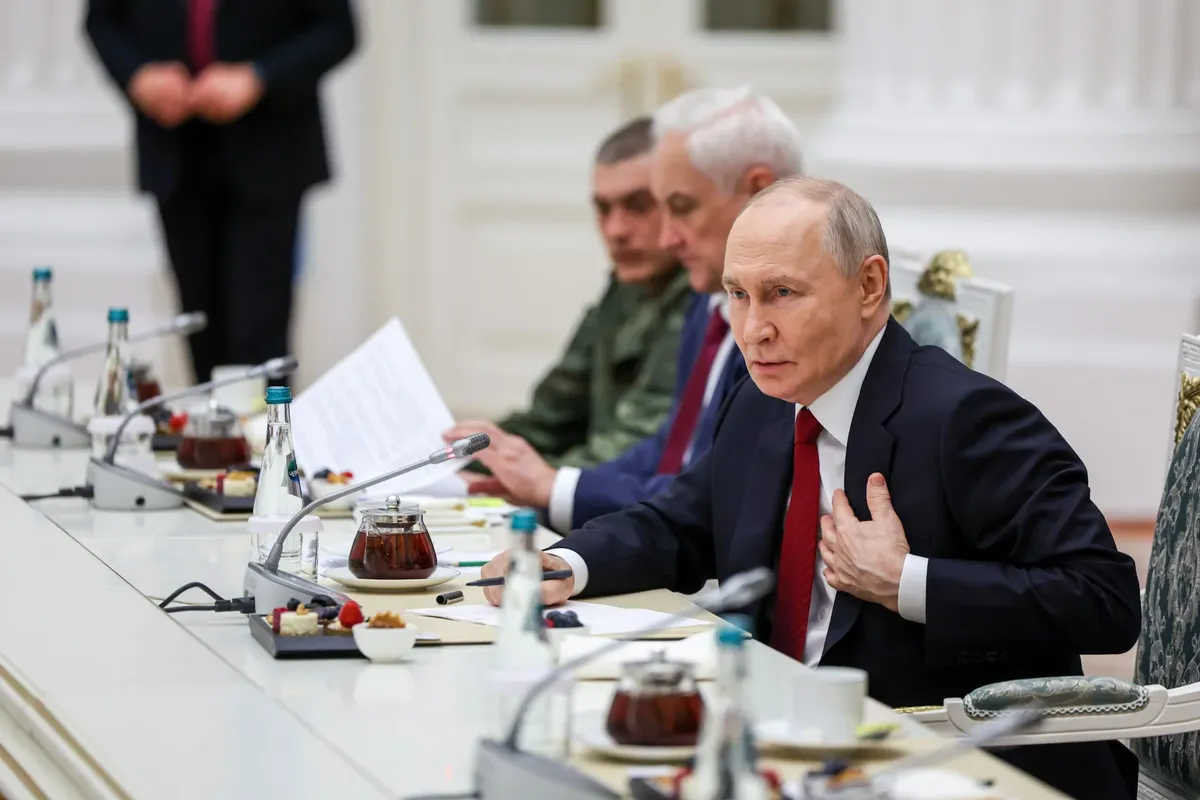
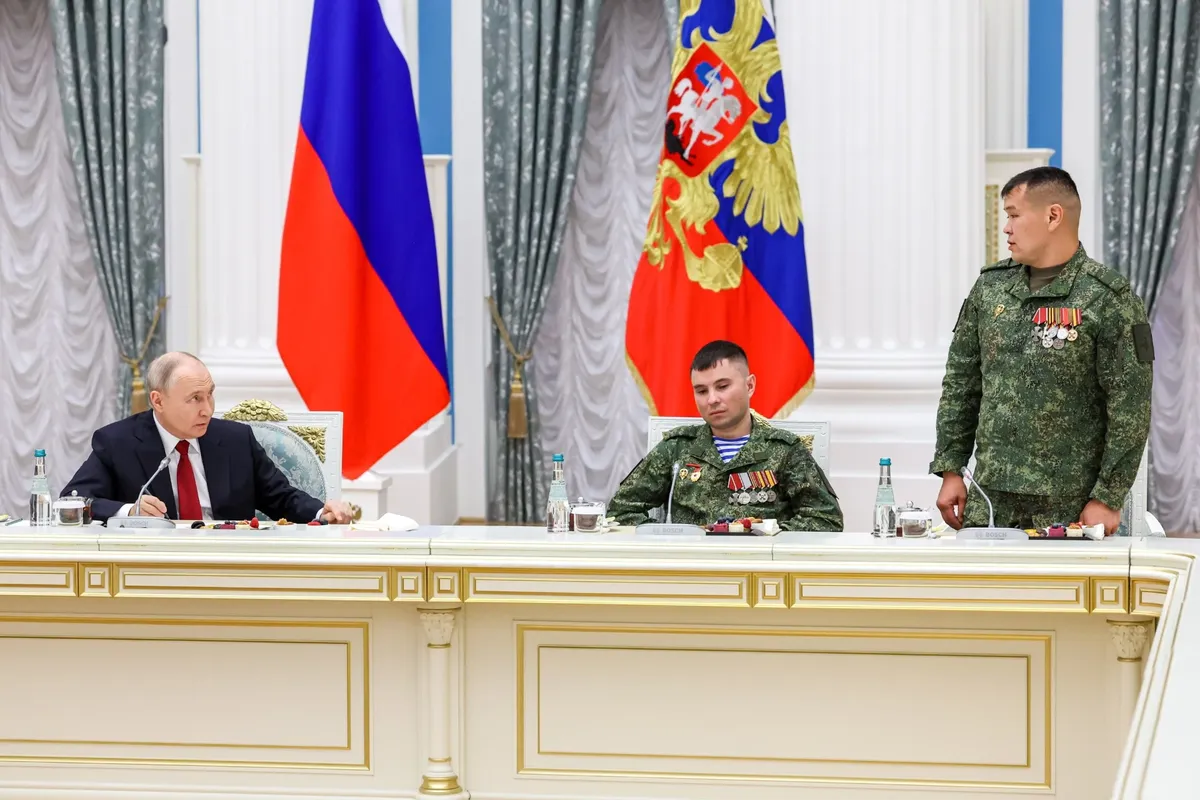
At a meeting on Russia Day, President Putin explained to the participants of the North Military District: Ukraine is increasing the use of UAVs “mainly to solve one problem - to create a split in Russian society...”. The topic of splitting is not new to him, but a direct connection with drones is somehow not visible.
You can split something whole: a log, a vase, a party, an elite - but not a society, which is not homogeneous, but always already consists of heterogeneous parts. It contains minorities that “break away” and become isolated for a variety of reasons. One and the same person can identify himself as a member of different minorities and claim to be represented in this capacity - this is how we restore connection with the whole and do not find ourselves “extra.”
No taxation without representation (“No taxes without representation”) - under this slogan the English colonists fought for the independence of the United States. But the opposite should also be true: everyone who pays taxes should be able to control their spending, and for this purpose have their own representative in parliament.
Representative democracy is the way of such representation.
The opposite approach, practiced on behalf of the majority, is the stigmatization and marginalization of minorities. The search for “enemies” and persecution of those who are different brings the majority together at some biological level, this is know-how.
But in this case, it is hardly true to talk about a split - we are more likely talking about a “breakaway” or “scol,” about rejection, when a smug majority writes off a certain minority into fragments: Jews, bourgeois, “liberals,” LGBT* people, etc., depriving them of rights and representation.
Within the framework of democracy, non-governmental organizations that unite people by interests also organize themselves. Members of some NGOs claim to participate in representative bodies at the national and regional levels (for example, environmentalists, “greens”), and more often “do not engage in politics,” but the totalitarian state views even philatelists and cat lovers with suspicion. It allows and even encourages the creation of NGOs, even paramilitary structures, but these are always organizations of the majority, controlled by the state, and minorities, with the help of quasi-legal practices, are deprived of the right to association (by the way, enshrined in the Constitution of the Russian Federation).
Where representative democracy works, albeit always with certain shortcomings, “split” threatens only individual parties and organizations (cat lovers are especially prone to this), but not society as a whole: conflicts at this level are resolved in representative bodies. The real danger of a split in modern Russia is connected precisely with the lack of representation of significant minorities at the national level.
* * *
In the late Soviet era, which modern cinema glorifies without really understanding it, there were no such splits in society, with the possible exception of national movements in individual republics. Those whom current propaganda labels as “liberals,” but at that time they were most often called “Soviet intelligentsia,” were widely represented in the party apparatus, not to mention creative unions. At the everyday level, the majority and minorities experienced conflicts and misunderstandings, but there was no antagonism or bullying - this feeling of equal dignity will be confirmed by anyone who entered adulthood in the 70s and 80s - and that same Vladimir Putin.
The current opposition between “patriots” and “liberals,” that is, the majority versus the minority, was artificially grown with the help of quasi-legal practices at the legislative and law enforcement levels. Perhaps this is a consequence of the pathological desire for “unity,” which is simply unthinkable in a complexly organized society.
The “breakaway” was planned back in 2001 by the creation of the United Russia party, which, starting in 2003, squeezed out fragments of parties representing “liberals” from representative institutions: the State Duma and local legislative bodies.
In 2005, according to the idea of the deputy head of the presidential administration, Vladislav Surkov, the “Ours” movement was created, its very name indicating that there were some “not ours” in the country. In 2010, in the camp on Seliger, “not ours” were represented by an installation: the plastic heads of Lyudmila Alekseeva, Yuri Shevchuk, Ilya Yashin** and others in fascist caps were mounted on stakes.
Let us note in passing that this is in its pure form the contents of Article 282 of the Criminal Code of the Russian Federation: “actions aimed at inciting hatred or enmity, as well as humiliating the dignity of a person or a group of persons on the basis of... belonging to any social group, committed in public.” Here is part 2 - by prior agreement, but this agreement apparently included release from all responsibility.
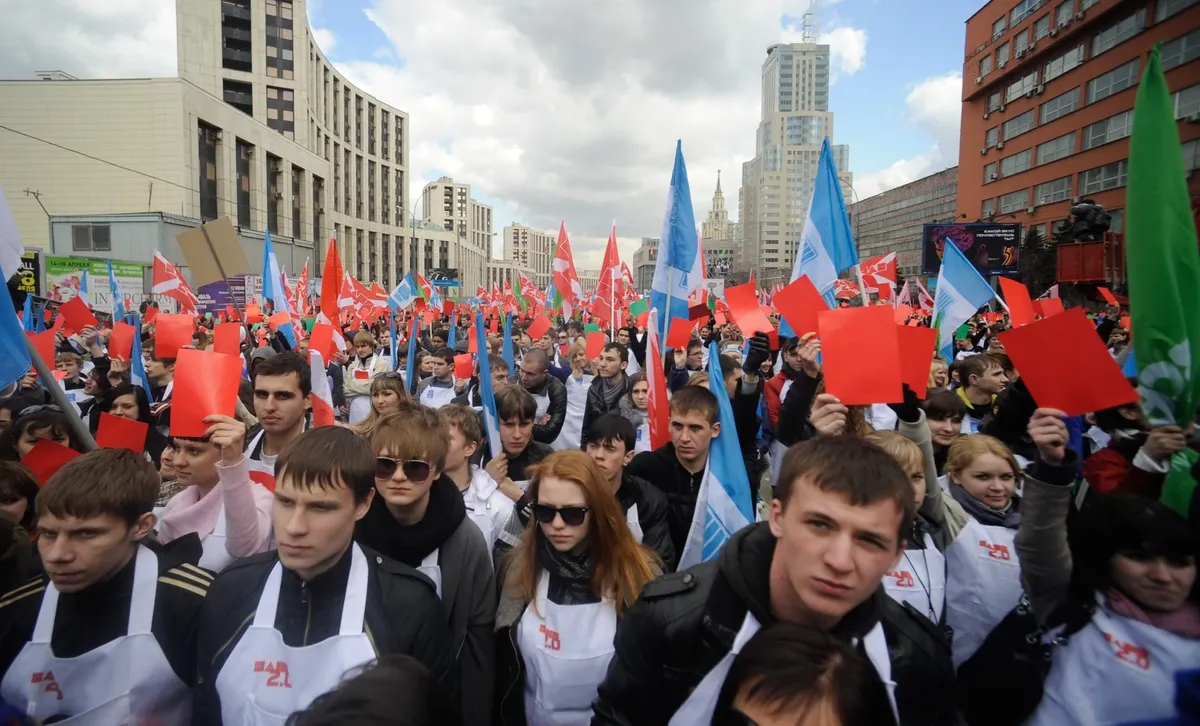
In December 2011, against the backdrop of rallies against the falsification of election results and the “castling” of Putin and Medvedev, the presidential administration found itself at a fork in the road: to allow the protesters to be represented in politics or to tighten the screws. The second path was chosen.
Then, during a teleconference with the president, the head of the Uralvagonzavod assembly shop, Igor Kholmanskikh, said: “If our police cannot cope, then the men and I are ready to go out ourselves and defend our stability.” Putin appointed Kholmanskikh to the post of his plenipotentiary representative in the Ural Federal District, that is, he actually recognized himself as the president not of the entire people, but only of the majority.
The final split into “ours” and “not ours” was sown in July 2012 with the advent of legislation on NPOs - “foreign agents”. The further development of this legislation and the accompanying rhetoric stigmatized not only those who formally “came under foreign influence,” but also “liberals” in general. The constantly expanding register of the Ministry of Justice has become a list of people who have been written off from society, “who should not be.”
The beginning of the Northern Military District squeezed out of Russia - temporarily or forever - hundreds of thousands of highly qualified, mostly young people, and law enforcement agencies are doing everything to completely break their connection with their homeland.
What are they (we) to blame for? Only in attempts to ask the question: where, in fact, are the successes of the “majority”?
* * *
Political philosopher Jacques Rancière developed the concept of “dissent,” which is also the title of his main book. Disagreement is a fundamental feature of any society, resulting from the fact that people “simultaneously understand and do not understand each other” - this is exactly what our current attempts at discussions about patriotism and about SVO are like.
“Majority” is a fiction; there is always an unaccounted (not represented) part or parts of the whole. The struggle of these unaccounted for a new order of equality—this would be politics according to Rancière. But politics is a rare phenomenon: societies are usually in a state of “police” - this is when everyone sits on the square assigned to him and no one raises the question of a new order of equality. The results of sociological surveys suggest that there are about 20 percent of those who disagree in Russia, that is, about 30 million people, but their organizations and the media have been destroyed, and their voice is not heard.
In parallel with the stigmatization of “liberals,” the Putin administration adopted the informal (but state-forming) practice of the CPSU, according to which key and simply leadership positions can be held only or predominantly by members of United Russia. And in general, in order to live in peace and eat your bread and butter, it is better not to “talk.”
People are adapting: over a quarter of a century of such a policy, those who disagree have not only become quiet, their number has actually decreased, including many representatives of the traditional intelligentsia who have sold their souls to the devil of prosperity and external success.
But on the board laid out in this way, some changes are brewing, and politically experienced functionaries catch them. Those who returned from the Northern Military District have not yet raised the question of a new order of equality in an organized manner, but most likely they will do so, which cannot but worry today’s elite. In the struggle for their privileges, they will seek support from the “people”, and this can bring the country to the brink of civil war. And only those who are not accounted for and “written off” today can prevent this.
Ukrainian drones do not provoke a split in Russian society, which, under a thin film of state propaganda, is split, first of all, by the Putin system itself according to the principle of “divide and conquer.” The lack of clear “victories” in the protracted special military operation only contributes to the manifestation of this split: the propaganda film is torn, which forces the president to take out the old scarecrow about the “schism.”