
Translated material
“There is no instability - everything is consistently bad”
“There is no instability - everything is consistently bad.” It's getting more difficult for small businesses. We talked to St. Petersburg entrepreneurs from different fields
The economic crisis, customer outflow, blocking of social networks and internet shutdowns are putting more and more pressure on businesses. In St. Petersburg, some small and medium-sized enterprises are closing, others are forced to reduce staff and production, and others are going into “survival mode.” Entrepreneurs burn out and lose motivation.
Bamaga spoke with businessmen from different fields about how the blocking of Telegram affects their work, why fashion brands are urgently closing locations, what problems are being talked about in the business community and how they are trying to cope.
“I’m always trying to fix things that are broken on purpose.” How entrepreneurs survive under new restrictions
Anna Bidun opened her business in 2019. She was the first in Russia to develop “barefoot” shoes, which allow the foot to be in a freer position, to be functional and flexible. The entrepreneur has her own office in St. Petersburg and self-employed employees: two salespeople, SMM assistants, a marketer and an outsourced accountant.
As Anna tells Paper , a sharp drop in sales began in 2025. Since then it has been impossible to return to the previous momentum. Now she sells some goods - for example, sandals - at the same price and breaks even, while others have sharply increased their prices so that the business can continue to operate.
“For buyers it was a shock, but for us it was a survival zone. Now we can work with these prices, but it’s difficult for people. Previously, people bought more easily - they could buy two or three pairs of shoes. Not now,” says Anna.
Increasing taxes and introducing new ones became an additional problem. From January 1, 2026, the conditions for small businesses on the simplified tax system and patents have changed in Russia: the income threshold above which one must pay VAT was reduced from 60 to 20 million rubles, and the tax rate itself was increased from 20% to 22%. If Anna used to give 500 thousand, now she gives a million for the same thing. According to her, in order to adapt to all the changes, she had to not only raise prices, but also actively look for new clients and work “ten times more” and seven days a week.
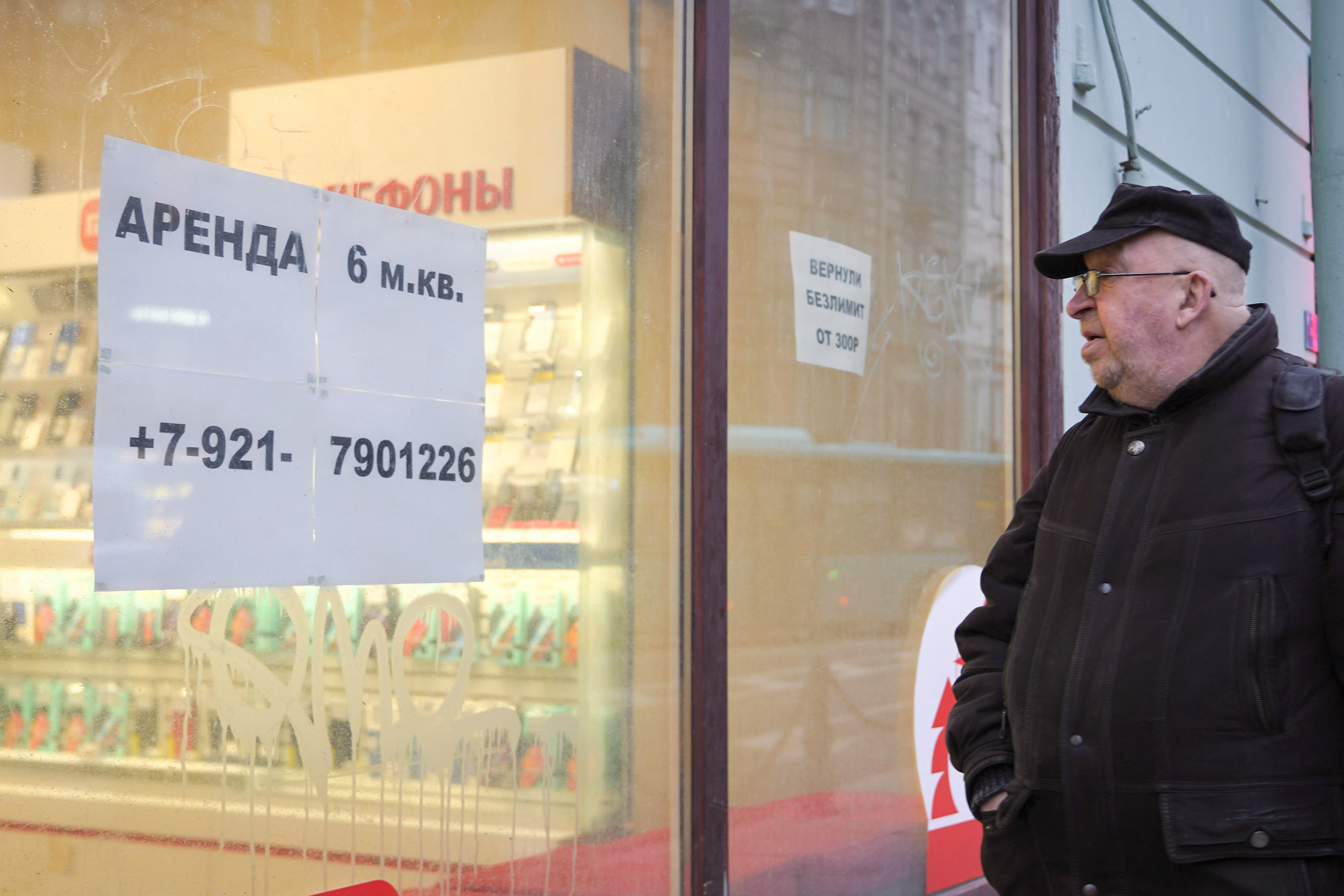
Anna’s business was hit hardest by the Telegram blocking and Internet shutdowns. The entrepreneur conducts sales through social networks, and due to new restrictions, she had to switch to cellular communications and provide Internet access to the office - this added additional costs. Internet shutdowns have also had a negative impact on sales themselves: people cannot place orders, and the reach of posts on social networks has decreased.
“I just want to work and come up with ideas that will help me grow, and not figure out how to make my work more or less sane. If I come and there is no Internet, I spend the whole day thinking about how to make it. We still need to figure out how to make telegram work. I always try to fix things that are broken on purpose,” shares Anna.
Over the past year, small businesses and individual entrepreneurs began to close more often by 10%. This is higher than the Russian average. Motivation decreases. Only 23% of businessmen are completely ready to continue their business, and 39% of companies are now operating in survival mode. This is the maximum since the pandemic.
"We're moving towards making alcohol as simple as possible." How do establishments survive?
Back in 2025, more than two thousand restaurants, about a hundred bars and about 300 cafes stopped operating in St. Petersburg—there were almost 40% more closures in the industry than a year earlier. Turnover has also decreased, experts attribute this to the desire of customers to buy ready-made food in supermarkets and delivery.
At the beginning of 2026, dozens of well-known projects announced the cessation of work: the restaurants “Spices and Joys”, “Futura Bistro”, Tytto Bakery and others. Large chains also began to close locations - Shokoladnitsa, for example, abandoned about 40 of its coffee shops.
The Dead Poets bar has been operating on Zhukovsky Street since 2013. People came there for signature cocktails and an intelligent, creative atmosphere. The establishment announced its closure in February 2026.
One of the founders of the bar, Vladislav Zholudev, told Paper that the main reason for the closure was the human factor and the inability to come to an agreement with the landlord, who greatly increased the price. In recent years, the bar - like other St. Petersburg establishments - was not in the best situation; every year it became more and more difficult to keep the business afloat.
“We would have survived, but that’s what we survived. They didn’t flourish – only at the level of survival,” says Zholudev.
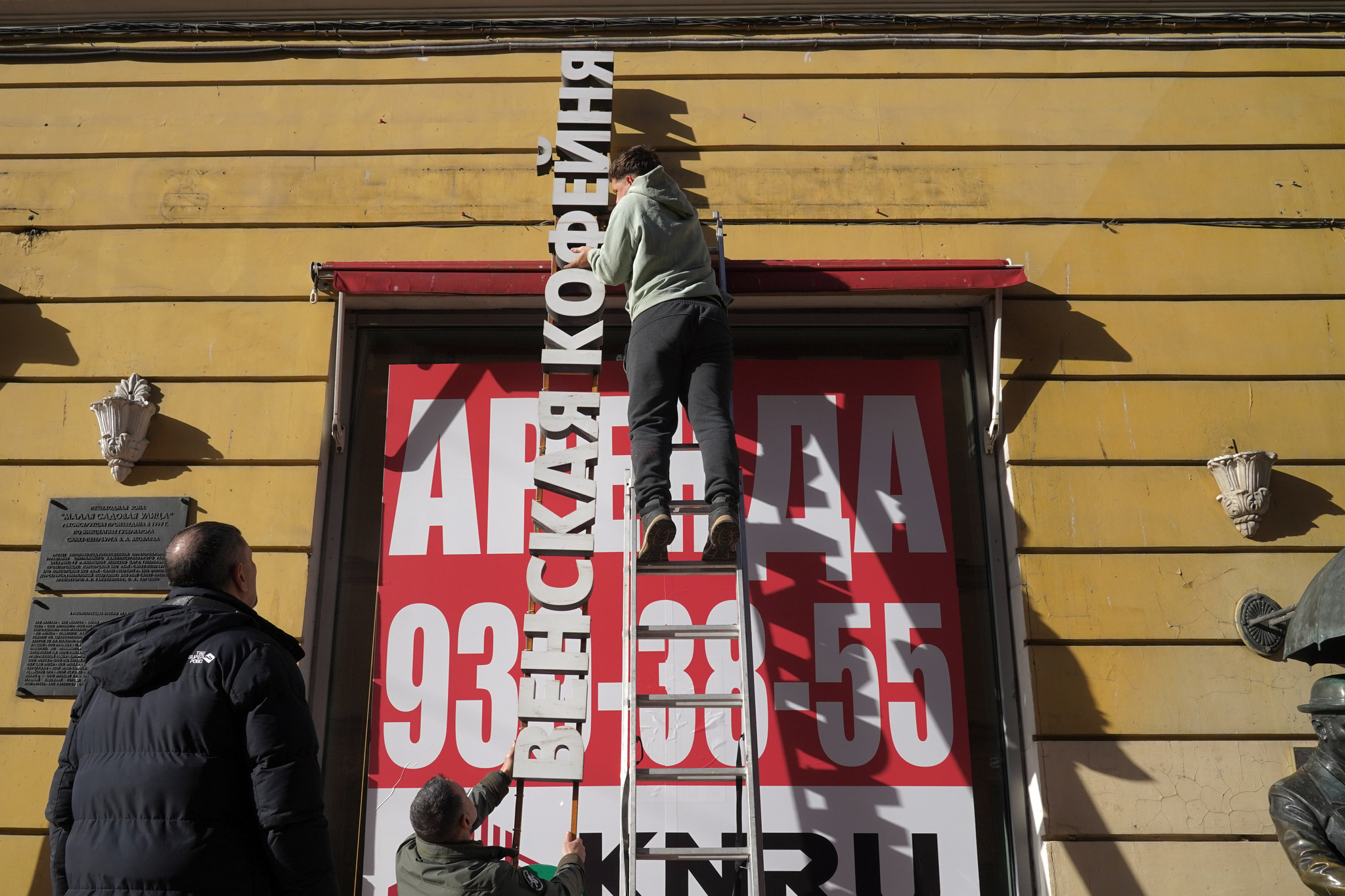
According to Vladislav, the first blow to business happened during the pandemic, the second in 2023, and the third in the fall of 2025. At that time, bars were hoping for the New Year season of 2026, but 80% of establishments failed.
The main problems of city bars were pressure from the authorities, including the law on “nalivayki” , due to which several establishments were closed, as well as an increase in VAT against the backdrop of a decrease in purchasing power.
Clients began to go to glass shops with cheaper and simpler alcohol or to chain establishments where there are discounts and cashback.
“People choose something simpler, more understandable, for reasonable money - so that there is more, rather than tastier. If you look at the entire history of public catering: the less money people have, the simpler the alcohol. We are cheerfully and cheerfully moving towards the simplest possible alcohol. In a few years there will be spills and the simplest alcohol without any meaning,” shares Zholudev.
“Now everyone is focused only on saving the ship.” How does a fashion business survive?
In St. Petersburg, for the first time since the early 2000s, the number of stores decreased —for the first time, there were more closures than openings. In the clothing segment, the reduction was even more noticeable - over the year there were almost 10% fewer stores.
The fashion segment was especially hard hit. According to experts, in 2026, up to 40% of clothing stores in Russia may cease to operate . The Zenden , Modis and Gloria Jeans chains have closed most of their locations or are planning to do so. The St. Petersburg brand Gate31 was on the verge of closure: at the end of the first quarter of 2026, the loss amounted to 31 million rubles, and revenue decreased by 26%.
The women's clothing brand Osome2some has been around for 18 years. Since 2008, entrepreneurs Anna and Natalya have been producing and selling clothing, mainly outerwear: coats, trench coats, jackets. In 2016, the founders moved to Tuscany: there they purchase Italian materials and send them to production in St. Petersburg.
“We have a strong reputation as a coat brand. We work with very cool compounds, cool fabrics, and make insulated coats,” Natalya tells Paper .
Initially, the brand had a store in St. Petersburg in the creative space “Tkachi”, and then on Nevsky , but in May 2026 it closed - only a production showroom remained. The Moscow store of entrepreneurs moved to “more modest premises.”
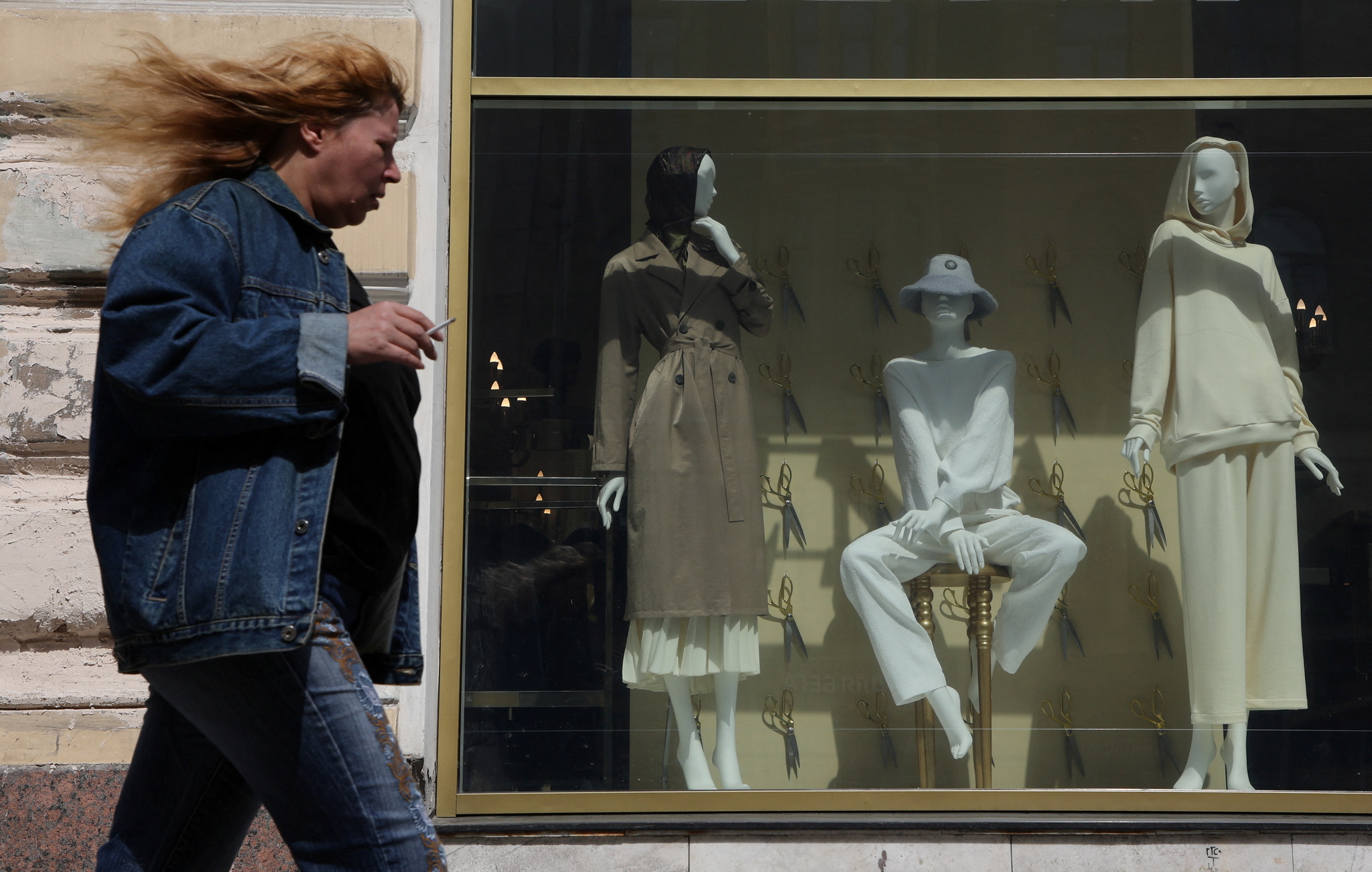
The staff had to be reduced. Now in production there are five tailors, a designer-technologist and a production director, and they have refused to employ operational directors, marketers and SMM specialists. Now entrepreneurs perform these functions themselves.
“Honestly, this way we feel much more confident at this moment, because it’s easier to make decisions,” admits Natalya.
During its existence, the brand has gone through several crises, but the current one, in her opinion, is the most serious and turning point.
“We hoped that the situation would stabilize, but a very noticeable economic decline began, which showed itself in all its glory in 2025. Then it became clear: the economy is changing and it is necessary to disband the entire staff that does not directly affect sales. We have reduced all optional expenses and revised the matrix ,” said Natalya.
The entrepreneur calls the decrease in purchasing power the main problem - in her opinion, the client has become very selective. Previously, a buyer could come for a coat and buy several additional items, but now they only take one specific item at a time.
“The buyer is now becoming selective, so those brands that survive are those that offer not a product of poor quality or a one-day pattern, but something that is timeless and will retain its appearance for a long time,” Natalya shared.
To overcome the crisis, the brand is introducing new promotions and discounts, working with regular customers and practicing custom tailoring with non-standard sizes and requests.
“Everyone is focused only on saving the ship so that it does not sink.” Small business sentiment
Entrepreneurs talk about their difficult, melancholic and anxious state, as well as professional burnout and a decline in motivation. Natalya, founder of the outerwear brand Osome2some, notes that now we have to put in much more effort, but the return is less than just a few years ago.
“The main problem of founders and creative directors is that instead of moving forward with creativity, implementing interesting ideas, trying something new, now everyone is doing only one thing - saving the ship so that it does not sink. Because of this, that same impulse and motivation is lost - it turns out that you are just engaged in rescue,” shares Natalya.
The owner of the barefoot shoe brand Anna Bidun also says that work has become more difficult, but the business is simply standing still - “not growing, but not falling either.” Due to the unstable situation, she explains, it is difficult to decide on new ideas and expansions.
“The stress is enormous because you don’t know what will happen next under the ban. I used to work with pleasure: you come to your job and realize that you have people, customers, you want something new. I am very ideological, I always have a lot of ideas, but they constantly don’t let you do your work, they put pressure on you. But I want to work, I want to earn money. But if I’m constantly not allowed to do this, do I want to? I don't want to anymore. Seriously, I don’t want to anymore,” says Anna.
Entrepreneurs complain that it is impossible to plan for the long term - it is unclear what the situation will be in a couple of months. Natalya says that if previously it was possible to plan for six months or a year, now entrepreneurs consistently plan only for a week.
“Although, to be honest, I have hope that they will poke us in the face now, and then they will give us a carrot - some kind of relaxation. We will all begin to love, rejoice, there will be a euphoric effect. We will all forget the bad, and only good things will happen to us,” shares Anna.
Due to the general crisis, not only individual establishments, but also the entire bar culture are suffering, says Vladislav Zholudev, founder of the Dead Poets bar. In his opinion, restaurateurs who are now forced to close their businesses have helped ensure that this culture has developed in Russia over the past 20 years at the level of Europe and America.
The restaurateur notes that for establishments, 2026 was the end of an era and a gastronomic breakthrough that had lasted since 2005. Zholudev continues to lead another project - the Douglas pub. He also survives, the entrepreneur admits.
The entrepreneur has no plans to restart Dead Poets. In his opinion, in this case, it would be necessary to spend a lot of resources and effort on a new team and place in order to work, at best, to zero in the next two years.
“Instability has always been there. For me personally, it all started in 2020. But now there is no instability - everything is consistently bad. There is a stable understanding that things will not get better - at least for the next year and a half for sure,” Zholudev added.
Cover photo: Valentin Antonov / TASS
How to survive difficult times? Together 💪
Support our work - and we will help you look for solutions where it seems there are none
What else to read:
- The problems of Rubinstein and Nekrasov are typical of bar clusters around the world. They asked the researcher how such conflicts are resolved and how the fight against bars in St. Petersburg might end .
- As a political scientist and cycling activist, they work as couriers. Two views on food delivery in St. Petersburg in 2026.