
Translated material
Don't be a censor of feelings
On both sides of the wall. Lev Shlosberg* on why prison encloses not just one person, but a whole family

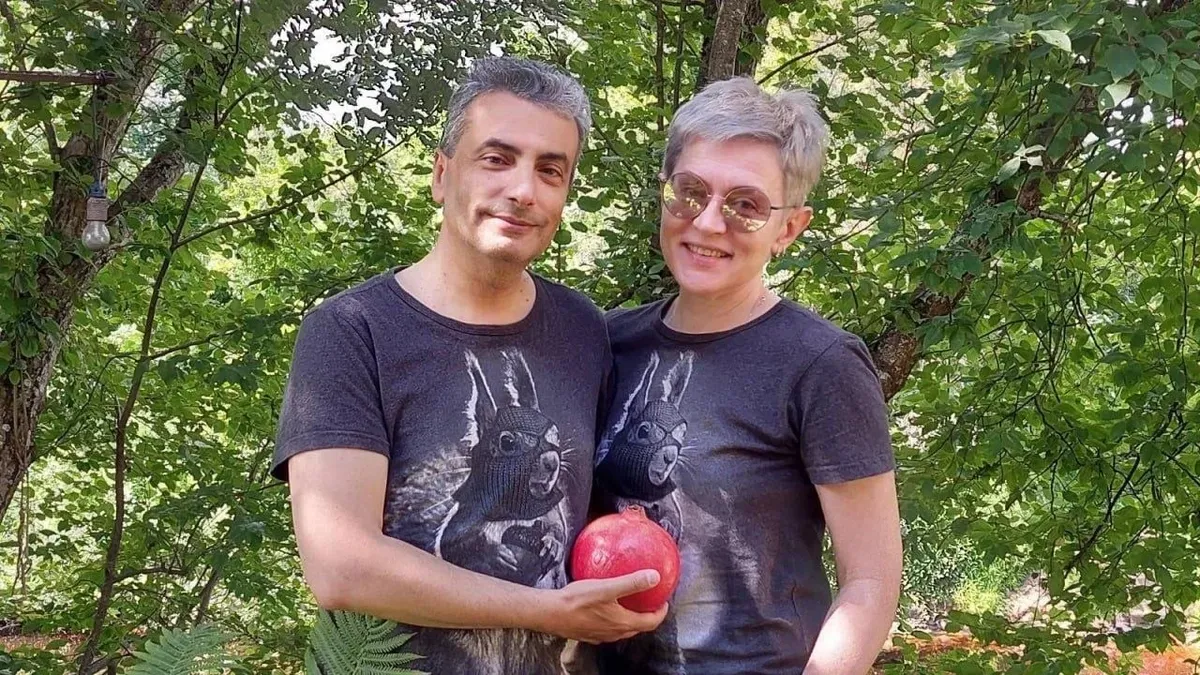
Lev Shlosberg with his wife before being taken into custody. Photo: Stepan Baranov / Pskovskoe Yabloko
18+. THIS MATERIAL (INFORMATION) IS PRODUCED, DISTRIBUTED AND (OR) SENT BY FOREIGN AGENT SHLOSBERG LEV MARKOVITCH OR CONCERNES THE ACTIVITIES OF FOREIGN AGENT SHLOSBERG LEV MARKOVITCH.
We continue to publish the prison diaries of politician Lev Shlosberg*. We're the next to start his trial. You will be able to see your loved ones in court. This chapter is titled “Family and Prison” by the author.
Relatives and prison
It is more difficult for the family of a person who ends up in prison than for a person who ends up in prison.
A person in prison knows every minute what is happening to him. His family doesn't know what's going on in prison every minute.
Having adapted to life in prison, a person ceases to feel anxiety about his existence. The protective psychological reaction of habituation and adjustment in prison life save a person from daily overstrain and create an atmosphere, if not of safety, then of understanding of all living conditions.
For relatives, such a view is difficult both physically and psychologically. A loved one asks himself the same questions every day, almost every hour. How is he doing? Are you healthy? Full? Warm? How does he sleep? What does it eat? How do they treat him? Who's next to him? What mood is he in? What is he thinking about? How much strength does he have to withstand prison?
The ring of these questions inexorably revolves around a loved one, does not give him peace, deprives him of the joy of life. In the eyes of relatives, prison is always worse than it really is. What is happening in prison from behind the walls of the prison is unknown, incomprehensible and for this reason scary.
The reading of a letter from prison always occurs after the hour of its writing. Prison deprives a person and his family of communication in real time. It is impossible to touch with your hand, it is impossible to hug, it is impossible to get a response to any question at any moment. The unknown consumes a person living in prison and his family. And the unknown is sometimes worse than bad news, because people who are in the unknown can create in their imagination any of the most dramatic and even tragic pictures.
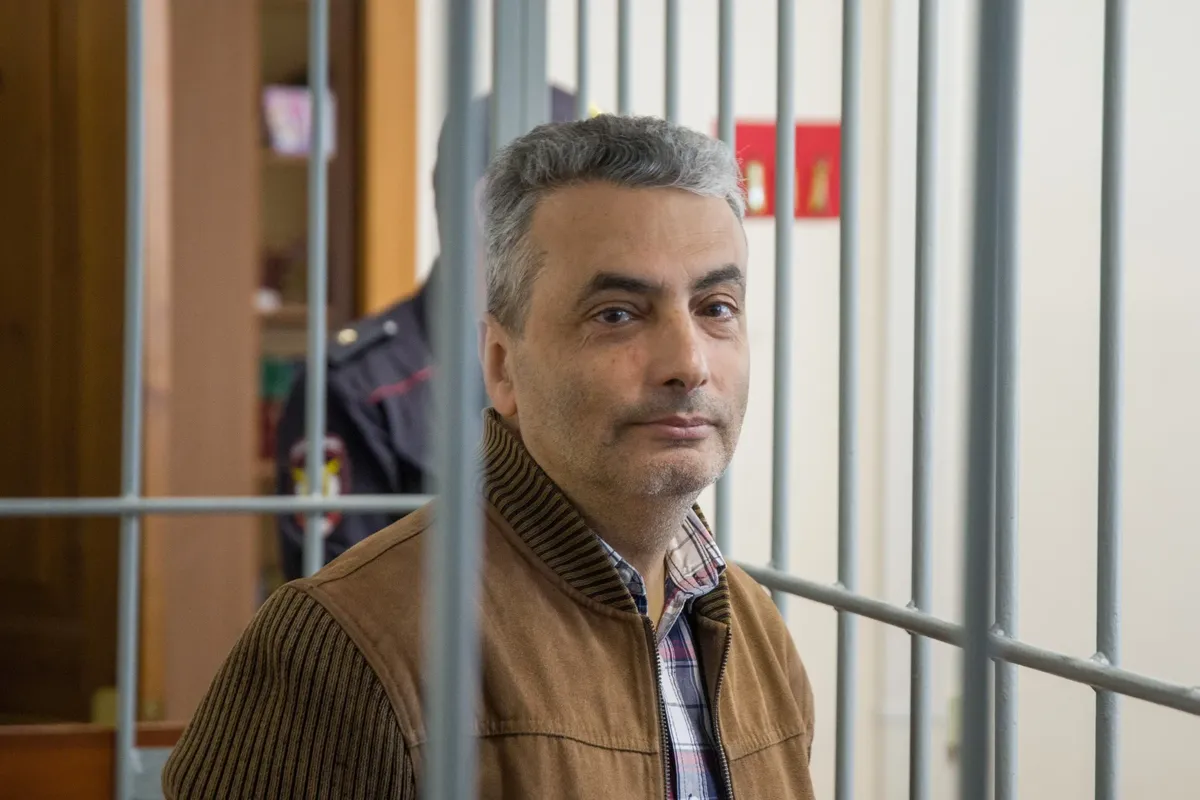
There are two closest touches between a person living in prison and his family: 15-minute telephone conversations and 3-hour visits - the same conversation on the phone, but with the ability to see each other at arm's length through a transparent partition with bars. In the first case it is a touch with the voice, in the second - a touch with the voice and gaze.
A person in prison has a special concern for his family. They need to be consoled, supported, reassured - as much as possible. No one can do this fully. Separation can only be healed by return.
But it is vitally important what kind of house you return to, what state your family will be in when you meet, how they will see and perceive you after the ordeal of separation.
A person in prison and his relatives are equally tested by lack of freedom. They are trying to take away the whole world from a man in prison. They are trying to take away the most precious thing in life - a loved one - from the relatives of a person imprisoned. A man in prison and his family undergo the test of suffering. Suffering can destroy, dry up, and weaken. And the same suffering can strengthen, elevate, purify.
The greatest test of suffering is love. Prison separation excludes physical communication and destroys the personal space of two people, to which no one else should have access. The prison becomes a 24-hour spy, an uninvited witness to a deeply personal relationship between two people that no outsider should touch. Conversations are monitored, letters are read, it is impossible to hold each other's hands, it is impossible to be alone. Personal communication does not become public, but becomes transparent - completely, down to every word.
I searched and, it seems to me, found a way out of this state. I decided to ignore this irreducible transparency. I write the same letters that I would write from freedom to freedom, I decided not to be a censor for my thoughts and feelings, not to invent Aesopian language, not to go over with my loved one to words that have no truth.
In life, including in prison, only the genuine matters. Any simulacra is false. A feeling rewritten in an unfluent language loses its content and becomes empty. Every living thing must be called by its proper name. The space of feelings is not the territory of masks and pseudonyms.
Prison experiences all the natural feelings of a person - first of all, love and affection for loved ones. You need to prevent your feelings from becoming a victim of unfreedom, not to let unfreedom into your love, not to give your heart to unfreedom.
Separation is a dangerous poison. Separation destroys habits and traditions, breaks the very structure of personal life, snatches from people’s relationships bodily warmth and affection, the electricity of hugs and kisses, voices and glances. Separation makes human relationships and feelings intangible, as if it pulls the ground from under their feet and suspends them in the airless space of a prison.
Prison did not bring joy to life for anyone. All human feelings, connections, emotions, attachments and relationships are imprisoned with a person. Prison plunges a person into the unnatural world of blocked vessels of human nature. Deprivation of freedom is the deprivation of a person and his family of the opportunity to experience vital emotions and feelings; these emotions and feelings deprive the oxygen of natural human communication.
Prison creates loneliness within the family and tries to force people who love each other to experience separation alone, away from the warmth of their loved one.
Prison tests a person and his family with the temptation of withdrawal and oblivion. To survive prison, you must not surrender yourself and your family to the power of the prison; the morals and customs of the prison must not absorb your feelings.
Nothing is more capable of resisting unfreedom than love. You can fully preserve yourself in prison only by keeping within yourself, surrounded by the darkness of unfreedom, the light of love. A man in prison and his relatives are going through the ordeal of prison not side by side, but together. You understood and felt each other from half a word and half a glance - now you need to learn to hear, see and understand each other when a prison wall has grown between you.
The life of a person in prison and the life outside of it of people who have retained love becomes the road to a future meeting, the time before which can be a difficult test in itself. Long is always difficult. You need to see, understand and accept this road as a common path to freedom, every step along which - the size of one day, the size of one hour - steadily brings the moment of reunification closer, and every movement along which gives strength to live.
Pskov Prison Castle