
Translated material
How I found the root of evil
A Novaya correspondent went digging for hogweed dressed as a sunflower and, together with other “flowers,” learned to create meaning in a sometimes meaningless world
Sosnovsky's hogweed - those huge trumpet palms with an umbrella that accompany you along the roadside wherever you go - is one of the main plagues of Russia. And I say this now without irony.
An adopted child of nature, Sosnovsky's hogweed was first described by botanist Ida Mandenova in 1944 in Georgia, and she named it in honor of her colleague, researcher of the flora of the Caucasus Dmitry Ivanovich Sosnovsky. In the late 60s, Sosnovsky's hogweed began to be purposefully cultivated and introduced into the USSR as an agricultural crop. It seemed that a cheap-to-produce, high-yielding fodder crop had been found. But the idea was quickly abandoned: the smell of hogweed persisted in the milk and meat of the animals, their lips became swollen, but there were no serious health consequences. The same cannot be said about workers who received terrible burns due to toxins contained in hogweed juice.
After the collapse of the Union, agriculture in the country fell into decay - the endless expanses of the new country opened up for hogweed.
For the ecosystem of the middle zone, Sosnovsky's hogweed is an aggressive, highly invasive (that is, quickly spreading) species that has begun to uncontrollably take over territories and displace other plants.
In 2015, hogweed was given the status of a weed, and in November 2018, the first law in our country on the obligation of land owners to fight this evil came into force in the Moscow region. From March 1, 2026, by decree of Putin, the owners of all land plots in the country are now obliged to fight Sosnovsky's hogweed.
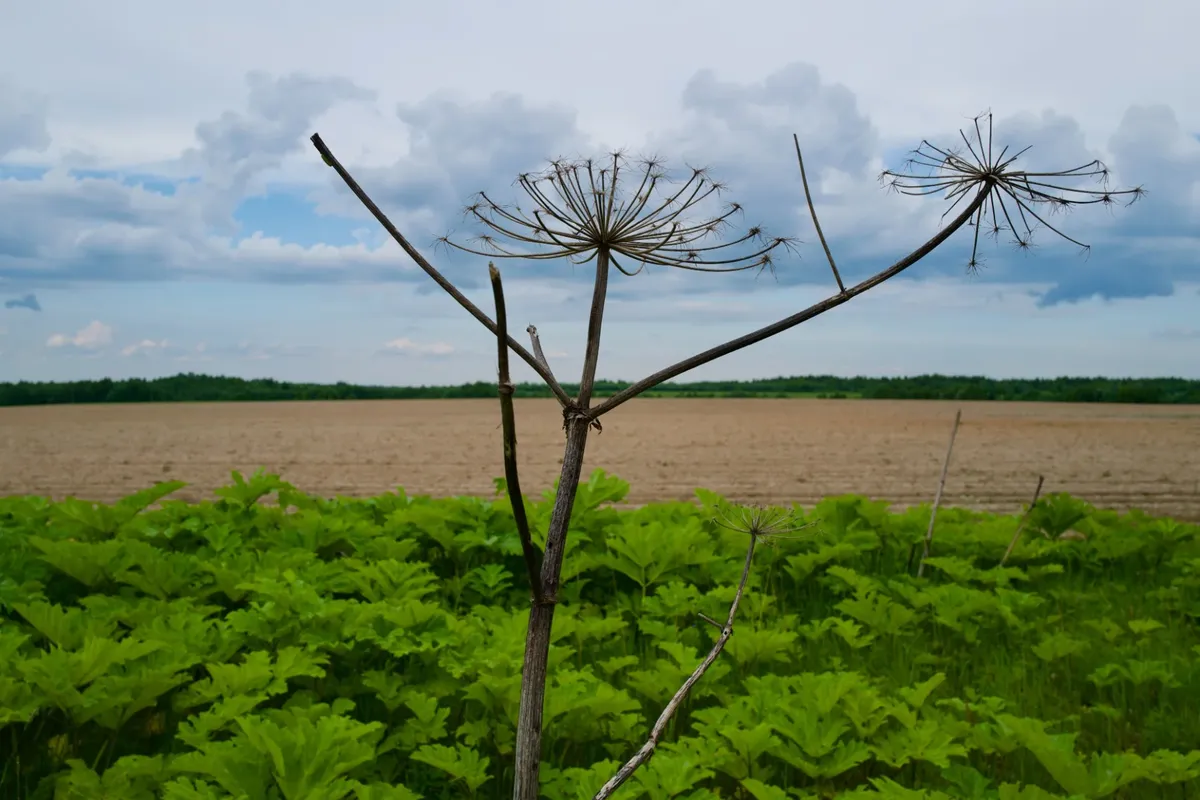
According to Rosselkhoznadzor expert Vyacheslav Osipik, to date Sosnovsky's hogweed has proliferated over an area of 1 million hectares. Which is more than some European countries! Its productivity horrifies experts: just one plant can produce up to 20,000 seeds, which scatter and capture not only new territories, but also our thoughts!
But what if Sosnowski's hogweed, now existing in a lore of aggressive invasion, invincible evil and learned helplessness, becomes a symbol of the rebirth of nature and the creation of connections between people?
To change people’s attitudes towards hogweed and their lives, a group of environmental activists has been organizing the “Festival of Hope” for the second year in the city of Staritsa, Tver Region.
“Get ready, flowers, for war!”
Staritsa is such a “temple-like”, green outback between Tver and Rzhev, famous for the Holy Dormition Monastery, where “officials” for some reason fly in helicopters. Well, our event is not yet so well known.
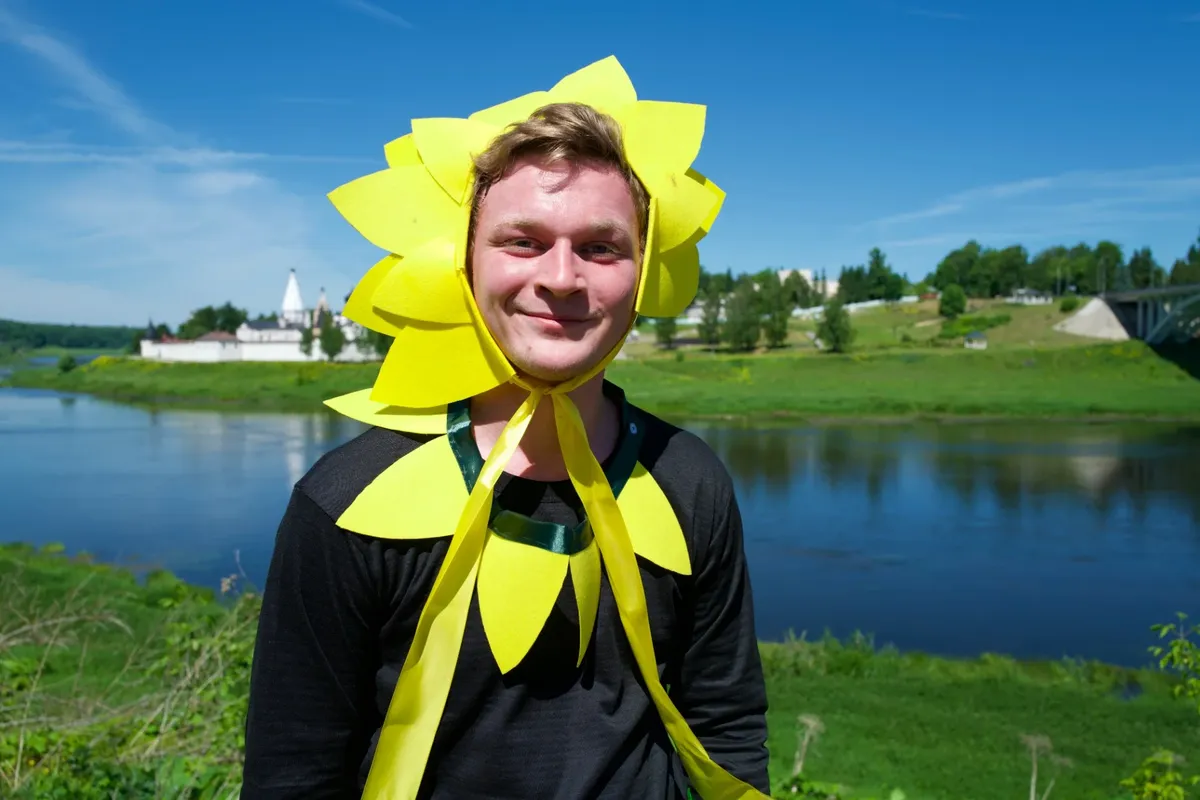
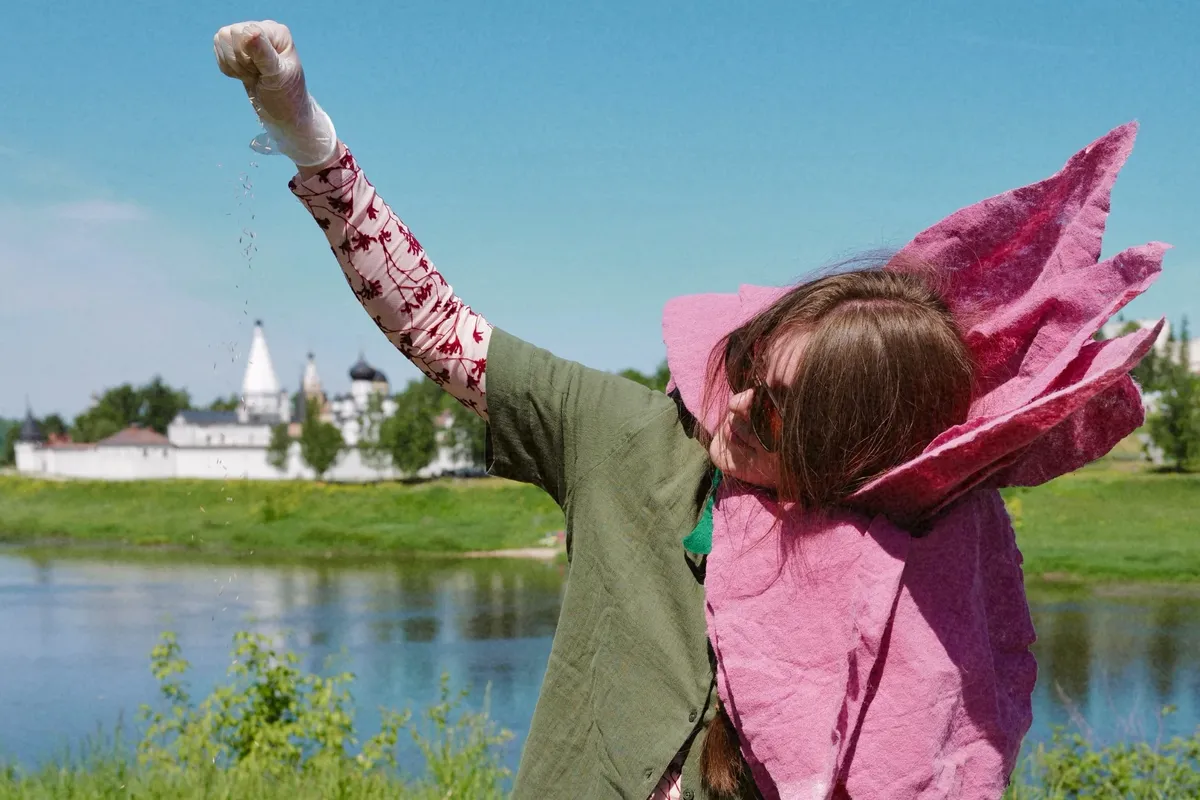
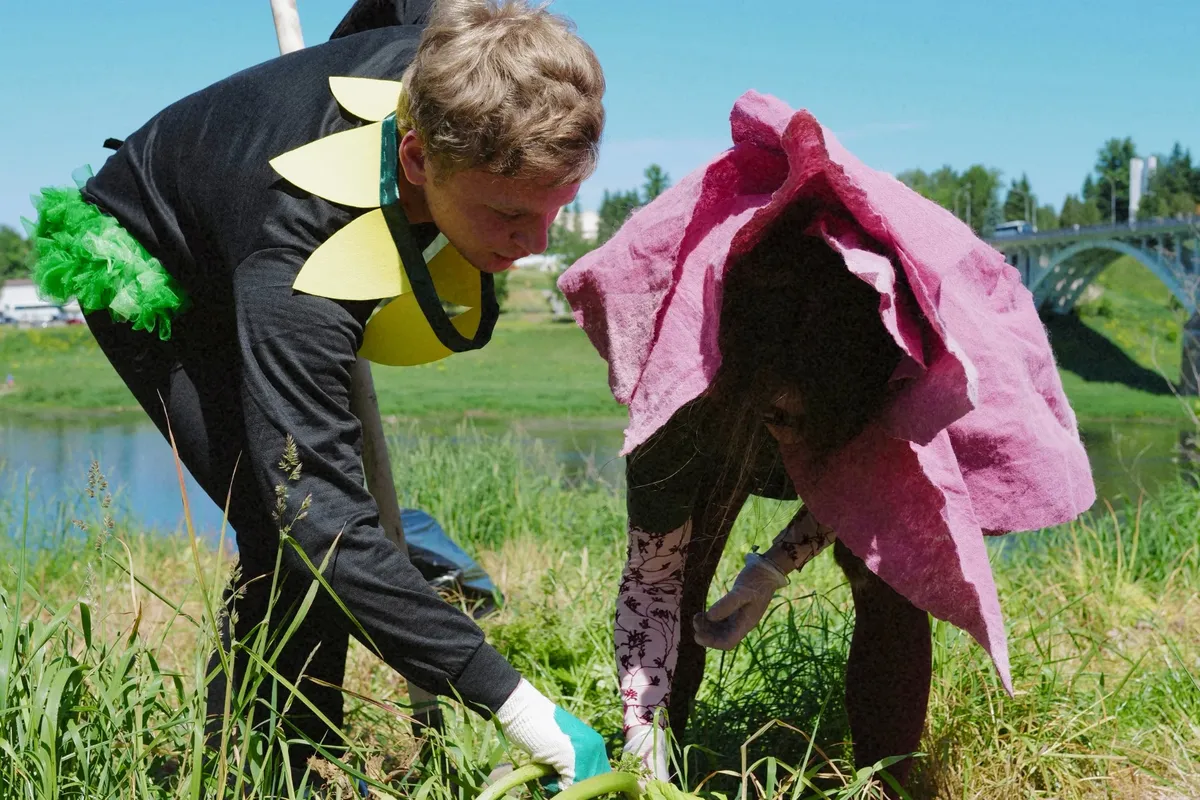
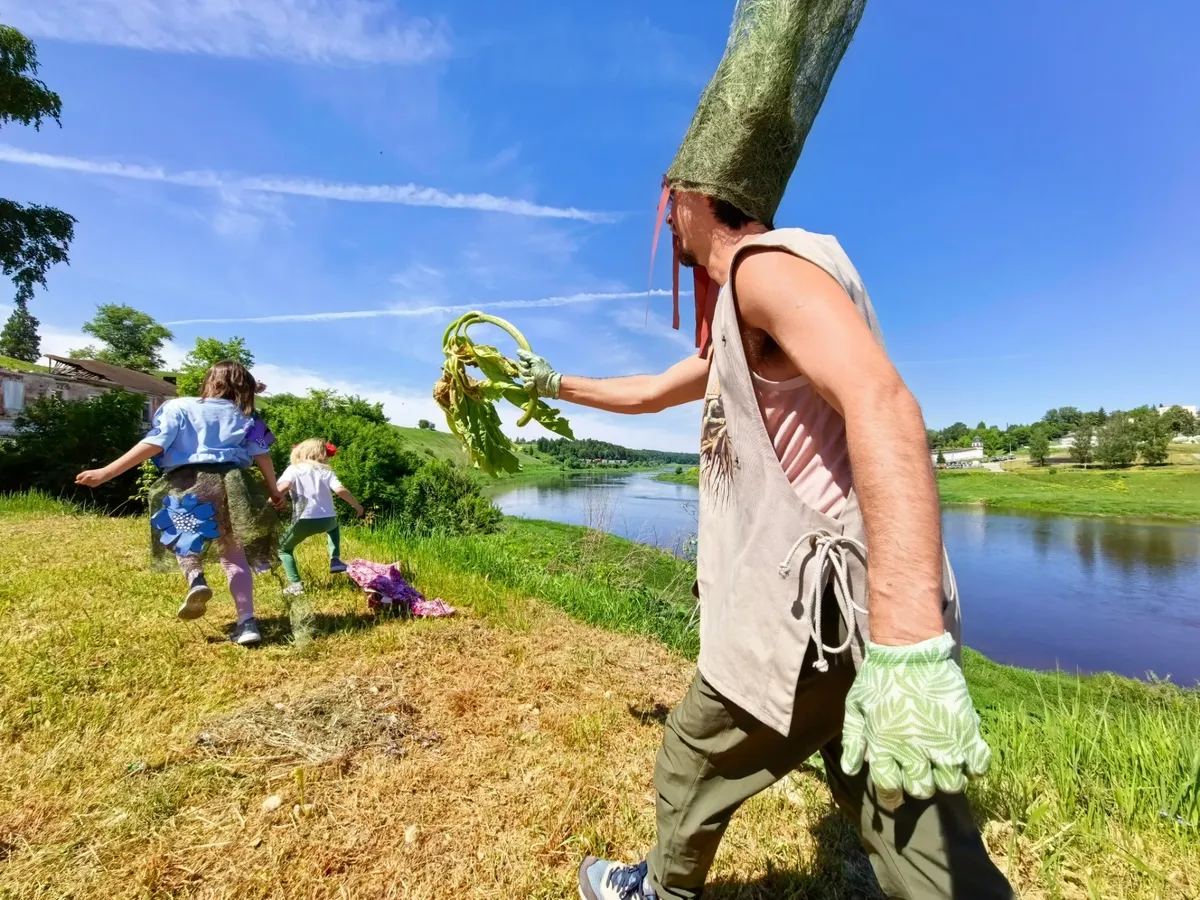
"Festival of Hope" - "for those who are tired of threat and apathy." That's what it says on the event poster. It is, as the organizers say, “a regenerative happening that allows you to connect with communities of humans and non-humans. Transform the narrative of threat and invasiveness into opportunity and co-creation.” To put it simply, this is an art clean-up day, where people in flower costumes liberate territories occupied by hogweed and sow them with seeds of cultivated plants.
I, too, almost sewed myself a sunflower costume (thanks, Marusya), ordered a shovel from Ozone and hit the road in the company of other wonderfully crazy “greenies.”
Another festival participant, Pen Anton, very kindly agreed to give me a ride in his red and black Mini to Staritsa. He is a successful business consultant, despite the fact that in 1922 he emigrated to India with his wife and two children, and their lives were turned upside down. In Russia, Pen Anton was engaged in prosthetics, but when they began to be used “for military needs,” he decided to leave. Now he comes to Russia to see friends and relatives.
Anton dreams of climbing Kailash, the sacred mountain of Buddha in Tibet, and is sure that the main thing in life is to “synthesize.”
“We are all a collection of connections,” he explains his philosophy to me. “And we don’t live separately in the biosphere. Without long-term connections, you will always be unhappy! This festival is our maximum. Within the framework of the Universe, of course.
Anton has been friends with Olya Glagoleva (the organizer of the festival and just a cool girl) for 27 years. He jokes that she was his first love. Then he apologizes and says he’s not joking.
— I am not allergic to Russia. But India is cool! — all the way Pen Anton talks about different “schools” of Indian rap and the intricacies of meditation, which he practices every day.
Strawberry Vika is riding with us in the back seat. A week ago, she received a diploma in eco-design from HSE and decided that she needed to “add some color to her life.” As a child, she was bitten by a hogweed at her grandfather’s dacha, and now she “goes to take revenge on him.”
The most famous Indian song “Jimi-Jimi, acha-acha” is playing on the speakers. To the left of Vika, Anton’s two daughters are sitting on boosters - six-year-old Rozochka Anya and nine-year-old Kotofeya Olesya. This is not the first civil action in which girls take part.
“That winter, when Navalny returned to Russia,” Pen says, looking at me, “my daughters were making snowmen in the park, and then together we threw signs on them with the following text: “I am the snowman Lesha - I will soon melt like your freedom.”
And people came up and took pictures... Now it’s time for environmentally friendly performances.
In the back seat, children are arguing which hogweed looks more like: a chanterelle mushroom or a dried dandelion.
Anton talks a lot about Olya and sincerely admires the idea of the festival and her other projects.
“She has an idea-dream, which I’m trying to help her with from the “business and planning” side - to start digging up hogweed and making clothes out of it. Process the fiber at a special plant and make pulp from it for export. This makes a lot of sense! Remove the invader and make him useful, then sending him abroad - and not as a bioweapon!
Anton is a cool father; there is absolute trust and understanding between him and his children. For each daughter he has his own playlist on Spotify. They, in turn, warn him about each camera marked on the route. “Flowers are better than bullets” by Yevtushenko performed by rapper 43ai is playing in the speakers.
*Stand up, girls of Tokyo,
Boys of Rome
Pick up the flowers
Against a common evil enemy!
Blow on all the dandelions in the world at once!
Oh, what a great snowstorm it will be!*
- You see, I even got goosebumps! - Anton says, raising his hand from the steering wheel.
The children and I play well-known road games: we count last year’s dried hogweeds along the road (there aren’t enough fingers for those who are still green). Anya and Olesya imagine how they will fight him.
- I will become a giant!
- And your little finger will be like a mountain!
- Yes, yes! And I’ll make such a big shovel and dig it all up!
- And I’ll take a tractor and drive like “dryyyyn-dryyyn” through the fields, destroy it!
- Children, now there will be a jump, hold on! - Anton warns before the car plops slightly onto the asphalt. - We drove over a speed bump!
- He died??? - Kotofeya is horrified.
- Yes!!! - Anya shouts joyfully in the back seat of the red and black Mini.
We open the window slightly, and Rosa and Kotofeya yell at the monstrous thickets along the highway.
- Hog parsnip, run away faster! We've come to dig you!
“Cow parsnip is so dangerous that one of my friends went crazy over it!”
“I’m neither a liberal nor a conservative, I’m just a cultured person.”
So says the inscription on the bottle of vodka, which we took with us, so that in case of a hogweed “bite” we could quickly wipe our hands (alcohol perfectly dissolves hogweed toxins on the skin). A local journalist from the online portal “Old Woman 1297” dressed as a flower with huge purple petals is trying to translate this quote, belonging to the chairman of the tsarist government Sergei Witte, into English for a dude from Peru.
This year the festival became “international”.
- Do you know what if the hogweed burns my throat? - Strawberry jokes, looking at the bottle lying in the shadows.
Olya Glagoleva, the festival organizer, comes up to us. She takes shovels from the trunk, an armful of gloves and a homemade forget-me-not costume consisting of hundreds of small blue petals. They leave a slight mark on her skin, like those guys from Avatar.
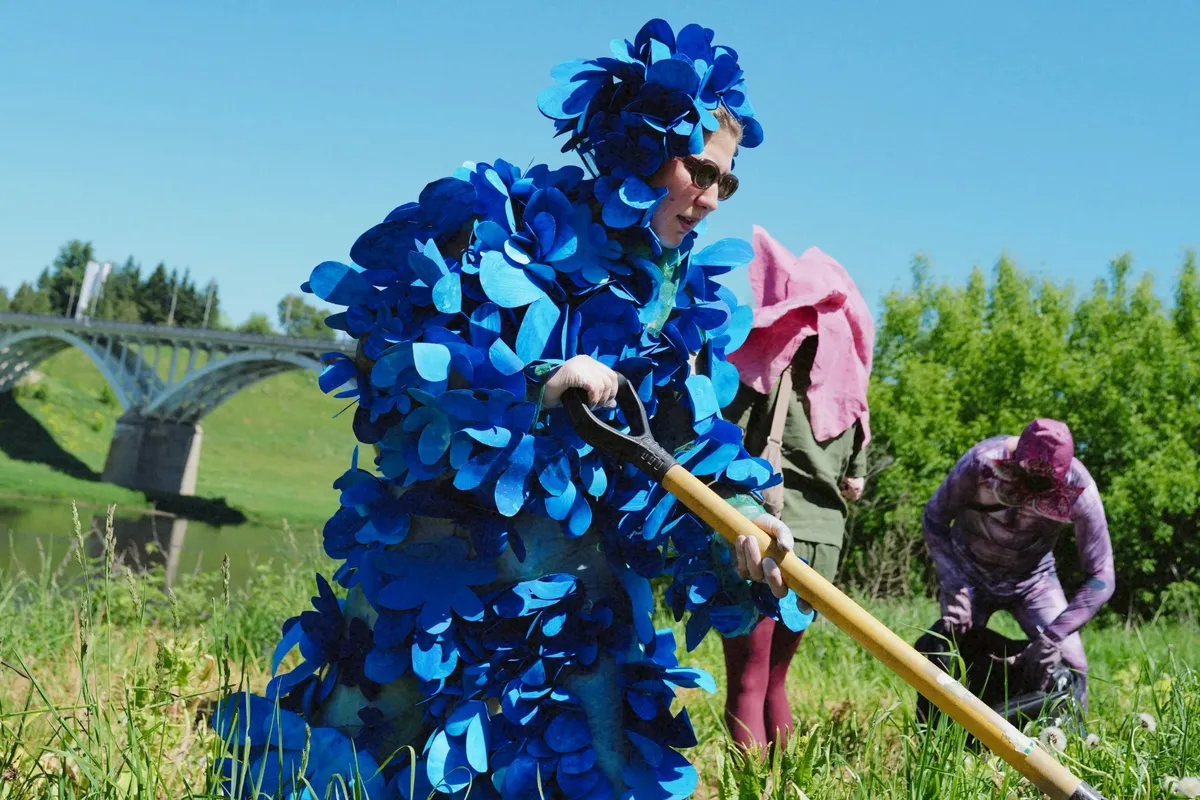
Olya grew up nearby, in the village of Izbikhino. She comes from a family of hydrogeologists and ecologists and since childhood she has listened to conversations about how scientists need to work with the consequences of the negative impact of people on nature.
— I have always been amazed by the fact that man builds his culture and economy on the extraction of useful resources and never on co-creation with nature, on the creation of interspecies relations!
The briefing begins.
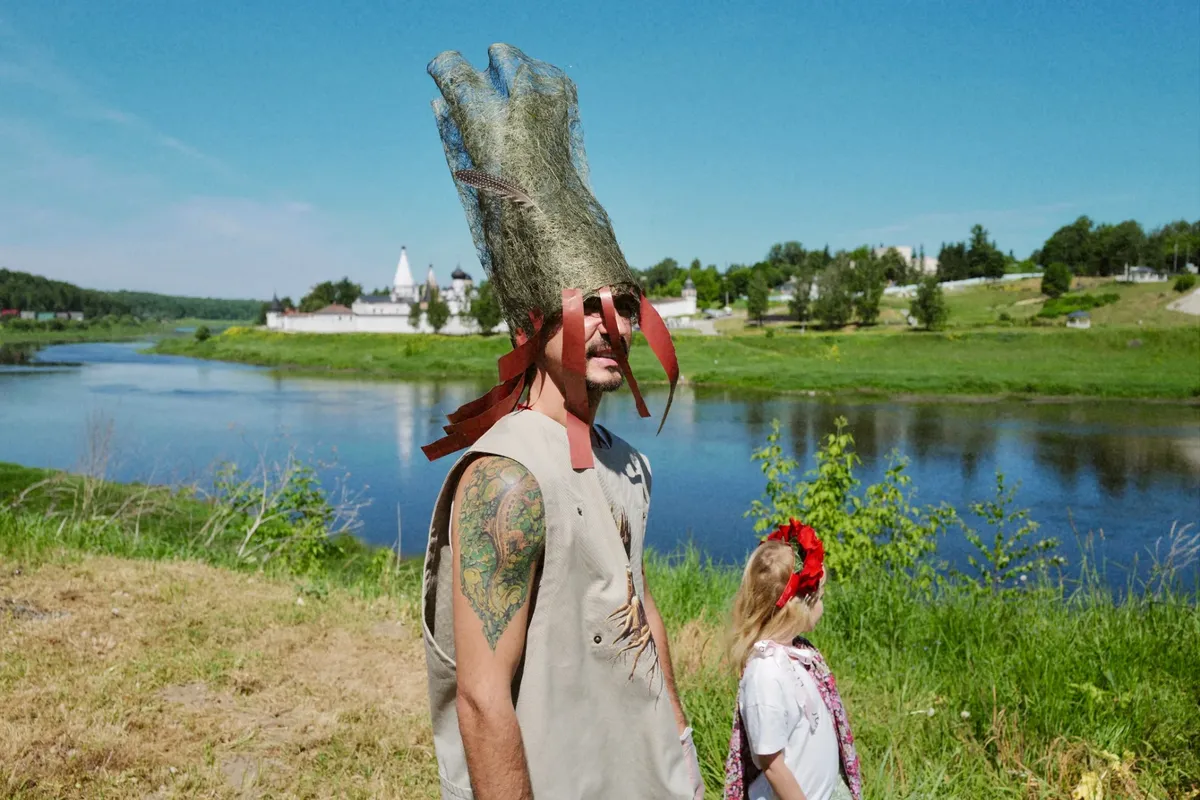
Other festival participants approach us: Len, Narcissus and Demogorgon from Stranger Things - the same guy from Peru for whom Olya will translate her speech into English.
— What do you know about hogweed? – Olya asks this “flower bed” and the “flowers” fellow travelers already familiar to me.
- My friend is crazy about him! - Pen Anton mocks in a friendly manner.
Last summer, Olya defended her diploma at Central Saint Martins University in London with a master's degree in regenerative design. The topic of the work was Sosnovsky's hogweed. And the “Festival of Hope” project, which united caring and active “creators,” became a practical part of her scientific work.
“Then we’ll take it straight to the field, where I’ll dry it.” And after that I’ll take it to the Institute of Chemical Physics, with which I collaborate and wrote part of my dissertation. Together we will make pulp out of it, paper out of it, and a huge cocoon out of it, which we will present at an art exhibition. Let's see in one small piece how this can work. If we remove an invasive species from the biosphere, the local flora recolonizes, that is, returns to this territory. We will help her today with the help of the seeds we brought.
Armed with this knowledge, we take shovels, a bottle of vodka with a glass cap and seeds - we go to clean the city embankment, all covered in hogweed.
Hogweed state and next level shit
13 participants and one passerby, who after a little culture shock were inspired by the concepts of the event, dig up still young hogweed. It is important to dig up the root so that the plant does not grow again next year. Staritsa city services have already sprayed it with a special solution, a herbicide, so that the green part of the plant will wither, and at least this year it will not reproduce. But this is not enough, we need to solve the problem from the root! Otherwise, the hogweed will come out next year.
I overdid it and broke one shovel, but I successfully struck up a conversation with Olya.
“My work pays attention to the narrative of apathy and threat around the invasive nature of hogweed and its transformation into opportunity,” she intelligently explains to me the meaning of what she has dedicated her life to. — Hogweed crawls out of the ground already in mid-March and with its large leaves blocks the light of other herbs. Herbaceous biodiversity declines, followed by a decline in the diversity of insects and birds. Just like some similar umbrella invasive systems in our state and in states with a similar system, they close the light supply, opportunities for growth and realization for others. Therefore, our festival is a celebration of species and cultural diversity and a reminder that we are here. What we are.
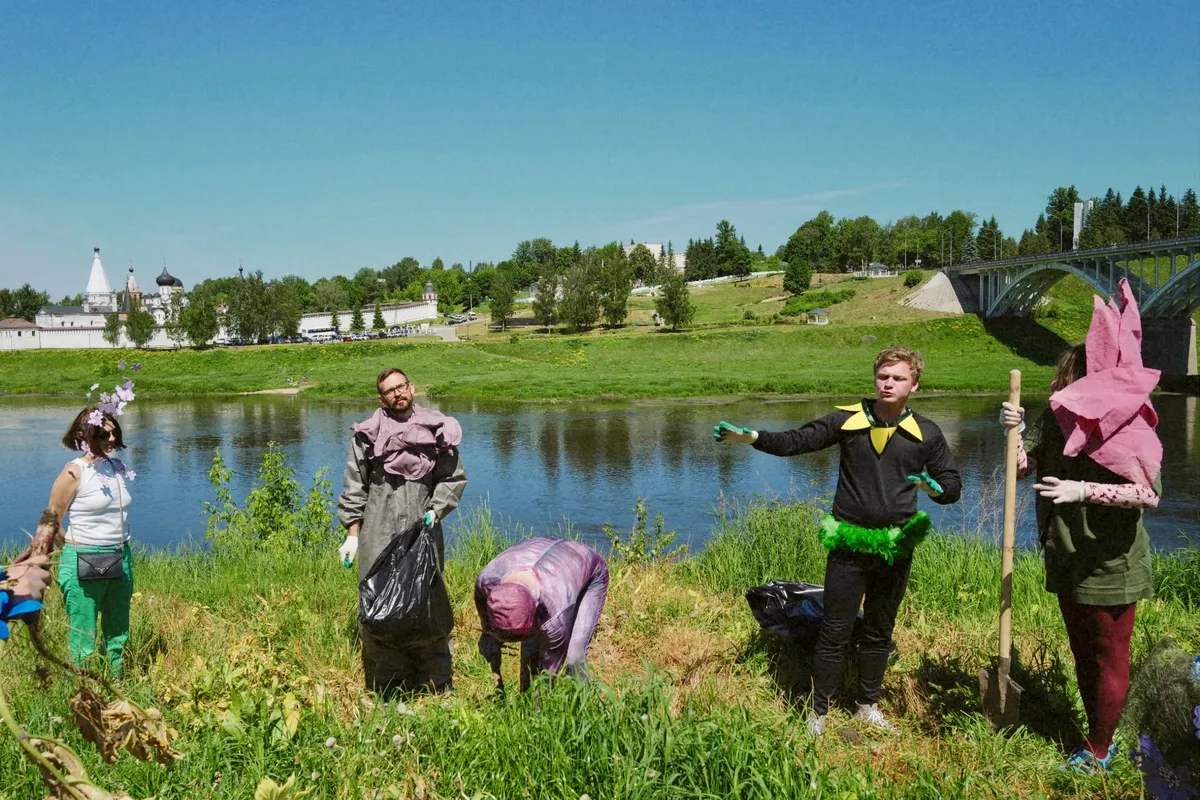
For the last 10 years, Olya has been rethinking the concepts of “eco-friendly”, “sustainable”, “conscious”. He studies and tries to create environmentally friendly production. He comes to the conclusion that sustainable design (an approach to creating products, buildings and services with minimal damage to the environment) does not work in Russia.
- But there must be some kind of system, well, next level shit! - she gets excited. “And then I find out that in 2022, the University of Central Saint Martins in London will open the direction of “regenerative design”. Its essence is to find broken connections within human and non-human communities. And at the expense of the product or service, restore them if they are needed for further development. And this is a fundamentally different form of design!
— Returning to apathy and threat... This is our inability to form into separate conscious groups to achieve any goal. Civic groups, political groups, economic groups! Lack of subjectivity, lack of critical thinking. That is, eternal thinking in the context of the impossibility of action. This constant “nothing depends on me, I can’t do anything, everything is decided at the top” - and so on...
As part of her master's degree, Olya studied other invasive species to figure out how to turn the invader into something useful. For example, ash-leaved or American maple - in Moscow you can see it at every step. This maple, like all invasive species, stands out because it has no biological antipodes, that is, anyone to contain it.
— When organizing the festival, I was inspired by the history of the art group “Collective Actions.” They had such cool events, exhibitions, performances – all in the Soviet Union! Their most popular and famous action is “Slogan” in 1977. Just imagine, people come to the wilderness, and there is a banner stretched between the trees with the inscription in white and red: “I AM NOT COMPLAINING ABOUT ANYTHING, AND I LIKE EVERYTHING, DESPITE THE FACT THAT I HAVE NEVER BEEN HERE AND KNOW NOTHING ABOUT THESE PLACES.” I was also impressed by the history of the “bulldozer action” in Moscow, when an unauthorized exhibition of nonconformist artists was dispersed with the help of bulldozers.
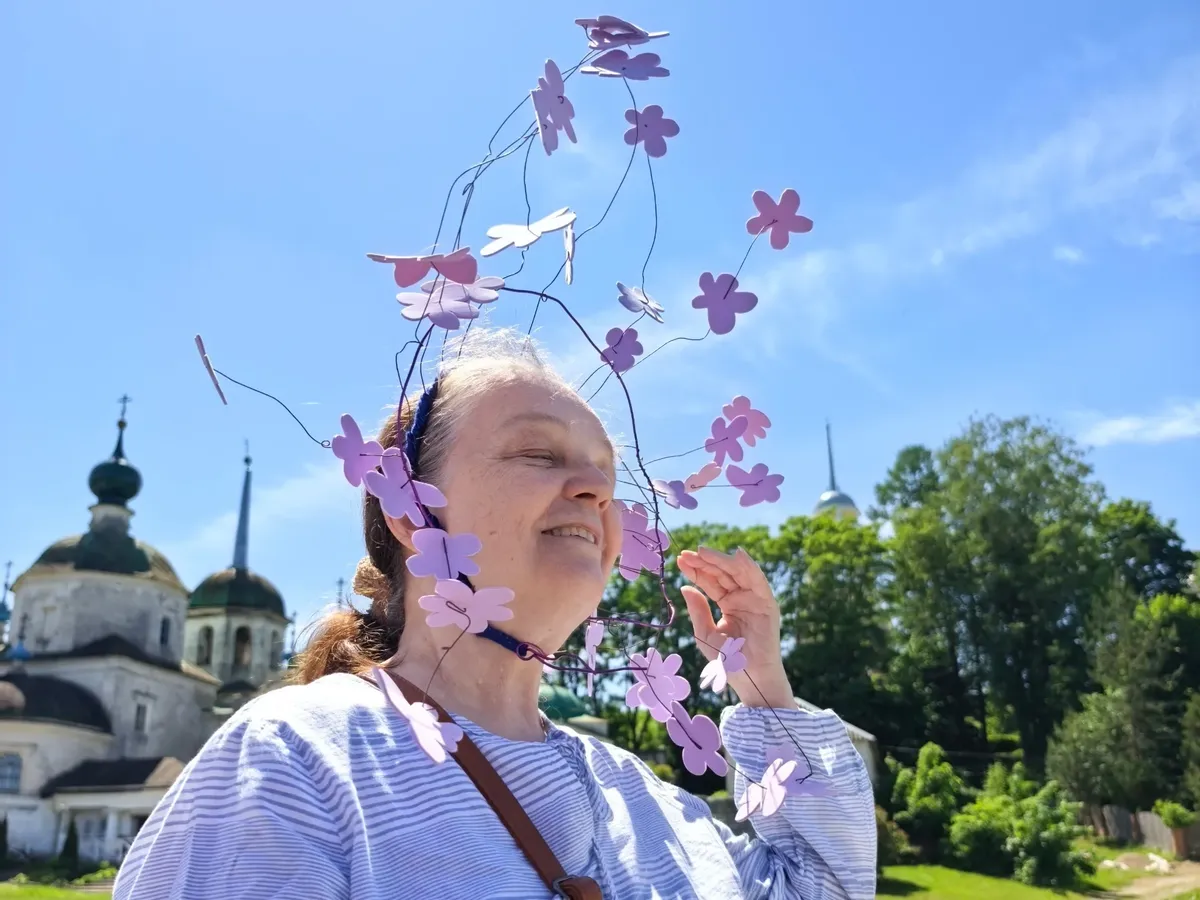
The “flower” squad does not fight hogweed. In the concept of the event, fight is not quite the right word. These guys believe that people should move from a narrative of struggle to creative interaction and see Sosnowski's hogweed as a “participant” in this interaction.
- So, I don’t start with the idea that “oh, you can probably make this and that from hogweed”... no! - Olya continues, collecting the trunks in black bags. “I’m studying how communities are already working with it, how much money is spent on it from the state treasury annually. Of course, the state is actively involved. I spoke with the deputy minister who literally issues laws on hogweed. And their narrative is one of struggle. All we can say about hogweed officially is that we are fighting it. But we never defeat him.
“And now we have such narratives everywhere.” We are sometimes the strongest, sometimes we are offended by everyone. As a result, we are very offended! - Pen Anton bursts into the conversation and immediately runs off to scare the children with hogweed.
— But is it possible to defeat hogweed in principle? — I ask cautiously.
- Yes and no. On the one hand, this is a meaningless concept of some empty victory, leading to apathy and lack of subjectivity. It all depends on the methods of struggle and people’s attitude towards this struggle. But it is still possible to defeat him! If you come up with a biological way.
- What if everyone goes out one day with a shovel and digs up all the hogweed in the world?
- Good idea, it’s possible! But this must be done within five years so that it does not spread faster than we can dig it out. The difficulty is obvious. The second, more realistic option is cross-pollination. For a seed to appear, pollination must occur. If a bumblebee from a plant that does not produce seeds pollinates a hogweed, that ugly palm will not produce seeds. If we make an umbrella plant that the hogweed can accept as one of its own, then it will think that it has been pollinated, but it will not be able to “give birth” due to, say, fake fertilization. Roughly speaking, the remaining ones simply will not reproduce. All that remains is to dig it out.
The problem with hogweed is that one plant produces 20,000 seeds. This is incredible productivity.
- Almost Pavel Durov! - Stump bursts in again, we burst into laughter and wipe the sweat from the petals.
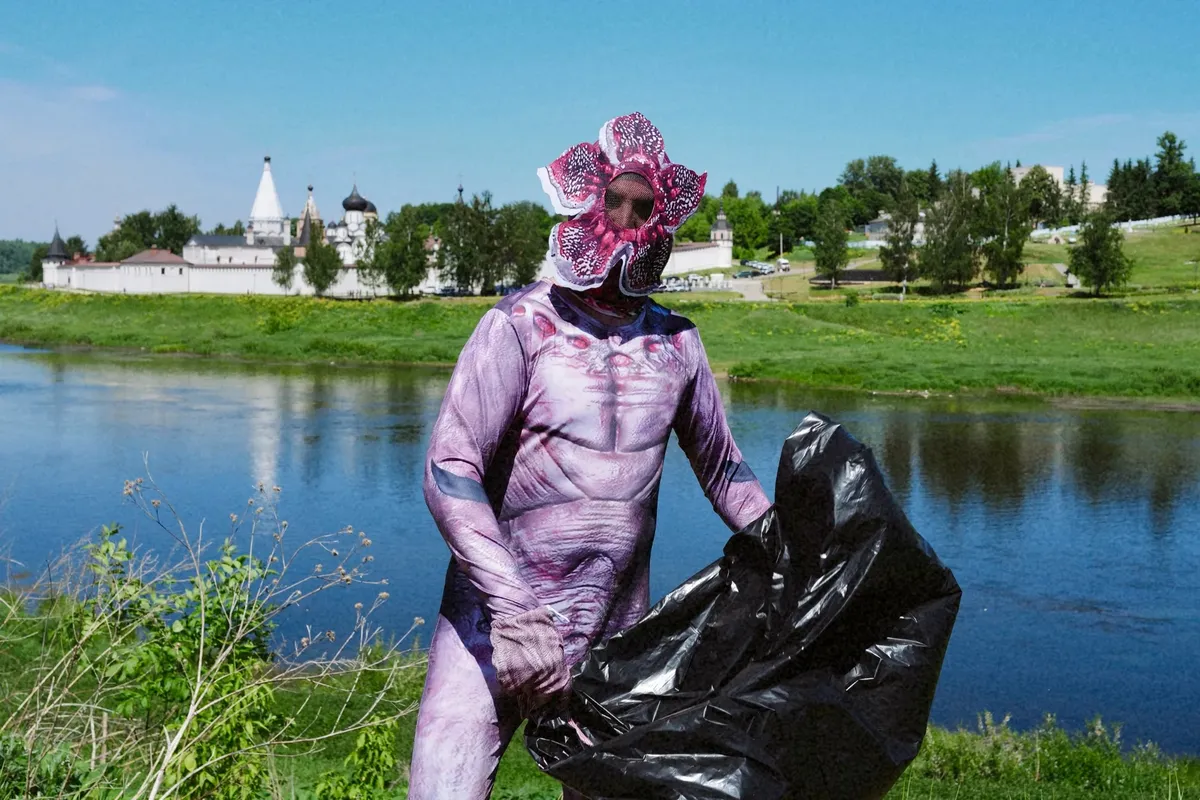
“And I’m thinking,” continues Forget-Me-Not, “how to learn to use this biomass, which was originally brought as a super-productive species, for good.” Its main part is cellulose, fiber - a raw material for the production of paper, sanitary products, packaging and threads. I go to different institutes, bring them hogweed, and say: here we have a task, guys... And we actually, together with the Institute of Problems of Chemical Physics, made paper from hogweed, and then with the Institute of Organic Chemistry named after N.D. Zelinsky - already made a viscose thread and even made a patent! This is completely unprecedented. Well, vodka together with the Tver Academy...
On a piece of paper made from hogweed, the participants of the action wrote a letter on his behalf, addressed to humanity. It begins with the following confession: I'm sorry that I hurt you. I guess I was trying to protect myself (“Sorry to hurt you. Most likely, I don’t know how else to protect myself”).
While talking, we collected two huge bags and cleared part of the embankment. The most enjoyable part of the job is opening the packages of seeds with various “field potpourri” and pouring them into the holes. There really is something in this! All the sneakers are covered in mud—the holes are filled with fresh soil.
There will be borscht and borscht - and we will be alive
По одной из легенд, борщ назвали именно в честь борщевика, правда, сибирского. Вы его точно видели почти в любом дворе. Он очень похож на борщевик Сосновского, уменьшенный раз в пятьдесят.
Тусовка переносится в дом Оли-Незабудки, и мы продолжаем разговор. С Пнем выносим на улицу стол, меня просят дотащить вазу полевых цветов.
По участку носится роскошный лабрадудль (метис лабрадора и пуделя) Беня с шоколадной кудрявой шерстью. Пока мы жарим баклажаны и перцы на мангале (к стыду признаюсь, я был единственным, кто пил пиво и не выковыривал мясо из покупного плова), вспоминаем и про «Цветы лучше пуль», которые слушали в машине по пути на фестиваль. Тихо переслушиваем. Клубника, с который мы подружились, к сожалению, не смогла остаться: между богом и баней выбрала первое, поскольку заранее пообещала подруге завтра с утра пойти на службу.
Оля очень ругается, когда дети сжигают обертки от конфет в мангале, потому что «нельзя так утилизировать пластик, вы че!». Она устраивает для детей мини-лекцию, объясняет какие бывают отходы, как устроен компост для органических отходов. А для неорганического мусора у нее есть отдельное ведро.
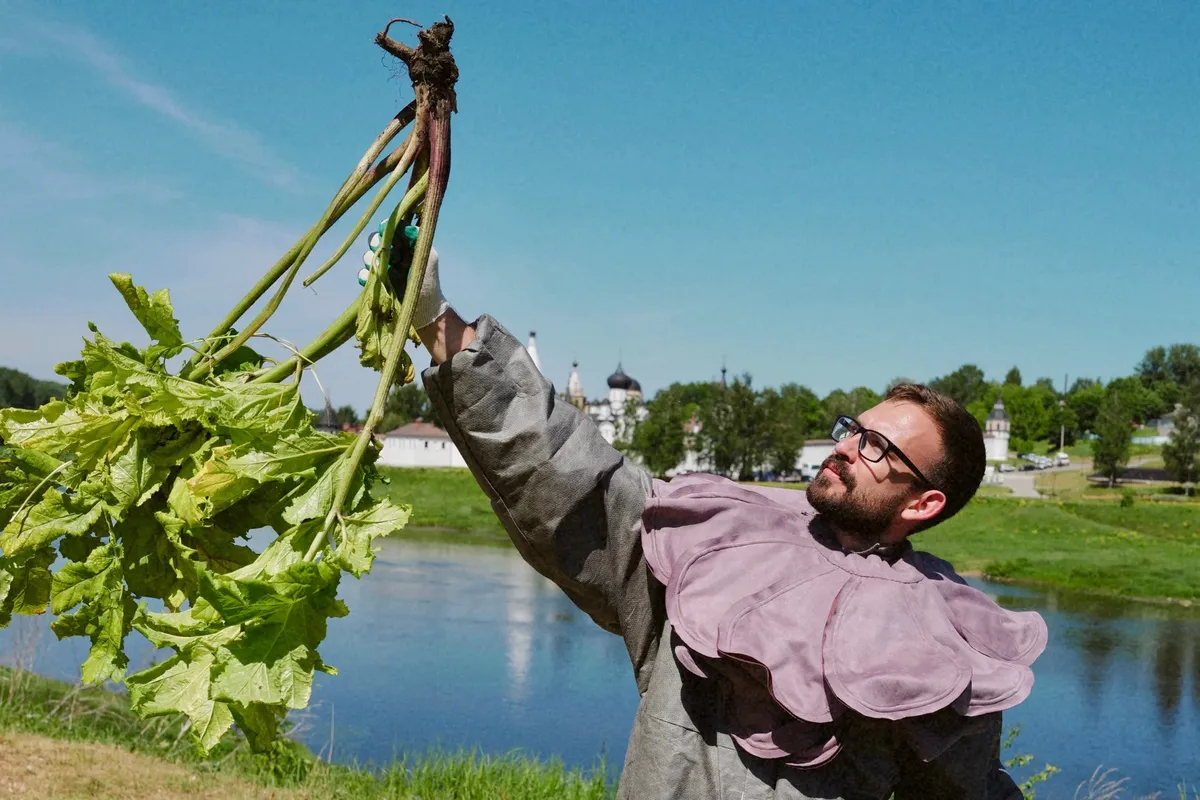
Антон забавно пьет чай, стоя на одной ноге, приставляя вторую к коленке в позе йога. У него на плече тату уральской ящерицы на уральском монолите –– напоминание об «угарно-трешовом» детстве, а также крестик и индийский амулет на шее с красной нитью. Антон — гражданин мира.
Девушки и дети идут париться в баню. Мы с Антоном остаемся болтать о всяком, что на душе. Не забываем и о многополярном мире, в котором не все «цветы» могут найти себе место.
— Политики любят играть в карты, один встает и говорит: «Димон-поменяшка» — сильный козырь! У второго — Иран. У нас таких карточек нет. Моя знакомая, которая была на ПМЭФ, рассказывала про чье-то выступление… Цитата: «Сейчас идет колоссальная работа по отстаиванию традиционных ценностей». Ah-ah-ah! Да это просто указ одного человека со «своими традициями»! Да и у нас всего три корня: крепостничество, совок и 90-е.
— А что плохого, например, в патриотизме — или какие там еще есть скрепы? — я пытаюсь сыграть в адвоката дьявола.
— В этом нет абсолютно ничего плохого. Но, как нас сегодня учила Оля, я — за биоразнообразие.
— Тогда как пережить эти годы тем, кто не согласен с происходящим?
— Пережить… твой глагол мне не нравится. Давай-ка попробуем прожить. Например, выкопав немного борщевика. — Пень Антон улыбается, я смотрю на небольшой ожог от борщевика на правой ладони.
Вспоминаю слова Незабудки:
«Каждый из нас, он в принципе заточен на то, чтобы исцелиться, если с ним что-то произошло. Если у тебя какая-то царапка, ты регенерируешься сам по себе. И так все живые существа. На этом построена жизнь на планете».
Уже гуляя по полю у дома и любуясь закатом, мы нашли немного ромашек. Дети начали гадать. Совсем маленькая Аня делала это в первый раз и попросила ее научить. Беру эту ответственность на себя.
— Любит… — она отрывает один лепесток и высоким голоском звенит на всё вечернее поле цветов — Не любит, любит… — потом она отрывает уже по два лепестка, по три… как это неправильно! Что-то дурацкое и взрослое шевелится во мне и хочет ее поправить, но она начинает радостно кричать и бросать лепестки в разные стороны, не давая мне сказать и слова: — любит, любит, ЛЮБИТ! — выкрикивая последнее, она бросает ромашку и бежит в объятия к папе Пню.