
Translated material
New wings for “Dream”
Why did both the authorities and the opposition consider Nikol Pashinyan’s victory to be theirs in Georgia?

Salome Zurabishvili. Photo: AP / TASS
The fifth President of Georgia, Salome Zurabishvili, was the first to congratulate Armenian Prime Minister Nikol Pashinyan, even before he himself announced his victory in the elections. Zurabishvili, although he insists on his leadership in the Georgian opposition, is an unofficial person. But Prime Minister Irakli Kobakhidze, her eternal political antagonist, also barely waited for Pashinyan to report his triumph.
It is no coincidence that the Armenian leader turned out to be an ideal mirror for all the heroes of the Georgian plot.
Bridges and tunnels
The opposition, led by Salome Zurabishvili, ostentatiously took Pashinyan’s holiday as its own. Georgian political scientist Tornike Sharashenidze is looking for a rational explanation for this, but does not find:
“Everyone always knew that Pashinyan had an excellent relationship with the Georgian Dream.” And therefore, Kobakhidze’s congratulations were completely logical.
The very next day, Pashinyan called on Brussels and Tbilisi to stop burning bridges: “We are interested in reconciliation between the European Union and Georgia, as well as between the United States and Georgia.” He spoke about the same thing three months ago in the European Parliament, explaining this interest by the fact that Georgia is the main land transit to Europe for Armenia. But such a guarantee from Yerevan turned out to be important for Tbilisi. Moreover, the lawyer is a person whose specific ideas about democracy are turned a blind eye not only by the Georgian opposition, but also in Brussels.
Sharashenidze, like many other Georgian experts, believes that something has been slowly changing in Tbilisi in the European direction lately. And Pashinyan, as a benevolent mediator, is also part of some behind-the-scenes process between Georgia and the European Union.
Political technology of the remaining sediment
The rhetoric of the Georgian authorities towards the European Union has softened somewhat. Passages about his intention to drag Georgia into the war became less intrusive. Irakli Kobakhidze sees the readiness of European leaders to negotiate with the Kremlin as recognition of the correctness of the Georgian authorities. But without the theme of a “second front” against Russia, which, as was regularly stated before, Brussels, together with the Georgian opposition and Kiev, would like to open in Georgia.
Regarding Ukraine itself, the discourse of the ruling Georgian Dream has also become less vibrant. At the summit of the European Political Community in Yerevan, Kobakhidze and Ukrainian President Vladimir Zelensky shook hands for the first time in modern history. Of course, this was a short “meeting on legs”, and the handshake was ritual, and the warmth of reconciliation was not noticeable in the glances. The meeting with Kobakhidze was clearly included in a series of such reconciliations organized by Brussels for Kyiv - after his conversations with the new Hungarian leader Peter Magyar and his Slovak counterpart Robert Fico. But even in this case, Tbilisi’s consent to participate in such an event also looks like a sign of readiness for a new conversation with the European Union. Even if not on camera.
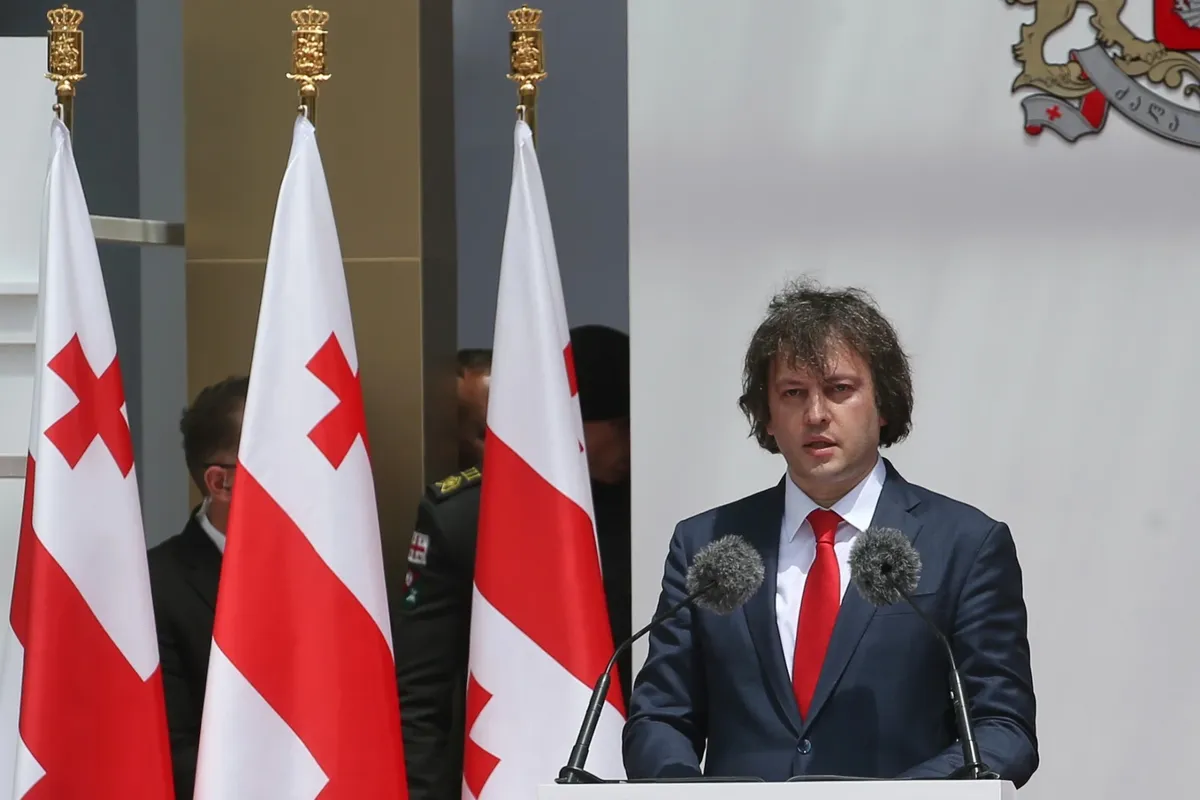
There have been other ambiguities in recent months, and on an equally strategic flank - the Russian one. Against the backdrop of Moscow's demonstrative approval of what it calls pragmatism, the Georgian government is no less demonstratively exposing spies, and the selection of heroes in the scandal looks alarmingly balanced. On the one hand, there is Irakli Chikhladze, a journalist with an impeccable pro-Western reputation. On the other is Gulbaat Rtskhiladze, head of the Eurasia Institute, which does not hide its connection with Russia. And Rtskhiladze himself connects his problems with the “Council for Monitoring Russophobia” he created.
Spies in Georgia were exposed even under Saakashvili, and today the mechanism of arrests, including government supporters, works to the delight of conspiracy theorists.
But Moscow is silent, and Tbilisi does not insist on big geopolitics.
The “remaining sediment” technology is generally becoming a trademark of Georgian politics. For example, in accordance with the education reform, the number of budget places in universities has been reduced - from approximately 27,000 to approximately 21,000. Including Russian-speaking ones. There were not many of them anyway, scattered throughout the country - according to various sources, from 500 to 1000. Now they are localized in Tbilisi, and there are a little more than a hundred of them left. Challenge to Moscow or everyday routine? There are questions that are enough to be asked only in order not to answer them.
The art of being neutral
But anyone who hopes to see real signals in this must be as careful as a sapper and as sensitive as a dowser in search of water, so that these signals are not only caught, but also distinguished from interference. And maybe even suspect the logic.
At the beginning of 2022, the ruling Georgian Dream formulated its neutrality, which made it in reality an antagonist of Kyiv (which it had never before been able to forgive for the political comfort provided to its sworn opponents in Kyiv) and a variation on the theme of Orban’s Hungary outside the European Union. Conservative voters were quite happy with this model. The opposition continued to accuse the authorities of sacrificing European ideals to the “Russian world.” But with such an agenda, Zurabishvili only mobilized her own people to protest, without trying to attract loyalists or those for whom the sun today, as Eduard Shevardnadze said, rises in the north. Now, even at the protest, which has been going on for more than a year and a half, only the last romantics come out in unimpressive numbers.
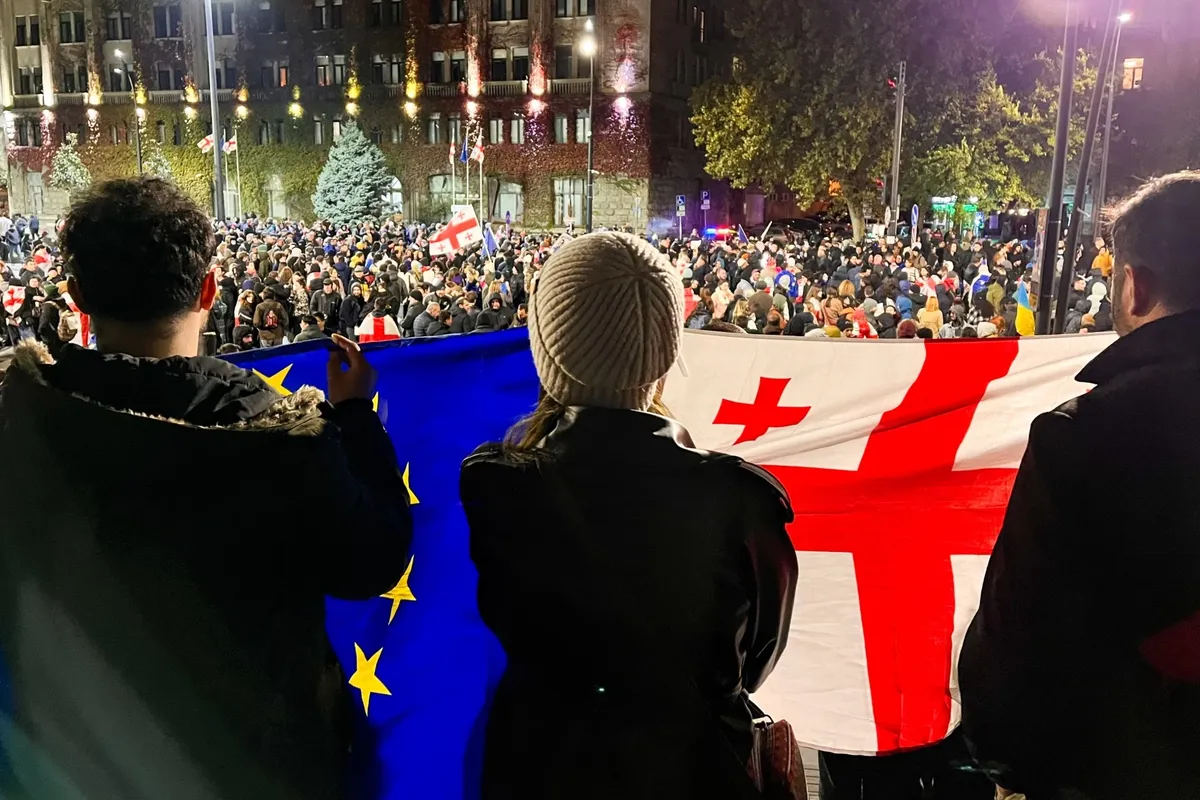
Georgian Dream continued to squeeze bonuses out of its neutrality. The protest dried up, the opposition increasingly became a thing in itself. But the government still could not stop in its lawmaking, as if setting out to inspire those who call it “Russian”. In addition to the very draconian fines for protesters who carelessly stepped from the sidewalk onto the pavement, the authorities brought down innovations on them that were either legally unnecessary or, like the law on foreign agents, still did not work on a mass scale. Perhaps the Georgian Dream deliberately strengthened the reputation of South Caucasian Hungary - both for its voters, scaring them with war, and for the European Union, following the negotiating leitmotif “to go to Europe while remaining post-Soviet Georgia.”
And now the situation has changed.
Minister of Compromise
The Georgian opposition already had experience of congratulations - in the same way, in April, in the triumph of Peter Magyar, it read the prologue to its imminent victory. Indeed, either without reading into Hungarian sociology, which did not promise anything good for Orban, or putting loyalty to right-wing conservative values above this vanity, a few weeks before the elections, Kobakhidze received a greeting from Orban at the Conference of Conservative Political Actions in Budapest (although many of its guests can only be called conservatives, even right-wing ones, with a large degree of political tolerance): “Hero of Georgia and international patriot!
But against this background, the Georgian authorities have forced Georgian experts to look at each other with cautious hope for the last six months. The degree of polemics with the European Union was decreasing, although throughout the spring Georgian Dream continued to fight with the EU Ambassador to Georgia Pavel Gerczynski.
Some appointments also looked like a hint of compromise. Maka Bochorishvili, who became Minister of Foreign Affairs a year and a half ago, unlike many of her party members, does not irritate Brussels and was not noticed in the architecture of the Georgian-European scandal. She, of course, supported the law on foreign agents, with which this scandal began three years ago, and today she reproduces all the traditional theses about Georgian identity and the encroachment of the European Union on Georgian sovereignty. But at the same time, she freely articulates the impossibility of diplomatic relations with Russia, establishes contacts with her Ukrainian colleague Andrei Sibiga, and last December at the Council of Europe conference in The Hague signed a Convention on the creation of an international commission that will establish the scale of compensation to Ukraine. There are other signs too. Let's say, without excessive publicity, some protest participants are released, even those who were accused of conspiracy.
But it is the Hungarian plot that looks symbolic and therefore decisive.
Hungary forever
From tough scenarios, both domestic and foreign policy, all resources have been squeezed out, only risks remain. All elections have been won, no new ones are expected, therefore there is no longer a need for aggravations within the country, and therefore in relations with the EU. The opposition is not just demoralized, its systemic crisis is taking place in the genre of “life after life.” The points of protest condensation of those who can replace it are not visible. In a word, the Georgian government has only one opponent, like a runner who has passed everyone in a circle - time.
But time also seems to be on her side.
The fall of Orban, contrary to the hopes of opponents of the Georgian Dream, did not at all become a disaster for the Georgian government. On the contrary, Peter Magyar’s ambiguity, like Pashinyan’s, may open up new room for maneuver.
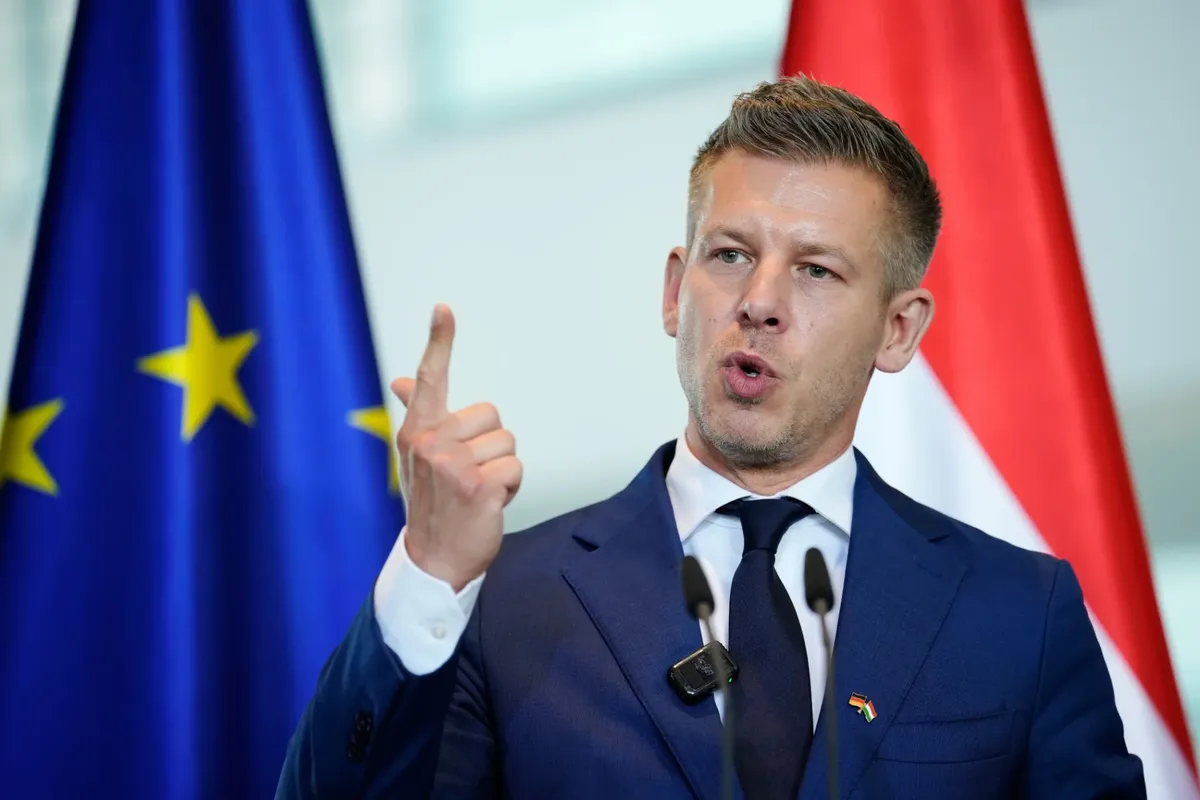
Orbán’s Hungary was the mastermind of Euroconservatism, almost single-handedly challenging Brussels. Magyar does not claim this scale. His Hungary is not a leader, but one of many.
For Brussels, a change of disposition is not a victory, but an opportunity to seize the initiative. True, for this you have to adjust your position. For example, we can assume that it is not only Georgia that prefers dubious neutrality. And how can we punish her alone now, if there are other bright leaders in terms of exotic democracy: the same Azerbaijan, and now Armenia, which has come out in defense of its neighbor.
Georgia is again feeling its “Hungarian” path. In this configuration, it, like Hungary, is already one of many. This position also helps to carefully distance oneself from Moscow - enough to try to slightly improve one’s reputation, but also not to risk relations with it.
In a word, Georgia is no longer a troublemaker, because this peace is now structured a little differently.
And finally, the words are returned to their original meaning. There is no longer any sacredness either in the term “EU candidate” or in threats to lose this candidacy. Brussels will probably resolve issues of relations with these candidates according to the rules of the post-war world, which no one knows today, because no one knows when and how such a world will come. Therefore, for now it is time for euphemisms, symbols and discussions with exaggerated significance. The EU is threatening to deprive Georgia of a visa-free regime, the Georgian authorities in response assure that this is Brussels’ way of seeking Georgia’s accession to European sanctions against Russia. There is no logical confirmation of this hypothesis, but none is required, since this has already been done more than once, and there is no other formula for coexistence and is not required. So, most likely, ordinary citizens are not threatened with the abolition of visa-free travel. But officials who have been deprived of visa-free status by Brussels will probably still have to spend a long time visiting consulates.