
Translated material
“I’m proud to be the first schoolchild in the world to be put on the sanctions list by an authoritarian regime.” A British teenager exposed a network of crypto farms that helped Russia launder billions.

A British teenager exposed a network of crypto farms that helped Russia launder billions.
There is a crypto commotion in Georgia. British schoolboy Alexander Browder exposed a whole network of crypto platforms through which Russia circumvented sanctions. Georgian crypto exchanges also played an important role in the network. As luck would have it, the meticulous schoolboy turned out to be the son of William Browder, the same one who initiated the Magnitsky Act. Russia immediately imposed sanctions against the boy who discredited her on the international stage.
Meanwhile, Georgia is laundering its crypto reputation in front of the Western world and trying to curb the domestic crypto market. Along with a successful joint special operation with European law enforcement officers to expose a cybercriminal network based in Adjara, the authorities decided to crush the crypto ring in Svaneti. The Svans swear in front of the icons that they will no longer mine, but they continue anyway.
Iya Barateli has collected the pieces of this crypto-detective.
In the coming days, the European Union is going to include Georgian cryptocurrency platforms in the 21st package of sanctions against Russia. This was reported by the Financial Times, according to which a number of crypto companies registered in Georgia are suspected in Europe of helping Moscow circumvent sanctions restrictions.
Earlier, at the end of May, the UK government introduced tough sanctions against crypto platforms associated with the Russian A7 payment network, which, according to the Foreign Office, was used to support the Russian war economy.
More than $90 billion was channeled through this network last year alone, an amount equal to half of Russia's annual military spending.
London imposed sanctions against 18 platforms - these are crypto platforms, banks and financial networks in Russia, Great Britain, Georgia, Kyrgyzstan, the United Arab Emirates, Panama and El Salvador, which, according to a statement by the British Foreign Office, were used as “shadow financial systems” to circumvent anti-Russian sanctions. The assets of these companies were frozen, and British organizations stopped working with them.
Three crypto exchanges from Georgia were also included in the sanctions list: Arvix LLC, Rapira Group LLC and Aifory LLC.
“We are also taking action against three Georgian companies that operate Russian-facing exchanges and are trying to circumvent sanctions,” the UK government said in a statement.
17-year-old British schoolboy Alexander Browder helped identify the Russian shadow cryptocurrency laundering network. This is the son of the famous British financier William Browder, the main initiator of the Magnitsky Act, adopted in the United States in 2012 and providing for visa and financial restrictions on high-ranking Russian officials involved in human rights violations.
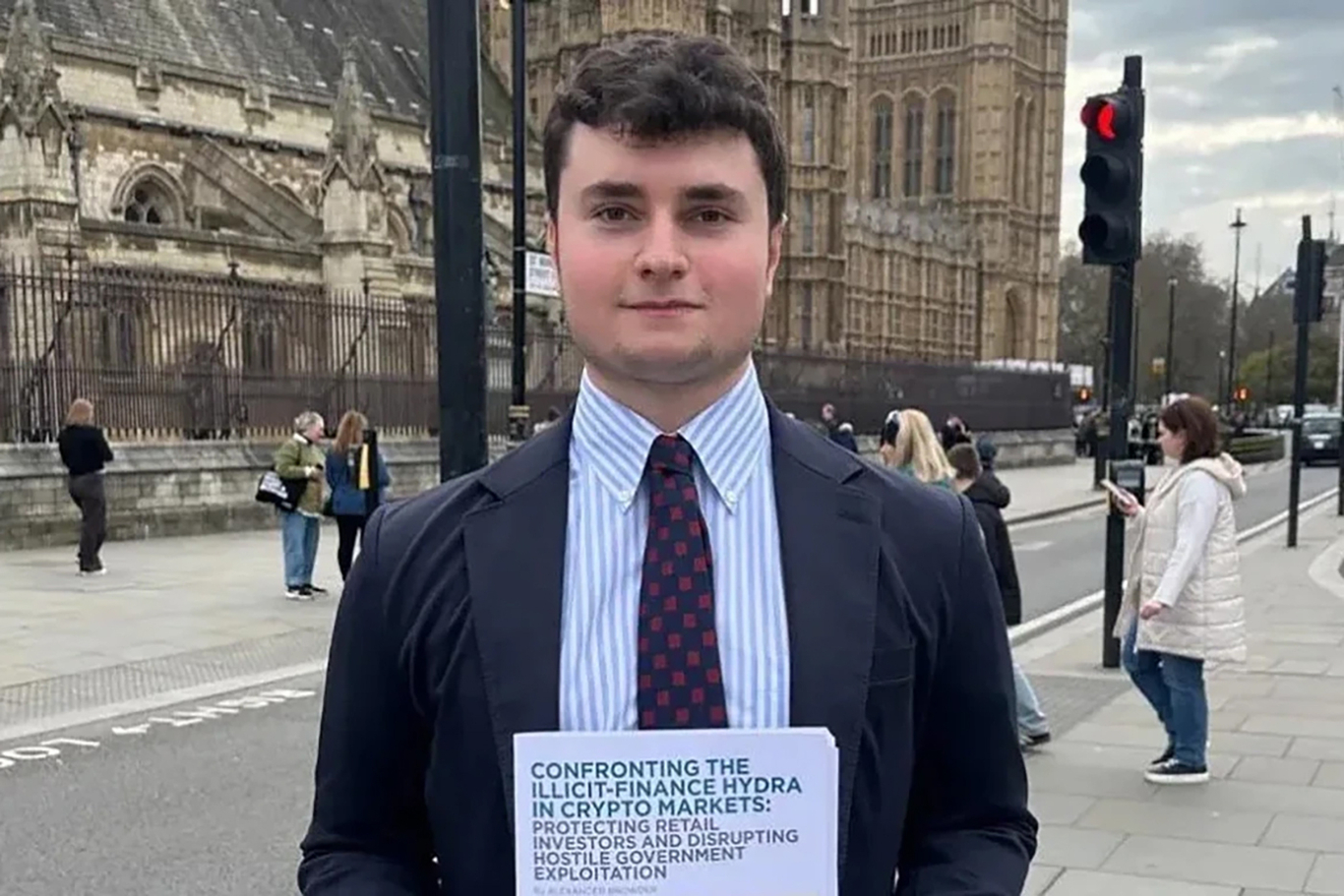
Back in March, Alexander Browder published a report for the Henry Jackson Society think tank, in which he described illegal schemes for transferring funds through cryptocurrency, and emphasized that the ruble-backed stablecoin, known as A7A5, poses “one of the most serious problems facing the West” in the fight against money laundering under sanctions regimes. According to Browder, a number of states, including Russia, Iran and North Korea, “laundered” about $350 billion in this way.
When it emerged that the UK government had consulted with Browder, the Russian Foreign Ministry introduced retaliatory measures: On June 2, Moscow announced that it was banning Alexander Browder and four other British citizens from entering Russia for “slanderous speculation and false information.”
“Any attempts by the British political elite to incite Russophobia, deliberately damage the international image of our country and increase anti-Russian sanctions will be met with decisive retaliatory measures,” the Russian Foreign Ministry said.
However, a British schoolboy in publications on the X network made it clear that the ban on visiting Russia does not bother him at all:
“I am proud to be the first schoolchild in the world to be sanctioned by an authoritarian regime for exposing corruption. /.../ I revealed their Achilles heel. Without the A7A5, they would not be able to finance their war of aggression.”
According to JAM News, the Rapira group of companies is most often mentioned in international analytical reports. The company was created in November 2022, is currently in the process of liquidation, the owner and liquidator is British citizen Ilya Akhaev. Blockchain analytics company Elliptic claims that Rapira was registered in Georgia, but also had an office in Moscow and actively collaborated with the Russian cryptocurrency market. Rapira provided services for converting rubles into cryptocurrency, which allowed Russian companies and users to bypass international banking restrictions. Rapira made more than $72 million in direct transactions with Grinex, a platform that Western authorities have previously linked to sanctions-busting schemes. In late 2025, Russian law enforcement also raided Rapira's Moscow office in connection with alleged capital outflows. The Aifory company was registered in Georgia in June 2023, its director and sole owner, according to the business register, is Georgian citizen Mikhail Gevorkyan. Aifory operated in Moscow, Dubai and Turkey, providing services for converting cash into cryptocurrency, as well as virtual cards linked to USDT, which could be used on Western online services, access to which is limited in Russia. According to reports, Aifory was also involved in intermediary payment services between Russia and other countries, and some transactions were linked to Iranian cryptocurrency exchanges. The Arvix company was registered in Georgia in October 2023, the director and sole owner, according to the business register, is Georgian citizen Tamaz Garayev. According to British authorities, the company was part of the same network that tried to ease financial restrictions against the Russian Federation.
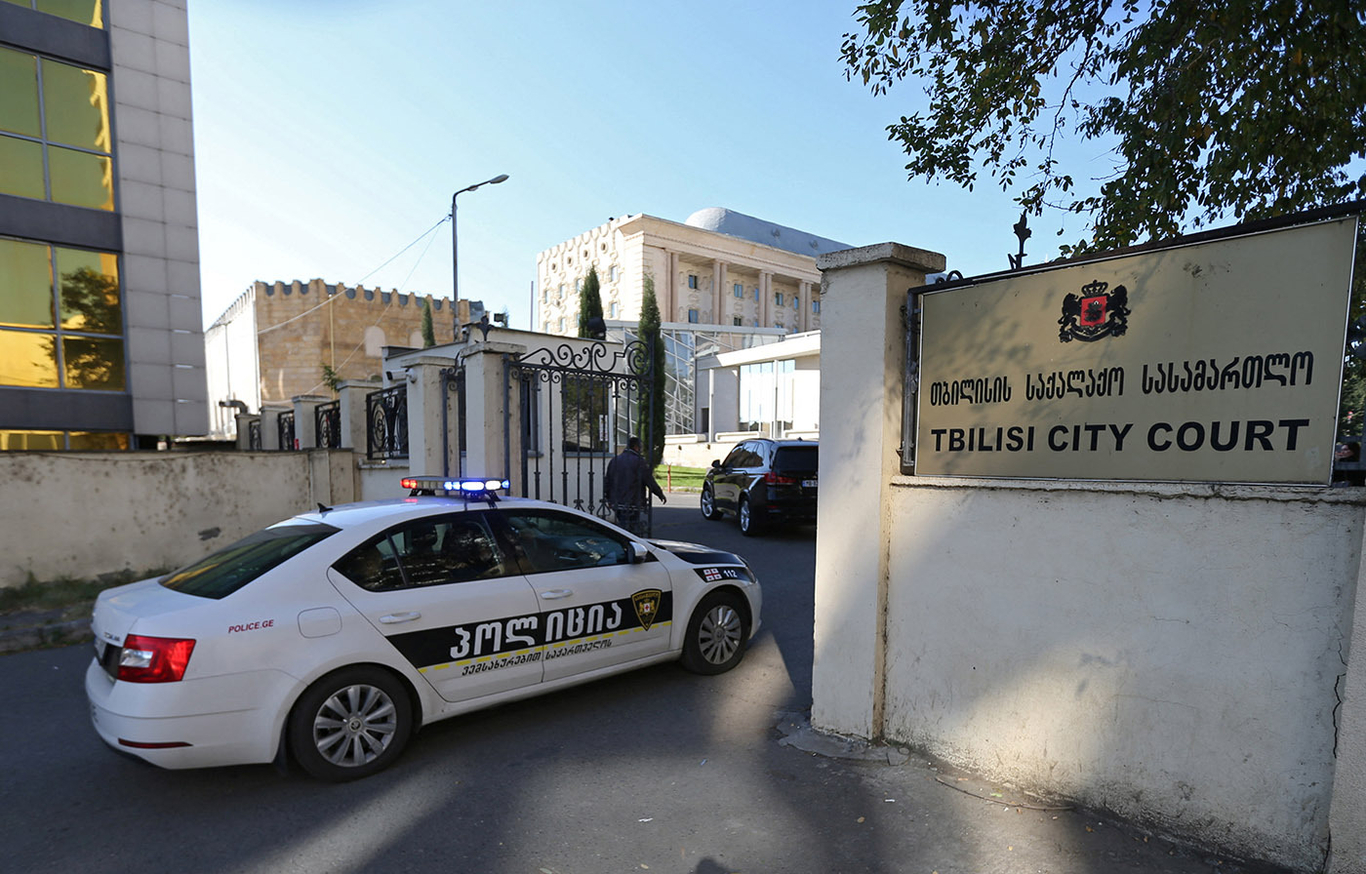
The very next day after the UK announced sanctions, Tbilisi made it clear that not only were they not surprised, but moreover, they had already taken measures.
The investigative service of the Ministry of Finance of Georgia officially stated that the companies Aifory, Arvix and Rapira Group were already under investigation, which concluded that Aifory and Arvix were registered to dummies for money and they had neither offices nor property in Georgia.
As for the Rapira Group, according to the investigation, a British citizen registered this company by power of attorney, and no financial transactions were recorded on its accounts, and it did not have offices or assets in Georgia. Rapira served exclusively citizens of the Russian Federation through the website rapira.net with a Russian registrar.
The Ministry of Finance reported that a month before the imposition of sanctions, namely on April 28, 2026, a trial had already taken place, by the decision of which two company managers were fined 30 thousand lari (about 10 thousand dollars), and the organizer of the fraudulent scheme, a certain David Dzhincharadze, was sentenced to a real prison term of 9.5 years.
Reporting this, the Georgian Ministry of Finance emphasized that they continue to cooperate with international partners on matters related to circumventing sanctions. Moreover, the illegal transactions were allegedly discovered by the National Bank of Georgia itself (and not some British teenager), of which the British side was also notified.
Nevertheless, the opposition had many questions, mainly about why the investigative authorities did not publicly inform the public about the investigation into such an important case. And the Speaker of the Georgian Parliament, Shalva Papuashvili, was clearly taken by surprise by the journalists. “I don’t know exactly what kind of communication there was,” he answered evasively when asked directly whether the National Bank of Georgia provided London with information about the facts of money laundering in favor of Russia.
Meanwhile, there was obviously some kind of communication with the Europeans, and not all the laurels will go to the British teenage crypto-whistleblower.
On June 11, the Prosecutor General’s Office, the Ministry of Internal Affairs and the Ministry of Finance of Georgia reported on their participation in a large-scale international operation to identify a network for laundering illegally obtained money through cryptocurrency, which has been operating since 2022. The volume of laundered assets is estimated at several hundred million dollars.
We are talking about the AudiA6 platform - a “cryptomixer” that, for a high commission, helps hide traces of suspicious cryptocurrency transactions.
It is believed that it was through AudiA6 that $9.5 million was stolen in April 2026, stolen from more than 50 users through the fake Ledger Live application.
This is software for managing virtual wallets, which scammers managed to place in the official Apple store, bypassing the verification systems.
In addition, the criminal group operates the Internet forum Dark2Web, where cybercriminals from different countries offer their services.
EU agencies Europol and Eurojust were responsible for coordinating the operation. In addition to Georgian investigators, employees of the US Secret Service, the Central Bureau for Combating Cybercrime of Poland and the prosecutor's office of the city of Lodz were involved.
According to official data, about 100 investigators and operatives conducted searches at dozens of addresses in Georgia: residential buildings, offices and cars. Two foreigners were detained in Adjara (the investigation did not disclose their citizenship), and electronic storage media and documents were confiscated. In addition, the property of the alleged participants in the scheme, acquired for the purpose of legalizing proceeds from crime, was arrested: 173 cars, expensive real estate and funds in bank accounts.
In Georgia, income from the sale of cryptocurrencies is not taxed, and transactions with digital assets are completely legal. Large industrial mining is concentrated not only in private farms, but also in free industrial zones, primarily in Gldani (this is a region of Tbilisi) and Kutaisi. Residents of such zones operate under a special tax regime: for permitted activities within the zone, there is an exemption from income tax, VAT on operations in the zone, property tax and import duties. The free industrial zone of Tbilisi itself lists among its advantages the provision of electricity without VAT.
The Gldani hub grew up around the Bitfury project: in 2015, the company received 18 hectares of land in Gldani for a symbolic price, the territory received the status of a free industrial zone, and in 2016 a 40-megawatt data center was built there.
The Bitfury project in Georgian political polemics is associated with the circle of the shadow ruler of Georgia Ivanishvili. It is known that the Georgian Co-Investment Fund, established by Bidzina Ivanishvili, issued a $10 million loan to Bitfury for the first data center in Gori in 2014. However, Forbes Georgia later wrote that the fund does not own shares in any of the Bitfury data centers.
And on this prosperous cryptophone, the authorities decided for the first time in many years to finally deal with the overwhelming volume of mining in Svaneti.
Residents of this small but extremely picturesque highland region of Georgia have officially enjoyed benefits for more than 20 years - they do not pay for electricity. There are several reasons for this: the simple poverty of the mountaineers, as well as the reluctance of the authorities to spoil relations with them due to the installation of meters.
It was assumed that the benefits would help develop tourism in Svaneti, but local residents found an even more profitable use for free electricity: it is believed that today there are about 10 thousand cryptominers in the region - devices for mining virtual money.
Thanks to liberal laws, today Georgia ranks first in the South Caucasus and is among the world's top 10 countries for ease of access to mining. However, due to mining abuses in Svaneti, both local tourism and the country’s economy as a whole are suffering.
According to experts, at normal load, consumption in Svaneti should not exceed 7–10 million kWh per year. In practice, it turns out to be many times higher:
According to Energo-Pro Georgia, in 2020 the local municipality consumed 91.1 million kWh of electricity, and in 2025 - already 132.9 million kWh.
Networks cannot withstand such overload, so power outages in the Svan mountains are a common problem.
Four years ago, when the situation became critical, one of the most unusual actions in the history of cryptocurrency took place in Mestia (the center of Svaneti): hundreds of Svans came to the Church of St. George to, according to community custom, “swear on the icon” and promise that they would turn off the miners. Despite the fact that this ritual in the old days stopped even blood feuds, this did not work with crypto, and mining in the mountains of Svaneti continues to flourish.
However, the other day the Georgian Dream government suddenly came to its senses and announced that miners from Svaneti annually rob the energy system in the amount of 20 to 25 million lari (about 8 million dollars). In this regard, war was declared on mining, and police special forces went to Mestia to seize equipment from local residents.
The opposition, of course, did not believe in the determination of the authorities and demanded to name the specific names and surnames of the patrons of the Svan crypto farms. Critics are confident that the raids are ineffective, and remind that there are miners in other regions, and in general they consider the authorities’ initiative to be a consequence of clan struggle within the Georgian Dream.