
Translated material
A voice for those who have sunk into oblivion
Carlo Ginzburg: historian as storyteller
The works of the recently deceased Italian historian Carlo Ginzburg made a very significant contribution to modern historiography; they will long serve as a source of valuable ideas and observations and a subject for scientific discussions. Grigory Bakus, researcher at INION RAS, presents his view on his work on witch hunts in Western Europe.
All of us, since February 24, 2022, have found ourselves in the face of advancing barbarism, violence and lies. In this situation, it is extremely important to preserve at least the remnants of culture and support the values of humanism - including for the sake of the future of Russia. Therefore, the editors of Gorky will continue to talk about books, reminding our readers that there is still a place for thought and fiction in the world.
The fame of Carlo Ginzburg is an obvious and undeniable thing. The success of his works among readers is evidenced by translations into different languages and the total circulation of publications. A number of thematic publications on historiography indicate that without his books it is impossible to imagine the development of such areas of historical science as microhistory and witchcraft studies - studies of witch hunts in Western Europe. Let us list the most significant of these publications. A special article by Oscar di Simplicio in the fundamental “Encyclopedia of Witchcraft” was devoted to the works of Carlo Ginzburg. Western Tradition" ( Encyclopedia of Witchcraft. The Western Tradition, 2006), edited by Richard Golden, as well as analytical articles by Willem de Blecourt in the collective monographs "The latest research in the historiography of witchcraft in the Palgrave series" ( Palgrave advances in witchcraft historiography , 2007) and The Oxford Handbook of Witchcraft in Early Modern Europe and Colonial America, 2013.
In the 1980s, abstracts of Carlo Ginzburg’s books on the inquisitorial trials of benandanti and Menocchio, prepared by L. M. Batkin, were published in the abstract collection “Culture and Society in the Middle Ages: Methodology and Methods of Foreign Research” (M., 1982), published by INION USSR, edited by A. L. Yastrebitskaya, A. Ya. Gurevich and Yu. L. Bessmertny. Thanks to this publication, Soviet medievalists could get acquainted with Ginzburg’s main ideas even in a situation where full translations of the books were not expected in the near future.
All these episodes are scattered over several decades and relate to the activities of the scientific community far beyond the borders of Italy, which allows us to say that the research of Carlo Ginzburg itself has become a significant historiographical phenomenon - a milestone in the development of science that the professional community cannot ignore.
Discoverer
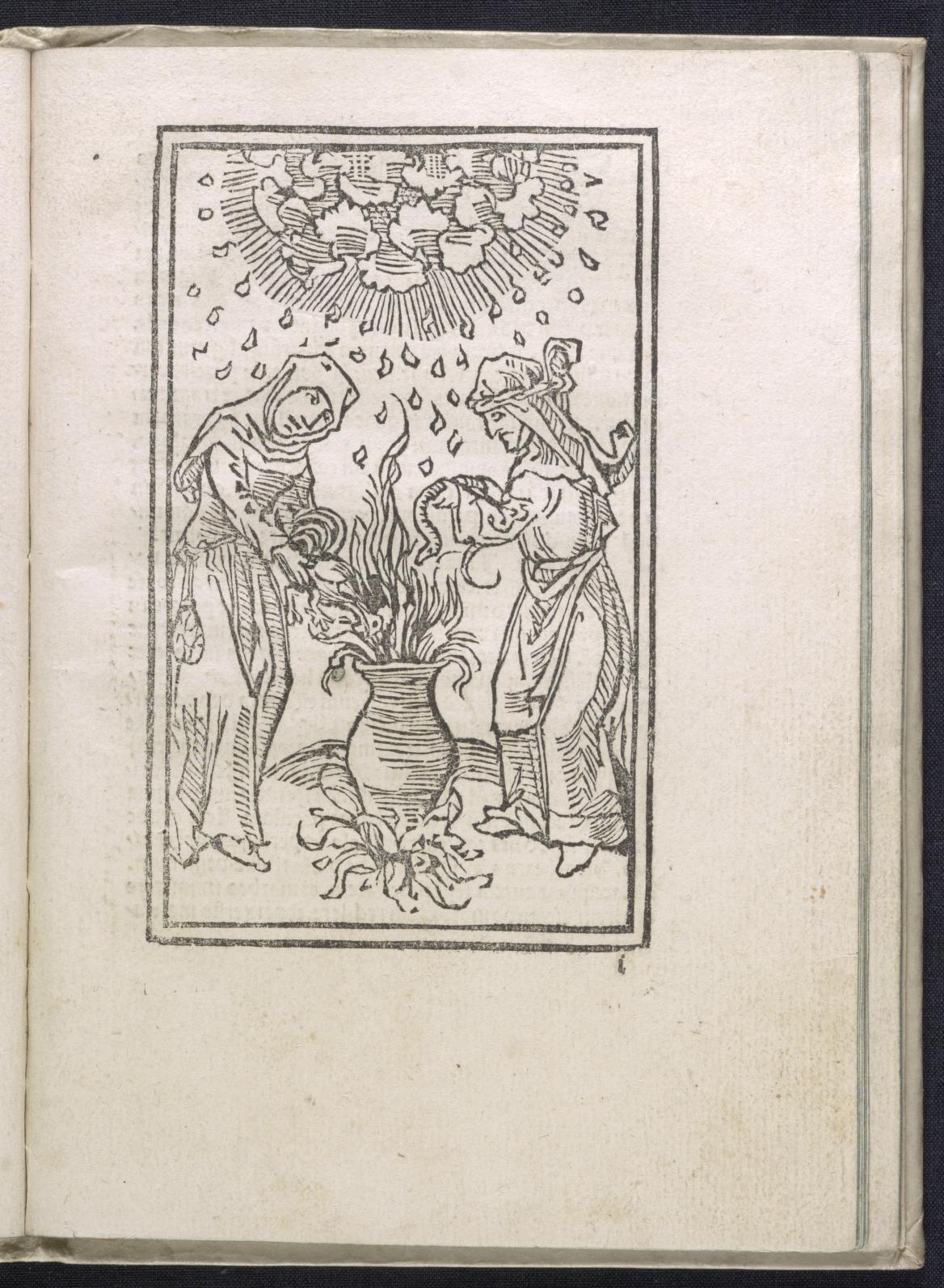
In 1966, Carlo Ginzburg (he was only 27 years old at the time) published his first book, Benandanti : Witchcraft and Agrarian Cults in the Late 16th - Late 17th Centuries. (in the English translation the book was called The Night Battles ), dedicated to a unique phenomenon of folk culture of the early modern era. The source base for the study was the corpus of inquisitorial cases containing a specific set of confessions - the journey of the soul outside the body, the ritual fight against the harmful witchcraft of witches, healing and protective magic. The word benandanti in the Friulian dialect (literally “well-behaved”) was used by the accused themselves as a self-description - a term that explains the totality of their actions.
By examining the interrogation protocols, Carlo Ginzburg aimed to identify the popular core of these beliefs, which, as he believed, went back to the archaic (pre-Christian) agrarian cult of fertility. Since in the surviving court records the spontaneous utterances of the “well-behaved” and the confessions extorted during interrogation represent an inseparable whole, the Italian historian set himself an ambitious and elusive goal - to reconstruct the ideas of the benandanti in their true form. Although Ginzburg himself did not use such terminology, Benandanti : Witchcraft and Agrarian Cults in the Late 16th and Late 17th Centuries. can be considered as an experience in discourse deconstruction - a selective retelling of process materials with a search for the closest historical analogies. As a consequence, the role of the historian in this study is to become a narrator on behalf of the inhabitants of Friuli who appeared before the Inquisitorial Court, an exponent of their views. As Leonid Batkin noted, Ginzburg used a rare case when the popular consciousness of the past directly testifies to itself - when recording the speech of these people, sometimes even their intonation was preserved (innocence, confusion, perseverance, misunderstanding). As the researcher himself summed it up, “it was possible to reconstruct a culture deeply different from ours, despite the filter introduced by the inquisitors.”
Method error and scientific criticism
The peculiarity of the “optics” of microhistory is that the researcher’s attention is focused on the personal stories of several “well-behaved”, whose testimony served as material for the experiment of mythological reconstruction, but at the same time the social parameters of persecution “went into the shadows”. As the discoverer of a previously unknown cultural phenomenon, Ginzburg ignored some “routine” questions, in particular, how the trials against “well-behaved” and “ordinary” witches in Friuli correlated. That accusations of “ordinary” witchcraft took place can be understood from Ginzburg’s laconic references to the fact that during the interrogations of the inquisitor Franciscan brother Felice da Montefalco in 1580, both benandanti mentioned specific people from among their opponents, malandanti (“evildoers”) - Battista Moducco “presented two names, one of which belonged to the woman who allegedly stole milk from the cattle,” and Paolo Gasparutto named the names of two male sorcerers. But we do not find any further comments on this matter in the study.
Statistics appeared in the works of historians who became interested in the phenomenon after the publication of Ginzburg’s book. Thus, William Monter drew attention to the fact that the spread of ideas about the Sabbath of witches in Friulian culture led to the emergence of a large number of accused, mostly women, accused of diabolical witchcraft (one hundred and ten charges against women and twenty against men). Data regarding the “well-behaved” themselves were published by Franco Nardon in the monograph “ Benandanti and the Inquisitors in Friuli in the 17th Century” (1999). The records of the Inquisition in Aquileia and Concordia and in Venice contain information about eighty-five cases of benandanti for the period from 1574 to 1749, but in more than half of them the accusations were not pursued and were not considered by the Inquisition. Official convictions were very rare - they were received by two men in 1581 (the already known Paolo Gasparutto and Battista Moducco), six men and six women from 1585 to 1662, and two more men in 1698-1705. This information showed that the idea put forward by Carlo Ginzburg about the existence of an archaic cult of fertility, as well as the gradual “psychological conversion” of the benandanti under pressure from the Inquisition to the negative model of the Sabbath and black magic, turned out to be difficult to prove.
The miller who could read and the humanism of the modern historian
“To reduce the scale of observation was to turn into a separate book what another scientist might have become a footnote in some monographic work on the Reformation in the region of Friuli. The motives that determined this choice of mine are not entirely clear to me."
This is how Carlo Ginzburg described the idea of his book “Cheese and Worms: A Picture of the World of a Miller Who Lived in the 16th Century.” In a certain sense, this work itself is a monument to chance in the work of a historian, to an unplanned and unexpected discovery. Surviving archival documents of the sanctum officium , in addition to the cases of the “well-behaved,” they also included materials from two trials against “one Friulian miller, Domenico Scandella, nicknamed Menocchio, who spent his life in complete obscurity and was burned by the verdict of the Inquisition.” Among other things, even his own handwritten notes and an incomplete list of the books he read have survived. The interrogation protocols of Domenic Scandella made it possible to record the situation of mutual exchange between written and oral cultures: “we learned how Menocchio read books - how he snatched individual words and phrases from them, which could not help but be distorted, how he connected passages separated in the source, establishing unexpected analogies between them.” Some of this man’s ideas resonated with topical discussions of the Reformation era and humanistic natural philosophy - in the original Italian title, instead of the ethnographic term “picture of the world,” Ginzburg used the word “cosmos” ( cosmo ), emphasizing this unexpected similarity. Menocchio was condemned as a heresiarch, the creator of a doctrine different from the teaching of the Church, and fifteen years later he was sentenced to death as a relapsus (relapsed into heresy). At the same time, the study brings to the fore a humanistic message: the historian cannot neglect the detailed documented history of the Friulian miller, no matter how insignificant this episode may seem to us, since we know nothing about many of his contemporaries, “who lived and died without leaving any trace.”
Policy article and discussion book
I would venture to suggest that Carlo Ginzburg’s most famous work is a small polemical article “The Image of the Sabbath and Its Origins.” It was published in French in the famous magazine “Annals” ( Annales ESC , vol. 39) in 1984; somewhat later, in 1990, translations into English (in the collection Early Modern European Witchcraft: Centers and Peripheries ) and Russian (in the almanac “Odysseus. A Man in History”) appeared. Between these dates, the monograph “Night Story” ( Storia Notturna , 1988; in English translation - Ecstasies: Deciphering the Witches' Sabbath ) was published - one of the most controversial historical studies of recent decades. The depth of this discussion can be indicated through two quotes - the author and one of his critics.
Carlo Ginzburg himself, suggesting that “this project is doomed to partial failure,” described the idea for “Night Story” as follows:
“return to the problems associated with the materials on benandanti - first of all, to the analogy between benandanti and shamans, which I have avoided considering in the past. Over the years I have become less careful and, perhaps, in vain. One way or another, I was now not ready to dismiss in advance the possibility that there was some kind of historical connection behind this analogy (which needs to be reconstructed from beginning to end).”
The general position of critics is most succinctly expressed by the observation of Oscar di Simplicio:
“Ginsburg's decoding of the Sabbath was soon absorbed into his search for the fundamental structure of human nature. His narrative wandered in search of a shamanic interpretation of the origins of this myth, and in prose that became extremely rich in allusions, but almost never analytical, Ginzburg collected a wealth of heterogeneous cultural data, completely indifferent to their social context.
However, this situation itself cannot be reduced to a discussion of a risky and poorly formulated hypothesis - in most of his works, Carlo Ginzburg himself actively polemicized with many intellectuals. His polemics included authors as diverse as Foucault (“Foucault is interested in persecution and its causes—the persecuted themselves are much less so”), Freud and Jung, as well as many fellow historians: Alan MacFarlane, Keith Thomas, Richard Kieckhefer. The driving motive behind this criticism was the assumption that history cannot be reduced to simple description, but requires efforts to overcome the forced silence of the majority of people of another era, invisible to us. In a certain sense, Ginzburg’s work boiled down to an attempt to become a voice for the long-sunk into oblivion Paolo Gasparutto, Battista Menocchio and the unknown old women who appeared before the court of Bishop Nicholas of Cusa (this story from “The Night Story” is available in Russian in the form of a short article “An Experience in the History of Culture: Philosopher and Witches”).
As an epilogue, I would like to make this observation:
“Many years ago I realized that, despite my emotional identification with the victims of the witchcraft trials, I also felt a disturbing intellectual affinity with their persecutors. <…> Of course, our goals were different in many ways, but I began to fear that I, like all historians of witchcraft, rely heavily on the interpretations of the inquisitors. In many cases, inquisitors used physical and psychological pressure to extract from the defendants what they wanted to hear themselves. But in other cases, as, for example, in the priceless Friulian benandanti cases, I was faced (as Mikhail Bakhtin would say) with an episode of dialogical testimony: a clash of discordant voices.”
Carlo Ginzburg left this retrospective description of his own research experience in a short essay “On the Eurasian roots of the witches’ Sabbath stereotype.” Today - and now always! - these words add up to direct speech coming to us from the past. Carlo Ginzburg once wrote them down among many of his other works and left us the opportunity to read and comprehend them.