
Translated material
Partially aware
The point is not that there is no information at all. And the point is that it does not go beyond a certain circle of people
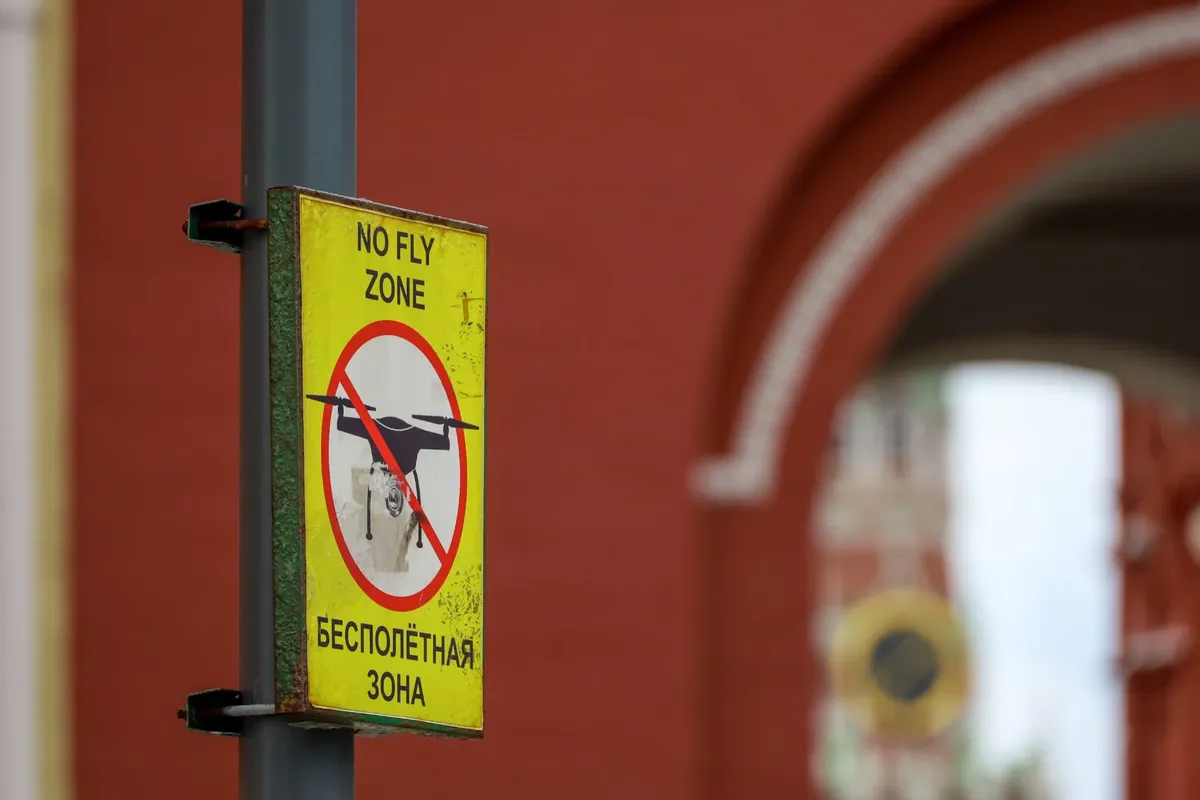
Last week I was not in Moscow, so I asked the same questions that were asked to me several times, not knowing that I was not in the city: “How is it there? Is everything on fire? Is everything in smoke? Can't breathe? No gas? I already knew the answers to all these questions. Moscow is a huge city. If you do not live in the southeast or your windows do not face the other side, you may not know anything at all about the fact that some drones flew somewhere and hit something. I’ve lived in Moscow all my life, but I’m not sure that I’ve ever been to Kapotnya, except maybe passing by on the highway.
If you are not a motorist, then problems with gasoline are quite abstract for you. The metro is running, the bus is generally electric, the traffic jams on the roads are as they were - nothing has changed visually. Relatives outside the city had an “oil rain” - they are definitely aware of the events. But, thank God, this new type of precipitation did not affect everyone. The others won't say anything about him.
“But there are social networks!” Depends on what and who has it? My example for all times is Prigozhin’s rebellion. I personally know people who learned about the very fact of the existence of such a person directly on the day of the rebellion - and by that time we had been playing his videos for months and discussing his actions. And people didn't even know about him! Even now they don’t know that anything happened in Kapotnya.
I was told about citizens who drove up to Tuapse by train and were amazed - what is that smoke outside the window? They didn't know that the local refinery was being serially bombed. We went on vacation, as we are used to doing every summer.
They probably even made some inquiries. But their “information desk” didn’t talk about drones. However, I am telling this from hearsay, but there is a direct example.
My friend is a little older than me - we are discussing the holiday season with him. Normal "small" conversation. And he suddenly says that the children have planned Crimea and urgently demand to go with them. Crimea is Crimea - for God's sake. But I just asked if the children are aware of the situation in Crimea as a whole? That if you go there by car, you might, to put it mildly, not get there and certainly not get out. My friend looked at me vaguely and replied: “They say it’s calm there.” In such a situation, you don’t know from what place and in which direction to continue the conversation. All that remains is to wish you good luck and be careful.
It is believed that in the era of information technology it is impossible to hide something, and attempts by the authorities to block and prohibit are meaningless and ineffective. Who knows, who knows... Yes, it is impossible to completely revive the Soviet experience. There was a myth that in the USSR everything worked like a clock, nothing sank, nothing exploded, there were no disasters or accidents. But all this happened, it was simply impossible to talk about it. Only the most egregious situations were officially reported - and then only in strictly measured quantities and only the official verified version was required. No alternative points of view, comments or discussions. And even then, the details penetrated the people, acquiring unimaginable fantasies against the backdrop of the lack of a complete picture. And now everyone has a phone, half have accounts on the same social networks! But the authorities impose restrictions on the publication of content, threaten fines (although it is completely unclear on what legal acts) and much less photos/videos appear. We at least understand something about the refinery, but about the Sadovod market?
Remember the first reaction of propagandists? Soloviev quoted Stalin’s order, known as “Not a Step Back”: “We must establish the strictest order and iron discipline in our army. Alarmists and cowards must be exterminated on the spot. That's it. There is no need to be hysterical, you need to think.” And he added: “Follow the path of traitors. Leave your homeland. Join the thin, vile ranks of Vlasov’s traitors. Start throwing mud at your country." On the Solovyov channel, propagandist Gasparyan demanded, using a facial recognition system, to find those who filmed the video and arrest them for two months - I will not quote him, there were a lot of bad words not for publication.
The point is not that there is no information at all. And the point is that it does not go beyond a certain circle of people. Those who already watch and read “enemies of the people”, bypass blocking and take a position far from Z. It is clear that such people exist, there are enough of them. But there are not enough of them to accumulate a critical mass. They are fought against, persecuted, pinched, and sought to be controlled. But they understand that it will still not be possible to reduce them to zero. The main thing is that it doesn’t spread further. So that the majority of citizens have a partial, blurry, unclear picture of the world. It seems like you heard something somewhere, but you’re not really aware of it. And in general, all this is exaggeration, lies or AI fakes. And so - “it seems calm.”
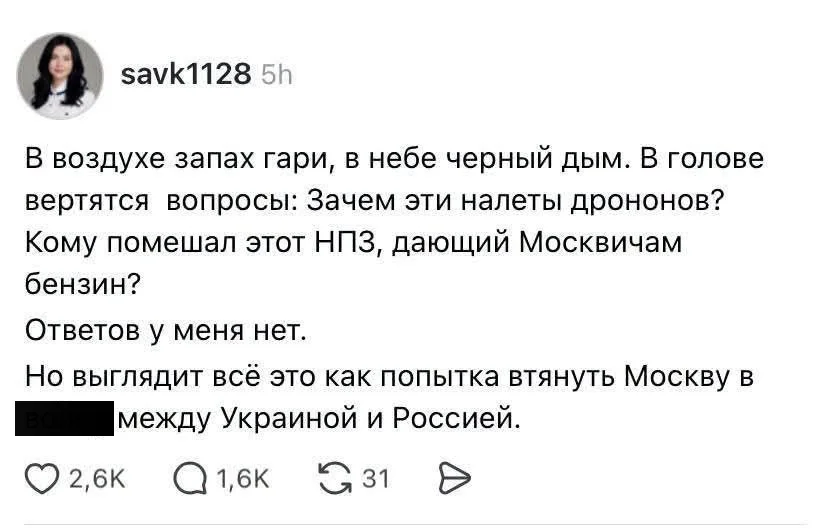
This strategy is not that stupid and not that ineffective. Everyone laughed at the girl whose post turned into a meme: who is dragging Moscow into the *** of Russia and Ukraine? But this is a meme for you, it’s all obvious to you. And someone won’t even understand what’s wrong in this matter?
We already live in information bubbles. Not only political ones. At least just in the bubbles of their interests. Cultural, sports, economic, geographical - there are many bubbles. We don’t even try to leave them, we are comfortable in these bubbles, we have enough of everything in them. If people are kept there forcibly, then it will not be so difficult for the state to control a society saturated with information, but informationally fragmented. In which you are aware of events, but partially. Without really knowing anything.