
Translated material
Paradise that survived the war
About Ksenia Buksha’s book “Little Paradise”

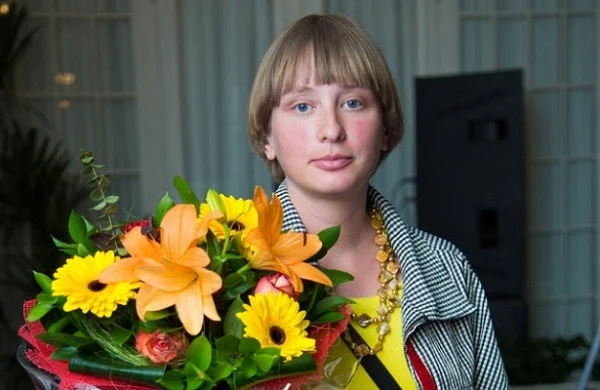
Bukshi’s novel “Little Paradise” was published by Freedom Letters
The independent literary award "Dar"* announced the winners of the second season. These are three books: the novels “Little Paradise” by Ksenia Buksha (Freedom Letters), “Lullaby in Mariupol” by Alexandra Krashevskaya (Freedom Letters) and “Repentant Days” by Oleg Radzinsky * (BAbook).
All these books in one way or another touch on the main theme of recent years - the military conflict in the center of Europe, but Buksha’s novel “Little Paradise” is unique. Modern Russian-language fiction is just approaching front-line themes - and suddenly a book appears that tries to describe not what happened before, and not even what happened during, but what will happen after! I suspect that this small book is the only one of its kind so far. The novel is strong and difficult, I would even say harsh. I would not recommend reading it to those who seek optimism.
This is a book with a rather simple plot and complex optics: somewhere in the mountains (presumably in the Balkans) there is a city that fifteen years ago survived the war, including a terrible episode: terrorists taking hostages in a school and their deaths (of course, Beslan immediately comes to mind). The city is “known throughout Europe primarily as a symbol of the incredible resistance it offered to the combined forces of the Imperials and terrorist gangs during the five-year war that ended fifteen years ago.” In principle, we can talk about any war of our time.
“Little Paradise” is an attempt to model the first quarter of any post-war years (but not only - the novel is multi-layered and polyphonic). The attempt, it must be said, is risky. During war, people rarely think about the future: to survive the flaming and bloody present. All warring parties strive for victory, while often having little idea of what it entails. What will happen after is taken out of the equation, and Buksha shows us what will happen after. But there’s nothing good there either.
A teenager goes missing in the city. Different people (an investigator, a mathematician, a journalist, a mayor) are trying to understand what happened to him. The disappearance of a teenager is a cool detective story, but the novel is not a detective story. The investigation as such is not described: the reader will not find any brilliant deduction a la Sherlock Holmes, no superhero running around in the style of Jason Statham, nor the usual tedious investigative or operational work.
By and large, people spend the entire book discussing the loss among themselves, nothing more. Even the investigator - he, of course, builds versions, but at the same time behaves completely inertly, sluggishly. What can be done? You can’t even comb the surroundings - they are full of mines from the war.
There is no detective story, and, I would venture to say, there is not even a clear event plot. No one is running anywhere here. Here, in general, the narrative is built more on dialogues. Events are presented as if offhand, in a broad stroke, often as if the conversation is about matters that are well known to the reader. Although there are many facets in the novel - for example, the political line is present, and how: even the damned Americans, who, of course, are to blame for everything, are in the book. There’s also more than enough psychologism. The novel also has its own Nazis. Your tyrant. Our own terrorists. Fans of mysticism or what is called “magical realism” will also be satisfied. All in all, a rich novel.
It's all there, and it's all really not that important. This is just a background for the main thing, and what seems most important is not the development of the action, but the picture, the puzzle, which is made up of different views and memories of the characters. “The most interesting thing here is that it doesn’t matter how things really are. It’s important who thinks about this,” says the mayor.
All heroes (and everyone in general) have a common trait. They are traumatized by the war, crippled by it, even those who did not see the war (the missing boy was born after the end of the fighting). Moreover, they, in general, live by war, these people. Mines all around. Cracked walls of houses. Memories. Even politics is determined by the consequences of the war: a city that has defended its independence has a certain autonomy, and the Metropolis dreams of gobbling it up.
I would like to say a few words separately about memories. The author highlights them in italics. This is similar to the technique that Hemingway used, introducing stories with very short, paragraph-long, micro-sketches. In Buksha they are scattered throughout the text and, among other things, give rhythm to the narrative.
At the same time, the novel, which naturally gave me quite a large number of associations with the work of writers of the lost generation, seemed to me similar in mood not to Hemingway, but rather to such works by Remarque as “Life on Borrow,” only without the romance.
Existence by inertia, the feeling that you survived, in general, by pure chance. General loss, even doom.
The heroes of the novel are divided and devastated people. They communicate with each other, interact, many have families, children (and this, in general, is a separate tragedy). But, in fact, they live alone with themselves and their pain, which has become so familiar that you don’t even notice it. War and trauma are the main motive for the actions of each of the heroes and the main reason for their restlessness.
At the same time, it cannot be said that these are extinct, indifferent people. Some of them are quite active. Not everyone sits with a dull look in depression, with their arms hanging down. But when these people try to understand what happened to the teenager, they are actually looking for an answer to the question of what happened to them.
As a matter of fact, I also had a question: do they live in the present? Where is the reality for these people - the current, albeit boring, but peaceful time or the terrible pain of the war years? Or something else?
It seems that the way out is outlined in the finale. It seems that by the end of the book it’s getting a little lighter, not everything is so hopeless: Aron is there himself, and not just there, but tells an incredible, mystical story: “I talked to them. - Did you talk? “Well, let’s just say that I dreamed about them all in turn.” And in a dream we talked. - Who did you dream about? — Those one hundred and thirteen guys who died during the terrorist attack. In the hall of our school." This scene is worthy of a separate discussion - it seriously changes the perception of the text and, perhaps, is the most controversial in the book. A frank mysticism is already happening before our eyes, which can be explained, for example, by a hallucination, or perhaps completely inexplicable, like what message the children conveyed through Aron.
Residents of the city gather in church for Easter - and there seems to be unity in this scene, and at least some promise of perspective.
But no. The last lines of the novel are terrible, they again contain war and death. Damn cyclicality.
However, in addition to those listed above, there is one more hero in the novel, perhaps the most important. This is the city itself. In my opinion, the most striking image in the entire book.
First of all, I note that the city in the novel is not Paradise. This is only its official name, and most often it is called disparagingly: Rayok. And “to the residents of Raik, Rayok does not seem like a paradise at all”: everything around is mined, and the climate of Raik “is the same as the past: it is extreme and uncompromising. Either raging heat, or chills, fog and mold.” Not Heaven, but a distorted, earthly, post-war parody of Heaven. What would have happened to paradise if it had survived the war?
The city is both conventional and beautifully described in detail: “a square with pompous and funny concrete buildings from the time of Dede the Great, dusty potholes, bright signs, a bazaar on boxes, traders, snack bars, where bottles are in a braid and local “boiled” coffee, sweet-smelling oleanders and wisteria, and a fountain restored under the current mayor (terribly restored, but the roads are really have become much better), and the highest mountains on all four sides and the blue sky above.”
In a word, nothing special. An average cute town with provincial touching and funny arrogance (there is even a traffic light, just one), attractions for tourists (the very symbolic Heavenly Carousel), some technologies (there is already a wind farm).
The city has its own history, which had its own dictator, a native of Raik, its own writers and poets (very sarcastically described), its own heroes and its own scoundrels. History (or mythology?) makes Rayok even more real.
The city is paradoxical. He is absolutely reliable, he is real. But for all that, Rayok fits tightly into a long chain of “ghost” cities of world literature, such as Marquez’s Macondo or the city in which the heroes of “Ugly Swans” by Arkady and Boris Strugatsky live. The Strugatskys' unnamed city is melting in the rain. A tornado wipes out Macondo. The rayok has not disappeared, but it is sharpened, sharpened, sharpened by mold, which is at first perceived as a household item, but then acquires deep ambiguity.
As befits a “ghost” city, “ghostly” events take place in it, with which, in fact, the novel begins. Aron's disappearance and return are beyond ordinary logic and reality.
And one more feature of Ryke is that it seems to be accessible (there are simply not many people who want to go here, except for tourist one-time groups). On the other hand, he seems isolated. Geographically, it is located in a mountain canyon; you can only get into it through a tunnel that was blown up at the end of the novel (“it’s a five-hour bus ride from Metropolis”). In addition, the space around - a beautiful mountain landscape - is mortally dangerous, it is literally mined. Even politically the city is autonomous. It’s as if he’s been removed from the general space, locked in some mountain valley.
Fifteen years have passed since the war in the so real and so “ghostly” Raike. It seems like a lot of time - and so little. The book will not answer how much time is needed. She says something else:
it won't be good after the war. There is no magician with a magic wand who will bring peace immediately after the end of the fighting. Living in post-war Paradise means living surrounded by mines and mold. The old, pre-war world will not return, because Raik’s past is now war.
The fact of the matter is that a war cannot simply end. This will last for a long time. For many - forever.
But nevertheless, they still don’t shoot in Raika - for 15 years now.
Well, they almost don’t shoot.