
Translated material
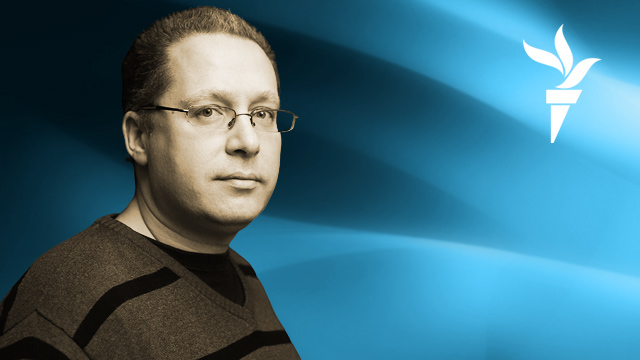
Send him to hell. Yaroslav Shimov - about quarrels and rudeness of politicians
The leaders of the United States and Italy recently had a fight. It all started with the fact that after the G7 summit, American President Donald Trump gave an interview to one of the Italian TV channels, where he said that Italian Prime Minister Giorgia Meloni “begged” him to take a joint photo, and he eventually took pity on the poor thing. Meloni was indignant, saying that nothing of the kind happened, and in general, neither she personally nor Italy “never beg for anything.” The scandal continued: Italian Foreign Minister Antonio Tajani called Trump's remarks "rude and insulting" and canceled his planned visit to the United States.
The story is strange, since it was Jorja Meloni who was for a long time - along with the President of Finland Alexander Stubb, like Trump, a good golfer - the favorite of the US President, who singled her out among European leaders. But Donald Trump’s moods and sympathies, as has long been known, are very changeable. Obviously, the president did not like how Italy behaved during the war between the United States and Israel against Iran, declaring that it would not allow Washington to use military bases on Italian territory to transfer troops, equipment and cargo to the combat area.
Leaders' personal conflicts are becoming more frequent, and their language is becoming harsher and harsher
However, in this case, what concerns me is not the reasons for the quarrel between Trump and Meloni, but the fact that it reflects the current state of world politics: personal conflicts between leaders are becoming more frequent, and their language is becoming harsher and even rude. The same Trump, as you know, does not mince words about his opponents - Wikipedia even has a special article dedicated to the nicknames he invented for them. But he himself was called all sorts of names, not only by his political opponents, but also by his own assistants .
Few people can compete with the current Russian leaders in terms of rude expressions. Ex-president and now deputy chairman of the Security Council of the Russian Federation Dmitry Medvedev, with his almost daily telegram philippics against the insidious West and the “Nazi Kiev regime,” has become a kind of standard here, and some of his expressions like “a pack of grunting pigs” (about Western politicians) have become Internet memes.
You can also recall another meme - the phrase “morons, b***” by Russian Foreign Minister Sergei Lavrov to journalists who had somehow angered him. It, of course, became public only because the microphone was turned on unsuccessfully (for Lavrov), and therefore cannot be considered fully public. But it is still difficult to imagine such vocabulary in the mouths of prominent diplomats of bygone times - even Prince Gorchakov , even “Mr. Net” comrade. A.A. Gromyko .
Evening Newsletter - Subscription widget compact
The current conflict between Poland and Ukraine over the Order of the White Eagle has so far avoided personal insults; the sparring between Presidents Nawrocki and Zelensky is taking place in more or less parliamentary terms. But the overall impression is still sad: the allied countries, in the midst of Europe's largest war since World War II, quarreled over opposing interpretations of history more than 80 years ago. As they say, we found the time and place.
Why have politicians become coarser, and what does this say not only about them, but also about us - that is, about the societies of which they are representatives? There are several reasons, it seems to me.
Politicians have not become closer to the people, but they have to play at simplicity and democracy
The first can be called “false democracy.” Politicians have not become closer to the people; rather, on the contrary, most of them live lives very far from the everyday worries of ordinary citizens. But we have to play at simplicity and democracy. In a world where the media and social networks immediately expose every public step of a politician for everyone to see, you need to “behave like everyone else,” to be like a simple and accessible person. The image of guy/girl next door (“guy/girl next door”) sells well during election campaigns, which are increasingly reminiscent of advertising campaigns. And a simple guy from the next house can, of course, “beat his mother”, because nothing human is alien to him.
A direct consequence of this is the convergence of the language of politics with the language of everyday life. “The guy/girl next door” doesn’t need to be too complicated or “clever.” The speeches of Churchill or de Gaulle, replete with references to literary and philosophical classics, would hardly have had much success with a wide audience today. Subtle irony and jokes are often not “read”, although there are still public figures who master this art - as, for example, the British King Charles III showed during his recent visit to the USA (you can read about this at the link below).
But to push the opponent harder - the public understands this. Once upon a time, Napoleon, having suspected (not without reason) his best diplomat Talleyrand of treason, scolded him in the presence of the entire imperial court, crowning his tirade by calling him “silk crap.” Talleyrand listened silently, bowed and, leaving, said quietly: “What a pity that such a great man was so poorly brought up.” Thus, in the opinion of those present, he gracefully won the verbal duel with Napoleon. I suspect that now Talleyrand would be considered simply a weakling in this situation.
Another reason for the rudeness of politicians is simple: they often simply have nothing substantive to say. The time for “big ideas” is now past. Maybe it’s for the better: attempts to implement some of these ideas, such as communist and fascist ones, have cost humanity very dearly. But certain political technology tools to “warm up the public” remain unchanged. One of the most common is confrontation, which in conditions of political petty issues becomes a real lifesaver.
Where there are enemies and confrontation, they don’t go into their pockets for strong expressions
Please note: nowadays most political campaigns - and here, alas, there is almost no difference between democratic and authoritarian regimes - are built on confrontation. There is always someone who prevents honest people and good citizens from living: foreign agents and “Ukronazis”, immigrants and homosexuals, corrupt officials and fascists (which is now fashionable to call everyone whose views you don’t like)… Only by getting rid of them or silencing them can you finally live like a human being, as the right, left and who knows what politicians instill in the masses. Well, where there are enemies and confrontation, they don’t go into their pockets for strong expressions, the same D.A. Medvedev will not let you lie.
Well, the last (but not least) reason. We are accustomed to the concept of progress, to the idea that, despite temporary disruptions and retreats, on the whole, the life of humanity moves forward, becomes better, more interesting, more diverse, richer... But this cannot in any way be considered the law of development of nature and society. History knows long periods (for example, the "Dark Ages" in Europe) when development went backwards, flourishing societies were destroyed, and people became narrower, more superstitious... and yes, ruder.
Who knows if we are at the beginning of another such era. The fact that at the end of the first third of the 21st century, people on average read less than their peers in previous generations, that their cognitive abilities are declining , and the presence of a huge amount of information made available thanks to the Internet, in general, has not led to a broadening of their horizons - these are simply facts confirmed by sociologists and anthropologists. What kind of outlook is there if, according to surveys, from 3 to 11 percent of residents of different countries believe in a flat Earth !
Perhaps the coarsening of morals, including political ones, is a symptom of the onset of cultural decline. And how could we not live to see the time when artificial intelligence becomes the smartest, most sophisticated and polite of the inhabitants of this planet.
Yaroslav Shimov – journalist and historian, columnist for Radio Liberty
Opinions expressed in the "Author's Rights" section may not reflect the views of the editors
Read Freedom on Telegram Make Freedom a priority source on Google  Install the Mobile application
Radio Liberty