
Translated material
Alan Greenspan, the legendary economist who determined US financial policy for almost 20 years, has died.
His name is associated with both a long period of rapid economic growth and the global crisis of 2008
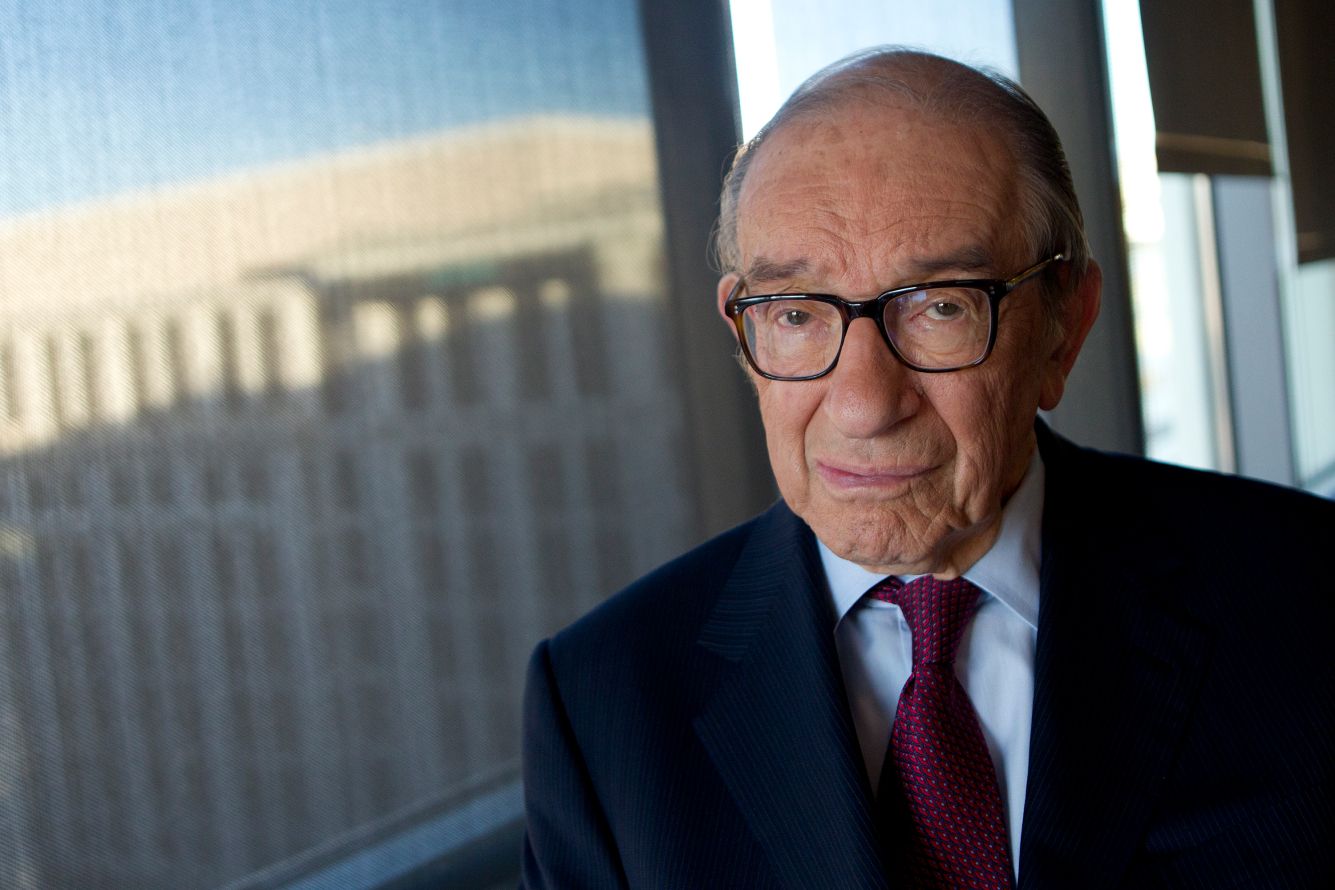
Alan Greenspan, former chairman of the US Federal Reserve System (FRS), has died at the age of 101. In his nearly two decades at the helm of the world's most powerful financial regulator, he has become a legendary figure: lauded for his contributions to global free trade arrangements - and just as mercilessly criticized for leading the financial system into crisis in 2008-2009. Meduza recalls the fascinating story of Greenspan's life and career (the material is based on obituaries of the Financial Times , The New York Times , The Economist and other publications).
Jazz, Wall Street and Ayn Rand
Alan Greenspan was born on March 6, 1926. He grew up in New York City in a studio apartment with his grandparents and his mother, Rose. His parents divorced when he was young. And although the boy was surrounded by the love of his mother, his father Herbert, a stock broker, took little part in raising his son. Later, he tried to improve relations and even offered Alan a business partnership. But Greenspan rejected his father's attempts to get closer.
With an aptitude for mathematics and a phenomenal memory for numbers, Greenspan initially dreamed of a career in music. He attended the Juilliard School, a renowned New York conservatory, but did not study long, deciding as a teenager to join the Henry Jerome Orchestra, a touring jazz group. Although Alan was considered a talented musician (he played the clarinet and saxophone), he quickly decided that building his dream career would not be possible. And in 1945 he entered New York University.
There he began to study economics. His first job after graduating from university in 1948 was with the Conference Board, a research organization, where he prepared analytical materials. Greenspan then entered into a partnership with William Wallace Townsend, a former trader (this is how the Townsend-Greenspan firm was born). And he quickly earned a reputation on Wall Street for providing detailed, data-driven analysis of the U.S. economy.
In 1952, Alan married for the first time, but separated from his wife less than a year later. Then he met the writer Ayn Rand. She has already become famous for her novel The Source, and also as a preacher of the creative power of capitalism. Greenspan became close friends with Rand, who initially derisively called him "Undertaker" due to his serious disposition and penchant for dark suits and ties. Her influence on him was enormous; he began to share her libertarian views and actively defended Rand's work.
His belief in the free market remained with him throughout his life. And his talents for statistical analysis allowed him to enter the Republican elite and become an adviser to three Republican presidents.
Presidential Advisor, Failed Minister and Member of the “Save the World Team”
In 1967, Greenspan joined Richard Nixon's election campaign, providing economic advice and analyzing public opinion polls. After Nixon resigned due to the Watergate scandal, Greenspan became chairman of Gerald Ford's Council of Economic Advisers. And in 1980 he took part in the successful campaign of Ronald Reagan. In the latter's administration, he counted on the post of Minister of Finance, but the post went to other candidates.
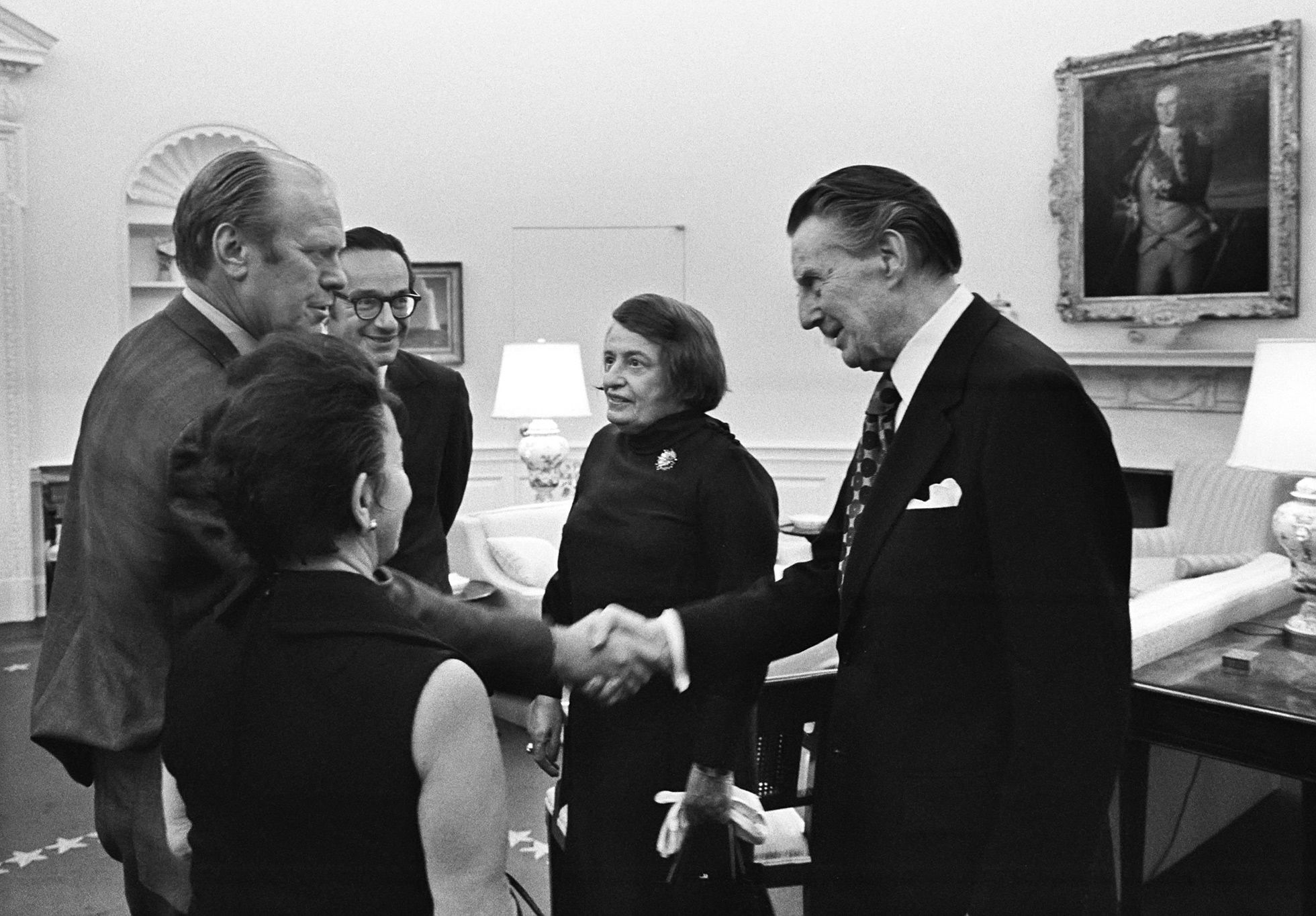
In 1981, Reagan appointed Greenspan to chair a panel reviewing pension system reforms. And at the beginning of 1987, the head of the Ministry of Finance, James Baker, approached him with a fateful offer to head the Fed. And when the agency's previous chief, Paul Volcker, resigned that same year, Greenspan received Reagan's nomination and was confirmed by the Democratic-controlled Senate.
The beginning of his work at the Fed was a real baptism of fire. Just two months after he was confirmed in office, the stock market crashed. On October 19, 1987, Black Monday, American stock exchanges lost more than 20% of their value in one day. It was the biggest one-day drop in the country's history. In response, Greenspan decided to provide additional liquidity to the financial system and lowered interest rates. And the collapse did not cause lasting damage to the economy.
How the Fed's measures work
Managing the key rate is the main action of the regulator.
When rates fall, it becomes cheaper for commercial banks to borrow money from the central bank.
In turn, commercial banks make loans more accessible to households and businesses. This accelerates economic activity. At the same time, profitability on bank deposits is falling.
Accordingly, an increase in the rate starts a reverse cycle: money becomes “more expensive” for banks, which is followed by an increase in loan rates for households and businesses. Economic growth is slowing down. It becomes more profitable to save money due to attractive deposit rates.
But with the recession in 1989, the new administration of George H. W. Bush began to aggressively call for additional monetary easing (MEP). Greenspan was especially pressured by Treasury Secretary Nick Brady, which led to a long rift between them. In 1990, the United States even plunged into a mild recession, that is, an economic decline lasting several quarters before emerging from a peak in 1991. Bush later stated that the Fed's refusal to more aggressively ease monetary policy was the reason for his election defeat by Bill Clinton in 1992.
The Clinton administration decided to stop publicly criticizing the Fed, an approach that was followed by all subsequent administrations until Donald Trump. Despite his Republican beliefs, Greenspan achieved reappointment to the post of head of the regulator by a Democratic president. And perhaps he collaborated with the Clinton administration even more constructively than with the Bush senior team.
It was during Clinton's second term that Greenspan solidified his reputation for standing up for his decisions as the Fed remained under pressure, with many demanding higher interest rates to stave off inflation caused by the booming economy.
Greenspan suspected that rapid technological change was increasing the rate of economic growth, which was not immediately reflected in statistics. This means that he could afford to carry out a milder PrEP. And the analysis turned out to be prophetic: if from 1970 to 1995 labor productivity increased by about 1.5 percent per year, then from 1995 to 2003 the growth rate doubled. “If you want a model to predict the unemployment rate in the United States over the next few years, here it is,” wrote economist Paul Krugman in 1997. “She will be whatever Greenspan wants her to be, give or take the occasional mistake, reflecting the fact that he is not exactly God.”
The Fed chairman's authority was further strengthened towards the end of the decade, when he became a key figure in mitigating the impact of the 1997–1998 emerging market crisis on the US economy, as well as the collapse of the large hedge fund Long-Term Capital Management. In 1999, Greenspan appeared on the cover of Time magazine with then-Treasury Secretary Robert Rubin and his deputy, Lawrence Summers, as the “committee to save the world.” Financial markets were fascinated by his ability to deal with crises - and responded with explosive growth.
In the late 1990s, concerns about overvalued securities began to intensify. Especially against the backdrop of intense growth in the technology sector. Greenspan pointed out the risks back in 1996 in his famous speech in which he spoke of “irrational optimism.” Yet he made no attempt to curb the boom through interest rates.
As a result, the dot-com crash occurred in the United States. The consequences of this at the beginning of the new century provoked a wave of aggressive easing of monetary policy, as part of which the Federal Reserve lowered its key rate to one percent.
Knighthood, retirement and reputational crisis
The regulator returned to tightening monetary policy only in 2004. And after Greenspan left office in 2006, the rate returned to above five percent. Critics argued that the Fed contributed to dangerous imbalances during this period by keeping rates too low for too long, raising them too predictably in 2005–06, and failing to advocate for stronger regulatory oversight of the financial system.
John Taylor, a Stanford economist and former Treasury official, has been one of the most vocal proponents of the view that soft monetary policy contributed to the housing bubble. Other economists took a different tack: Greenspan would have a hard time using rates to curb the credit boom. In their opinion, this tool is too crude to be used to suppress excessive optimism in the markets.
Either way, Greenspan was out of office to deal with the 2008-2009 disaster. He resigned in January 2006, handing over the reins to Ben Bernanke. Thanks to a period of stability during his chairmanship of the Fed, Greenspan received numerous accolades and honors, including a knighthood from Queen Elizabeth II and the Presidential Medal of Freedom, the highest civilian honor in the United States, which he was awarded in 2005 by George W. Bush.
Just over two years after Greenspan left the Fed, the Fed faced the collapse of investment bank Bear Stearns, followed by the collapse of Lehman Brothers and a series of bailouts of other sinking Wall Street players, as well as an unprecedented program of monetary easing.
The disaster led to a reassessment of Greenspan's figure. His focus on helping struggling market participants, along with his advocacy of laissez-faire economics, has been criticized, as has the entire free-market philosophy, which weakened banking regulation and failed to save the crisis-ridden US mortgage market.
Greenspan has used his influence for years to oppose increased regulation of derivatives , the products at the center of the financial crisis. Moreover, in 2003, he praised such tools, arguing that institutions had become “less vulnerable to shocks caused by underlying risk factors” and that “the financial system as a whole has become more resilient.”
Greenspan was not alone in supporting soft oversight. The Clinton administration also actively supported Wall Street, and the International Monetary Fund highly valued the properties of derivatives, which at some point made it possible to spread risk in the real estate market.
But while Greenspan was enthusing about the wisdom of markets, a bubble was brewing in the mortgage industry and on Wall Street. Alan Blinder, who served as Greenspan's vice chairman from 1994 to 1996, said his boss was "excellent" at managing the economy and keeping employment and inflation levels in line. But “he always had a regulatory blind spot.” Blinder said the Fed's refusal to confront unfair practices in the mortgage and banking industries was a "disgrace": "They haven't lifted a finger to stop it. And most of that happened during the Greenspan administration.”
Just a month after the Lehman Brothers bankruptcy, the former Fed chairman told a congressional committee that he had "discovered a flaw" in the free market philosophy he championed. “Those of us who relied on the self-interest of lending institutions to protect share capital, including myself, are in a state of shock and disbelief,” he stated.
However, Greenspan subsequently rejected arguments that the boom and bust were caused by PrEP settings. In 2010, he said that while regulators, including the Fed, had underestimated the size of the asset price bubble, low short-term interest rates played little role in inflating it.
In his book The Map and the Territory, Greenspan provided a more detailed post-crisis analysis. He concluded that traditional forecasting had failed because it paid too little attention to behavioral economics and the potential for irrational behavior.
Nevertheless, Greenspan remains a prominent figure in the history of American monetary policy. He acted decisively in times of crisis and was not afraid to go against conventional wisdom in economic analysis. During his tenure, he contributed to the longest period of economic growth and price stability in the United States.
The regulatory failures that preceded the 2008–09 crisis were not Greenspan's fault alone. Politicians in the 1990s and 2000s also praised risky financial instruments, criticized attempts to limit them through government regulation, and therefore share responsibility with the Fed.
However, a more sensitive attitude to the “irrationality” of free markets that he revealed clearly could have allowed Greenspan to better respond to the threats that were brewing in the 2000s.
"Jellyfish"