
Translated material
South Ossetia was headed by the former director of the Kurchatov Institute, citizen of the Russian Federation Marat Kambolov
Meduza’s sources believe that Russia is “thinking again” about annexing the partially recognized republic
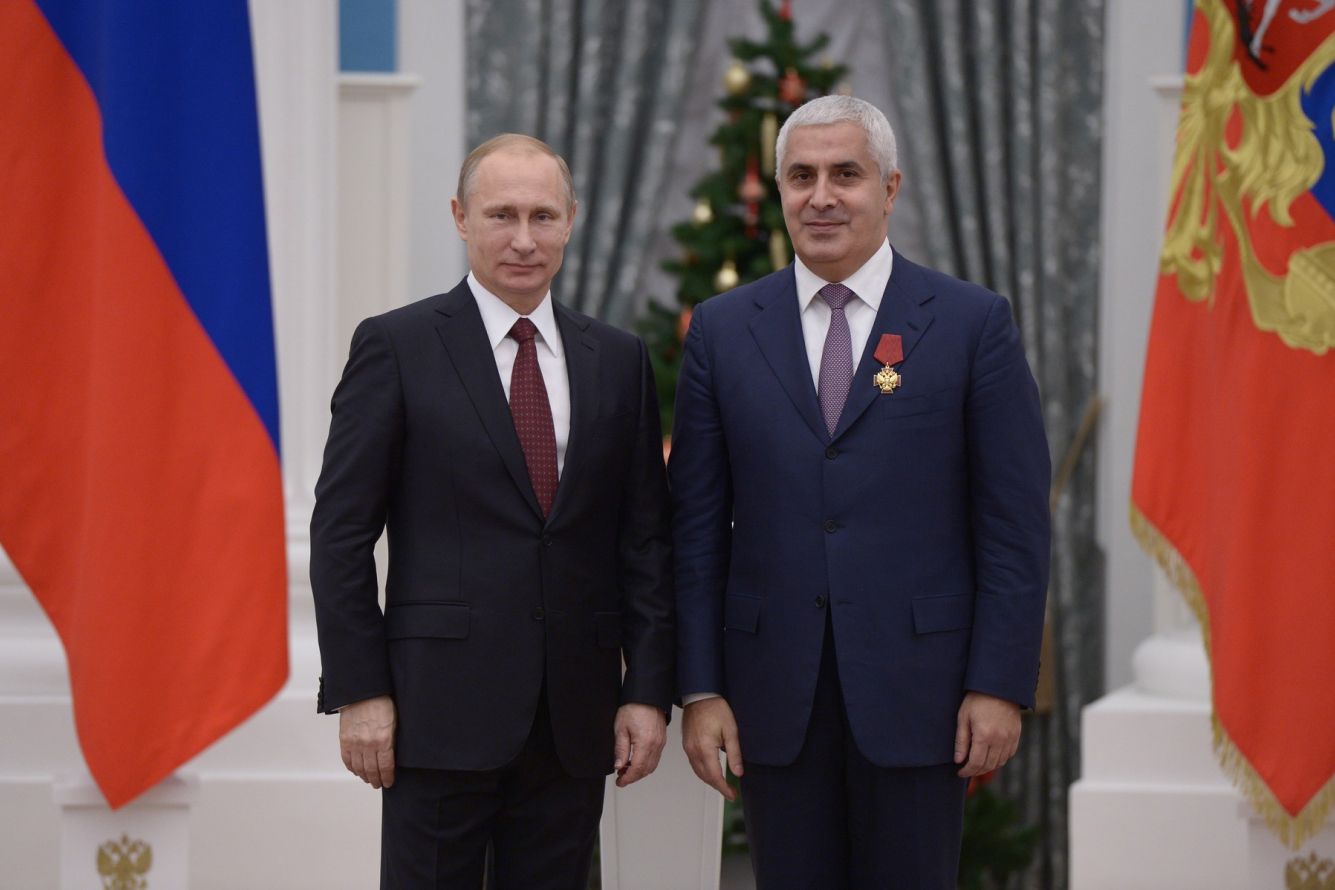
The president of partially recognized South Ossetia, Alan Gagloev, resigned on June 23. He announced that he had accepted an offer to become an adviser to Russian President Vladimir Putin. The decree on his appointment to this post has already been published.
“I supported our historical leader Vladimir Vladimirovich Putin and am ready to stand next to him. Starting today, I am transferring to serve in the administration of the President of the Russian Federation and resigning as president of the Republic of South Ossetia,” Gagloev announced.
Gagloev announced his resignation the day after the Kremlin reported on his meeting with Putin. At the meeting, according to the press secretary of the Russian President Dmitry Peskov, “prospects for further building up the bilateral dialogue were discussed, including taking into account the bilateral agreement that was signed in Moscow in May.”
The Agreement on Deepening Allied Cooperation between the Russian Federation and the Republic of South Ossetia dated May 9, 2026, which Peskov spoke about, among other things, allows citizens of the Russian Federation to hold government positions in the partially recognized republic (and vice versa).
In mid-May, the agreement was ratified by the State Duma, and on June 8, Gagloev nominated Marat Kambolov, a citizen of the Russian Federation who worked in the Russian government and held positions in the leadership of the Kurchatov Institute Research Center, to the post of head of the government of South Ossetia. On June 16, Kambolov’s candidacy was approved by parliament, and he was appointed chairman of the government.
The president of the Kurchatov Institute Research Center, where Kambolov worked from 2014 to 2026, is Mikhail Kovalchuk. Brothers Mikhail and Yuri Kovalchuk are believed to be part of Putin's inner circle.
Kambolov was Prime Minister for one week, and then headed the unrecognized republic. According to the laws of South Ossetia, in the event of the resignation of the president, it is the head of government who becomes acting until early elections are held.
Meduza’s interlocutor, close to the Russian presidential administration, in 2022 talked about the “scenario” of South Ossetia and Abkhazia joining the Russian Federation or a union state (Russia and Belarus), which was “being worked out in the Kremlin.” Such a step, he said, could demonstrate to the residents of the Russian Federation “territorial gains” after the Russian army left part of the occupied Ukrainian territories.
Such a scenario, a source told Meduza, “was discussed seriously, but not for long”: “In Ossetia, the majority of the population is in favor, but in Abkhazia the majority is categorically against it. As a result, the annexation of Ossetia alone was considered too small.” A technologist who is familiar with politics in South Ossetia called this republic “a gray zone where money laundering and cashing reign, so they decided not to touch it.”
Gagloev’s predecessor as president of South Ossetia, Anatoly Bibilov, after losing the elections, signed a decree to hold a referendum on the unification of South Ossetia with Russia. Gagloev, having assumed the presidency, “ postponed ” the holding of the referendum.
“Now, apparently, they are again thinking about the mini-USSR project,” a technologist who worked on the Ossetian elections told Meduza.
"Jellyfish"