
Translated material
“You're not even trying. You've become really lazy."
Former US Director of National Intelligence Tulsi Gabbard grew up in the Hare Krishna community in Hawaii. It seems that the guru of this community has been its secret political adviser for many years
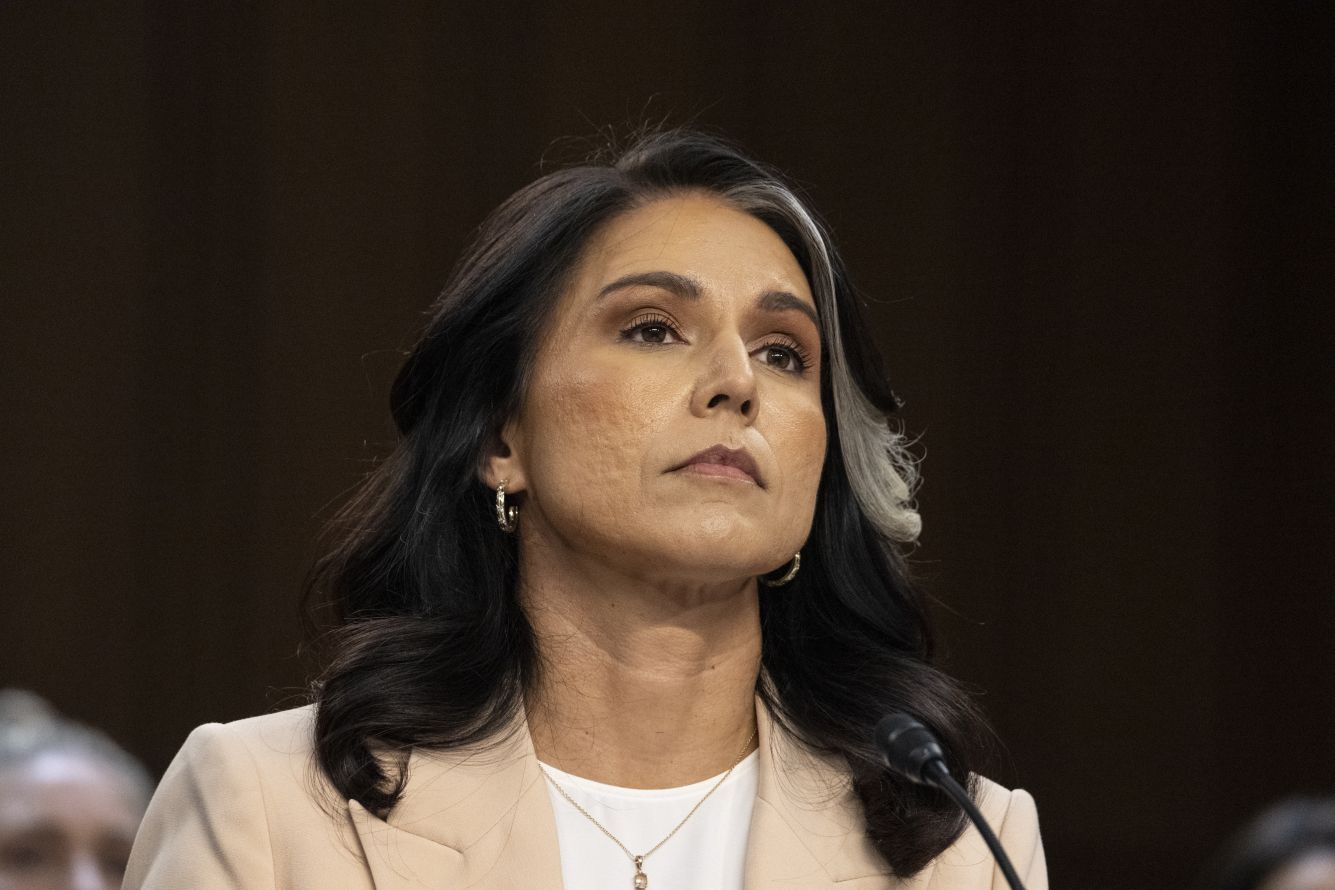
On June 19, Tulsi Gabbard resigned from her post as US Director of National Intelligence. Once a rising star in American politics (Hawaii's youngest member of parliament and the first Hindu woman in Congress), she was not remembered for anything special at the head of intelligence, except perhaps for her campaign against Donald Trump's political opponents. This, however, did not help Gabbard enter the circle of the president's confidantes, and she resigned 15 months later. After her departure, The Washington Post published an investigation that Gabbard, already a well-known politician, may have remained under the influence of the leader of the religious movement in which she grew up. We'll tell you what we know about it.
Gabbard grew up in Chris Butler's Hare Krishna community. And she became, perhaps, the most successful of his followers
Tulsi Gabbard was born in American Samoa, a US territory in the South Pacific. At the age of two, she moved with her parents to Hawaii. Her father and mother were students of local Hare Krishna guru Chris Butler. In the 1970s, he founded the Science of Identity Foundation (SIF), a religious organization whose followers worship Krishna as the supreme deity and practice yoga, meditation and vegetarianism. Some former members called the Butler community a cult, but the group itself denied this.
Butler was interested in politics. He said that incompetent administrators should be replaced by “holy men,” and his followers—including Gabbard’s parents—were active in Hawaii politics. However, the guru's views were eclectic: he opposed Muslims and gays, gun control and public schools, but also promoted anti-capitalism and an environmental agenda.
21-year-old Tulsi Gabbard was elected to the Hawaiian parliament in 2002 and became its youngest representative in history. She later joined the National Guard and served two tours in the Middle East. In 2012, Gabbard became the first Samoan-American and first Hindu woman to serve in Congress from Hawaii. She took the oath on the Bhagavad Gita, one of the sacred texts of Hinduism.
Gabbard quickly became vice chair of the Democratic Party, but her rhetoric often broke with the party line. In 2016, she supported leftist politician Bernie Sanders in the presidential election, and in 2020 she tried to run for president herself, but she did not have enough support. The following year, Gabbard resigned from Congress and began to openly criticize Democrats: she opposed American interventionism and called her former comrades “warmongers.” When Russia attacked Ukraine in 2022, Gabbard said the war would not have happened if Joe Biden had acknowledged Moscow's "legitimate concerns" about Ukraine joining NATO.
Gabbard tried very hard to win over Trump. But it seems their relationship was spoiled by the US war with Iran
In 2024, Gabbard joined the Republicans (she officially left the Democrats two years earlier). The announcement was made at a Donald Trump campaign rally. After returning to the White House, he appointed Gabbard as head of National Intelligence. This alarmed the intelligence community: Gabbardwould become one of Trump's closest advisers and oversee the work of 18 US intelligence agencies - including the FBI and CIA - although she had no experience in this area.
At the head of intelligence, Gabbard is remembered mainly for politically charged initiatives: she fired officials who could interfere with Trump's plans for mass deportation of migrants; organized a search of a Georgia election center to investigate possible irregularities in the 2020 presidential election (which Trump claims was stolen from him); rejected the investigation's findings into Russian interference in the 2016 election, saying it was a "treasonous plot" by Barack Obama against Trump.
Despite all this, Gabbard failed to get into Trump's inner circle. The main reason was their different views on wars abroad. This first became apparent when the United States struck nuclear facilities in Iran in the summer of 2025. Trump was then asked to comment on Gabbard's earlier statements that Iran was not building nuclear weapons. “I don't care what she said. I think they were very close to getting it,” Trump responded .
Gabbard was later not one of Trump's key advisers who made decisions about the capture of Venezuelan President Nicolas Maduro and the military campaign against Iran. The White House joked that the acronym for her position, DNI (director of national intelligence), meant “do not invite,” The Washington Post wrote .
According to the newspaper and Reuters , the White House forced Gabbard to resign, although publicly this was presented solely as her own initiative: Gabbard said she wanted to support her husband, who was diagnosed with cancer. The departure was humiliating. Gabbard had planned to work until the end of June, but according to Axios, on June 9, new acting Director of National Intelligence Bill Pulte called her and said it was her last day. After Gabbard's conversation with Trump, June 19 was set as her resignation date.
Before leaving, Gabbard was again in the news for retracting Biden-era intelligence assessments that questioned foreign involvement in Havana syndrome and declassifying information about U.S. biolabs abroad, including in Ukraine, that allegedly housed dangerous pathogens. After this, the Ukrainian Foreign Ministry had to once again explain that this was legal cooperation in the field of biosecurity and refute the propaganda narrative about the creation of biological weapons ordered by Washington.
Gabbard received political advice from the leader of her Hare Krishna community. And his other students wrote laudatory comments about her
On June 21, two days after Gabbard's resignation, The Washington Post published a lengthy story about the role Chris Butler, the head of the religious organization in which she grew up, played in her political career. Rebecca Salzburg, a former Butler community member who helped Gabbard during her congressional campaigns, provided reporters with 25,000 pages of letters and documents from her email and social media accounts. Among them were hundreds of notes with instructions and advice for Gabbard. They belonged to the period 2011-2017, when she worked in Congress.
The memos were anonymous and covered a wide range of topics, from legislation Gabbard should propose to specific words she should say publicly or use in Twitter posts. Most of the letters were not addressed directly to Gabbard, but to people around her, including her parents. At the same time, Gabbard followed the instructions from these letters. So, in 2014, she introduced a bill to help veterans in Congress, which was suggested to her by her anonymous adviser. In 2015, she followed him by comparing the Democratic debate, to which she was not invited, to a party.
The Washington Post analyzed 32 television interviews that Gabbard gave between 2014 and 2016, and compared her statements with the talking points that an anonymous adviser offered before these interviews. It turned out that in 24 cases Gabbard used language from his notes almost verbatim. On the eight remaining occasions she promoted some of his ideas, but in different words.
The anonymous adviser sometimes allowed himself to harshly criticize Gabbard. He called her a "coward" and a "wimp" because of her political comments. He criticized her for allegedly bulging her eyes when she speaks in public. And he assessed her comment about one of Obama’s addresses to Congress as follows: “Nobody gives a damn what you think about his address, unless you are going to say something interesting. You're not even trying. You have become truly lazy intellectually.”
Rebecca Salzburg said that only Butler could talk to Gabbard like that. She said he deliberately hid his identity and gave Gabbard advice either directly over the phone or through his other followers. They recorded his remarks and sent them to Gabbard's circle. The correspondence also revealed that people associated with Butler had organized a small “elf factory” for Gabbard’s benefit. They have been writing comments in support of her on social networks and media sites for years - and the latest of these comments appeared only recently, after the resignation of the official.
Representatives for SIF, Butler's religious organization, did not deny the authenticity of the letters Salzburg showed to The Washington Post. But they denied that Butler himself had written them, and stressed that Salzburg could not be trusted because she had resigned from the SIF after the conflict and threatened to ruin the organization's reputation. Gabbard herself declined to comment. Her office said it viewed the article as a “false, bigoted” attack on Gabbard’s faith.
Need a break from the news? Then we are coming to you - with books! In the Meduza app you can read books by Elena Kostyuchenko, Mikhail Zygar, Anton Dolin, Kira Yarmysh, Alexander Rodnyansky and many other authors for free. Both fiction and non-fiction fans will find something to their liking. You can also play the best Jellyfish games in the app. Well, you won’t miss the most important news either (if you turn on push notifications). Anyway, here's the link to download the app - you know what to do!