
Translated material
Ukraine and Poland have been fighting for almost a month over the “heroes of the UPA.” This conflict could become destructive, Western journalists write
"Donald Tusk is the only adult in this room"
Ukraine and Poland continue to conflict over Vladimir Zelensky’s decision to assign the honorary name “Heroes of the Ukrainian Insurgent Army (UPA)” to one of the units of the Ukrainian Armed Forces. Poland is outraged - there Ukrainian nationalists are considered responsible for the murder of tens of thousands of Poles during the Second World War. In Ukraine, UPA fighters are considered fighters for independence. Western media write that this conflict could become destructive.
Vladimir Zelensky awarded the honorary title to the Ukrainian Armed Forces unit at the end of May. Because of this, Polish President Karol Nawrocki decided to take away from him the Order of the White Eagle, Poland’s highest state award, which the Ukrainian President received in 2023.
In response, Zelensky said that he had already sent the award to the Polish leader, and Ukrainian politicians, including former presidents Petro Poroshenko, Viktor Yushchenko and Leonid Kuchma, began to refuse other Polish state awards. The Ukrainian Foreign Ministry threatened Warsaw with mirror measures in response to “contempt for the Ukrainian soldier.”
The resulting disagreements caused a serious diplomatic crisis between Ukraine and Poland. Initially, Kiev tried to resolve the conflict, but the visit of the head of the office of the President of Ukraine Kirill Budanov to Warsaw did not help - Polish officials demanded that the UPA be removed from the name of the military unit, notes the Financial Times.
Donald Tusk is trying to reconcile the parties to the dispute. He believes that the conflict plays into the hands of Moscow
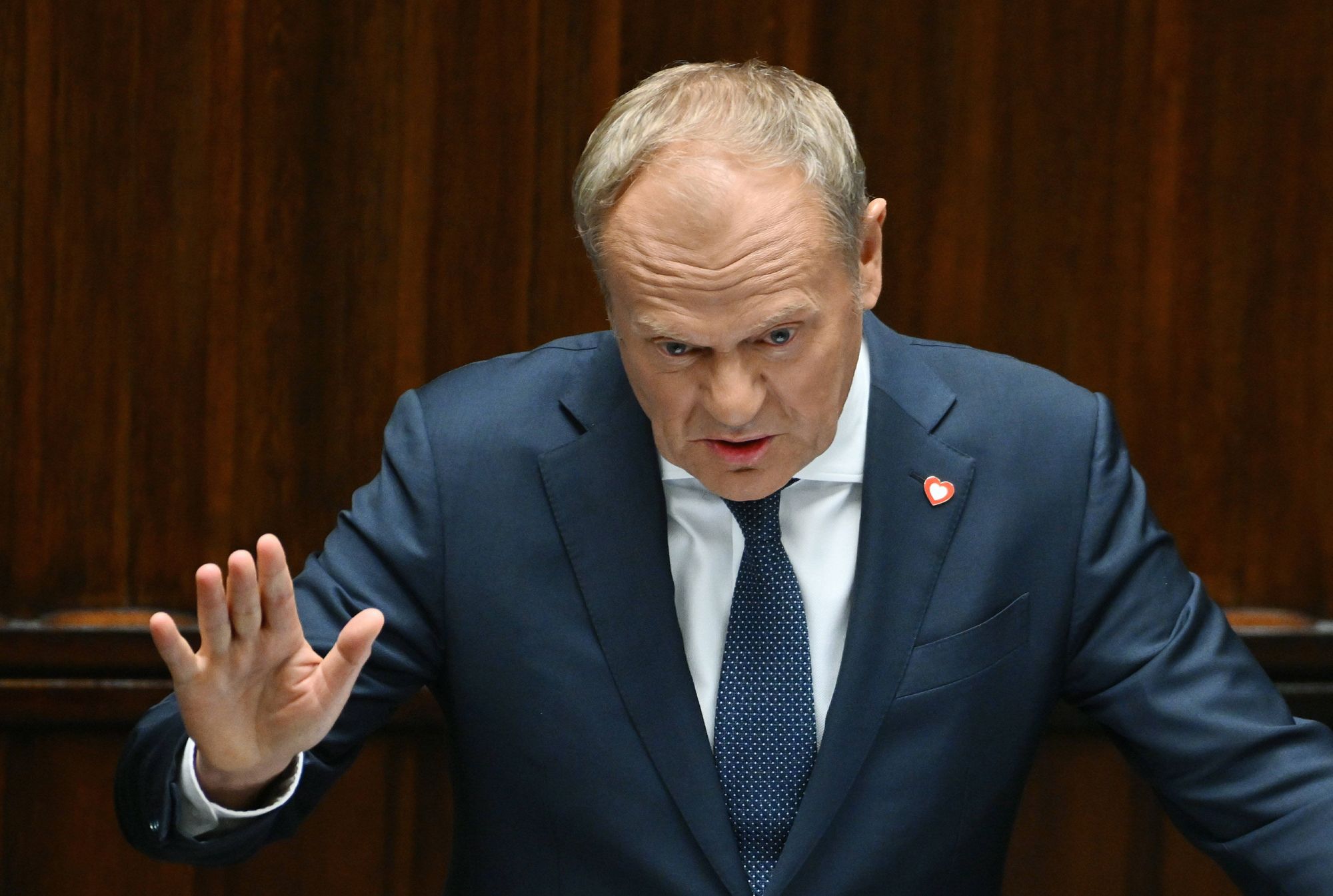
The conflict between Poland and Ukraine is being tried to be resolved by Polish Prime Minister Donald Tusk, a longtime supporter of Ukraine who has differences with the Polish nationalist camp. Tusk, like Ukrainian Foreign Minister Andrei Sibiga, said that the conflict plays into the hands of Moscow and undermines the unity of the West.
So far, Tusk has not said whether he will sign a decree depriving Zelensky of his award. He seeks to reassure allies: “The task of Presidents Zelensky and Nawrocki is to calm emotions, not escalate tensions. The front line is somewhere else."
Tusk said the conflict between Polish and Ukrainian politicians “is a strategic mistake that will damage both sides in terms of business, geopolitics and reputation.” “In negotiations with my European partners, I strive to minimize losses and reduce tensions. This is not an easy task,” he added.
Observers believe that the conflict between the two countries could become destructive
Many countries in Eastern and Central Europe are united in fear of Moscow in the fifth year of Russia's great war with Ukraine, but historical grievances remain between them, and the conflict over the UPA could become destructive, writes The New York Times.
Ukraine and Poland, after the start of a full-scale invasion by Russian troops in 2022, made significant efforts to smooth over differences over the events of World War II. However, Zelensky's decree reignited the hostility. “Russia is now opening the champagne,” says Alexandra Ivaniuk, associate professor of political science at the University of Warsaw.
Donald Tusk is “perhaps the only adult in this room,” said Polish political commentator and author Siemowit Szczerek. According to him, great hopes are placed on the Polish prime minister on how to smooth out the conflict. Bloomberg columnist Mark Champion also writes that Tusk was the only one who “behaves like an adult” in this dispute.
Polish analysts believe that the conflict plays into the hands of the right-wing opposition of Tusk's party. Polish far-right nationalist Slawomir Menzen, who won 14% of the vote in the last presidential election, said he thought it was right for Ukrainians to return Polish awards, but added: “It’s a pity that we even gave them out like candy.” He said that "once they return all the rewards, they can also return the money, weapons, ammunition and everything else that we previously provided to them."
Warsaw is an important ally of Kyiv. The future of Ukraine depends on Poland
Ukraine's survival in the current war depends almost entirely on Poland, says Bloomberg columnist Mark Champion. And, according to him, the point is not that Warsaw provides assistance to Kyiv, but that the only reliable transit route passes through Polish territory, along which weapons are also supplied. In addition, like any other EU member state, Poland has a veto over Ukraine’s entry into the bloc.
Ukraine “should start with a full reckoning with the controversial history of the UPA,” and gestures that could clearly alienate a key ally are unacceptable, the Bloomberg columnist said. “Zelensky needs to do everything possible to defuse this conflict,” he added.
The tensions that have arisen, according to The Washington Post, do not jeopardize the military alliance between Kiev and Warsaw. Karol Nawrocki said that the decision to deprive Zelensky of the award “does not mean a change in the strategic course of Polish security policy.” According to him, Poland will continue to support Ukraine, “because we know that Russian aggression poses a threat to the security of Poland and all of Europe.”
Volodymyr Zelensky said that Ukraine and Poland cannot be “anything other than partners and friends,” adding that the political struggle could lead to “a very dangerous escalation.”
"Jellyfish"