
Translated material
Unloved. Andrei Ostalsky on why Keir Starmer left

The rift between British Prime Minister Keir Starmer, who announced his resignation on June 22, and his party began long ago, when Labor was still in opposition. The date when this discord came to light is known: November 15, 2023. On that day, 56 Labor MPs broke party discipline and voted for a resolution proposed by the Scottish National Party (SNP) demanding an immediate ceasefire in the Gaza Strip. From Starmer's point of view, this approach showed a complete misunderstanding of the situation. After all, such a truce would mean that Hamas terrorists would retain full control over the sector - both political and military - and, moreover, could continue to strike Israeli territory, also preparing the repetition of the massacres of Israeli civilians they promised.
But the deputies refused to listen to their leader. According to the rules, there was a punishment for this - temporary deprivation of the guilty party's right to vote. But there were too many of them - more than 25 percent of the entire faction. Therefore, remaining unpunished, they believed in their strength and independence from the leader. Starmer's credibility has been irreparably damaged; in a sense, it was then that his fate was sealed. A large number of members of the Labor faction did not like not only his “pro-Israel” position and what they thought was excessive zeal in eradicating anti-Semitism in the party. They also did not like the careful, gradual changes in the party leadership that Starmer was slowly but surely implementing, getting rid of the radical left, thereby changing course, shifting it towards the center.
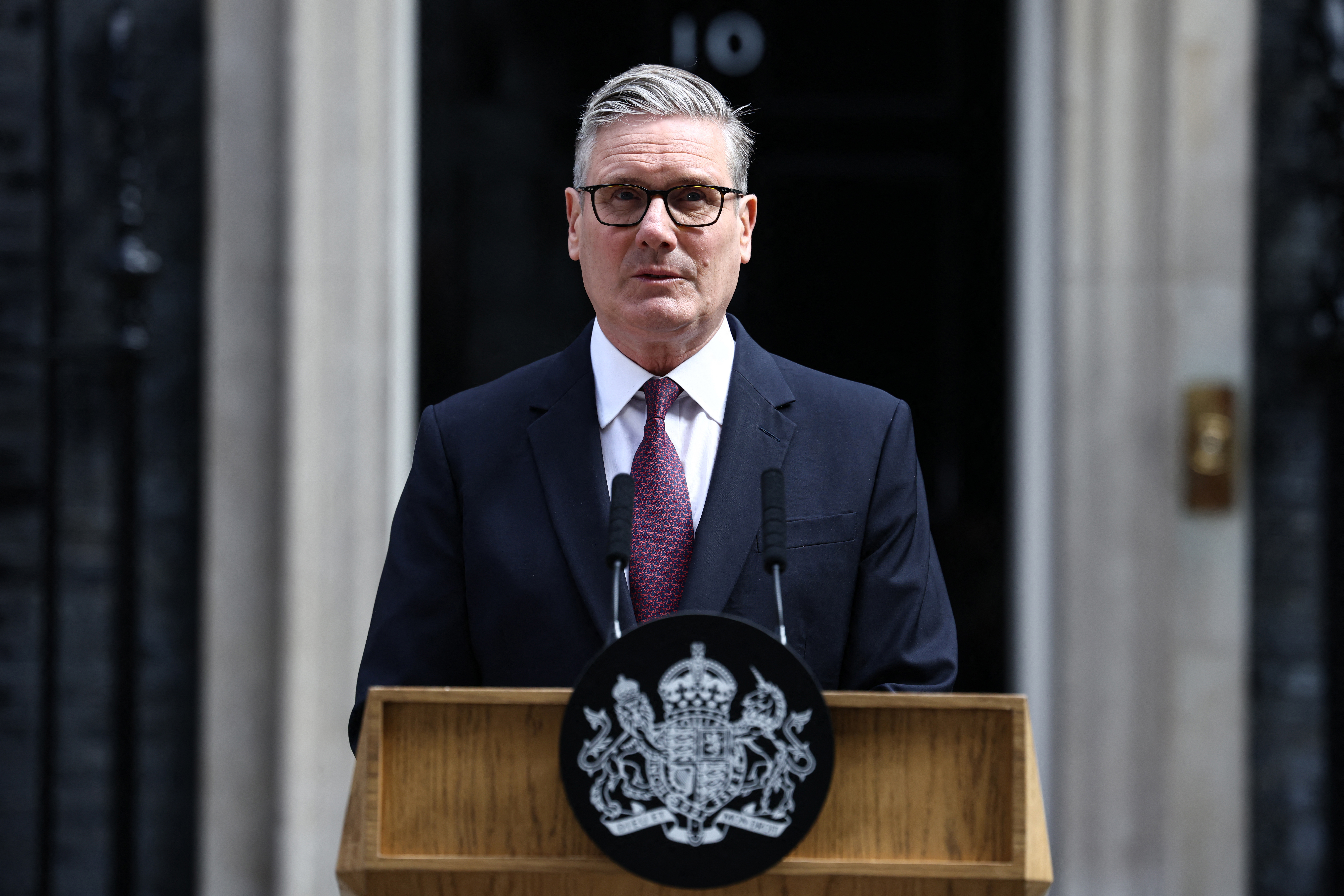
But then the time came for parliamentary elections. Both ordinary members of the Labor Party and deputies were ready to bite their tongues and tolerate a leader who was ideologically unsympathetic to them, because they understood that it was getting rid of the toxic legacy of his predecessor, the radical left Jeremy Corbyn, that provided a chance for victory. And this deliverance was firmly associated among the general public with Starmer’s activities.
Announcing his resignation on Monday, the prime minister recalled that six years ago he inherited a bankrupt party - financially, politically and morally. The British were ready to vote for anyone, but not for a dogmatic fanatic who was ready to turn the country and society inside out in the name of his morbid fantasies. (Corbyn considered Hugo Chavez’s Venezuela to be a model of state building and an example to follow). I remember very well: at that time it was said on all corners that the Labor Party had come to an end, it would never again be a serious political force. Despite all these prophecies, Starmer performed something of a miracle, managing to revive the party in four years, returning it to mainstream politics and even leading it to a decisive victory in the 2024 parliamentary elections.
Yes, without any doubt, it was a vote “from the opposite side” - a protest against the boring conservatives, who were mired in internal strife and, after 14 years in power, were not able to formulate any coherent political, economic or social program. But at the same time, voters would not have given power to Labor if they had not believed that they had again become a normal party, which, perhaps, would not give an ideal government course, but at least would not destroy the country.
Voters would not have given power to Labor if they had not believed that they had become a normal party again
It soon became clear that the new government did not have a coherent program either. Or rather, Starmer had the right general idea: to place the main bet on economic growth, which will help solve, or at least mitigate, all the other numerous problems. What to do with impossible social expenses? How to stop illegal immigration, which is terribly annoying to public opinion? How to save the national health care system? How to increase defense spending in the new conditions? For all this, a lot of money was needed, and only economic growth gave some hope. But here's the problem: the parliamentary faction of its own party was not going to allow the government free rein.
In addition, a fatal mistake was made: while fighting for votes, Labor included in the election program, and as an important, loudly proclaimed principle, a promise not to increase income tax, as well as VAT and workers' contributions to the social insurance fund. The party would probably have won the protest elections even without this commitment. And after the election, the government discovered that the hole in the budget was much larger than expected (about £22 billion) and had to be filled somehow. And then a triple blow was dealt to entrepreneurs: both the special tax collected from them (the so-called business rate) and the social insurance contributions they paid for each job were increased. At the same time, the minimum wage was sharply increased. After this, any significant economic growth could be forgotten. And the desperate business class hated Labor with a mortal hatred.
Out of impotence, Starmer and his team began to look for ineffective palliatives: patch up a little here, add a little money there. Call for saving resources. Put pressure on energy and water companies to reduce margins, keeping prices down for consumers. At the same time, the prime minister sometimes showed a strange lack of political sense. Chasing savings, he agreed to cancel winter heating benefits for 10 million old people, earning for this in the eyes of many the reputation of a callous, almost cruel person. And when, seeing a sharp reaction in society, Starmer reversed this decision in a panic, this reputation remained with him, while for many others he also became a laughing stock. Moreover, the savings were not very significant: 1.2 billion pounds is a drop in the ocean of government spending.
In society, general fatigue was accumulating from the lack of decisive action. And, as usual, they blamed the “chief boss” for everything. Meanwhile, the "backbenchers" - ordinary members of the Labor faction in parliament - began to show strength again. A powerful blow to Starmer's authority was his vote to cut social spending, which has risen to absurd levels in recent years - over £300 billion a year, allowing almost nine million Britons to live without much poverty or even trying to find work. It turns out that being unemployed is more profitable than working for minimal remuneration. Meanwhile, the unbearable burden of social spending is strangling the economy and depriving the country of the opportunity to develop normally.
Starmer understood that this situation urgently needed to be changed, but his fellow party members did not even let him try. Often the matter did not come to a vote: the leader did not want another public humiliation and was forced to refuse to carry out any meaningful reforms. Ordinary Labor members, apparently, even enjoyed the fact that they could tie the hands of this “upstart” that was ideologically alien to them. After all, in the end, voters blamed Starmer for the lack of meaning in politics.
The deep divide between the Labor masses and the leader is the main reason for Keir Starmer's downfall
I would argue that it is precisely the deep gap between the Labor masses and the leader that is the main reason for the political collapse of Keir Starmer. To which someone might object: what about his extremely low personal ratings among the population as a whole? Yes, he really turned out to be the most unpopular prime minister in history (minus 66 percent!). Political scientists accuse him of “not understanding his country” and of extremely poor communication skills. One can argue about the “misunderstanding,” but it’s hard to disagree with the latter: Starmer is not at all telegenic or charismatic, lacks pronounced oratorical abilities, and speaks boringly, woodenly, like a bureaucrat. And apparently, not everything is in order with a sense of humor for this boring workaholic, who tried to solve the growing avalanche of problems by increasing the length of his working day and the colossal number of documents that he managed to look through per day.
It turns out that his opposite – the lazy, hated paperwork, but charismatic and witty Boris Johnson – was liked by the public much more. And even Liz Truss, who almost bankrupted the country and showed the height of incompetence, managed to have higher ratings. Yes, the heart of the voter is mysterious... Besides all this, Starmer does not consider it necessary to always look for words that will appeal to every audience, and this, perhaps, is the talent of a politician. Or, as some would say disparagingly, a politician, no matter how true what he says is. You certainly can’t call Starmer anyone, let alone a politician. And with what genuine dignity he always carried himself, without betraying himself even at the tragic moment of announcing his resignation.
We must admit: unlike Starmer, the former successful mayor of Manchester Andy Burnham, the most likely successor to the outgoing prime minister, is a brilliant communicator and speaker. He is charming, witty and telegenic. In addition, he has a reputation as a moderate left politician who, in theory, will move away from Starmer’s centrism and move the party and the country to the left. This is what ordinary Labor members really hope for, some even dream of a reversal of Thatcherite reforms, a return to tight government control and regulation, nationalization and a move towards some form of socialism. It seems that Burnham once proclaimed something similar. That’s why the Laborites waited for him like a prince, and are now going to crown him king.
But outside the party, public opinion does not at all share these hopes. The older generation still has vivid memories of what pre-Thatcher times looked like, with uncollected garbage on city streets, power cuts and endless strikes. The average Briton is not at all convinced that the arrival of the left's new messiah should be celebrated. According to polls, approximately 64 percent of Britons know nothing or almost nothing about Burnham, his views and a political program that simply does not exist at the moment.
To sum it up: Keir Starmer was not the worst prime minister in British history. But he lost in the political game because he did not find solutions to a situation where he did not have sufficient support either in the faction, or in the party, or among the majority of his colleagues in the cabinet. They simply stopped believing him as a leader. But will Andy Burnham, who is replacing him, cope with the situation? This is not easy to believe. And no other party offers real recipes.
Andrey Ostalsky – London-based journalist and political commentator
Opinions expressed in the "Blogs" section may not reflect the views of the editors
Evening Newsletter - Subscription widget compact Read Freedom on Telegram Make Freedom a priority source on Google  Install the Mobile application
Radio Liberty