
Translated material
Queues at gas stations and rising gasoline prices. What's happening?
Muscovites, following residents of other regions of Russia, reported multi-meter queues and traffic jams at gas stations, as well as sharply increased prices for gasoline: car owners fill up fuel in cans, and gas stations inflate prices and require payment in cash. What is happening and what are the forecasts, experts told Taki Dela.
 Photo: Dawn McDonald / Unsplash.com
 Since last week, car owners in Moscow and the Moscow region have been puzzled by questions of the cost and availability of popular brands of gasoline and diesel fuel. After the Ukrainian Armed Forces struck oil refineries , unscheduled repair work began there, which could affect retail prices. The same messages are coming from the cities of Siberia, Central Russia and the northern part of the country - Novosibirsk, Kemerovo, Arkhangelsk, Tver, Smolensk, Samara, Saratov, as well as St. Petersburg.
“In the near Moscow region it’s now like this: you stop at a gas station, it says: “A liter of gasoline - 70 rubles.” You ask: “Is there?” The gas station attendant replies: “Yes, but for 90 rubles and only in cash,” says Alexey Yakimov from Moscow, who today visited the “Trassa” gas station on the A-107 road.
Evgenia Valeeva , who was stuck in a traffic jam at the entrance to a gas station in the Ruza district of the Moscow region, shared her dialogue with a gas station attendant. “At one of the gas stations we asked an employee if there was any gasoline at all. At this she rolled her eyes: “Why are you all panicking? There are no interruptions at all, everything is there. Here the 92nd ended, but an hour later they brought a new one. Refuel calmly.” But at the same time, in line at a gas station, people actually ask each other if there is gasoline and what kind,” said Evgenia.
She notes that people in lines for gasoline keep cans ready to buy fuel in reserve: they fear an even greater rise in prices.
“A lot of people have canisters ready, well, we got ours too”“I think that people are afraid not so much of the complete disappearance of gasoline as of its rise in price; everyone now wants to refuel at a price that is still acceptable.
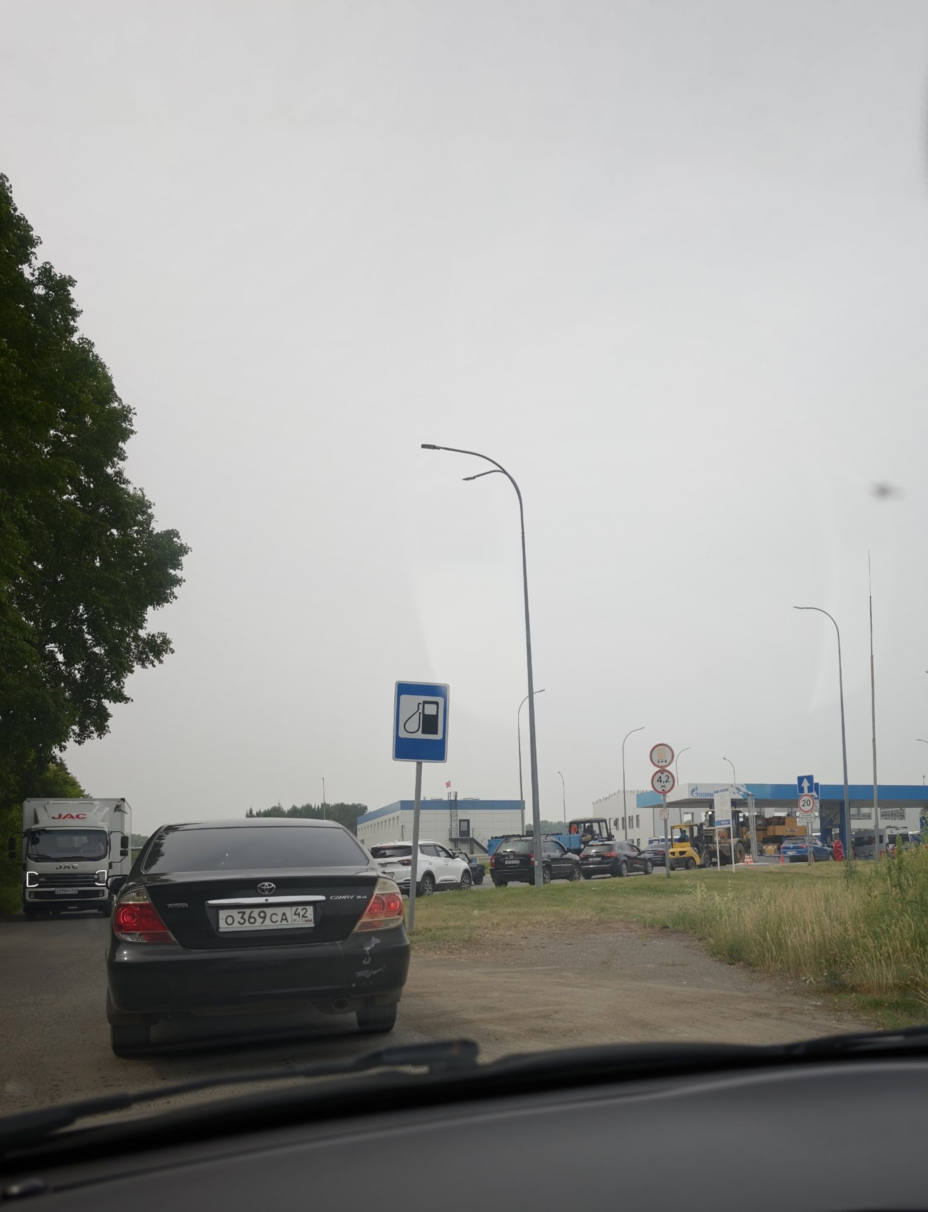 Photo: from Vladislav’s personal archive
 Because they expect that if there are more attacks on the refinery, problems will really begin,” Evgenia concluded.
Vladislav Frolov from Kemerovo talks about the huge queues at gas stations and the real shortage of fuel in retail sales in the city. “Today at 13:00 I waited in line at the gas station for about 15 minutes, all the gasoline was in stock. I saw a total of four gas stations today - all of them had a queue of 15-20 minutes of waiting. I think that by the evening, when people leave work, these traffic jams will turn into huge ones,” shared Vladislav.
At the same time, he added that some gas stations in Kemerovo do not have any gasoline: “For example, at the Tatneft gas station there has been no gasoline for a week. Recently, Teboil very often does not have gasoline, but there is diesel. True, the prices there are wild: 95 rubles per liter of AI-92. But for obvious reasons there are no queues there.”
In general, a resident of Kemerovo said with restraint about fuel prices: “There is an increase, but small: within one, two or three rubles per liter.”
In Samara, the situation with fuel prices can hardly be called comfortable, says city resident Daria Asmolova : “Yesterday I saw lines at gas stations where gasoline cost 62 and 66 rubles per liter. But today, when I already needed to refuel, I stopped at Tatneft, where it was empty - all the gas stations had “out of service” signs.”
“I stopped by the Irbis. There, AI-92 costs 102 rubles and AI-95 costs 105 rubles, respectively.”“I decided to look for other options: for example, they say that Rosneft has gasoline for 62 and 66 rubles, but there are long queues,” concluded Daria.
None of the car owners surveyed by Taki Dela spoke about fuel limits in retail sales, although there were statements about limiting the supply of gasoline to one person. On June 16, Tatneft established temporary restrictions on the sale of gasoline and diesel fuel at its gas stations : gasoline - up to 30 liters per person, diesel - up to 60 liters, diesel for trucks - up to 300 liters.
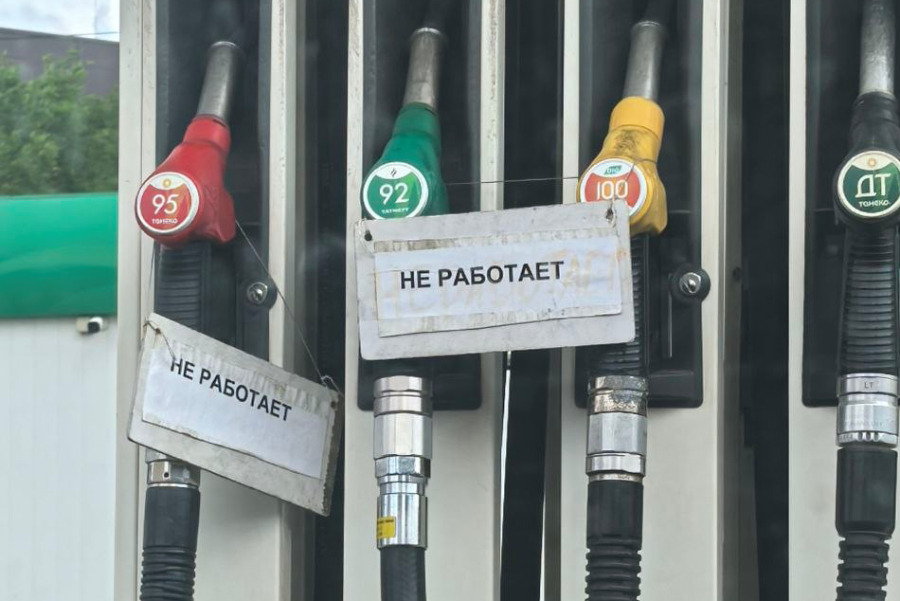 Photo: from personal archive
Also, limits were fixed in the Voronezh, Nizhny Novgorod, Samara, Orenburg and Lipetsk regions, in Udmurtia and Kuzbass. Restrictions on the sale of gasoline to individuals in some of these regions were also observed at Surgutneftegaz gas stations.
There were problems with gasoline in Russia before - before the “special military operation” in Ukraine, says Ilya Shelestov , ex-owner of a private gas station in one of the large cities of Siberia.
“There were problems with gasoline in Russia before, but now there seems to be an external reason that explains them - this is the SVO”“Now we have something to refer to when we talk about the fuel crisis,” says Shelestov.
He explains that because Russia does not have a reserve supply of fuel in case of force majeure, such as attacks on refineries, supply disruptions may occur. “Another problem: the distribution of refineries across the country. It is advisable to place them so that they are not in the same (western, as now) part. We have 70–80% of our capacities located in the European part of Russia. After all, this is the territory that is susceptible to military attacks... Yes, we have the Omsk Oil Refinery here, but that alone is not enough,” says Shelestov.
 Photo: Engin Akyurt / Unsplash.com
Tension in the fuel market in Russia and, in particular, in Moscow and the region is associated with unscheduled refinery repairs and increased seasonal demand, says Sergey Frolov, managing partner of NEFT Research.
This is now observed in Moscow and the surrounding regions, which were supplied by the Moscow Refinery. “Gas stations do not count on increased spillage and do not have time to deliver fuel,” the expert explained. He added that this is also associated with an increase in prices at gas stations of independent chains, which are forced to buy expensive fuel on the market.
On June 19, Deputy Prime Minister Alexander Novak instructed the relevant departments to work out measures to stabilize the domestic fuel market and prevent problems with access to it.