
Translated material
Myths, thickets and ruins: a walk through modern landscape photography
What unites the overgrown microdistricts of Anastasia Tsayder, the church ruins of Pyotr Antonov and the mythological landscapes of Igor Elukov and Natasha Lozinskaya? All of these projects use the language of the Romantic landscape, a tradition in which the subjective experience of nature, ruins and myths becomes the key to understanding the universe. Nadya Vikulina tried to figure out why this language remains in demand today and how it helps photographers talk about time, history and the changing world.
© Anastasia Tsayder
“Is this a city in a forest or a forest in a city?” - this humorous question will almost certainly arise in a conversation with residents of Dimitrovgrad, a small town in the Ulyanovsk region where I was born. Pine forest surrounds the city. Its center, built in the 1950s, is also full of pine islands, and forest paths run between the high-rise buildings. To get to the gymnasium from my eleventh microdistrict, I first dived and then emerged from a pine thicket.
While I was growing up, the forest increasingly conquered Dimitrovgrad. The path from the children's clinic to the Golden Lake still hinted at its past: islands of asphalt could be seen between the pine cones and sand underfoot, and the trunks of pine trees were sometimes interspersed with the concrete trunks of non-working lamps. When we were kayaking along Cheremshan in the summer, at one of the bends of the river, dad pointed out visible concrete slabs and asphalt, gradually melting into the forest: there had been a pioneer camp here for a long time. All this added up for me to a romantic image of a bygone civilization and its overgrown ruins.
The collision of nature and architecture, playing out on the streets of the city, became an intimate experience for me. Several years ago, while studying contemporary landscape photography, I found valuable “interlocutors” who, it seemed to me, also experienced this fascination with post-Soviet city landscapes and the mysticism of their transformations. Anastasia Tsayder’s series of photographs “Arcadia” talks about the “new romantic landscape of the post-Soviet space,” “Ruins” by Pyotr Antonov and “Pale Shelters” by Polina Rukavichkina explore the poetics of destruction, and “Book of Miracles” by Igor Elukov and “Treasury” by Natasha Lozinskaya turn to mythologies set in the forests and rivers of the north. How can we explain this interest in romantic images in the works of modern photographers?
The classic definition of romanticism refers to the era of cultural rebellion against the ideas of the Enlightenment, which lasted from the end of the 18th century to the mid-19th century. However, many researchers believe that romanticism can also be understood as a more universal phenomenon that has settled forever in European culture and is important for understanding the art of our days. For example, Michael Levy and Robert Sayre, in Romanticism Against the Tide of Modernity (2002), hypothesize that Romanticism should be understood primarily politically: as a cultural counter-reaction to capitalism and other manifestations of modernity, finding its ideal and inspiration in the past. In the same book, they give a long list of components of the romantic worldview - interest in the Middle Ages, imagination, mythology, folklore, the cult of strong emotions and nature. Such a definition helps to understand the common themes and visual images in the projects of contemporary photographers, not only as an appeal to a cultural era of the past, but also as a way to comprehend the present.
"Arcadia" by Anastasia Tsayder
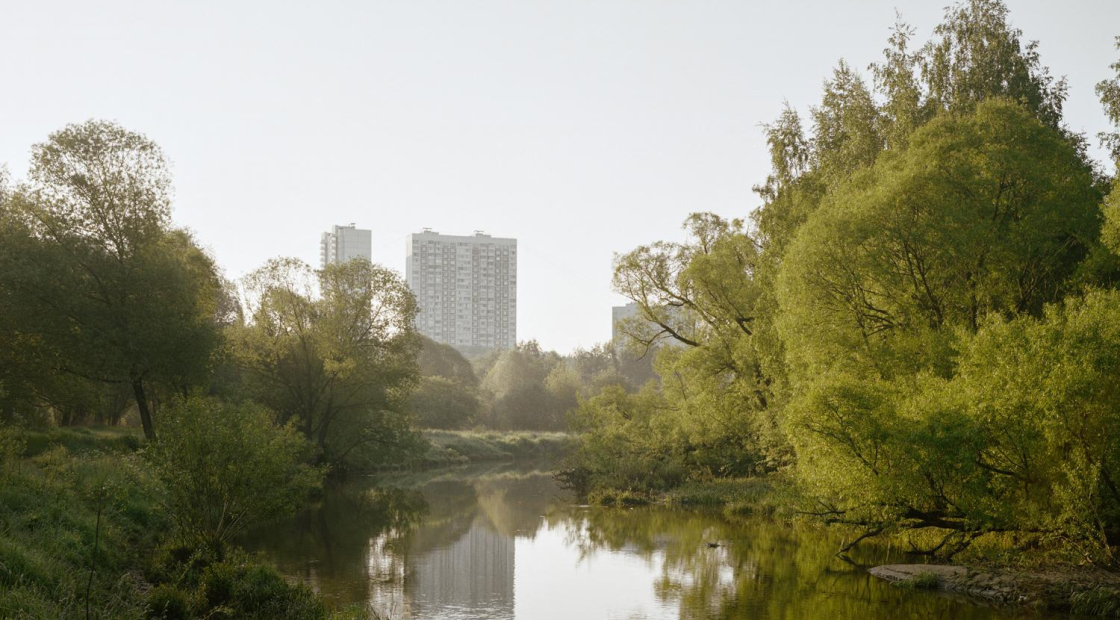
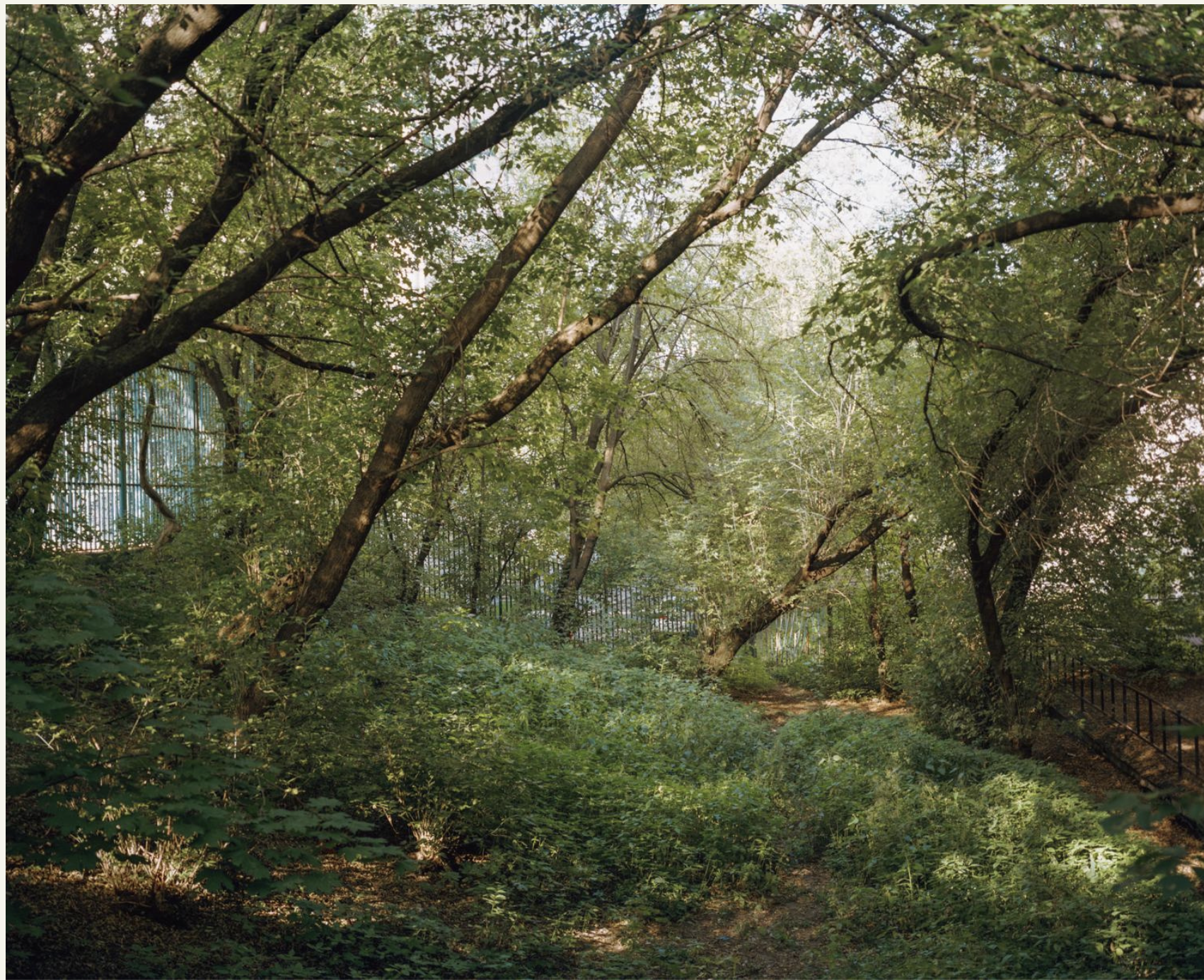
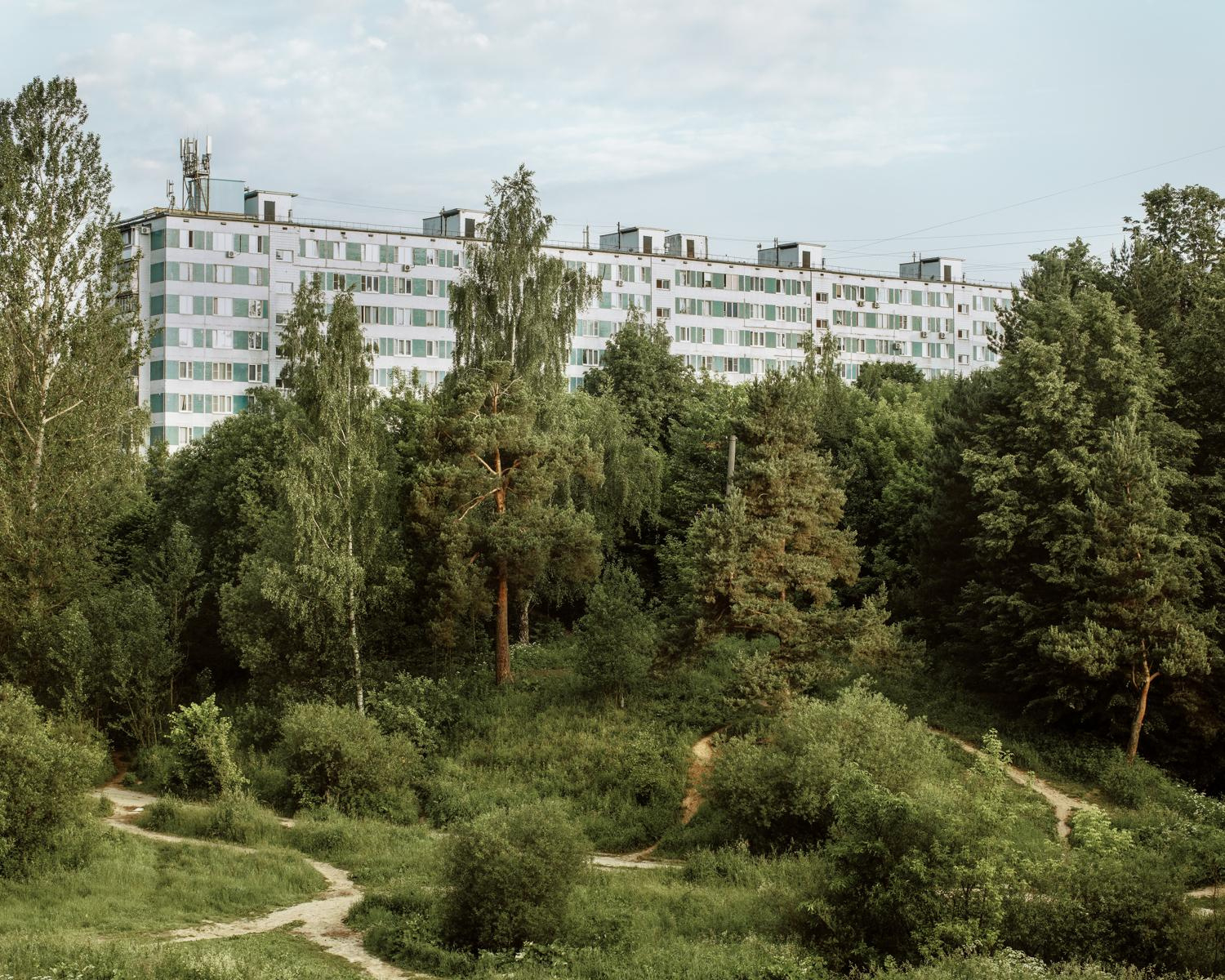
The photo project " Arcadia ", filmed in 2017–2021, explores the life of Soviet residential areas. Conceived in the past as a socialist paradise, today many of them are covered with overgrowth - concern for green spaces has waned amid a change in political regime. In most of the photographs we see multi-storey buildings, the silhouettes of which are slowly absorbed by the green waves of trees. Others show abandoned pieces of city infrastructure: a concrete structure that may have been a fountain, or a rusted basketball hoop that would now require one to negotiate patches of tall grass to play under.
© Anastasia Tsayder
In the preface to the photobook of the project “Arcadia. Shared Gardens,” British architectural researcher Owen Hatherley compares post-Soviet landscapes with overgrown courtyards in his native Great Britain. In his understanding, their appearance is the result of a reluctance to support unprofitable social projects and spaces. At the same time, for Hatherley, such “thickets” do not necessarily become a space of melancholy and sadness about the past. Quite the contrary: “trees grow and bloom, change their appearance throughout the year, and the animals and birds that inhabit them may be of more interest than a chain coffee shop on the ground floor of the house” (p. 11).
The non-uniqueness that Heatherly writes about is emphasized by the very name of the photo project, “Arcadia,” which layers a different figurative space on familiar urban scenes. In the popular imagination, Arcadia is the utopian land of Ancient Greece, where musically gifted residents enjoy an evergreen, fragrant nature. This myth, as art historian Erwin Panofsky writes in the article “Et in Arcadia ego,” has undergone many radical changes throughout its history. The original image of Arcadia, as we find it in ancient Greek texts, is far from idyllic. It was a stingy region, deprived of productive lands and often experiencing hardships. It was made a happy land of abundance by the Roman poet Virgil, and the entire subsequent literary and visual tradition of the New Age. Arcadia has become an image that evokes the memory of an unsurpassed happiness that existed in the past but is no longer available.
© Anastasia Tsayder
Zeider's photographs address the myth of Arcadia with sensitive attention to the reincarnation of the image of the ancient Greek idyll. How do we remember the landscapes of the past—sparse or abundant? Who, after a while, creates these images, and why does the idea of shining, unattainable happiness captivate us so much? Answering these questions is all the more interesting because the photographer invites us to an incredible walk in the Arcadian landscape, which, it would seem, exists only in the imagination of poets.
Thus, conceptualizing modern urban thickets as Arcadia, Zeider creates an intriguing collage of time trends: conceived as a utopia looking towards the future, gardens become an image of the idyllic past, and we watch them bloom and shorten our paths through them - today. Places such as overgrown parklands and courtyards may harken back to the melancholy space of the past, but the photographs hint that Arcadia is a myth shimmering with opposite meanings. A place connected to the past can give the passer-by an awakening encounter with the very idea of the cyclical nature of life, nature and history.
“Ruins” by Pyotr Antonov and “Pale Shelters” by Polina Rukavichkina
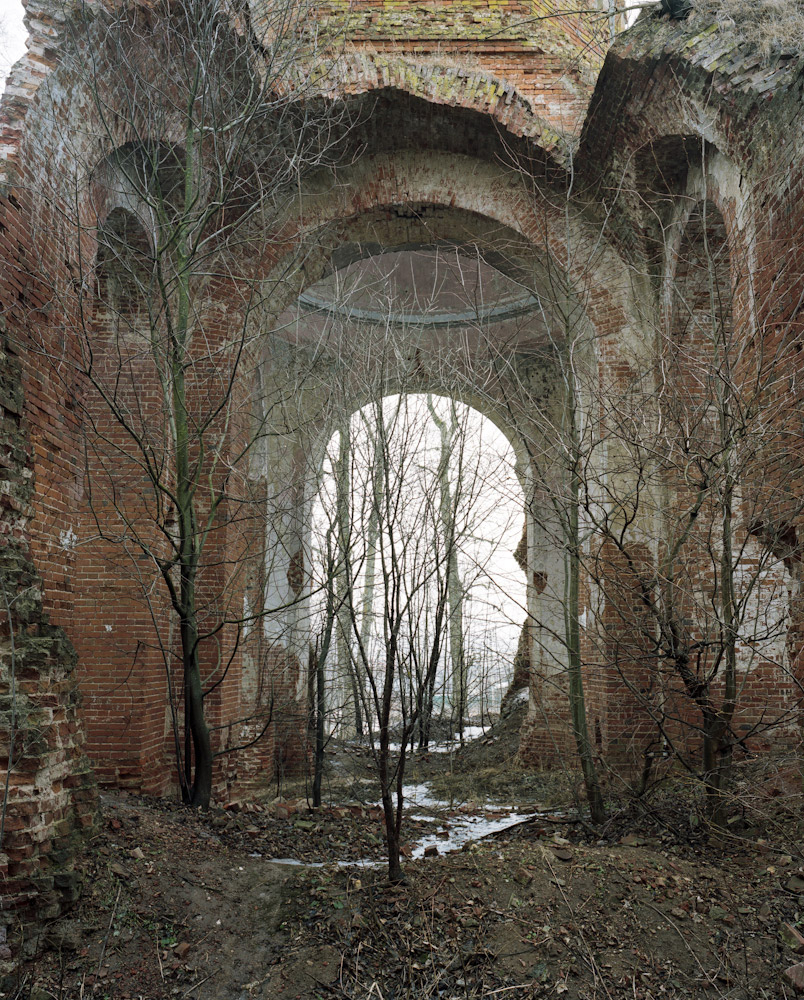
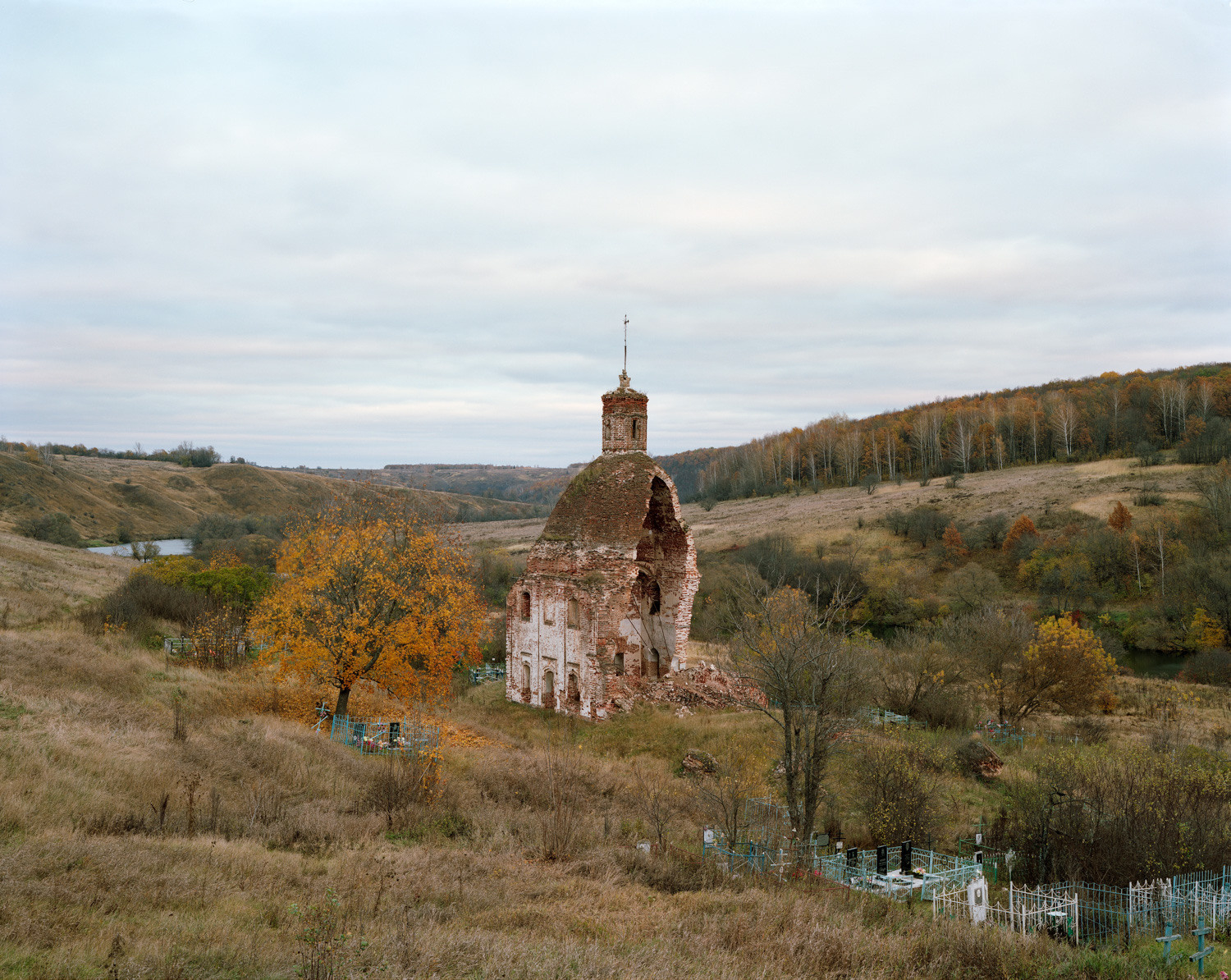
A special place in the romantic landscape is occupied by ruins, encounters with which take place in the projects of Pyotr Antonov and Polina Rukavichkina. Antonov's " Ruins " documents churches destroyed during the Soviet years. The project shows the ubiquity of church ruins in the modern Russian landscape: they turn green with islands of grass in the summer, peek through translucent branches in the fall, and in winter their white walls enter into visual rhymes with the snow and sky. “The image of a ruin,” the photographer writes about his project, “traditionally acts as an allegory of the temporality of everything worldly in European fine art.” In this sense, the change of seasons that we observe in the photographs emphasizes not only the photographer’s long and methodical study of church ruins, but also the internal semantic movement of the project: the transformation of the landscape and the slow dissolution of architectural monuments of the past in it.
© Petr Antonov
In some shots, Antonov carefully examines the details of the ruins, for example, traces of frescoes. But more often these are wide format photographs. On one of them we have a view of the sloping autumn hills framing a section of the half-collapsed dome of the church. In the right corner of the photograph, graves are visible - a typical element of the Arcadian landscape. Observing the ruin from afar and at the same time examining it closely echoes the duality of this image in the project. Antonov understands it “on the one hand, as an aesthetic image referring to the pictorial tradition, on the other, as evidence and a metaphor for Russian history of the twentieth century.” The medium of photography, which implies a direct documentary connection with the captured landscape, helps to take a walk-exploration, but also to take a step back and see these ruins as an amazing engraving or painting that tells the story of the “temporariness” of historical ambitions.
© Petr Antonov
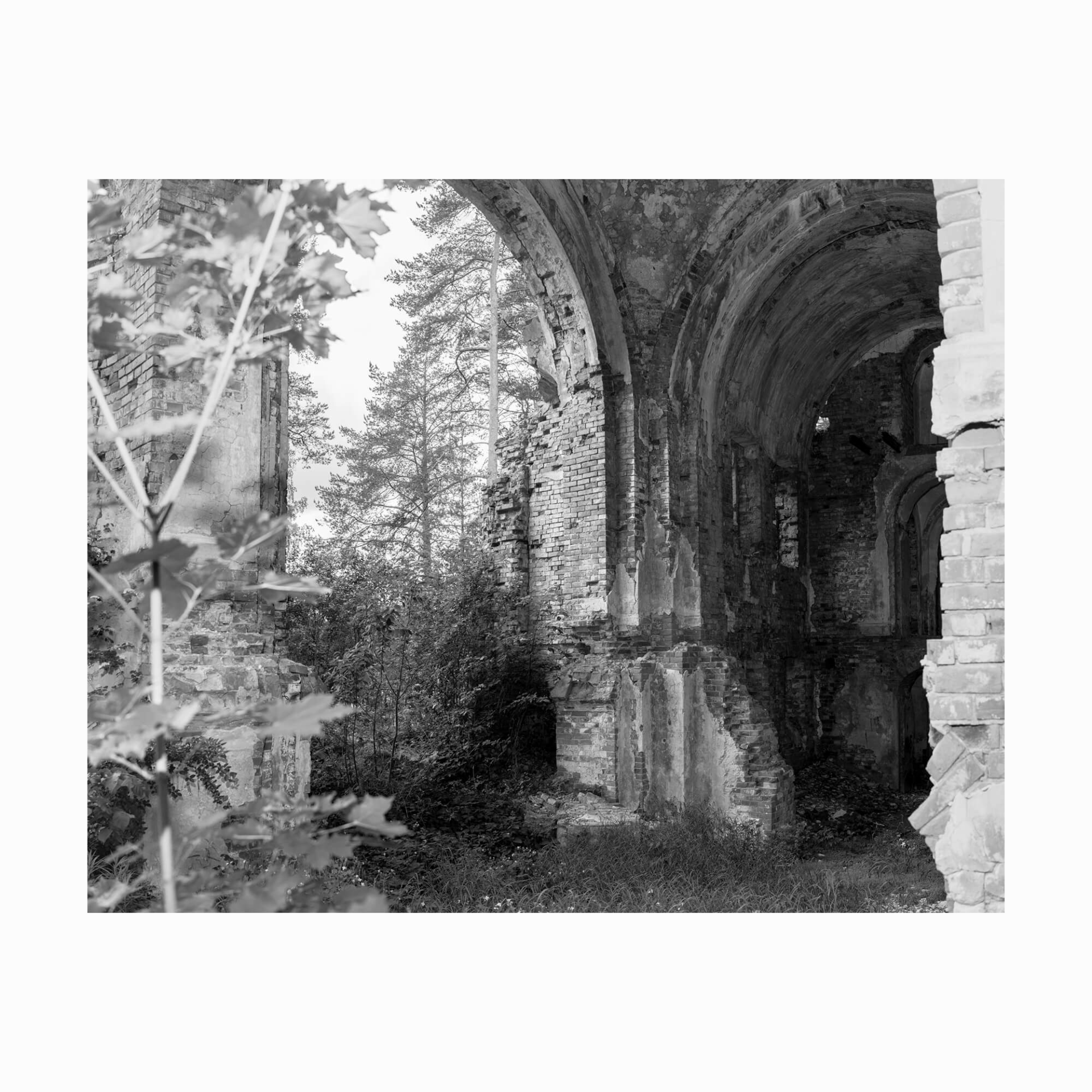
The ruins of church buildings also play an important role in Polina Rukavichkina’s photographic project “Pale Shelters,” which depicts a semi-abandoned village in the Leningrad region. Rukavichkina's project is a complex lyrical statement about a small and unidentifiable place from which most of the inhabitants have left. Both the specific location, touched by dilapidation and overgrown with hogweed, and the real identities of the characters are out of focus. "Pale Shelters" becomes an exploration of the process of slow extinction itself.
© Polina Rukavichkina
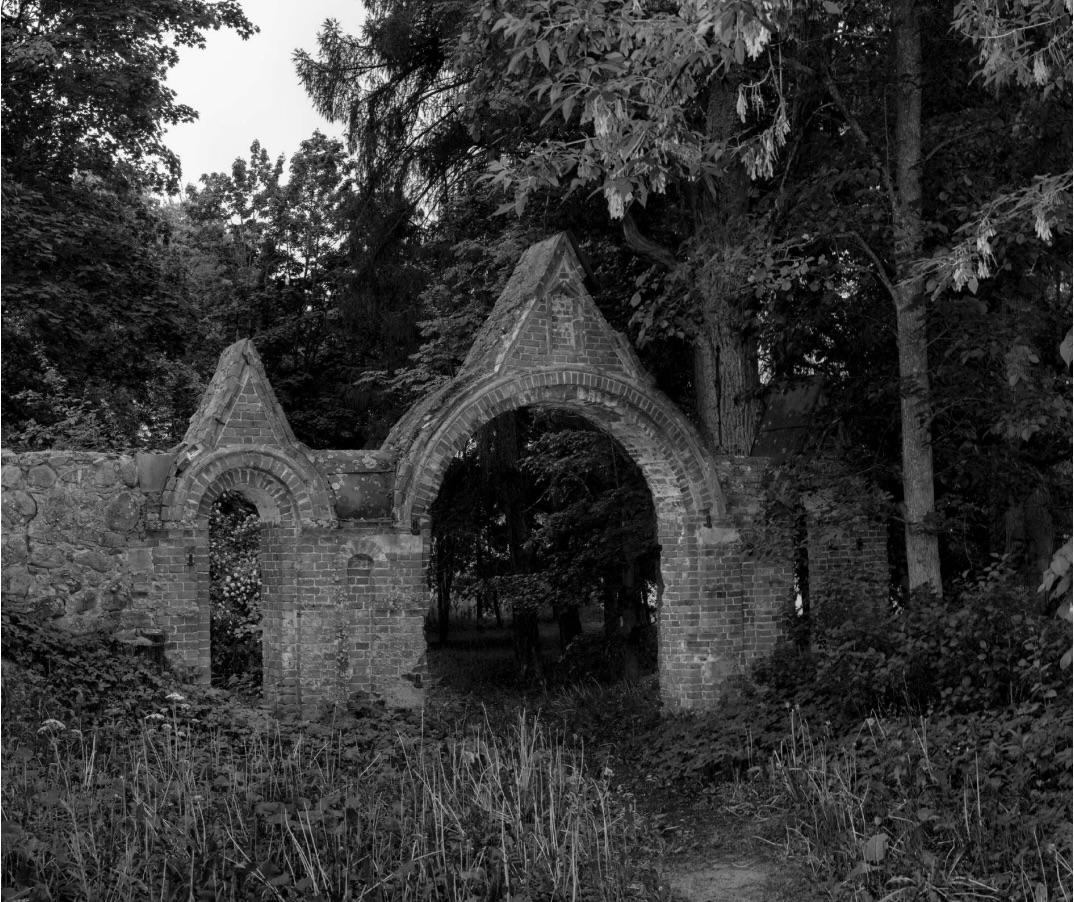
Ruins appear in this series as monumental mystical portals. Unlike the churches of Peter Antonov, carefully placed in the center of spacious compositions, the ruins from “Pale Shelters” are located in forest thickets. The photograph “Entrance I” reveals to us an ancient gate that leads into the dark depths of the forest. “Reality and mystical events intertwine, creating an atmosphere of uncertainty and anxiety,” the curators write about the series. Thus, the landscape, affected by general processes of the post-Soviet era, such as the abandonment of small villages, becomes a capacious and flexible material for the artistic exploration of fear, ambiguity and attitudes towards the expanding void.
© Polina Rukavichkina
“Treasury” by Natasha Lozinskaya and “Book of Miracles” by Igor Elukov
The projects of Natasha Lozinskaya and Igor Elukov examine the landscapes of the north, where both photographers grew up, through the magic glass of mythology. In his works, Igor Elukov recreates visual images from the “Augsburg Book of Wonders,” a German illustrated manuscript of the 16th century, and Natasha Lozinskaya delves into the study of the myths of the Vyatka region.
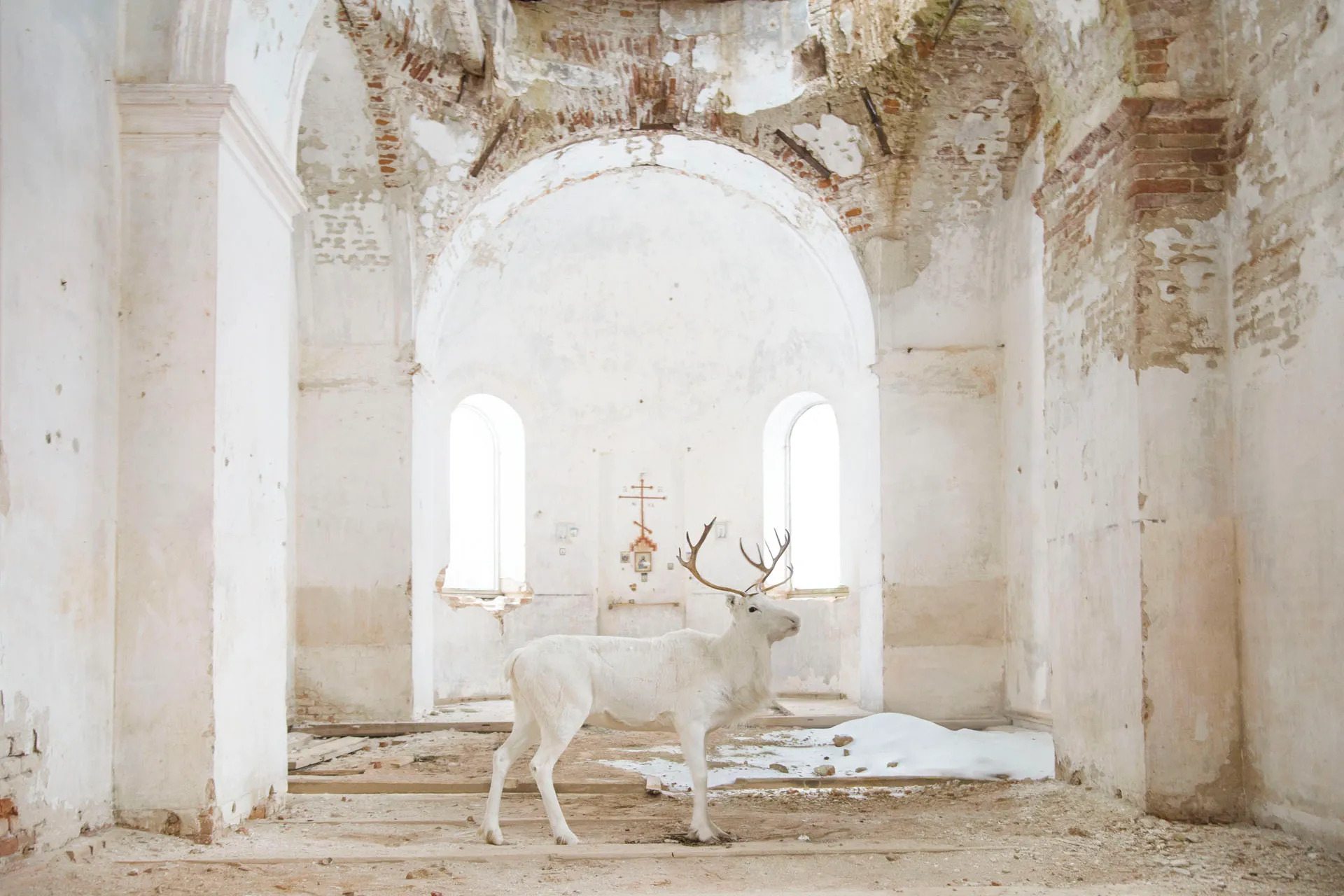
The “Book of Wonders” contains many pages on which you can find the most unexpected images: deer antlers visible behind the soft fold of a snow bank, a gaping golden wound from a fire on a dark coast, a horse in a night creek whose fur resembles the starry sky. Two photographs especially attract attention in the context of a conversation about romantic landscape and ruins. In one of them we see a doe standing majestically in the center of an abandoned church. Her snow-white fur seems to illuminate the building from the inside.
© Igor Elukov
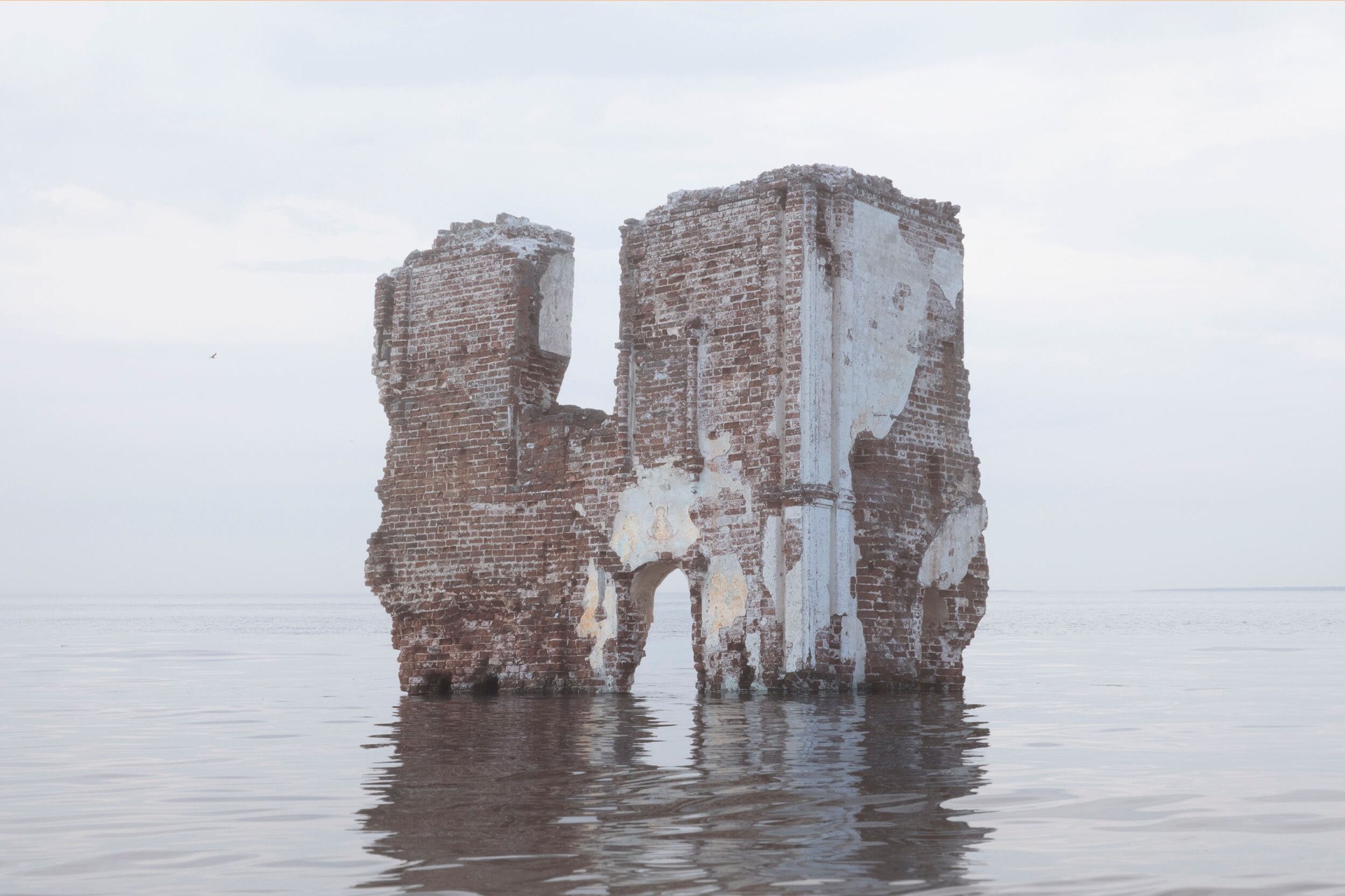
In another photo we see the ruins of a church submerged in water. The water and sky shimmer with the same light blue light, framing the ruin with weightlessness. What happened to this building? Why is it now impossible to reach its walls? The ruin, as one of the images of the Book of Wonders, complements the overall tone of the project, which the curators of the Pennlab gallery describe as follows: “Igor’s photographs are full of foreboding, evoking a feeling of danger and death, and at the same time capturing the silence, solitude and pristine beauty of the North.” “The Book of Miracles,” like Anastasia Tsayder’s project working with the ancient Greek myth of Arcadia, conceptualizes the modern landscape as a space rich in mythical potential and capable of telling us not only about the post-Soviet era, but also about the very nature of time.
© Igor Elukov
Recognizing mythic potential is a creative act, both on the part of the artist and the audience. “These images have no meaning, but there is joy in creating your own myth, your own cosmology,” writes Elukov. The artist invites the viewer to exercise myth-making, viewing the landscape from the active position of questioning and inventing his own story. Interestingly, the ruin in the photograph is a large model, and not a real church. It was created specifically for this shot: among its prototypes, Elukov names a temple he once saw in Georgia, as well as the ruins of the Cathedral of the Nativity of the Virgin Mary in the Vologda region. At the same time, if you look closely, you can find frescoes from the Ferapontov Monastery. The photo itself was taken on the alluvium of Vasilyevsky Island. Thus, a ruin in the hands of an artist becomes not a lyrical monument of the past, which must be treated with reverence, but something that can be reinvented, reassembled and even “transplanted” to a new place.
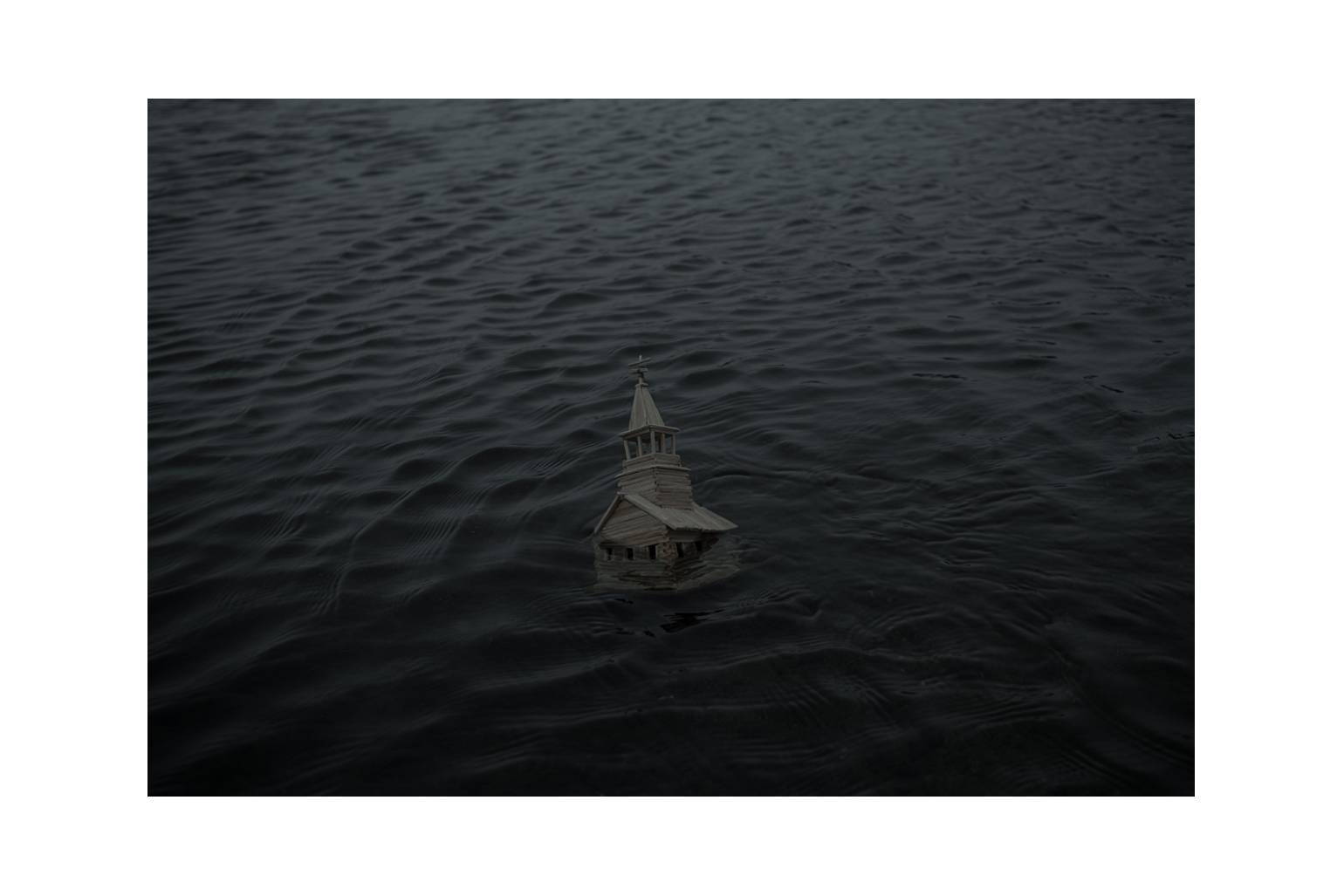
In the works of Natasha Lozinskaya from the “Treasuries” series, legends about Vyatka fairy-tale creatures and places are embodied in mysterious staged shots. One of the photographs, “The Sunken Church,” rhymes with a ruin in the water from the “Book of Miracles.” A wooden church (probably recreated using a small model) sinks in dark, wind-touched water. She does not occupy a stable vertical position in the center of the frame. Rather, the building is carried along the river like a broken island of ice. Based on the description of the project, one can imagine that the dark stream is an image of the story of the sunken church itself: how it lives in the imagination of people who are still able to find this story in the open waters of their memory.
© Natasha Lozinskaya
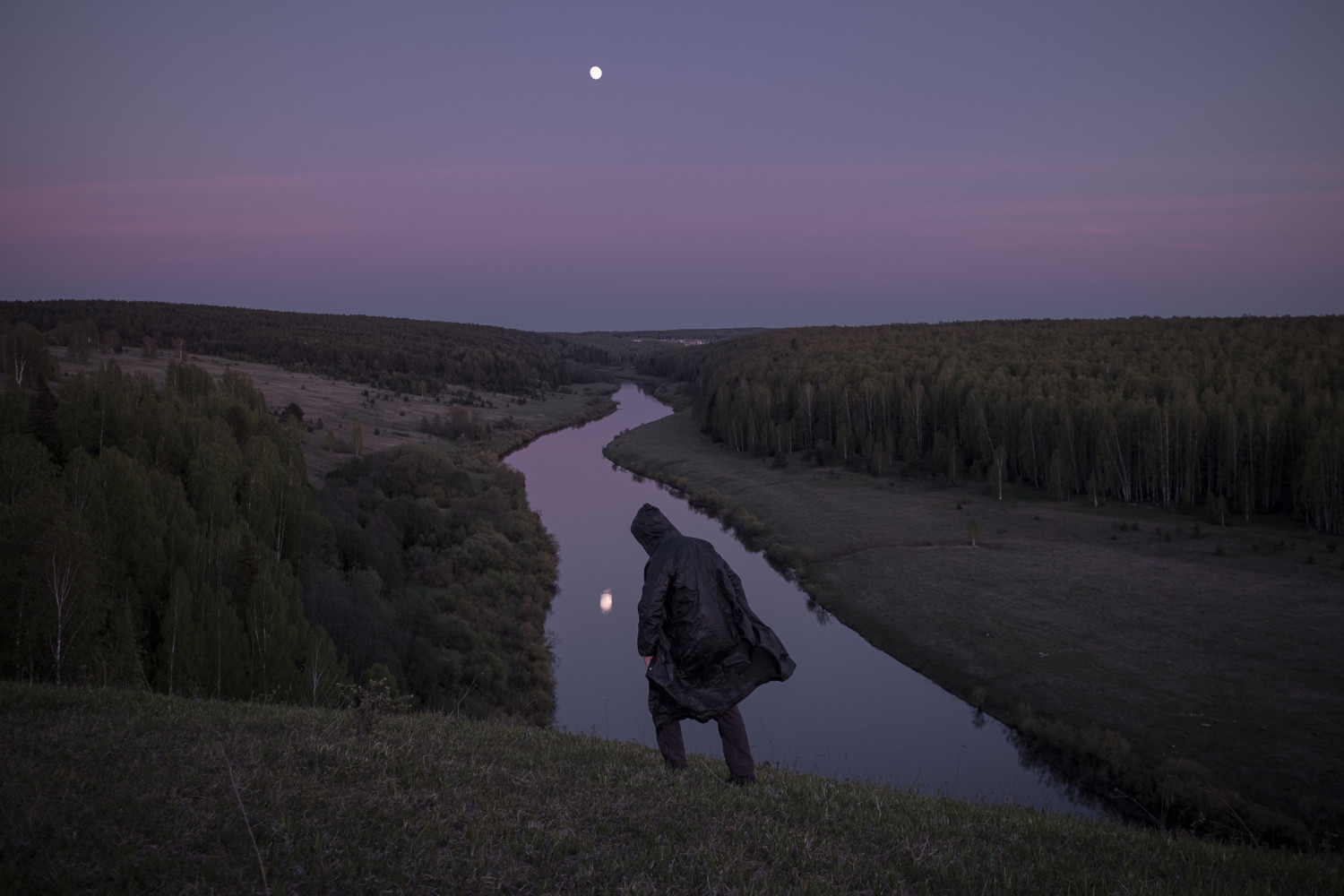
In another photograph, in the center of the composition there is a figure of a man on a hill near the river, shot from behind and not revealing his face to us. He looks around at the stretching distances, the rich purple-pink sky and the moon. Many elements of this photograph are reminiscent of the paintings of the German romanticist Caspar David Friedrich. Standing behind this figure, as in the case of the famous “Wanderer above the Sea of Fog,” we involuntarily identify ourselves with the beholder: what do we see in front of us and what are we looking for in this landscape? “I was looking for my own identity through the identity of Vyatka,” writes the artist herself. “The uniqueness of the Vyatka region is that it is not unique - it is an environment that has absorbed the features of different regions and cultures of the Russian North, the Urals, and central Russia.”
© Natasha Lozinskaya
***
In many photographs of the “Arcadia” thickets you can easily recognize your city, just as I recognized Dimitrovgrad in them. Does this lost land of blooming nature belong to the reality of utopian dreams of the past or is it hidden behind the neighboring high-rise building in our yard? Where are the numerous church ruins? In which areas, villages and cities? Where is the village overgrown with hogweed from Pale Shelters located? The external location of many landscape projects opens up the question of the “sameness” of space and experience, which we share not only with people from different regions and areas, but perhaps also with people of other cultures and times.
Many years have passed since I left Dimitrovgrad. When I return, I am always surprised at how valuable the familiar smell of pine trees and the outlines of familiar buildings are to me. Now the city looks completely different than in childhood - the changes are largely associated not with overgrowth and dilapidation, but with the emergence of new shopping centers and the development of the so-called comfortable urban environment. Everything around us, especially in small Soviet cities, changed very quickly, and many feelings and thoughts did not find their time and place in the stream of transformations.
On public social media pages in Dimitrovgrad people like to discuss black and white photographs of the city. The comments are often filled with nostalgia and lamentation, but even these uncomfortable emotions are worth experiencing and discussing. One way to talk about lost time is provided by photographers who work with the romantic concept of landscape and open up for the viewer a complex range of thoughts and emotions that can nourish, develop, and resolve our own, often contradictory, feelings about the changing world around us. Where lies Arcadia, and who remembers her? Is a romantic ruin a monument to a past that has ended, or an awakening reminder that even present events are not eternal? The photographers’ works, focused on mythology and archetypal cultural images, allow us to see from afar the collision of “past” and “present”, and at the same time, to see everything that surrounds us again.