
Translated material
Swastika without Hitler
How the fascists appropriated the swastika, and how it affected the lives of Asian peoples
Approval of the Red Army swastika and its censorship
In 1919, at the height of the Civil War, the commander of the South-Eastern Front of the Red Army, V.I. Shorin, signed an order approving a distinctive sleeve insignia for Kalmyk military formations. This sign became the lyungtn - the Buddhist symbol of the swastika.
The word lyungtn comes from the Buddhist terms meaning "vortex" and "vital energy".
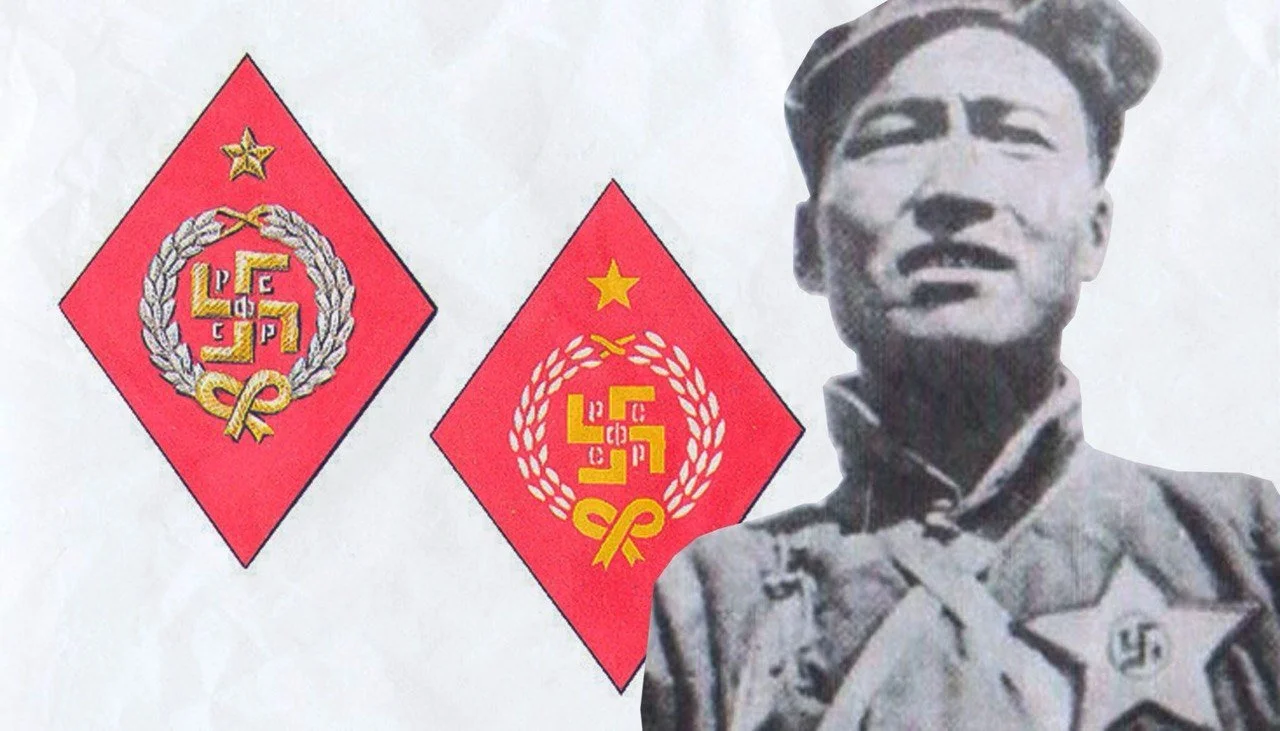
Figure: Order to the troops of the South-Eastern Front No. 213. November 3, 1919. The distinctive sleeve insignia of the Kalmyk formations is approved, in accordance with the attached drawings and descriptions. The right to wear is assigned to all command personnel and Red Army soldiers of existing and formed Kalmyk units.
The red star, a symbol of Marxist-Leninist ideology, adopted in most parts of the army, did not carry any meaning for Kalmyk Buddhists and was absent from visual culture, unlike the Lyngtn .
A few months later, a similar sign with a swastika was introduced for the Buryat units.
The swastika on banknotes of 1917–1918, which is sometimes mistakenly associated with the influence of the Lyngtn, appeared there by accident: both the Provisional Government and the authorities that replaced it used old royal cliches made for the Mongolian National Bank.
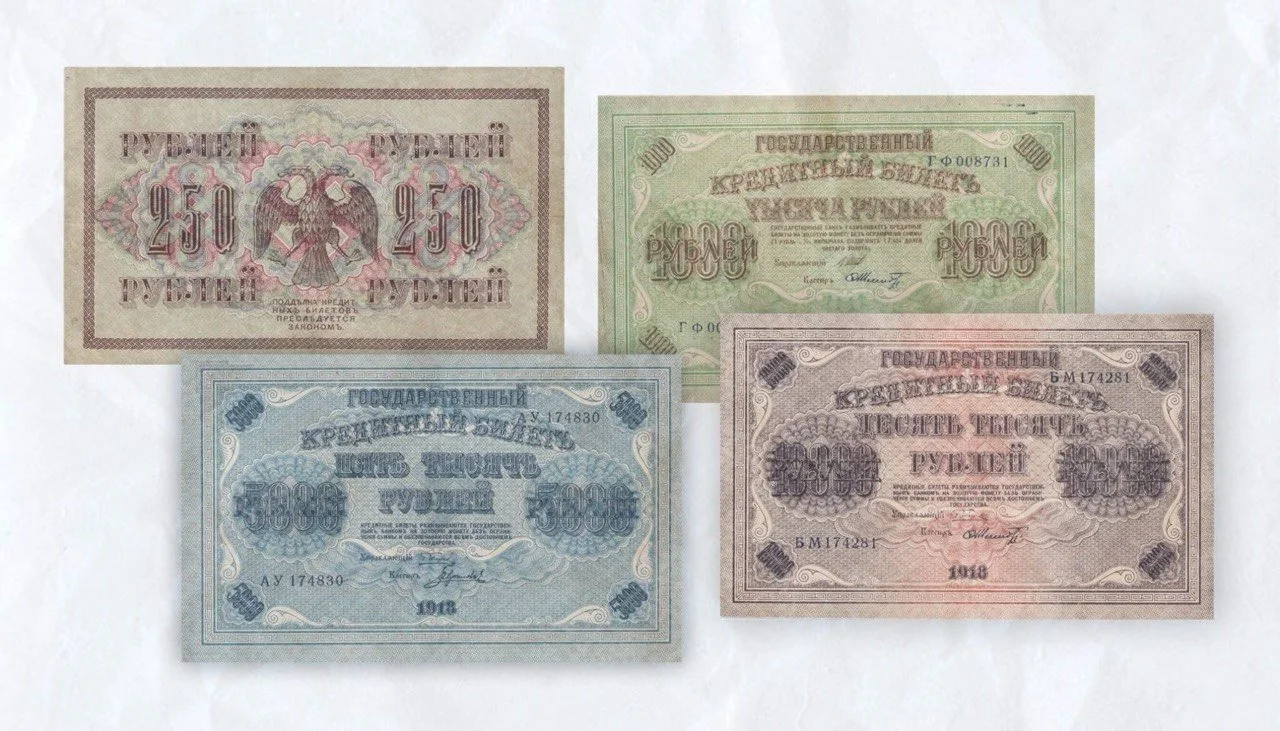
Figure: 250, 1,000 rubles 1917; 5,000, 10,000 rubles 1918-1919.
In 1922, People's Commissar of Education Anatoly Lunacharsky banned the use of the swastika and any similar signs in Soviet symbols and works of art - at that time, fascist organizations that appropriated this symbol were already gaining strength in Germany.
The Soviet state responded to appropriation with retaliatory censorship. Thus, Moscow’s reaction to the political situation in Europe determined the boundaries of cultural autonomy: the ban on the symbol for peoples who used it long before the Nazis and had nothing to do with them.
The swastika as a symbol of Tuvan statehood and ancestral signs
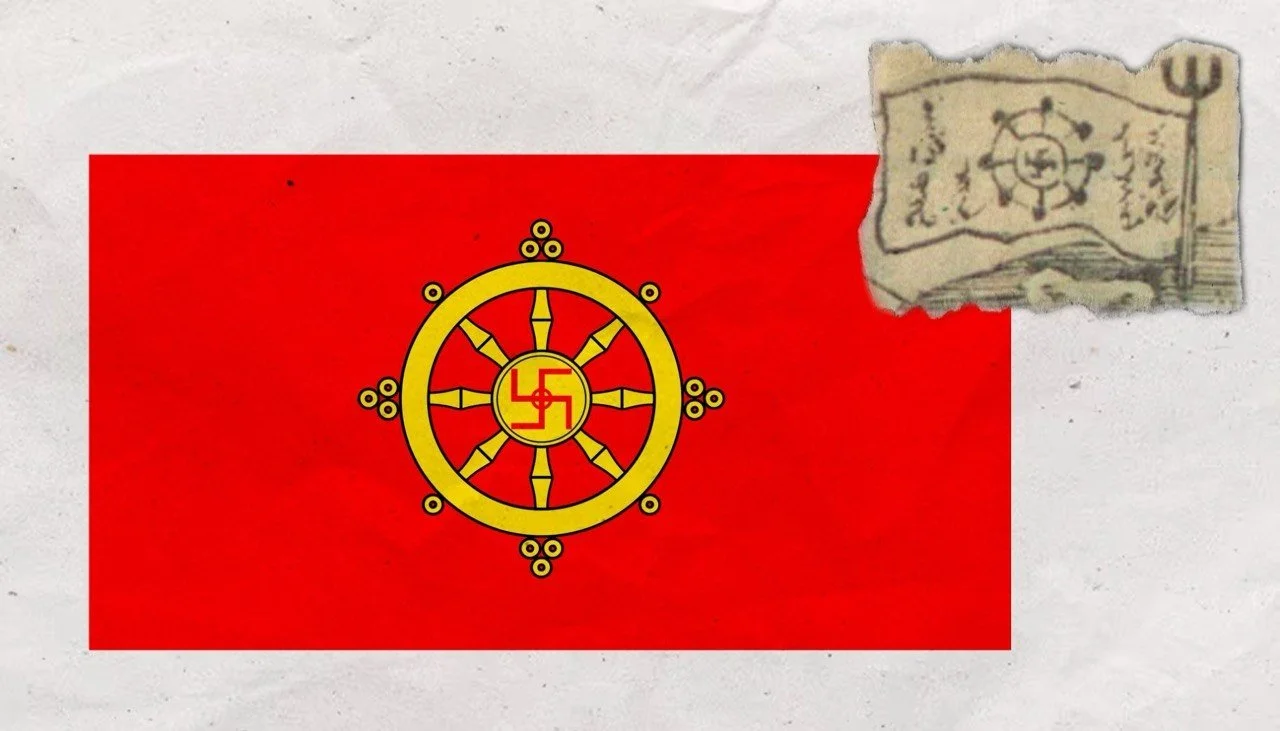
Figure: Reconstruction of the flag of Tuva Arat Republican Tugu (1921-1926)
During the existence of the Tuvan People's Republic, its flag (Tuva Arat Respublikanyn tugu) changed several times.
On the page of the newspaper “Red Plowman” for July 1924 you can see a drawing depicting one version of the flag. It shows a Russian peasant, a school under the flag of the Russian Labor Commune, an arat and the flag of the TPR.
The inscriptions on the drawing of the panel are illegible, judging by the reconstruction of B. Mongush, it could have been written “tangutiva-iinarad-unqubisуal-tujasaу-untuу” - “Banner of the Tannu-Tuva People’s Revolutionary Government”, and after 1924 - “bugudenayiramdaqutangutiva-iinaradulus-untuу” - “Banner Tannu-Tuva People's Republic".
Source: B. B. Mongush, “Coat of arms of the Tuvan People’s Republic 1935–1939: reflection in the symbolism of traditional cosmological ideas of the Tuvans”
The name of patterns with swastikas in Tuvan is Kas Hee , they are used by the Kyrgys, Khovalyg, Adyg-Tulush, Oyun clans in Beezi Kozhuun.
Kas demdek , the name of the swastika, is a symbol of man’s connection with the sun, a symbol of the sky, an assistant to Kurbustu Khaan. It shows the movement of the sun and how life develops. Tuvans put this sign on animals: for livestock breeders, it meant a ten thousandfold increase in the number of animals and ten thousand years of peaceful life.
After World War II in Tuva, Kas was destroyed by people who did not know its true meaning due to its association with fascist symbols.
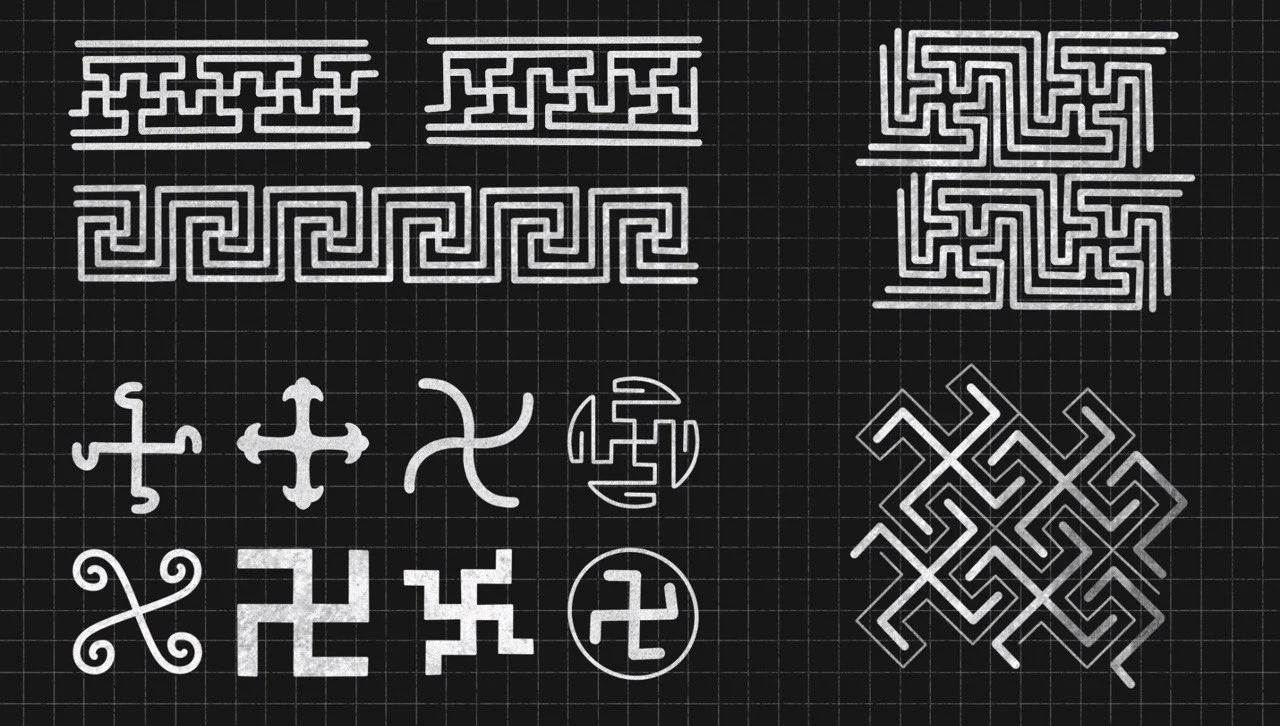
Drawing: Tuvan tribal signs and ornaments
Source: L. S. Adyg-Tyulyush, “Tuva chonnun ugulzalary, kheeleri”
Meaning of the swastika in Asian cultures
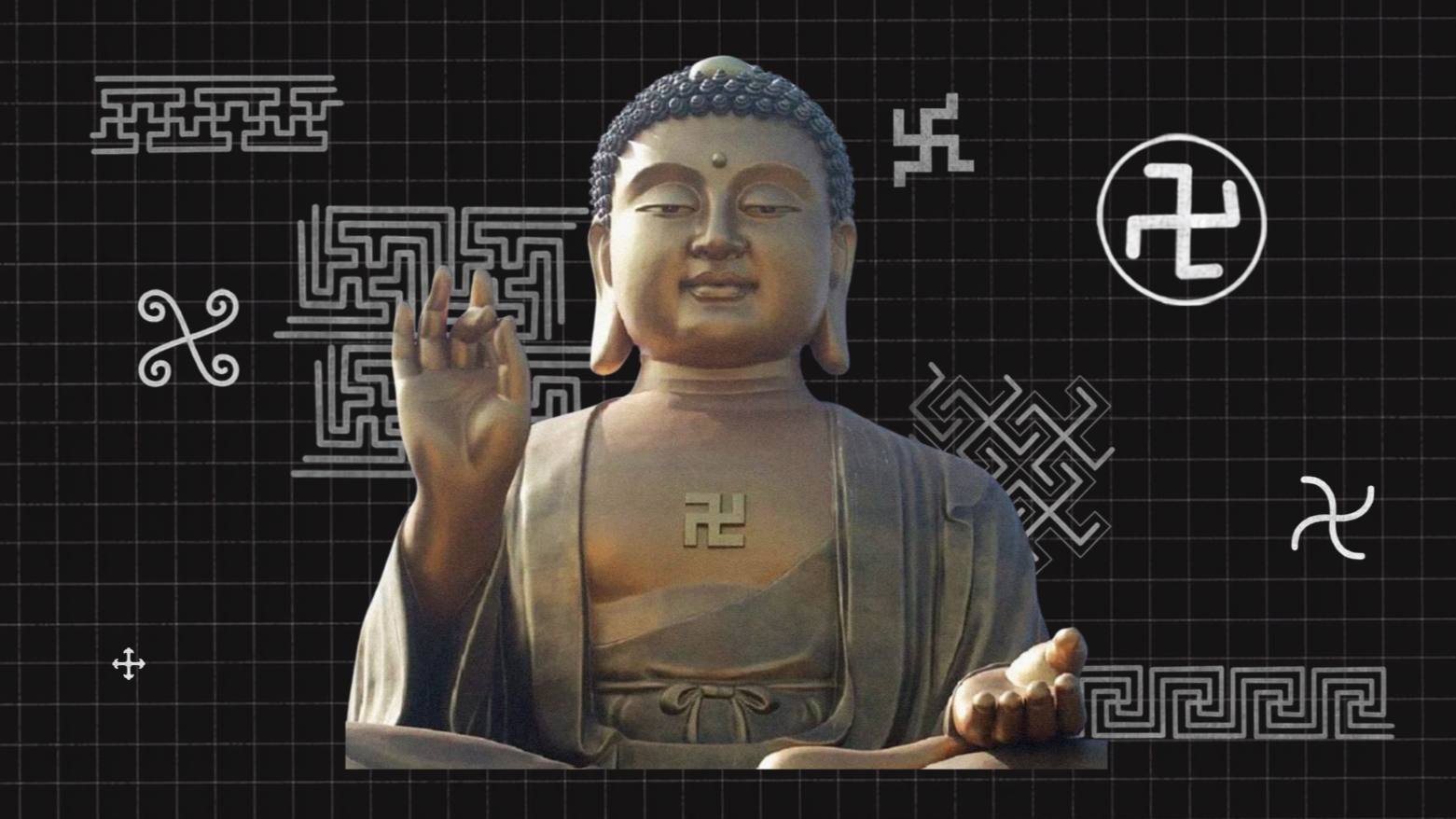
The word “swastika” comes from the Sanskrit su (“good”) and asti (“to eat”) - literally “this is good,” “a sign of well-being.”
For more than a billion living people: Hindus, Buddhists, Jains, this symbol does not need reappropriation, that is, returning the symbol to their culture. It has been used continuously in religious practices, architecture, textiles, and jewelry.
In Tibetan cosmology, the right-handed swastika is a symbol of stability and sustainability; it is cut out above doorways as a talisman and placed in the foundations of new buildings to ensure stability and strength of the structure. It has architectural and protective applications.
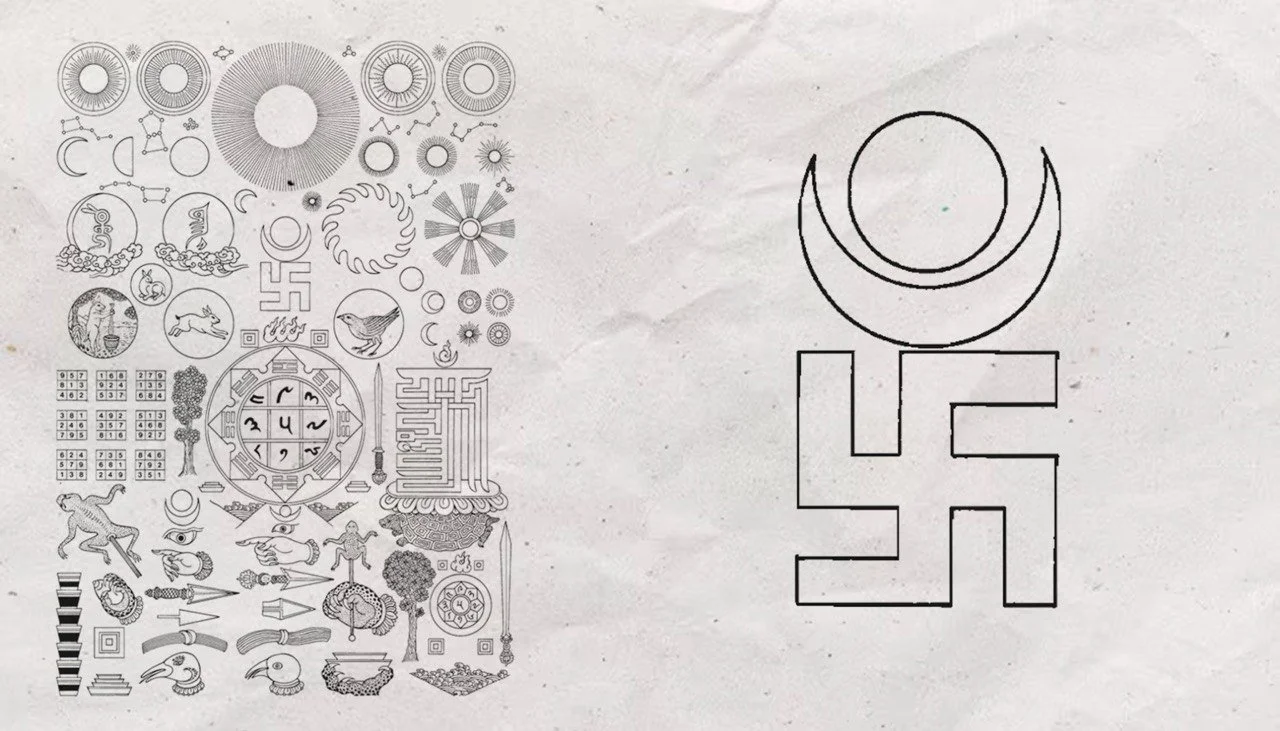
Drawing: Astrological symbols. Source: Robert Beer " Encyclopedia of Tibetan Symbols and Designs "
In Buddhism, it means turning the wheel of the Dharma teachings.
In Jainism, the swastika is the main symbol representing the four types of birth in the cycle of existence.
In Mongolian tradition, the swastika is called khas and is recorded in artifacts over 15,000 years old. Mongolian Wikipedia states that the swastika was the symbol of Genghis Khan's horse.
How Hitler stole someone else's symbol
In the 19th century, scientists discovered that Sanskrit was similar to German and other European languages, and came up with the theory of a common ancestor - the “Aryans”. The Nazis took this idea and from a linguistic hypothesis it became the "master race" theory. The image of white-skinned warrior-gods, their ancient ancestry - all this formed a narrative that was picked up by nationalist communities even before Hitler came to power. And already in 1920, the Nazi Party officially adopted the Hakenkreuz : “hook-shaped cross” as its symbol.
The Nazi appropriation of the swastika remains one of the most prominent examples in the 20th century of how cultural appropriation harms source cultures. The Nazi regime tore the symbol from its cultural context, appropriated it from its original purpose, and then gave it a meaning for which it was never intended.
The Hackenkreuz, on the characteristic white circle and red background of the Nazi flag, became the most hated symbol of the 20th century, inextricably linked with the crimes committed under the Third Reich.
The Nazis appropriated this symbol so firmly that its original custodians found themselves alienated from their own tradition. To this day, the stolen version of the swastika remains the main identifying mark of neo-Nazi groups around the world.
How the swastika is used against Asian people
The swastika is associated with neo-Nazi ideology for many representatives of the indigenous peoples of Russia.
Hate crimes , graffiti with a swastika, Kolovrat, the meaning of which is inspired by the fascist swastika, on the clothes and accessories of neo-Nazis have become a signal “you are strangers here” in many cities of Russia.
Groups have attacked and are attacking people of non-Slavic appearance. Especially in the 2000s, the streets of Russian cities became a zone of terror for all “non-Russians.”
A victim of one of these gangs was 19-year-old Ulan Tumudov from Kalmykia, who was killed by Nazi skinheads “White Wolves”, who were also guilty of other crimes, including serial murders of citizens from Central Asia.
Sergei Nikolaev, a Buryat chess player from the Republic of Sakha (Yakutia), was killed in 2007 by a group of teenagers, football fans of Spartak, who attacked people of non-Slavic appearance with knives and bats and posted videos of the attacks on the Internet.
Celebrating Hitler's birthday, one of the groups in the south of Moscow attacked Sergei from Buryatia. The leader of the group brutally beat him and tried to scalp him.
Eight-year-old Khursheda Sultonova was killed in 2004 by neo-Nazis from the Combat Terrorist Organization group. The jury of the St. Petersburg City Court found the eight defendants guilty only of hooliganism. One defendant was acquitted. The main defendant received 5.5 years in an educational colony, the rest - from 1.5 to 3 years.
According to the Ministry of Internal Affairs, from December 2007 to March 2008, more than 40 people were killed as a result of neo-Nazi attacks in major Russian cities. And according to the SOVA center, in 2008, 110 people were killed and 487 were injured.
The police and the judicial system became part of a common problem: attackers got away with impunity, and victims, often migrants or citizens with the “wrong” non-Slavic appearance, risked being persecuted themselves by seeking help.
How the swastika ban is used against those peoples from whom this symbol was stolen
Tyva
In 2015, a Tuvan social activist published an archival photo with a swastika on social networks. The court fined her under Article 20.3 of the Code of Administrative Offenses of the Russian Federation: “Propaganda or public display of Nazi paraphernalia or symbols.”
In 2019, the verdict was appealed to the European Court of Human Rights at the request of the human rights center Memorial, but a decision on the case was never made, since in 2022 Russia was expelled from the Council of Europe, and thousands of complaints filed against it found themselves in a legal vacuum.
Buryatia
In 2016, during a search of activist Vladimir Khagdaev, FSB operatives confiscated his devices. They found screenshots from social networks depicting swastikas - khas-tamga . The FSB classifies the images as a “Nazi swastika.”
Khagdaev points out that khas-tamga is a Buddhist-shamanic symbol that Buryat shamans actually apply to the objects they use.
The court sentenced Khagdaev to three years of suspended imprisonment on charges of calls for separatism (Part 2 of Article 280.1 of the Criminal Code of the Russian Federation) and possession of narcotic drugs (Part 2 of Article 228 of the Criminal Code of the Russian Federation). According to investigators, Khagdaev “has personal convictions aimed at uniting the Mongolian peoples into a single state.”
Mongolia
Rapper Amarmandah Sukhbaatar (known as Amraa) appeared on stage wearing a swastika-embroidered dress , for which he was beaten by a Russian diplomat.
The media wrote that he was hit on the head with a bottle and kicked in the face several times. After the beating, Sukhbaatar spent about ten days in a coma. The musician's father, Sevjidin Sukhbaatar, came to the press conference with a book of Mongolian ornaments to show that the khas symbol is a traditional Mongolian ornament.
The Russian embassy called the press reports "distorted." The suspect was not detained, and there is no information about the attacker in the media.
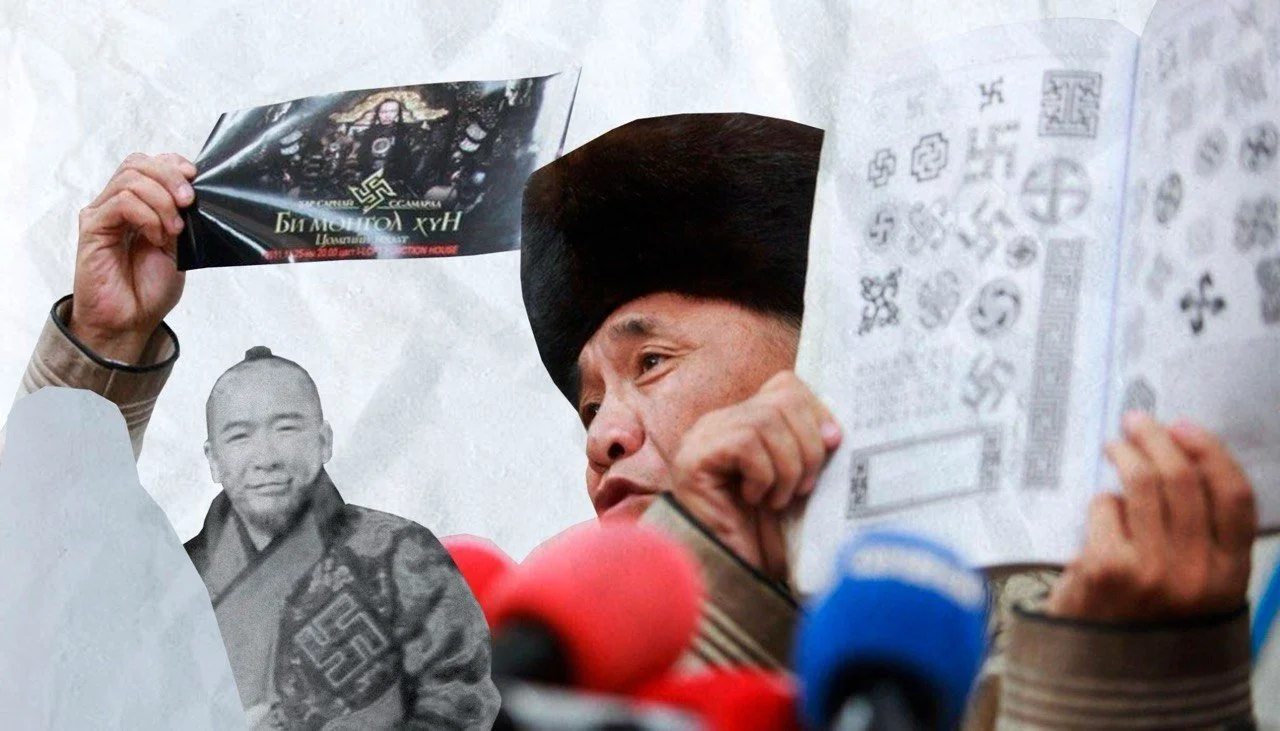
Picture: The father of a beaten musician in Mongolia, Sevjidin Sukhbaatar, displays a book with the history of the symbol, Sources: AFP/Getty; personal archive of Amarmandakh Sukhbaatar.
Thus, state mechanisms of censorship of the swastika - fines, criminal cases, diplomatic immunity - are turned against peoples whose symbols have been distorted by others. Article 20.3 of the Code of Administrative Offenses, formally used against fascist propaganda, is de facto used as a tool for the suppression of indigenous peoples.
Work to return the symbol
Some say that turning the swastika into a Nazi symbol has made it hopelessly corrupt. Others believe that it can be returned - and even should be done.
Attempts to devalue and ridicule the artificiality of the construct began with “Nazi chic,” a style associated with the pop culture of Nazi Germany. Its popularity was at its peak in the 1970s, during the heyday of subcultures, intended to shock, provoke and achieve comic effect. Although this trend originated in Western culture, it has gained significant popularity in Asia, especially in Japan, where Nazi chic has become part of cosplay culture.
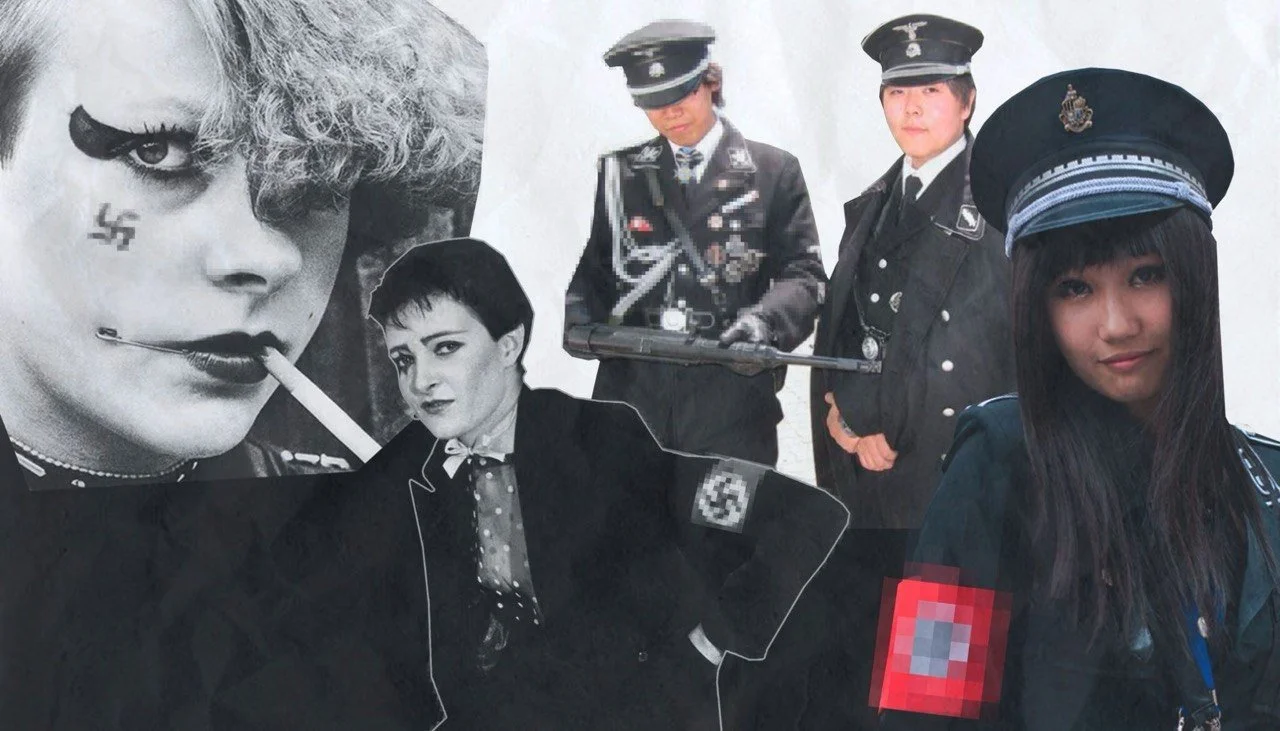
Figure: Cosplay using "Nazi chic"; representative of subcultures; Siouxsie Sioux, lead singer of Siouxsie and the Banshees in 1976.
Later, as a reaction to bans and crimes against cultures that use the swastika, a movement for the decolonization of the symbol appeared and it acquired a more systemic political optics.
At the beginning of 2007, German Chancellor Angela Merkel made a proposal to extend the German ban on Nazi symbols to all EU states.
Representatives of Hindus in Europe made protests. Critics of the initiative pointed out that the symbol was appropriated by Hitler's Germany, and more recently by white supremacists.
Paragraph 86a of the German Criminal Code does not specify which symbols are prohibited, leaving interpretation to law enforcement officers. It is not the symbol itself that is banned, but its illegal use by anti-constitutional organizations for anti-constitutional purposes. In practice, this led to the fact that even anti-fascists with a crossed out swastika came under persecution. And the difference between the Buddhist swastika and the Nazi one for an ordinary passer-by or police officer practically does not exist.
"Just because Hitler abused this symbol to spread his regime of terror, racism and discrimination does not mean we should ban its peaceful use,"
- says British Hindu public figure and publicist Ramesh Kallidai, commenting on the German initiative to ban the swastika in European countries.
In one of the online discussions surrounding this topic, a participant with Oirad-Kalmyk roots wrote: “This symbol has existed in Asian cultures for thousands of years and carries a sacred and religious meaning. Just because the fascists stole it and used it for their crimes does not mean those cultures should abandon it.
On the contrary, as a sign of solidarity with those from whom it was stolen, one could stop reproducing the meanings that the Nazis put into it. In my culture, this symbol was self-censored during the Second World War. I agree that we must learn from history. But we must also go deeper and not perpetuate the meanings created by others. I hope that one day we can reclaim it for ourselves.
Imagine that for most people on the planet, a green light means permission to drive. But one day one country introduced new rules and announced that green now means stop. Should all other road users obey these rules? »
One of the interlocutors objected: the symbol will forever remain associated with the Nazis.
Racial equality consultant and researcher Sangeeta Thanapal writes in an article about decolonizing the swastika:
“The Nazi appropriation of the swastika remains one of the most striking examples in the 20th century of how cultural appropriation harms source cultures. People should not give up their traditions because others have abused them. Nazis should not dictate to millions of people how they should practice their religion in the 21st century.”
The ban on swastikas has spread beyond Europe. Thus, the Australian state of Victoria became the first in the country to ban images of the Nazi swastika in public places.
Representatives of the Hindu, Jain and Buddhist communities of Australia reacted to this - they tried to achieve a distinction between Hakenkreuz and the swastika in legislation banning Nazi symbols. In their opinion, in this way the law will help improve public understanding of what the swastika symbol represents and how it is used. In 2023, the Australian Attorney General introduced an amended federal bill to ban the display of Nazi symbols throughout the country.
The critical debate surrounding the swastika ban is based on a simple principle: people do not have to give up their traditions just because others have abused them. The Nazis should not dictate to millions of people the meanings of the symbols they stole.
That is why it is important to consistently refuse to interpret Nazi symbols in only one way. Every time the swastika is mentioned in the context of hate speech, it must be called an aberration in the millennia-long history of the symbol. Not having this information means perpetuating ignorance, which only increases fear and hatred.
Claims of cultural appropriation are often derided as part of an identity politics project. But the fact that Hindus and Buddhists, almost a century later, cannot freely practice their religion and display their own symbols shows that cultural appropriation can cause real and lasting damage.
One can and should argue about whether it is possible to return a symbol.
But the important thing to start with is to stop “ giving ” it to the Nazis by default. The Nazis carried out one of the most successful acts of cultural rebranding in history, and they did it at the expense of someone else's heritage.
By doing so, we can send a clear message to neo-Nazis and other purveyors of hate that all who have used the swastika as a symbol of prosperity, well-being and goodwill for millennia are reclaiming the symbol that was stolen from them.
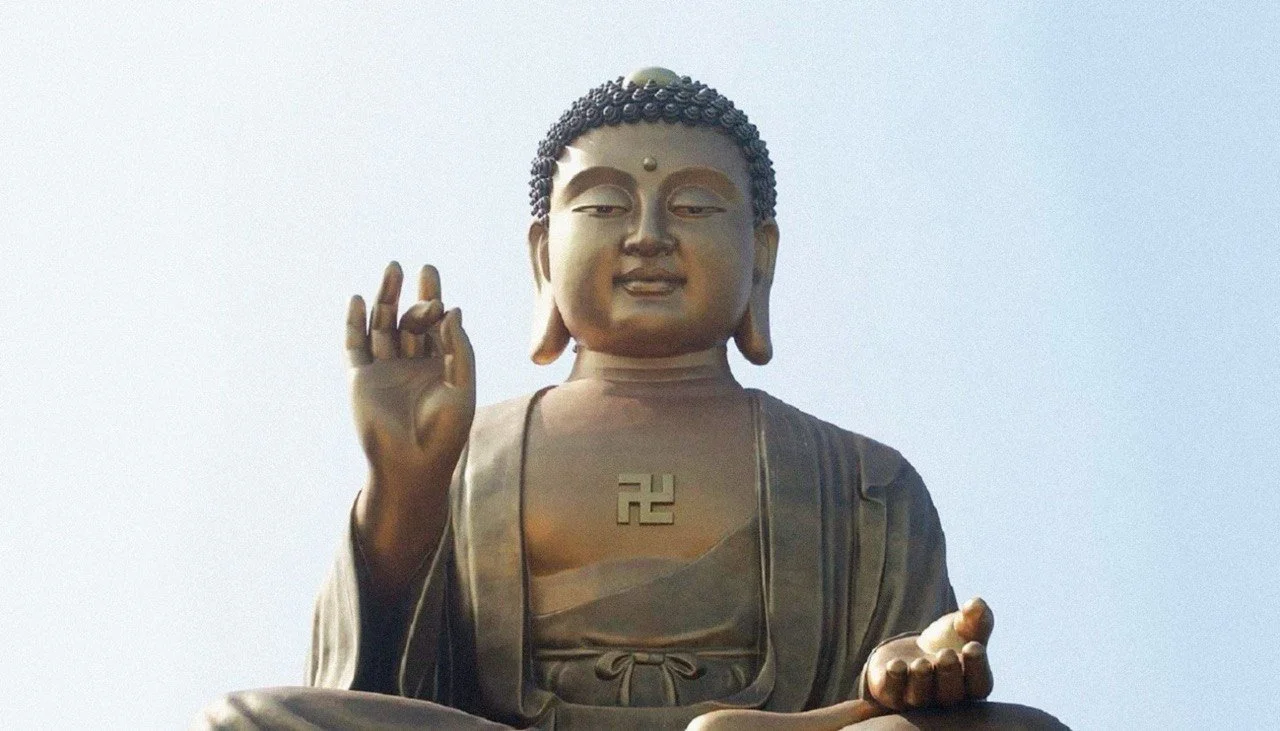
Photo: Fo Guang Shan Buddha Museum in Dashu District, Kaohsiung, Taiwan.