“This is not Bakaldyn, but propaganda”: how the Evenki holiday in Neryungri was mixed with the Northern Military District and elections
18+ This material (information) was produced, distributed and (or) sent by a foreign agent Media project “New Tab” or relates to the activities of a foreign agent Media project “New Tab” Author Alexey Fedorov June 25, 2026 read: 8 min.
In the Yakut city of Neryungri, the national holiday Bakaldyn was held on June 20 - on this day, Evenks traditionally welcome summer after a long winter. Usually it begins with rituals, the main of which is the meeting of the sun, and is dedicated to Evenki traditions, but in Neryungri the guests of Bakaldyn were also reminded of the war and elections. “New Tab” tells why some Evenks were outraged by what they saw and left the holiday early.
Bakaldyn is a national Evenki holiday (its name is translated from Evenki as “meeting”), which is usually celebrated at the beginning of summer: at this time the Evenks celebrate the New Year.
Evenks are an indigenous Tungus-Manchu people who live in Siberia, the Far East, Mongolia and China. These are nomads, hunters and reindeer herders; in the cold season they were busy searching for food, so Bakaldyn was conceived as a holiday where different kinds of Evenks met after a long winter, greeted nature and introduced children to their culture. In the Sakha Republic, Bakaldyn is held in the village of Iengra, the city of Neryungri and Yakutsk.
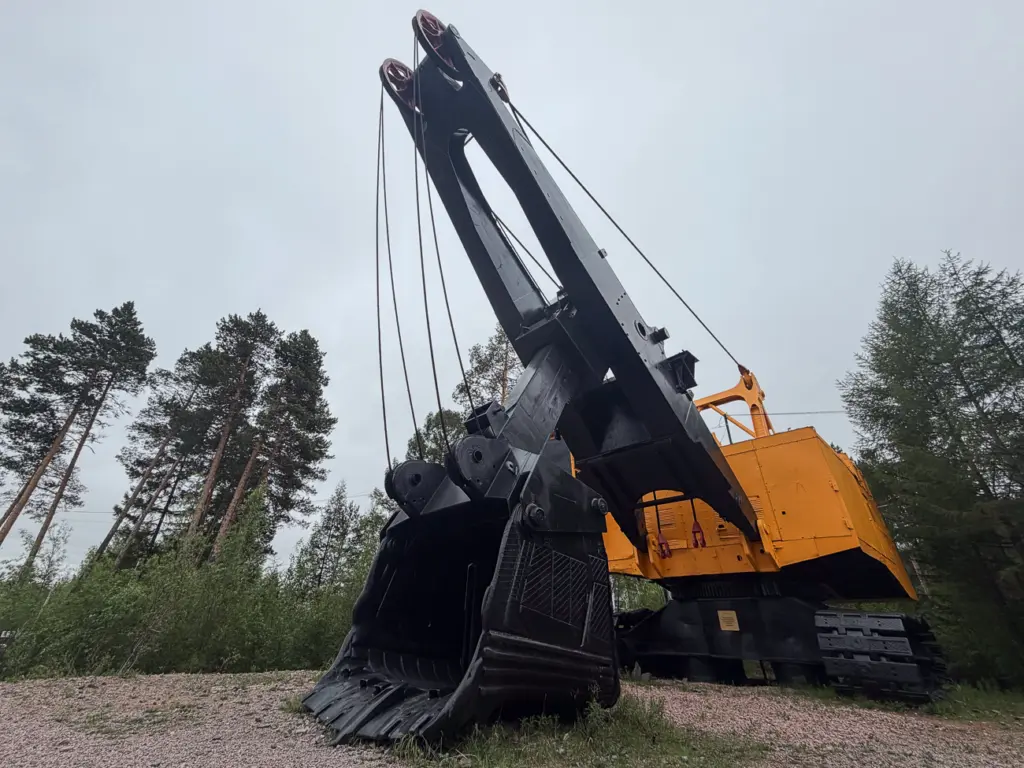
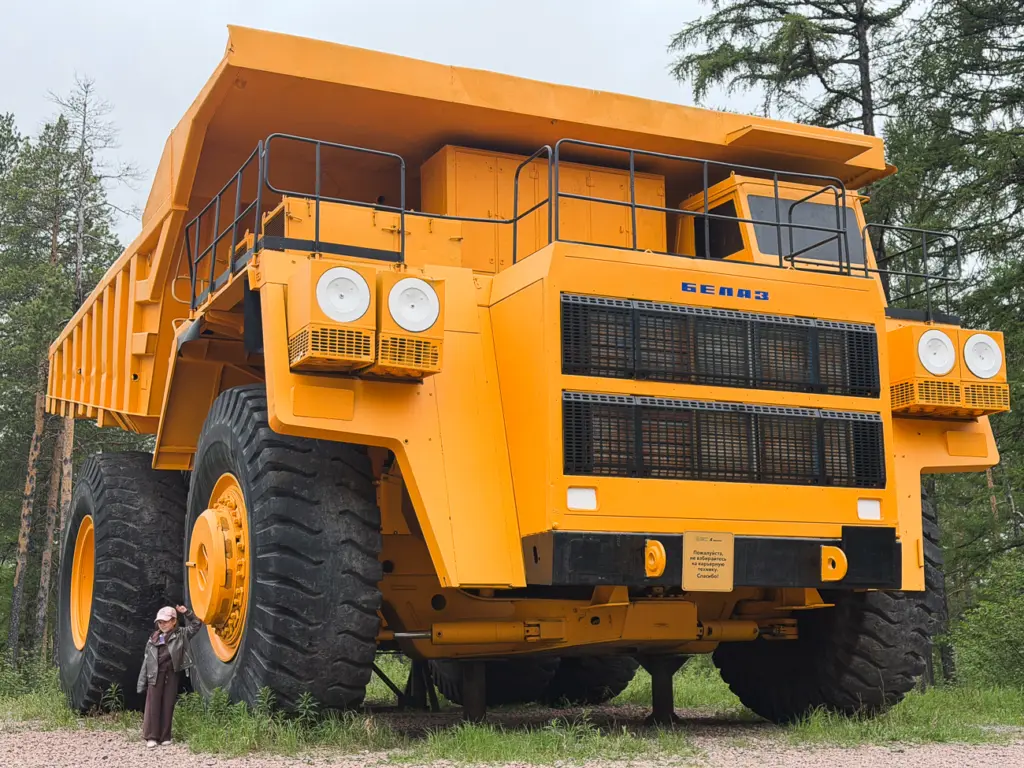
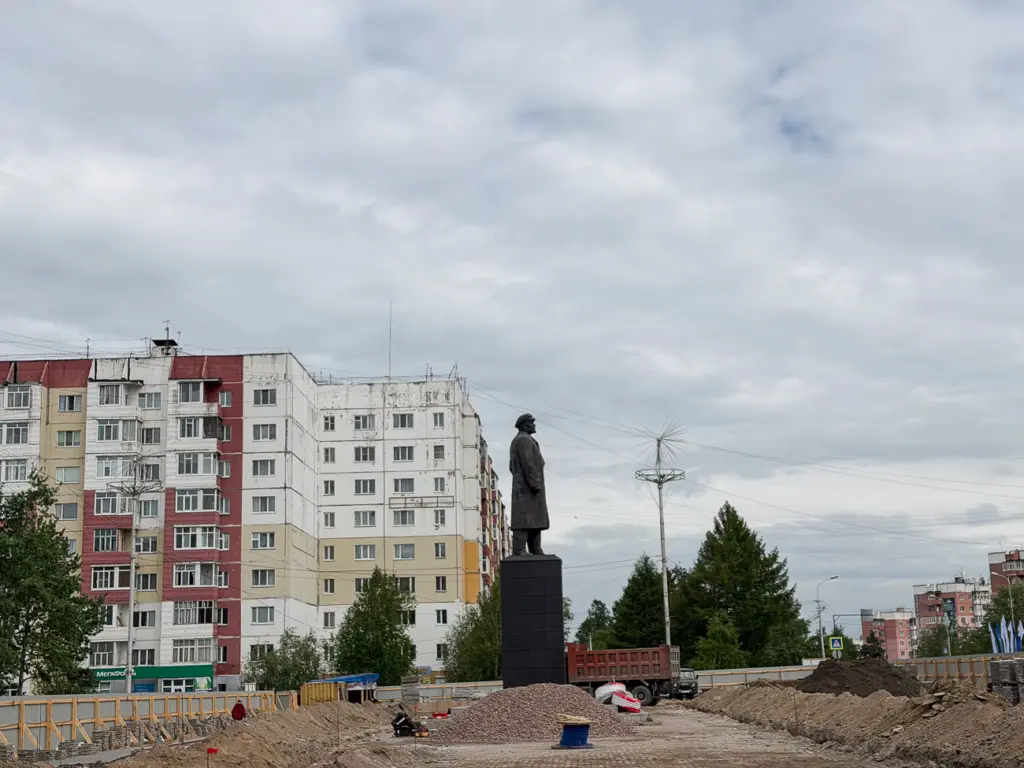
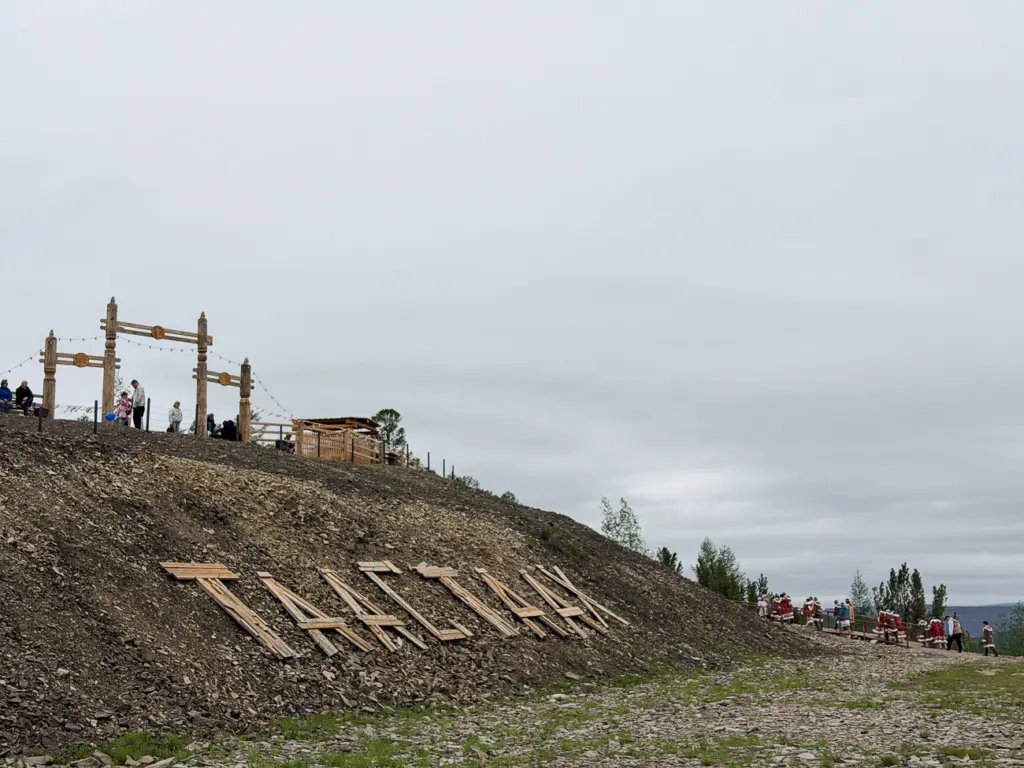
The road to the Taastakh ethnocomplex in Neryungri, where Bakaldyn was celebrated on June 20, passes through the technopark. There are almost no attractions in Neryungri, and tourists take photos near the huge excavators and BelAZ trucks of the local coal mining company. As I walk past the bucket, a preschooler wearing a Stitch hat is standing in it, looking around lostly while his parents take pictures of him.
Stitch is an alien character from the American cartoon Lilo and Stitch.
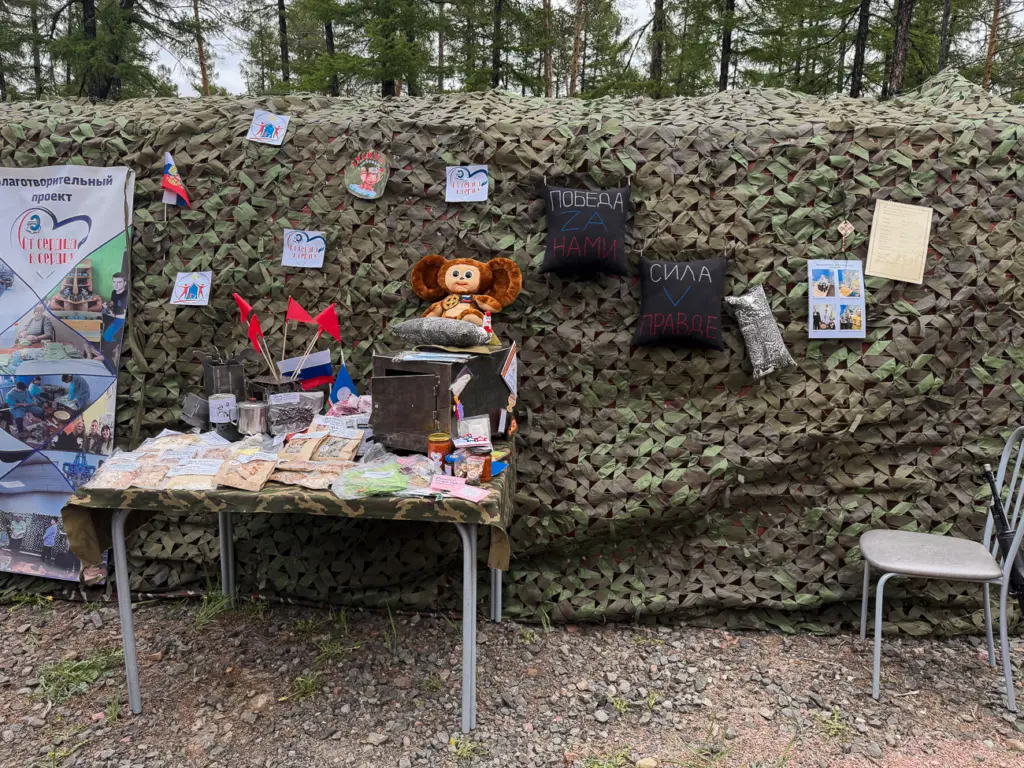
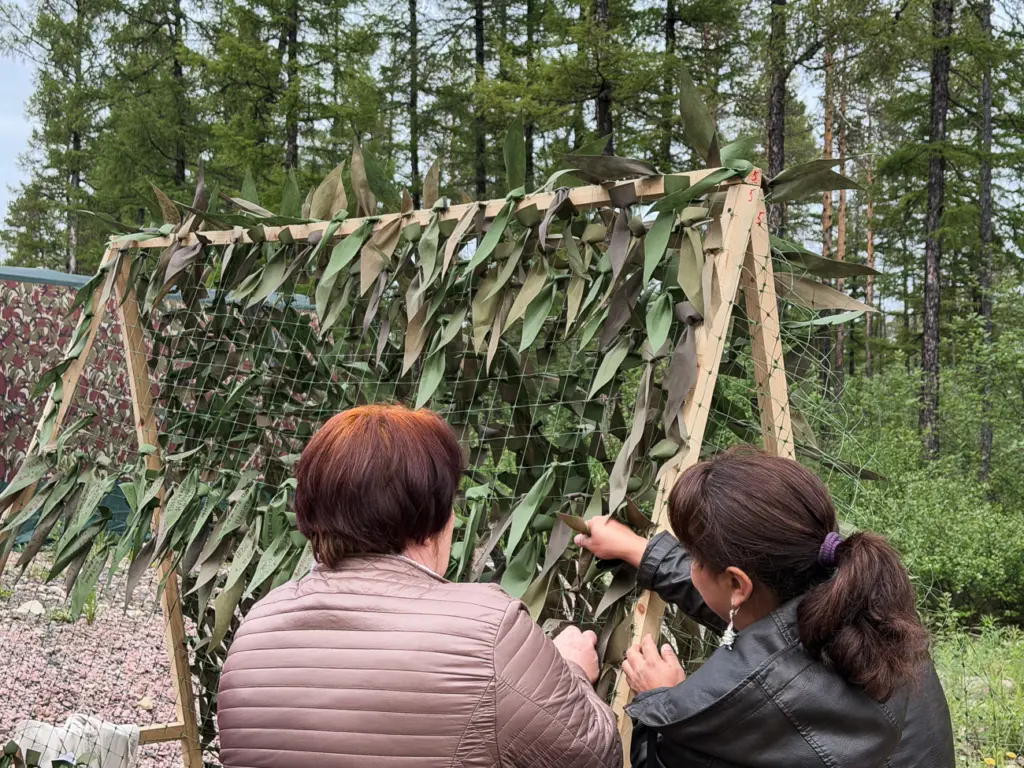
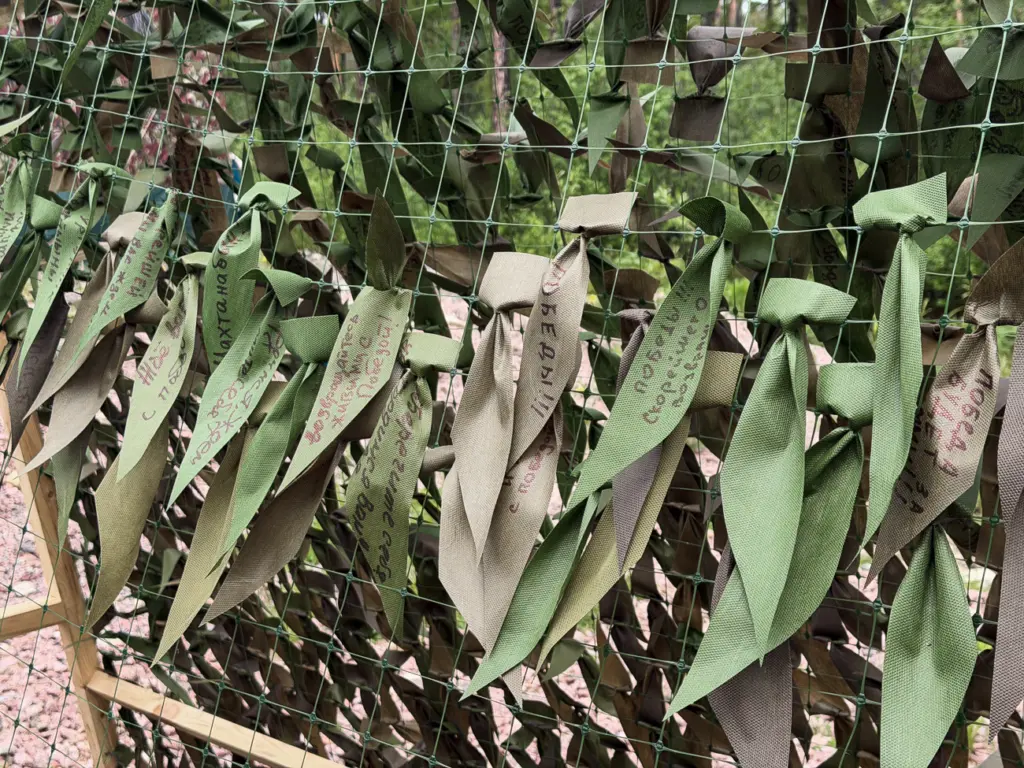
Having passed the BelAZ trucks, I find myself at a tent camp lined with camouflage nets—the site of the “From Heart to Heart” charity project, whose volunteers remind festival visitors about the war:
- Stop, write letters to our guys at SVO!
— Take some delicious apple chips! We dry them and send them to the front.
Photo: New Tab Photo: New Tab Photo: New Tab
On the table next to the dried fruit are homemade cards for soldiers with the inscription “Open when you feel sad,” a plush Cheburashka with a Z patch and some kind of military emblem. Attached to the tent are black pillows with embroidered “Victory ZA by us” and “Strength V truth.” Next to them is a printed table with a report on parcels for the war: in 2025, activists sent soldiers 221 loaves of bread, 393 letters, 193 postcards, 291 crafts, 113 amulets, tea, jam, etc. And, of course, we are ready to tell the guests of the Evenki holiday about this.
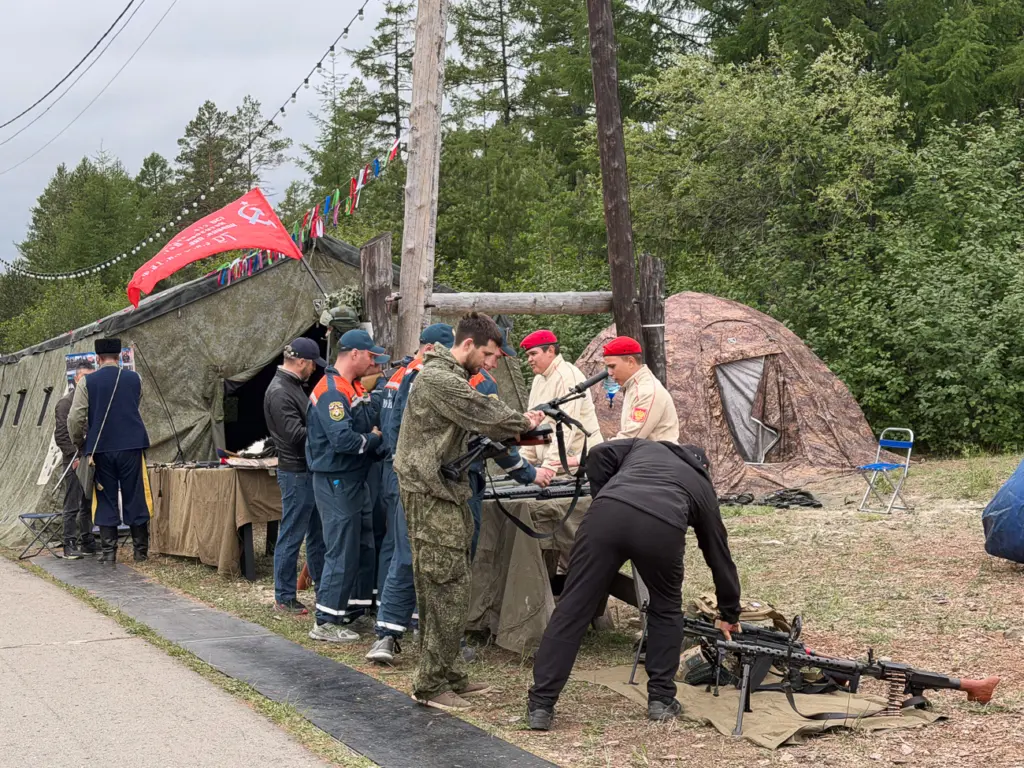
Behind the tent stands a red-haired student of the South Yakutsk Technological College in camouflage with a patch of the military-patriotic club “Vympel” and a Kalashnikov assault rifle in her hands.
— Do you want to assemble and disassemble it?
Photo: New Tab
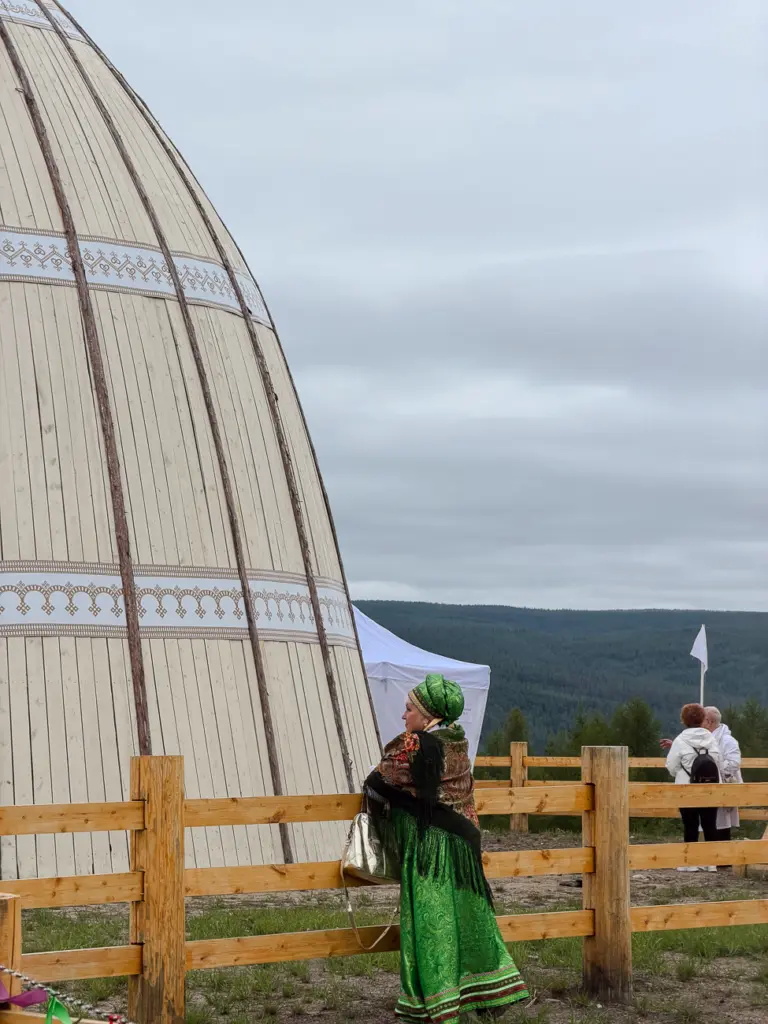
While you are walking towards the wooden gazebos and tents in the ethnopark, you can forget that you are at the Evenki national holiday.
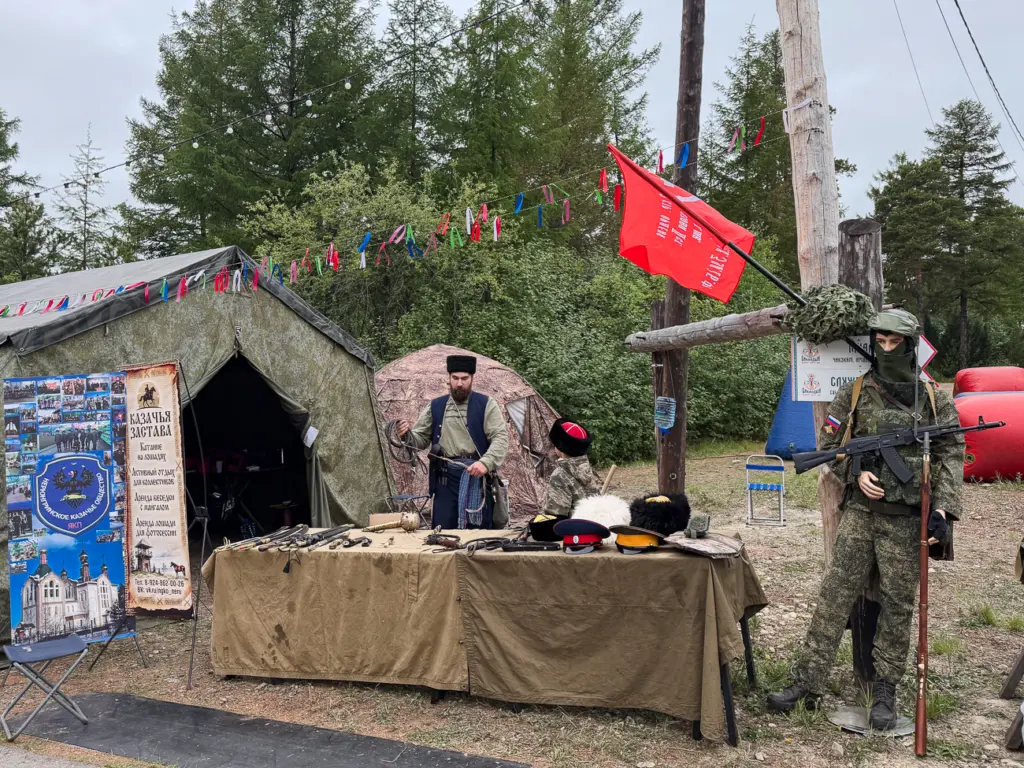
— What does this have to do with ribbons for SVO and Bakaldyn? They also shout in such an orderly Komsomol tone, they say, sign it! “I didn’t do it on principle - a person himself must sincerely want and send something like this,” an Evenk woman of about forty, whom I met later, was indignant. She came to the holiday from Yakutsk and was disappointed with what she saw. - This is not Bakaldyn, but a mixture of some kind of propaganda event. If you don’t have time to come in, sign ribbons for the fighters, take cards, and remember about the elections. Where are the Evenks, whose holiday is this? I was very surprised that there were Cossacks with all sorts of military instruments, some squires with swords, military commanders... Evenks are children of nature, this is not about them at all.
“Neither morals nor principles are important here” How and why the indigenous peoples of the Far East lose their men in war
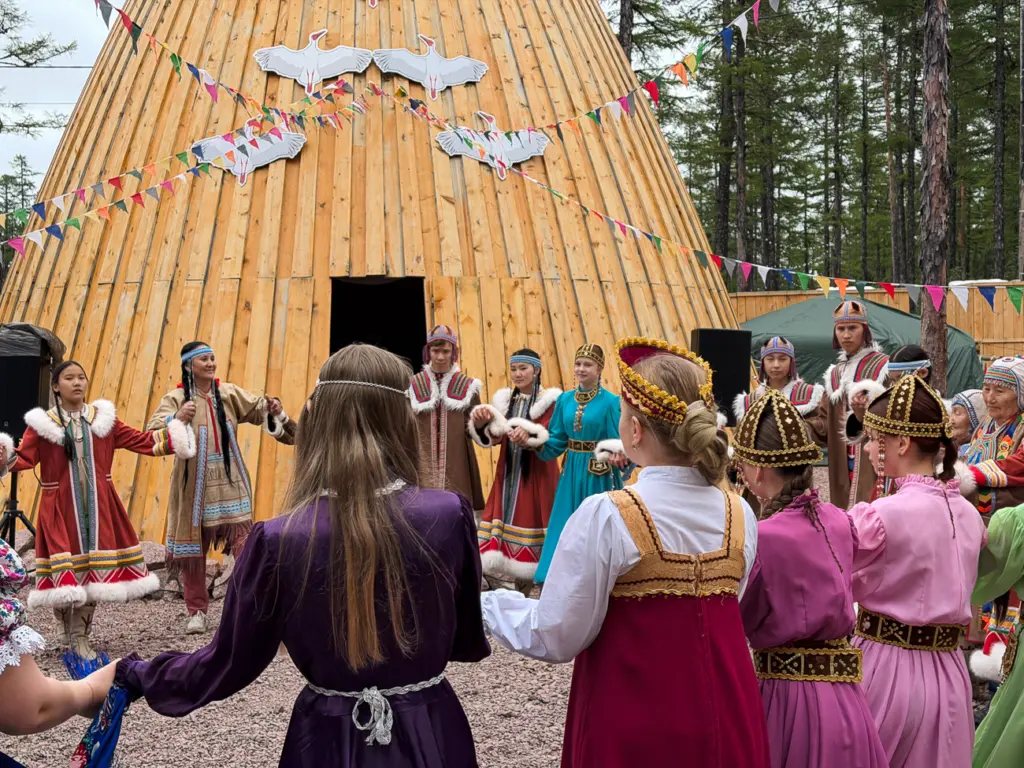
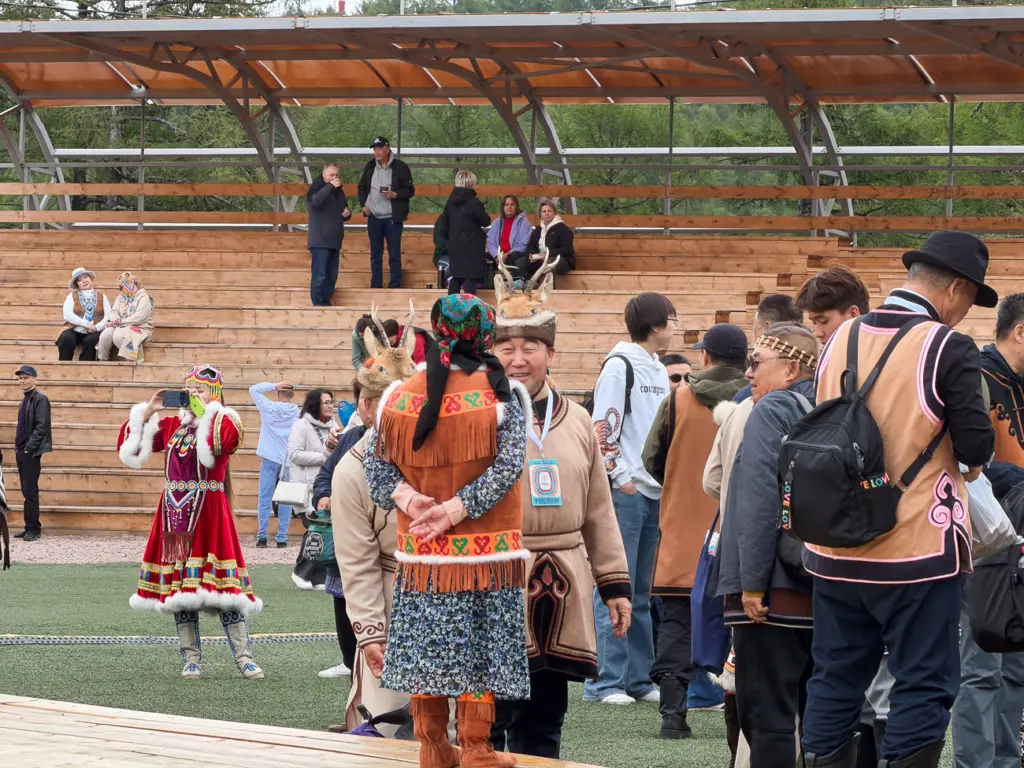
Evenks and Yakuts at the festival can be seen from afar: they came with authentic decorations on their heads, some in national costumes. Children in bulletproof vests are running near the Evenki tents, and the song “Darkness will stand on the way, be close to enemies for evil, enemies for evil” can be heard from the speakers. “The Happiness of the Russian Land” is playing on the playground nearby.
Song "Valkyrie" by singer BEARWOLF.
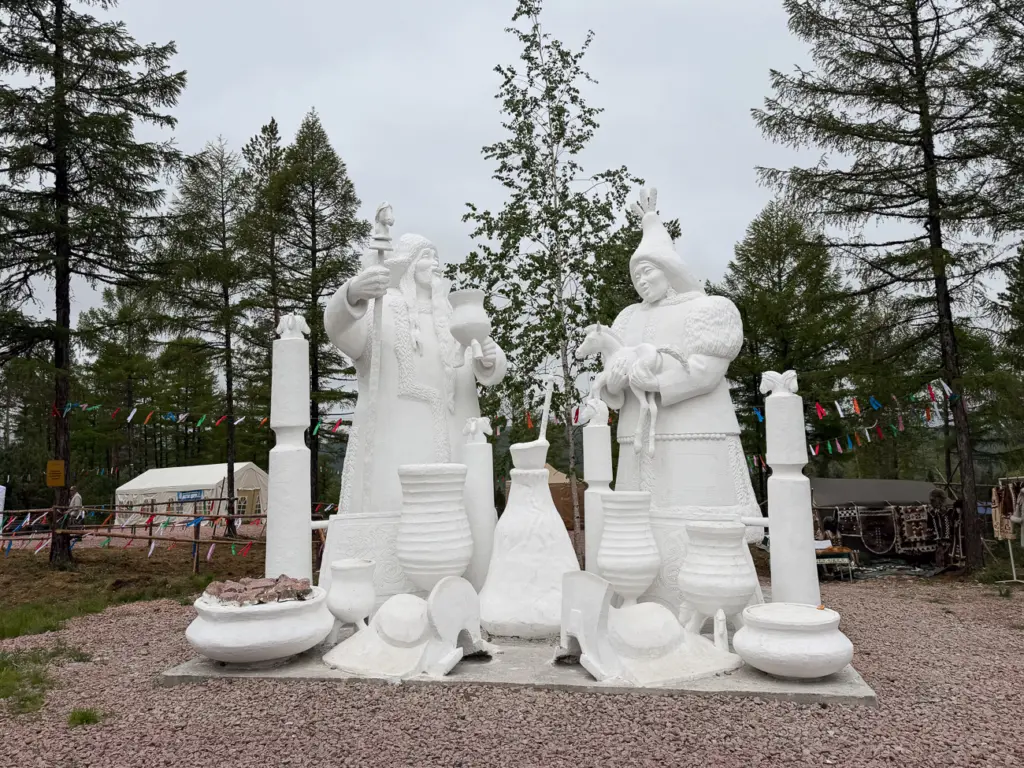
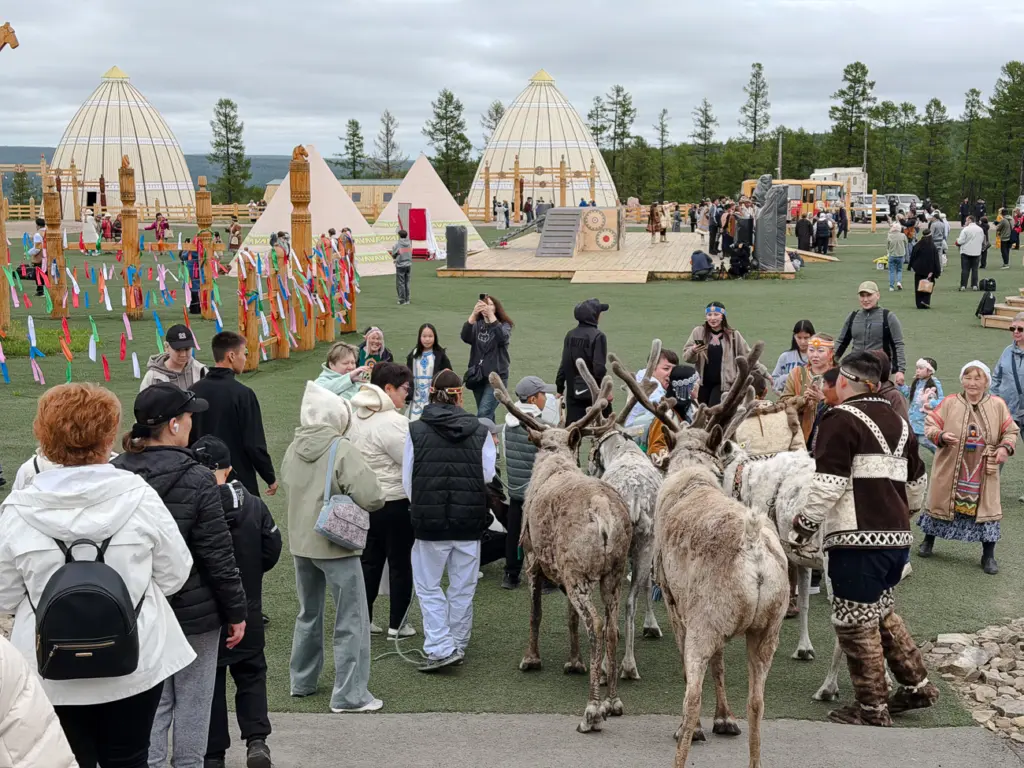
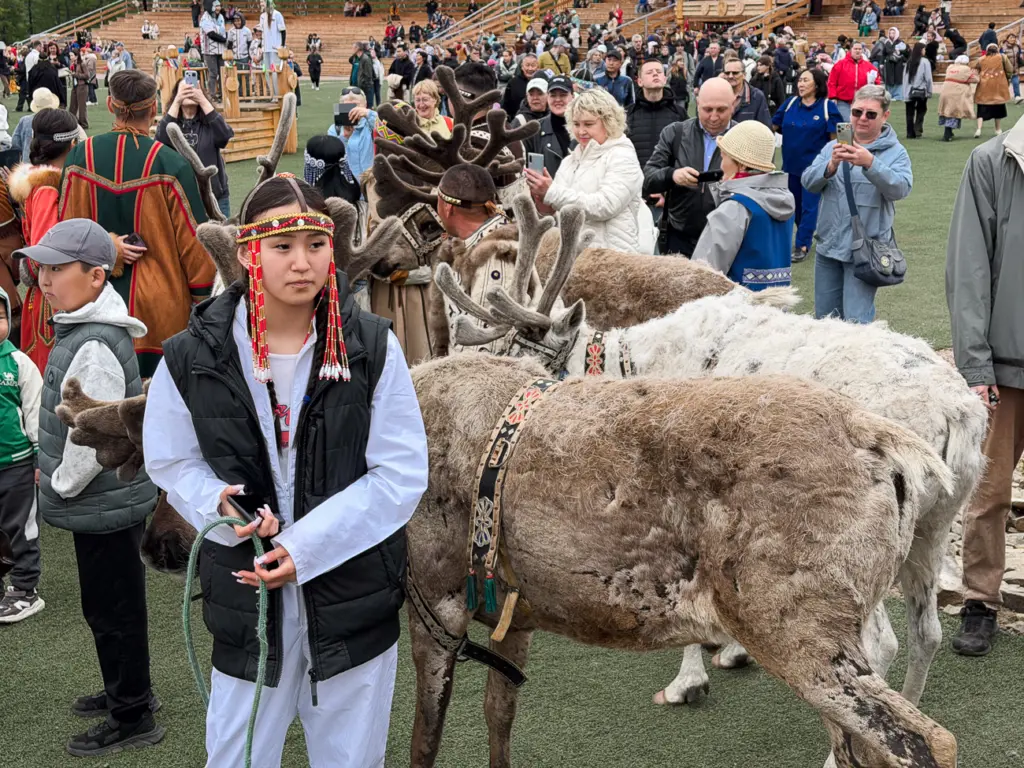
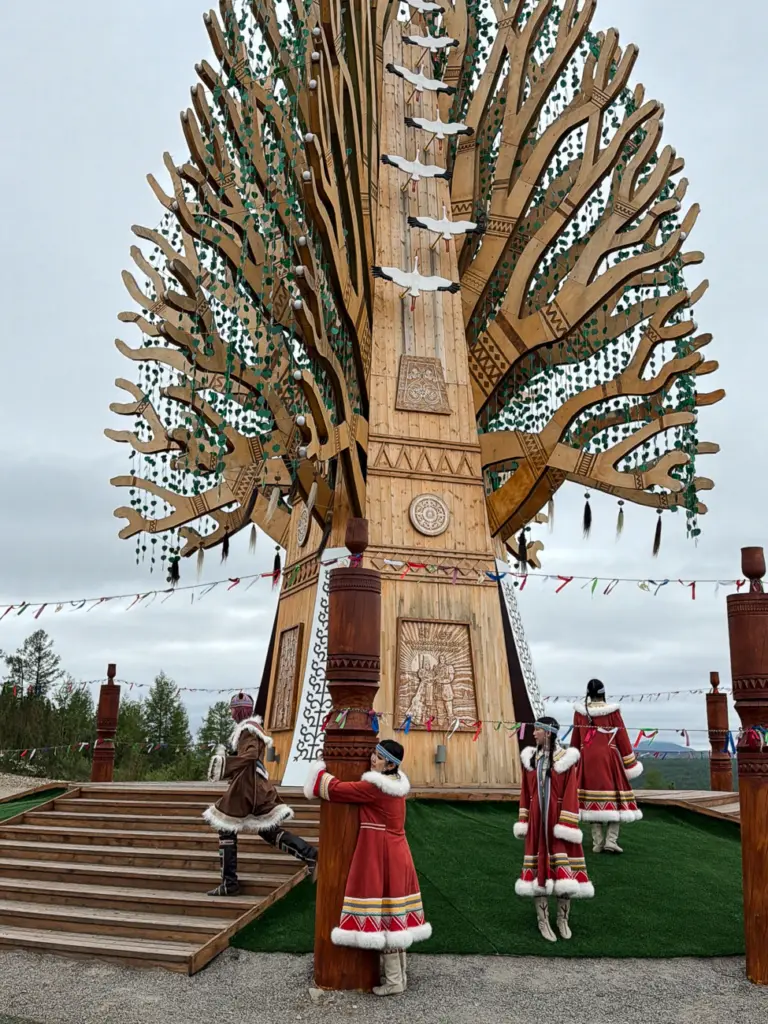
In wooden gazebos they sell souvenirs and clothing related to the Evenki culture; different areas of their residence in Russia are represented here. Participants from eight regions of the country, including ten uluses of the Sakha Republic, gathered for the holiday. This year, Bakaldyn in Neryungri became international: orochons came from China wearing hats with horns.
Orochons (self-name “man on a deer” or “reindeer herder”) are an indigenous Tungus-Manchu people in China. The Orochons speak the Evenki language (an eastern dialect) and are genetically the closest relatives of the Evenks in Russia and China.
Photo: New Tab Photo: New Tab
At the festival you can buy unique things made by Evenks from the taiga, for example, accessories and shoes made from deer skin, handmade jewelry, and traditional amulets. But there are also many kiosks selling Chinese factory toys: Stitch and other characters from the global world, knitted bunnies, bears and brownies.
Directly opposite is a platform where you can play a war game: hold a machine gun, run through a labyrinth of shelters, chat with Cossacks and doctors. “Lube” is screaming from the speakers nearby: “Why are the birches in Russia so noisy…”.
Nearby in the forest, a historical reconstruction unfolded - Slavic heroes fighting each other. Here you can also do archery for a fee. There are no national treats in the food stalls - the usual pies, belyashi and pork kebabs.
Photo: New Tab Photo: New Tab Photo: New Tab
— Come to us, we have a whole exhibition of photographs about how the elections took place in the village of Iengra! - the guys are calling at some stand.
On the stand are photographs of early voting in the 2024 presidential elections: members of the election commission flew to the reindeer herders by helicopter. Here is a deer with its nose buried in a wall newspaper with candidates, as if examining them, here is a woman with a dog (both wearing medical masks) looking at a newspaper with the headline “Amendments to the Constitution - this is my choice,” here are Evenks voting in festive national costumes, and here is the election commission collecting signatures on tree stumps in the forest.
Photo: New Tab
Unlike the city of Neryungri, where Evenks account for less than one and a half percent of the total population, the village of Iengra is one of the rare places in the world where the culture and language of this nomadic people are preserved. The Evenks lived here long before the territory of modern Yakutia became part of the Russian state. The village itself appeared in 1926, when the Soviet government tried to accustom the Evenki nomads to a sedentary lifestyle and settle them compactly in one place. Collectivization almost destroyed their original culture.
Photo: New Tab Photo: New Tab
This year Bakaldyn was timed to coincide with the centenary of the village, where celebrations began on June 19. Now a little more than a thousand people live in Iyengra, most of them are Evenks, the rest are mainly descendants of the BAM builders. Some Evenks are still nomadic and engage in reindeer herding.
— Some locals say that they moved to the village because there are very few deer and it is no longer possible to live a nomadic life. They come for a settled life, get a job,” says an Evenk woman with whom we talked after the holiday. — Many nomads began to drink and die out when the Russians brought them alcohol in the 17th century. Now for some of the Evenks this is still a problem.
Photo: New Tab
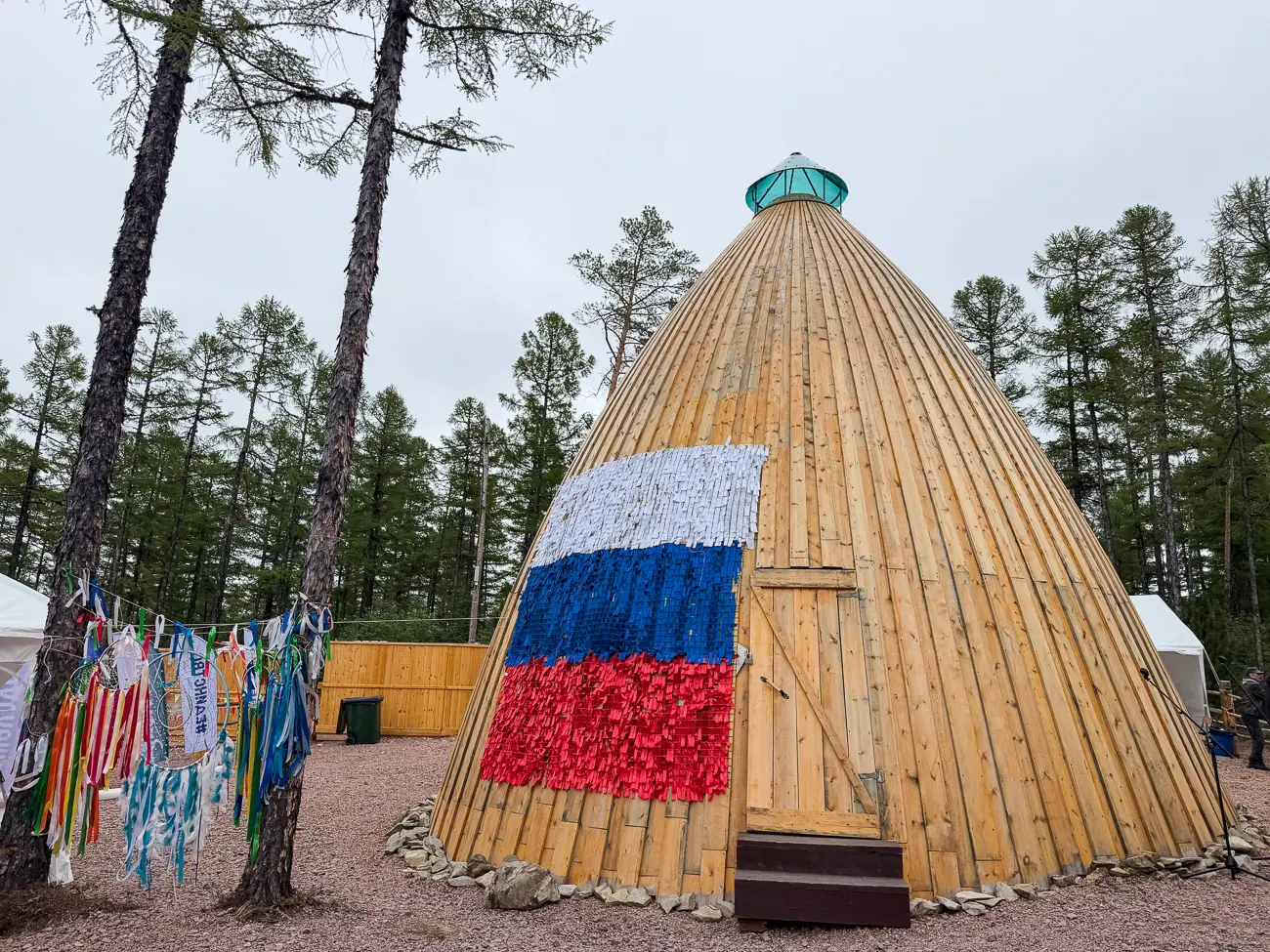
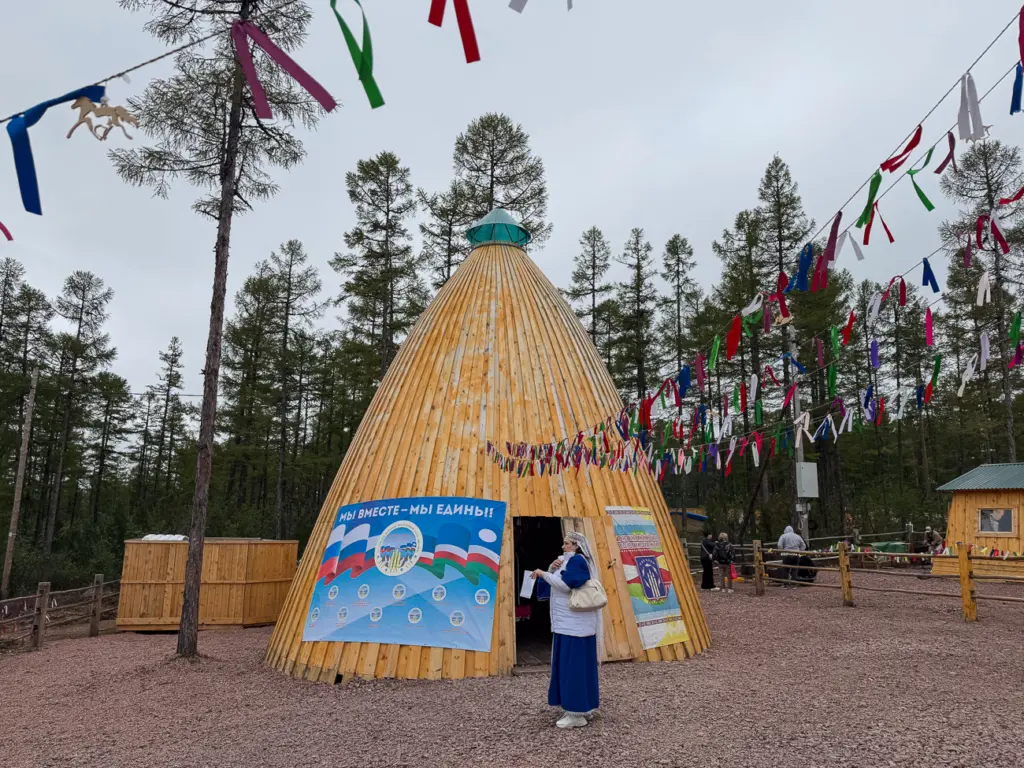
There are tents located closer to the main site. On one there is a large Russian tricolor lined with tinsel, on the other there is a poster “We are together - we are united.”
A tired deer is tied to a tree nearby. Among the Evenks in national costumes are members of ensembles in Russian folk dresses and kokoshniks and elderly women in khaki jackets with a red ribbon with the Komsomol emblem and Lenin’s profile, medals and the signature “All-Russian shock Komsomol construction”.
Photo: New Tab Photo: New Tab Photo: New Tab
“It seems like they are reminding us once again: “We suppressed the Evenks a long time ago, destroyed the disobedient Tungus, and then put it in the Red Book that there were few of them left, and hoisted our flag,” a Yakut woman who came to Bakaldyn tells me. “And even here they are now pulling the blanket over themselves: it’s all thanks to the Russians.” In fact, not only Russians participated in the Great Patriotic War, and now. Who are mostly dying now? Yakuts and Buryats. And the Russians will take credit for themselves.
According to her, there were only three Evenki ensembles at the festival. A Yakut woman is upset that the state “trend towards multiculturalism” has affected the atmosphere of Bakaldyn:
“We just saw enough of it all, we didn’t like it, and we decided to leave early.” Formally, everything seems to be there, but there is no soul, no spirit.
Photo: New Tab Photo: New Tab
The worldview of the Evenks is largely determined by shamanism, so Bakaldyn has special significance for them. This is a kind of beginning of the new year, a time when the Evenks met each other and the sun after a long, harsh winter. Traditionally, this day begins with the performance of rituals: cleansing, worshiping the river, anointing a ritual column, feeding the fire. An important ritual for the Evenks - meeting the sun - was scheduled for three in the morning, but it was postponed to four.
“We arrived at three, everyone here is so unfriendly, it’s cold, there’s nowhere to warm up.” The poor Chinese walked around lost, they didn’t even know where to turn,” explains an Evenk woman who came to Neryungri from Yakutsk for the holiday. She and her friends did not wait to meet the sun - they went home. “I still don’t know, has anyone met the sun at all?”
Photo: New Tab Photo: New Tab
I admit, I didn’t see this; I arrived later. But, judging by photographs in the media, the ceremony was still carried out. The photos show happy guests of the holiday. Media materials and posts by the head of the Sakha Republic talk about the successful conduct of Bakaldyn. The video on social networks captured beautiful moments of the festive concert: the Evenki dance with tambourines and deer antlers, a show with spirits - life-size figures, elegant deer and reindeer herders in national costumes.
But the Evenk woman who spoke to me, instead of being in a good mood, takes with her only the earrings she bought in Neryungri.
“It wasn’t a holiday, but a purchase and sale, plus collecting signatures on ribbons for the Northern Military District ,” she gets upset. — Every year we go to our city Bakaldyn in Yakutsk. We don’t really have any Russians there, only Evenks go there. There are no SVO ribbons, no Cossacks, no sellers in such numbers. People come specifically to undergo the ritual, to cleanse themselves and to tune in to a positive mood for the whole year. We thought that it would be the same here, but it turns out that Bakaldyn is like this here... Just for show, for show.
We are talking about wishes that are written on ribbons for soldiers.
“This is not Bakaldyn, but propaganda”: how the Evenki holiday in Neryungri was mixed with the Northern Military District and elections • Novaia vkladka • RIMA — Russian Independent Media Archive