Translated material
“Fools for money are over”: how the Russian authorities are trying to solve the problem of shortage of contract workers
They are discussing different scenarios - up to the rotation of reservists and mobilization
It is becoming increasingly difficult for Russia to recruit new contract soldiers and retain captured territories. In Moscow, the flow of recruits in the spring fell by a third, the same trend in the regions. Worried, the authorities continue to increase referral payments for contract soldiers, and on the sidelines there are rumors about the rotation of reservists and new mobilization.
In order not to miss new texts from “Layout”, subscribe to our telegram channel
The material was prepared with the participation of “Important Stories”
The flow of contract workers has collapsed
There are fewer and fewer Russians who sign contracts with the Ministry of Defense and go to the SVO. This is evidenced by the data at the disposal of “Layout”. In the spring of 2026, the flow of new recruits fell by a third compared to the same period in 2025.
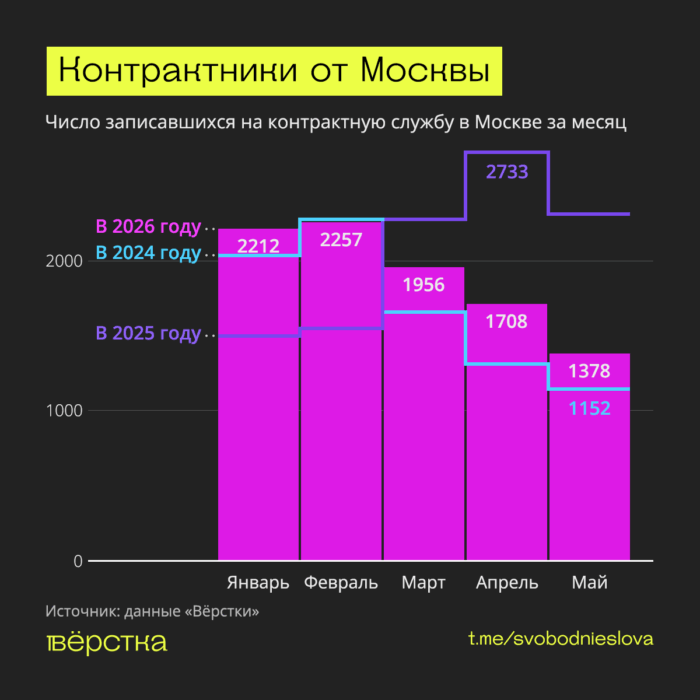
In April, Moscow sent 1,708 contract soldiers to the front, in May - 1,378. This is a thousand people less than last year, and comparable to the figures for 2024 - when the capital had not yet introduced millions in payments for a contract with the Ministry of Defense . In June 2026, according to Vorstka’s source in the Moscow City Hall, the downward trend continues.
“Everything is consistently bad here, few people come, and even fewer are motivated. But we are not discouraged, because we are not yet doing the worst by the standards of the whole country, as far as I understand. So we’re working,” says Vorstka’s source at the mayor’s office.
It is noteworthy that at the very beginning of 2026, the flow of recruits, on the contrary, grew - against the backdrop of peace negotiations with the participation of the United States and expectations of a truce. Many applicants spoke about the motivation to “jump on the last bandwagon”—to receive several million rubles before the freeze in hostilities. However, by the end of February it became clear that the end of hostilities should not be expected soon.
“Many people really believed that the war would end any day now, and this was a chance to jump into the last carriage and make some money. But something went wrong,” explains Vorstka’s interlocutor at the Moscow City Hall.
The situation in the capital is even worse with the flow of contract soldiers into the “Rubicon” - a UAV detachment, where contracts are concluded for a year without further extension. When the recruitment was just announced, there was a very large flow, but due to high requirements, almost everyone was eliminated. Vorstka’s interlocutors were unable to provide exact figures. But according to them, those who have now signed contracts with Rubicon are about a third of the total flow.
“About the UAV. It is clear that there are very strict requirements. We have few such people. In principle, there are very few such people left! There are a very large number of problematic candidates,” says Vorstka’s interlocutor, who oversees contract recruitment issues in Moscow.
The quality of recruits is also deteriorating, admit Vorstka’s interlocutors. This started last year. As one of the sources working with candidates says, “he used to be a patriot, but now he looked at the Russian people and is now as unpatriotic as possible.”
According to sources, the situation in Moscow reflects the picture throughout the country. Thus, a high-ranking interlocutor of Vorstka, who serves in one of the military units in Siberia, said that the flow of those wishing to sign a contract continues to decline.
“The decline began two years ago, but now the numbers have reached a minimum. At the same time, no one has canceled the recruitment plan - recruits need to be sent every month.”
This is confirmed by a source in the military commissariat of the same region. According to him, earlier, on the contrary, recruiters came to them, because there were many people who wanted to fight in a large region remote from Moscow and quite poor. “The flow is now being increased mainly through the cops,” he said, referring to the practice when detainees and suspects are offered to sign a contract in exchange for dropping charges and not drawing up a report. A source working with recruitment in the Lipetsk region also says this.
It was not possible to obtain specific figures for other regions. But there is other data that may indirectly indicate a decline in the flow of recruits. For example, federal budget expenditures.
Throughout Russia, recruitment for contracts in the fourth quarter of 2025 decreased by one and a half times compared to the same period last year, according to calculations by “Important Stories” based on data on federal budget expenditures.
Recruitment rates continued to decline in early 2026. According to Janis Kluge, a researcher at the German Institute for International Security Problems of the Science and Politics Foundation, in the first quarter of this year, 800-1000 people signed the contract every day, which is 20% lower than in the same period last year.
Problems at the front
New contract soldiers who arrived in 2026, according to military personnel interviewed by VERSTKA, are mostly “not capable of fighting.” “I see from the contingent that these are the ones who are mainly taken away, and not they themselves who go,” one of the mobilized says to “Verstka”. — Some are taken from prison, others from the street. Homeless people in the truest sense of the word. Criminals, and already at such an age and with such sores that they can barely stand on their feet. The kind of muzzles that hang around drink bars were littered on the streets until recently. It's a burden for everyone. What can you teach them? They can’t walk in uniform; it’s hard for them to carry 20 kilograms. These are disposable."
“Or about ten blacks were recently brought in, but they quickly ran out of positions,” continues the interlocutor of “Vestka”. “New contract soldiers don’t live longer than a month if they don’t get in through connections.”
Among the surviving newcomers, half immediately flee from the front, claims the same source of Vorstka. In confirmation, he sends 19 SOCH profiles: “These are only those that we were informed about in a week. And we have one tiny village near the LBS. I think a lot, hundreds, all over the world per week.”
“It’s as if the people have run out,” continues the mobilized man: “This is very noticeable in our regiment; the units are 30, at best 40% staffed. Individual companies (sniper, commandant, air defense, security, armored group) are disbanded, leaving 15-30 people instead of 60-80. Those who are released are driven into the infantry through a three-day training ground (training) - and after this “training” they immediately go to assault and “fixing” i . They are sent two by two, in pairs. A guy from my platoon immediately lost his leg there, the very next day after his transfer.”
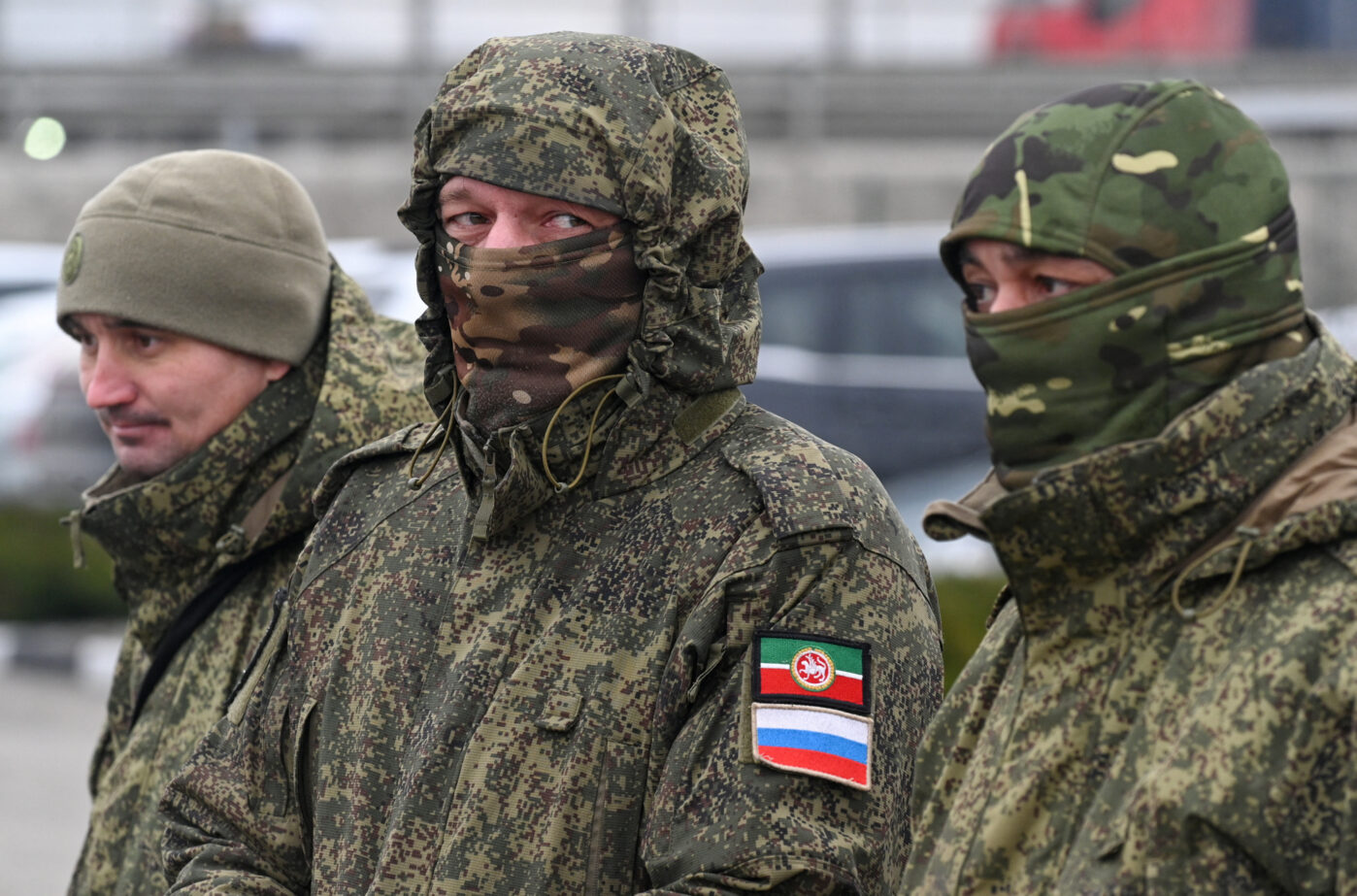
Some who signed the contract in 2026, says another military man, managed to be wounded, captured, returned to Russia during the prisoner exchange with Ukraine - and now in one of the hospitals near Kaliningrad they are waiting to be sent back to the front. “Three months were enough for everything,” adds the interlocutor of “Vestka”.
“My friend got drunk and drunkenly stumbled into the military registration and enlistment office yesterday... I really hope that he sobered up today and he will be able to get out of the contract,” one of the mobilized employees in the rear responds to “Verstka” when asked who signed the contract with the Ministry of Defense in 2026 and how their fate turned out. “I’ve already lost another friend.” He and his wife had a fight and went there drunk, sobered up, tried to jump out and didn’t succeed, after a couple of months - 200. Three children left 🙁.”
All this, of course, is reflected in the course of hostilities. Here’s what, for example, one of the contract soldiers who is currently in the Kharkov direction says:
“We have been fighting for 300 square meters since January, everything is ping-pong art as always, a lot of 300 and 200. This is just a buffer zone, Kharkov is ahead. We barely hold onto this territory. Everything is missing: people, shells, birds. We eat feed for livestock. Everything is hard,” says Anton.
“We captured four people in Kherson. They surrendered not to man, but to drones. - says another contract worker who went on vacation in May. “There are so many drones that it’s impossible to approach and impossible to drive up, so you have to lie in three boxes.”
“Really combat-ready men,” according to Vorstka’s interlocutor, there are 15–20 people in the assault company, and the reports give information about 80–90. Vorstka was unable to confirm this information in another source. “And under this sauce they are presented with tasks that are generally unrealistic, so people stupidly go one way without options. They hide everything... Losses, wounded, ceded territories, destroyed equipment, problems with logistics... Yes, everything in general. Total lie! We are being stupidly disposed of in this strange military operation.”
According to military analysts, in the first half of 2026, the pace of Russian advance at the front decreased significantly. At the beginning of the year, Russian troops were still occupying new territories, albeit at the local level, but by spring the front line in many directions had actually stabilized. ISW reported that in March Russian forces occupied only about 23 km² - the minimum figure since the fall of 2023, while in some areas Ukrainian units even managed to regain previously lost positions.
The DeepState Project reported that May was the month with the smallest Russian territorial acquisitions in several years. Against this background, more and more analysts characterize the situation at the front as a phase of trench warfare, where neither side is capable of achieving major operational breakthroughs.
Among the mobilized and experienced contract attack aircraft, judging by their conversations with “Verstka,” there is despondency and irritation that did not exist at the beginning of 2026.
“All the guys are very tense and irritable. There have been many written refusals to participate in combat missions; they are not judged for this, but are sent to other units, exactly where the special contingent serves,” says the mobilized man. Previously, for refusal to carry out a combat mission, the military, as a rule, was either threatened with “nullification” or “nullification”; The practice of written refusals, judging by the sources, is new; Vorstka does not have such documents at its disposal.
“In general, the absolute majority, to put it very mildly, are disappointed in our government and specific people,” continues the military man. - I think you understand who I'm talking about. This is already hatred, but not yet rage, but this is where everything goes. Honestly, I’m scared for the country, I imagine very sad times similar to the collapse of the USSR.”
How to find resources
Problems at the front and difficulties recruiting new contract soldiers are forcing the authorities to desperately look for new solutions. This mainly has to be done by regional administrations.
A senior officer who serves in one of the military units in Siberia tells Vorstka that “all the villages around have literally been raked out for contract soldiers” and now the Ministry of Defense is sending the military to recruit people to other regions.
“There are almost no people left in the city. Therefore, now our girls - the propaganda team - have gone to Dagestan. And this despite the fact that new contract workers are paid more.” According to the source of “Vestka”, the “propaganda brigade” gave concerts in the Caucasian republic and called on all locals to sign contracts.
In addition, the military is given a kpi based on the number of business trips “for the ribbon” for those who constantly serve in the region. “Since there is nothing special to help, our orchestra will now go to Luganda. In order to give a clean report on business trips, although why the hell is he needed there, there are other needs,” says the interlocutor of “Vestka”.
Some regions and government agencies are raising referral payments for contract recruiters to a record level. In 2026, average monthly expenses in the regions for payments to recruiters more than doubled compared to the previous year - from 358 to 802 million rubles per month, “Important Stories” calculated based on reports on the execution of regional budgets. Such bonuses can be received by both ordinary people and employees of military registration and enlistment offices, local administrations, and even security forces involved in recruitment. In total, the regions have already paid recruiters at least 7.7 billion rubles.
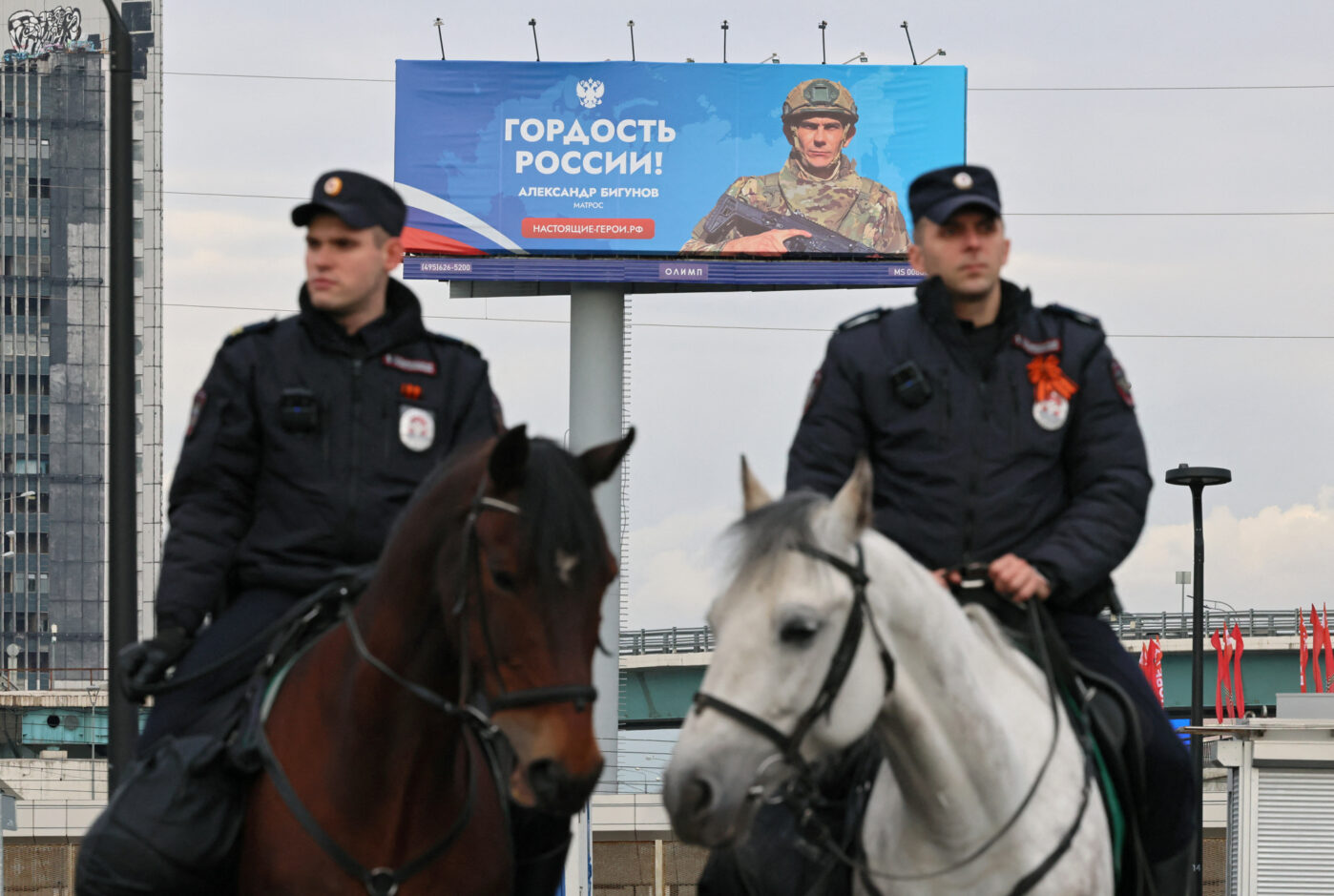
They try to motivate volunteers with the help of “promotions”, offering increased payments if a contract is concluded before a certain date. When the Tyumen region increased the amount of payments for military personnel without experience to 3 million rubles, the number of requests immediately doubled, boasted the region’s military commissar Sergei Chirkov.
At the same time, Russians are literally lured into war under the guise of vacancies in the rear. Candidates are offered service as drivers, security guards and construction workers. But in reality, men have no guarantees of such distribution - contracts are concluded with them on a general basis, and the distribution is handled by the commanders of units and training centers.
Recently, advertisements for vacancies “ in the rear of the Northern Military District ” appeared, even in China and Belarus. Such advertisements appeared on Avito, Vorstka discovered. Vacancies often seek people of any nationality, including “over 45 years old,” pensioners and people “with health problems” (fitness categories from “A” to “G,” that is, up to “temporarily unfit”) without experience and a military ID, but with an expunged criminal record or a suspended sentence.
“No business trips to “hot spots” and battle lines. Why Belarus: stable environment, developed infrastructure, close to home for many citizens. The service takes place on the territory of the union state with all guarantees and payments from the Russian Ministry of Defense,” the recruiters note.
The advertisements offer 10 million rubles in “lift” of unknown origin, debt write-off up to 10 million rubles and benefits for the family. And also - full payment for travel to the place of duty, provision of accommodation in dormitories or barracks, as well as food and equipment.
Exactly the same conditions are in the ad seeking “an employee for the production of ammunition” in China. The place of work is called a “quiet rear zone” with developed infrastructure and security.
Another attempt by recruiters to get more contract soldiers for the Ministry of Defense is to advertise the vacancy of a “peacekeeper.”
Such a position in the military does not exist, but on the same Avito in 2026, advertisements appeared about the recruitment of “peacekeepers” to the combat zone in Ukraine.
Employers with the accounts “We are where you are needed”, “Contract with the Ministry of Defense”, “Government” and others offer work “in the rear”, “in the Northern Military District”, as well as in the occupied regions of Ukraine - Donetsk, Lugansk and Kherson regions. The descriptions of some vacancies directly indicate that we are talking about concluding a contract with the Ministry of Defense. In others, the work is described as “helping civilians,” “maintaining public order,” “patrolling in safe areas,” “without participating in hostilities.”
A "Verstka" correspondent, under the guise of a job seeker, contacted one of the recruiters. The man, who introduced himself as Denis, was not immediately able to explain what exactly the “peacemaker” would do. At first, he said that he could offer “absolutely everything that is involved in the Northern Military District”, several thousand positions - “from clerk to cook.” But then he still explained the details.
“This is a man who came in peace, to help people, not to go to the front line, to do various jobs, to dig up, unload, build a dugout, work as a storekeeper, do something related to the world, not necessarily kill there, trenches, machine guns,” said the recruiter.
As “Verstka” previously wrote, those who signed such contracts are often transferred to assault brigades already in the first months and weeks of service.
Will there be mobilization?
Among the options for solving the problem with the shortage of contract soldiers, the authorities are discussing more radical measures, including a new wave of mobilization. Eight sources working with the presidential administration, as well as interlocutors at military registration and enlistment offices and a source close to the FSB spoke about rumors and possible preparations for this “Layout” and “Important Stories”.
The interlocutors heard about a possible mobilization in the fall of 2026, in October after the elections, but emphasized that “no decision has been made on this issue.”
“The reason, in my opinion, is that things are not going quite as planned. And the people involved in the process began to get creative,” explains a source close to the Kremlin, the internal political bloc of the presidential administration. “It’s not clear what the mobilization will fundamentally change, other than mobilizing protest and collapsing the economy,” he adds.
Another colleague confirms that he has heard about different “types of road maps for army saturation,” with mobilization being one of the scenarios. “But this is all at the level of rumors. There is a lot of talk about this, supposedly something could start in October,” he adds.
Another interlocutor working for the Kremlin also heard that such a decision is being discussed, but “there is a feeling of lack of will.” “There was no political preparation in the spring, but there are plenty of reasons for this decision: failure of the offensive, loss of initiative, impotence of air defense,” he says.
An interlocutor in United Russia doubts that they will still decide to mobilize: “The situation at the front is difficult, but the risks with mobilization are obvious. I don’t believe in this decision.”
Two more sources in the leadership of two large Russian regions told Vorstka that they consider the possible mobilization to be rumors. “In our region everything is fine with recruitment. I think these are pre-election rumors from Western opponents - they want to scare people before the Duma elections,” suggested an interlocutor in the leadership of the Russian region.
An interlocutor of VERSTKA, close to one of the European intelligence services, considers mobilization in Russia one of the “hypothetical tough measures.”
«Путин не хочет заканчивать войну и готов воевать еще два-три года. Есть опасения нестабильности — в случае завершения боевых действий сейчас, как есть, без серьезных успехов. Прорабатываются жесткие меры, мобилизация и военная экономика. Военные ему якобы гарантируют полный контроль над четырьмя украинскими регионами при наличии людских ресурсов».
Детали возможной мобилизации приводит собеседник, который курирует вопросы набора на контракт в одной из российских госкорпораций. По его словам, подготовительные мероприятия «к тому, что никогда не назовут мобилизацией» идут «уже несколько месяцев», а «ошибки [мобилизации] 2022 года стараются учитывать».
Собеседник утверждает, что «начиная с октября» военные будут готовы принять на ускоренное обучение десятки тысяч человек на полигонах, и такими партиями «распределять по действующим войскам». Точного количества новых бойцов, необходимых на фронте, с точки зрения военных и Кремля, он не назвал, но сообщил, что «из-за ленточки постоянно жалуются на острый дефицит людей». «С закрытием потребностей придется спешить», — уточнил он. На вопрос, окончательно ли решение о новом наборе в войска, ответить собеседник «Вёрстки» не смог: «Наша задача — готовиться». Других подтверждений его слов «Вёрстке» получить не удалось.
Собеседник, работающий с медиаповесткой в администрации президента, говорит о более спокойном варианте пополнения войск — ротации резервистов i .
«Обсуждается ротация резервистов, которые сейчас участвуют в тыловом обеспечении, это люди без особой подготовки. Часть из них могут перевести в действующие части, а часть резерва пополнят свежими поступлениями», — пояснил источник. Таким образом, часть мобилизованных могут вернуть в тыл, заменив их на резервистов — или вовсе демобилизовать. Как именно при этом будут пополнять резерв, источник не уточнил.
Другой источник, работающий в региональной администрации ЦФО, сообщил, что «аврального набора не будет». «У нас не та ситуация на фронте, чтобы, как в 2022 году, хоть бы кем с винтовкой дыру закрывать. Такие там и нескольких минут сейчас не выживут. Нужно обучение и хоть какие-то базовые способности и знания у обучаемых. Заманить таких пряником не получается, соответственно — сам понимаешь», — вздыхает он.
С этим не согласен один из поговоривших с «Вёрсткой» мобилизованных. Он уверен, что вторая волна мобилизации будет. «Вообще по логике мобилизация должна быть, и я уверен, что будет после сентябрьских бутафорских выборов. Но есть и другой вариант, менее реалистичный, что придут все-таки к какому-то соглашению.
«Да у нас тут людей нет, дураки за деньги закончились, — говорит военный. — Так что либо мобилизация, либо договорняк с потерей „лица“, и невыполненные условия и цели СВО. Я думаю, выбор тут очевиден, да?»
Infographic: El
Cover: Dmitry Osinnikov
You can support “Layout” from any country in the world - it is still safe and very important. We really need your support now
How to help us