
Translated material
Russia used spyware to spy on Pivovarov
On February 8, 2024, DOXA was added to the register of “undesirable organizations.”
If you are in Russia or planning to return to it, you cannot repost our materials on social networks, link to them or publish quotes.
Read more about what is and is not possible in the cards .
Russia used Israeli spyware Cellebrite to spy on politician and exchanged political prisoner Andrei Pivovarov, investigators from the Citizen Lab found out Canadian research laboratory specializing in cybersecurity, human rights and internet freedom; monitors the spread of spyware around the world. . The infection of Pivovarov’s phone occurred three months after the Israeli company announced that it would “immediately” cease all cooperation with Russia and Belarus.
Citizen Lab found that Pivovarov’s phone was infected around mid-July 2021 In the same year, the politician participated in the elections to the State Duma. while the politician was detained. The researchers also found out that the security forces tried to hack Pivovarov’s MacBook, but they were unable to do so.
In a conversation with DOXA, Andrei Pivovarov says that after his release from prison as a result of an exchange of political prisoners, a phone and a MacBook were delivered to him in Germany, which were seized during a search. At one of the events, he met experts from Citizen Lab, who tested his devices and found traces of spyware:
“At first they even suspected that there was more than one such entrance, but then they concentrated on the autopsy that occurred on June 17, 2021. And this really happened after Cellebrite officially left Russia.”
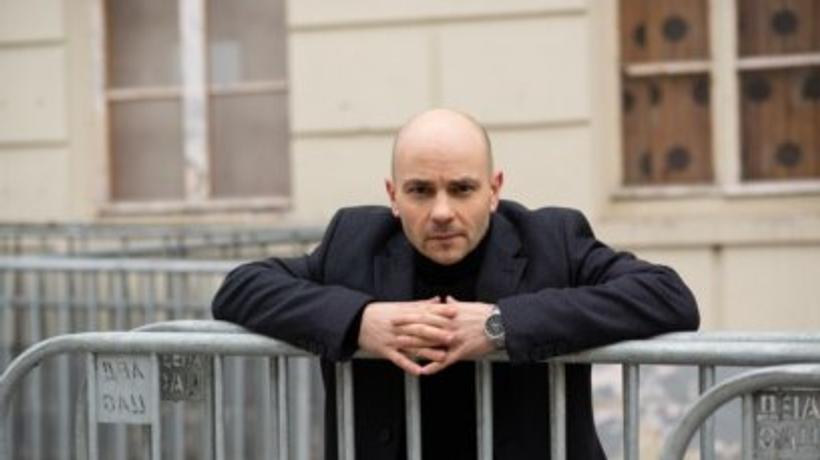
Andrey Pivovarov
Radio Liberty
Why was the phone hacked?
The data obtained using Cellebrite software at the request of the Russian Investigative Committee was used during the investigation of the case against Pivovarov, the investigation notes. Pivovarov himself also confirms this in a conversation with DOXA:
“The problem here is that in my case this data became evidence in a case in which I was sentenced to four years. And now the same comments, words or actions that can be obtained through opening a phone can lead to much more serious consequences: people can get ten years or more.”
In Pivovarov's case, the security forces most likely used Cellebrite to obtain information from various instant messengers using the keywords "Open Russia" and "United Democrats" Organizations associated with Mikhail Khodorkovsky, in which Pivovarov worked , as well as entering the names of Pivovarov’s associates, including Mikhail Khodorkovsky and Pivovarov’s wife Tatyana Usmanova.
Cellebrite Company
The Israeli company Cellebrite was founded in 1999 and has since been regularly accused of selling its spy systems to spy on activists and public figures.
Pivovarov notes to DOXA that it was a surprise to him that Russian security forces use foreign software to spy on the opposition, and the fact that it was Israeli air defense caused rather disappointment in the politician:
“For me, Israel is on the side of the democratic world, which opposes Hezbollah, the Iranian regime and Hamas. And it would seem strange to help Russia, which directly supports these cannibalistic regimes.”
In 2023, Cellebrite software was used against left-wing activist and creator of the telegram channel “Protest MSU” Dmitry Ivanov - as a result, he was sentenced to 8.5 years in prison. The hacking of Ivanov’s phone occurred two years after the Israeli company formally stopped cooperating with Russia.
In addition, Cellebrite spyware was used against the opposition in Hong Kong, Saudi Arabia, Serbia and other countries.
In 2025, Cellebrite also re-signed an $11 million contract with the US Department of Homeland Security - now the company's software is used by ICE agents to combat migrants.
Andrey Pivovarov told DOXA that he wrote a letter to Cellebrite management demanding that they take action and prevent further cooperation with authoritarian regimes. The letter is at the disposal of the editors. Researcher from Citizen Lab sent a similar message.
Pegasus
Another spyware, Pegasus, created by the Israeli company NSO Group, was also used in cyberattacks against activists. Thus, in 2023, four Russian journalists reported that they had received notifications from Apple about a possible attack on their devices. Meduza publisher Galina Timchenko, general director of Novaya Gazeta Europe Maria Epifanova, Novaya Gazeta Baltia correspondent Evgeniy Pavlov and ex-editor of the Current Time TV channel Evgeniy Erlikh, who were working in Latvia at that time, received identical notifications.
From August 2020 to January 2023, Pegasus spyware was also installed on the phones of Belarusian journalist Natalia Radina, Belarusian opposition leader Andrei Sannikov, and two unnamed activists from Russia and Belarus.
NSO officials claimed that the software was being used to track terrorists. However, multiple investigations have documented that the company was involved in surveillance abuses around the world, including in Saudi Arabia, Spain, Mexico, Poland and El Salvador.
“Espionage by an authoritarian state not only damages your professional relationships, but also narrows your social circle,” former Moroccan journalist Aboubakr Jamai testified: “You put your family and friends at risk simply by speaking freely to them on the phone.”