
Translated material
Has the AI bubble burst?
Stock markets in the US and South Korea have been falling for several days. The main reason is doubts about the profitability of AI companies
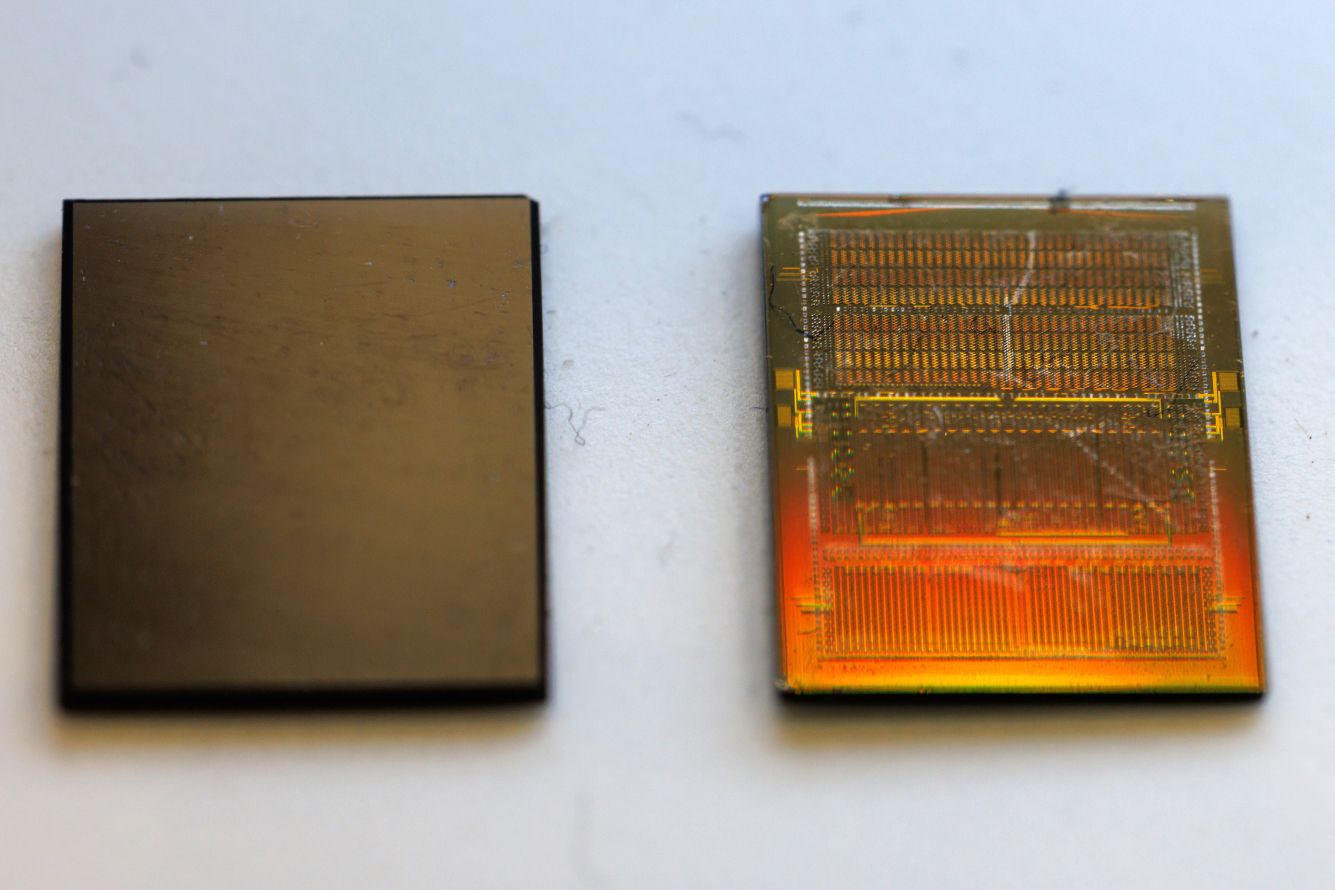
The stock markets of South Korea and the United States continue to fall throughout the week. It mainly affected technology giants that develop artificial intelligence or its infrastructure. There is no specific reason for the panic in the market, but most experts believe that investors have begun to doubt the prospects for the development of AI, as well as the profits they can make from it. Meduza tells how artificial intelligence developers and chip manufacturers have already suffered and why companies have begun to bring back employees fired because of AI.
It all started on June 23, 2026, with a fall in the shares of South Korean companies Samsung and SK Hynix. They fell by more than 12%, pulling the entire country's stock market with them, CNN writes . As a result, the Kospi index collapsed by 10%, which led to an automatic 20-minute trading stop to reduce panic. The reason for this, as journalists note, was the fears and even nervousness of market participants about artificial intelligence.
Samsung and SK Hynix are the world's two largest RAM manufacturers, holding about 67% of this market. In addition, these companies account for about half of the total market capitalization of the Kospi index. Therefore, the panic reaction of investors to the sharp drop in the shares of the two leaders is not surprising.
The fall also affected the American stock market, notes Reuters. The Nasdaq and S&P 500 indices fell by 2.2 and 1.4%, respectively, at the end of the trading day - the worst result in more than a week. Shares of the American company Micron, the third major player in the memory market, fell by 13%. At the same time, journalists write, it was among the best in the S&P 500 index in terms of trading dynamics this year.
Almost all American technology giants, one way or another connected with artificial intelligence, did not do without losses. Nvidia shares fell more than 4%, as a result of which the capitalization of the world's most valuable company decreased by at least $200 billion. Alphabet (Google's parent company) fell 1%. Losses of processor manufacturers Intel and AMD are estimated in the range from 5.8 to 9.4%.
Even Elon Musk suffered. Shares of his aerospace company SpaceX, which only went public in mid-June, fell to $156 at the end of the trading session (although previously they reached $225). According to Bloomberg, because of this, Musk is no longer a trillionaire. It's worth noting that SpaceX is also involved in artificial intelligence - it owns a company called xAI, which develops a chatbot called Grok.
The fall in the markets continued in the following trading days.
Analysts attribute everything to growing investor doubts about the profitability of AI. And companies began to limit the use of expensive technology
Analysts find it difficult to identify any one specific reason for the fall in shares in the American and South Korean markets. The most common version is that investors are worried about the ever-increasing costs of artificial intelligence infrastructure. Moreover, it is financed mainly through borrowed funds.
This version is confirmed by the fact that the fall primarily affected semiconductor manufacturers, as well as AI developers. The Kospi index has grown by 90% this year, CNN notes. And even slight doubts among traders that this growth will continue (primarily due to technology giants) could push them to start getting rid of stocks.
“Some of the latest news around AI raises questions about all this spending, capital investment and capacity building in the semiconductor industry,” a senior manager at US investment firm Globalt confirmed to Reuters. The expert did not specify what news he meant.
There are already signs that investors have begun to be more cautious about the prospects for the AI boom, Politico confirms . For example, on the evening of June 22, analysts at the investment bank Goldman Sachs told clients that the market had become "more vulnerable to any news that calls into question" optimistic estimates of future earnings. In other words, investors are increasingly wondering when their investments will begin to pay off.
Speaking separately about the US market, analysts surveyed by Reuters identify at least two additional factors that may influence investor behavior. Firstly, they continue to be concerned about the uncertainty with the peace agreement between the United States and Iran, in general, events in the Middle East and how they will affect the American market.
Second, many traders expect the Federal Reserve to hike its benchmark rate before the end of this year, which will negatively impact large technology stocks. However, the CNN text notes that this is not new information and the market reacted to it last week. So it cannot be unambiguously considered one of the reasons for the current decline.
Generative AI continues to attract investors. But many companies are thinking about the effectiveness of its use
So far, few people expect that the demand for artificial intelligence and related infrastructure will decrease significantly, Politico writes. But at the same time, in the first half of 2026, many AI developers faced difficulties that could affect their income in the future.
Some companies (for example, Walmart or Uber), which were among the first to introduce artificial intelligence into work processes, are already limiting its use, writes the Financial Times. The reason is simple - AI is too expensive, but it is used very often. Some of these companies have begun to regulate its use or switch employees to cheaper models. The publication notes that among those who have already introduced restrictions are the technology giants themselves - Amazon and Meta.
“The cost of computing resources is starting to become a concern for both CFOs and boards. Consumers and businesses have been taught that AI is cheap or free, but this is definitely not the case,” Costi Perricos, head of generative AI at accounting and consulting firm Deloitte, told the FT.
The situation is aggravated by the fact that many employees use not just chatbots, but also AI agents. They perform complex tasks autonomously, but require a lot of money and energy. In addition, market leaders such as Anthropic and OpenAI are increasingly offering their services not through a fixed subscription, but through token payments. This allows companies to better estimate the costs of AI.
OpenAI CEO Sam Altman confirmed in early June that spending on AI has become a “huge problem” for some companies recently. At the same time, he emphasized that at the beginning of 2026, most people and companies were satisfied with their current level of spending on this technology.
According to Goldman Sachs analysts cited by the Financial Times, by 2030 the use of AI agents will lead to a 24-fold increase in token consumption. This huge increase will further worsen the chip shortage situation over the next 12 to 18 months.
Journalists also note a new trend in the labor market. Some companies that rushed to reduce their staff and replace some of their employees with artificial intelligence are gradually bringing people back. As a rule, this happens within 6–12 months from the moment of active implementation of AI.
According to the analysis company Forrester, cited by Forbes, 55% of managers who replace employees with artificial intelligence will regret it within 18 months. According to the American recruiting company Robert Half, almost a third of companies that replaced people with AI have already brought back some of their workers.
The reasons are not only that artificial intelligence is too expensive. In many areas it is still unable to solve problems in the same way as humans. It handles standard responses to requests well, but cannot recognize when a situation requires something more (for example, human intervention). AI can write advertising texts, but does not understand customer needs in the same way as an experienced marketer, Forbes journalists note. He can process transactions, but does not recognize anomalies like a seasoned financial professional.
Now many companies have realized the ineffectiveness of artificial intelligence in certain areas. As well as the ever-increasing costs of this ineffective activity. This doesn't mean the AI bubble has begun to burst. However, all participants in these processes - and first of all the developers themselves - need to forget about endless scaling for a while and think about optimizing processes.
"Jellyfish"