
Translated material
“Get out of the car and give your soul to the people.” 65 years of Biysk riots. Writer Andrei Filimonov understands why they rebelled under Khrushchev and why they abruptly stopped under Brezhnev

65 years of Biysk riots. Writer Andrei Filimonov understands why they rebelled under Khrushchev and why they abruptly stopped under Brezhnev
65 years ago, on June 25, 1961, a “market riot” took place in the Siberian city of Biysk - one of the largest urban pogroms during Khrushchev’s rule. A domestic conflict between drunken market visitors and a police squad provoked mass riots. In search of justice, a crowd of 500 people overturned cars, turning them into makeshift stands from which speakers called for “beat the cops.” The five-hour pogrom was stopped only with the help of an army unit from a nearby military unit. One person was killed and dozens of people were injured.
The instigators of the riot were sentenced to death, which was commuted by the Supreme Court to 15 years of “strict punishment”. Under Khrushchev, these were “normal sentences” for the organizers of street riots that regularly occurred in the country. Their participants promised the authorities to organize a “second Hungary,” and some counted on the arrival of “American paratroopers led by Eisenhower.” Large amounts of alcohol liberated the protesters' fantasies.
In a similar way, people rebelled in those years in Novocherkassk, Odessa, Temirtau, Murom and other cities. A few years later, the riots stopped as suddenly as they began. The era of “stagnation” has arrived, the ideologists of which have invented a recipe for calming the masses.
We are publishing a text by writer Andrei Filimonov about this historical phenomenon of popular riots of the Khrushchev era.
Most often, riots began when the weather was good. On June 25, 1961, it was sunny in Biysk, and even in the shade the air warmed up to 27 degrees. Under such favorable weather conditions, a person quickly gets sick of vodka. Especially if you drink in the morning.
Many market visitors did just that. Local bottling “Stolichnaya” was sold right there, from the wheels of the Biysk Distillery Distillery. Founded under Alexander III, the city-forming enterprise has been regularly replenishing the state budget for 70 years, with a short break for Prohibition, during which two revolutions took place, an attempt by Siberia to separate from the metropolis and a civil war.
As historian Vladimir Kozlov notes in the book “Mass Riots in the USSR under Khrushchev and Brezhnev,” “the city bazaar became a kind of “club” for all the local drunkards.
In this city, the conflict between “economy” (implementation of the plan) and “politics” (the campaign against drunkenness), typical of the Soviet system, ended in the victory of “economy”.
Trading organizations, trying to fulfill the plan at any cost, ignored restrictions on the sale of strong alcoholic beverages, and on weekends they sold vodka at the market directly from their cars.”
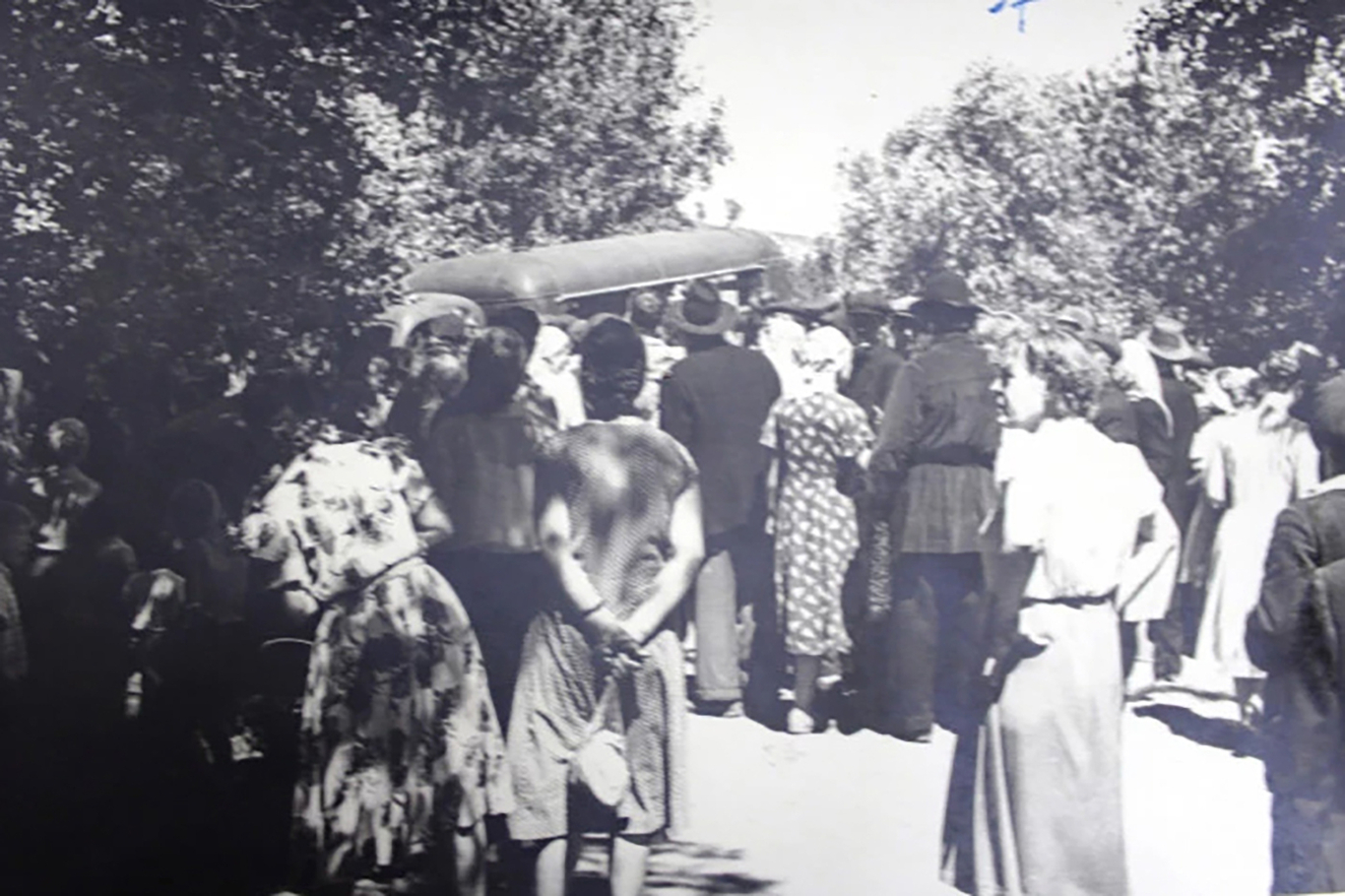
The police also made their plan at the market. A squad of two police officers, reinforced by “voluntary vigilantes,” drew up reports on the noisiest members of the “vodka club.” Those who objected or resisted were taken to the police duty room located right in the market. This procedure was as ordinary and routine as the work of the conveyor belt of the Biysk distillery.
But on Sunday, June 25, the system unexpectedly crashed.
At about 11 a.m., the Trubnikov family from the nearest state farm appeared at the market - 38-year-old state farm carpenter Nikolai, his wife Maria and their son-in-law Anatoly Prilepskikh, who acted as custodian of the family treasury. He held in his hand a bag containing about three thousand rubles, intended to buy a car or a motorcycle with a sidecar.
However, there was no suitable vehicle on the market that day. So they decided to have a drink. Together with two acquaintances they met by chance, the Trubnikovs and the Prilepskys who joined them drank two liters of vodka. After which Maria went to the toilet, and her husband and son-in-law went to the bus stop, loudly discussing (and condemning) the policies of the party and government.
Of course, they could not help but swear and attracted the attention of the police patrol. Policemen Zosima and Leyerzon invited the men to go to the duty room. The men refused to comply with the legal demands of government officials. Then Leierzon tied up Prilepsky and took him away, handcuffed, taking a bag with money. Nikolai Trubnikov, who had great physical strength necessary for his work, entered into single combat with policeman Zosima. When the policeman realized that he could not defeat the carpenter, he took out a pistol and fired into the air. Trubnikov ran, but was overtaken by a police GAZ truck that had come to help the patrol. The fugitive was beaten a little and forced into a car.
At the sound of the shot, people flocked to the scene. Rumors spread that the police had “killed someone again.” At that moment, an excited Maria appeared in the crowd, who immediately attacked policeman Zosima, spat in his face and tore off his shoulder straps.
The crowd emotionally supported the woman’s actions and helped her climb onto the roof of the patrol car, from where Trubnikova addressed the crowd.
According to a report from a plainclothes agent standing in the crowd, Trubnikova announced that the police had robbed them, taking away their honestly earned 30 thousand rubles. This was a serious increase in the stakes: the son-in-law only had about three in his bag. The information made a strong impression on the listeners. The crowd began to rock the car. Nikolai Trubnikov managed to get out of it, taking advantage of the confusion of the police, and ran through the market with a bloody face, shouting to notify the public about the “cop lawlessness.”
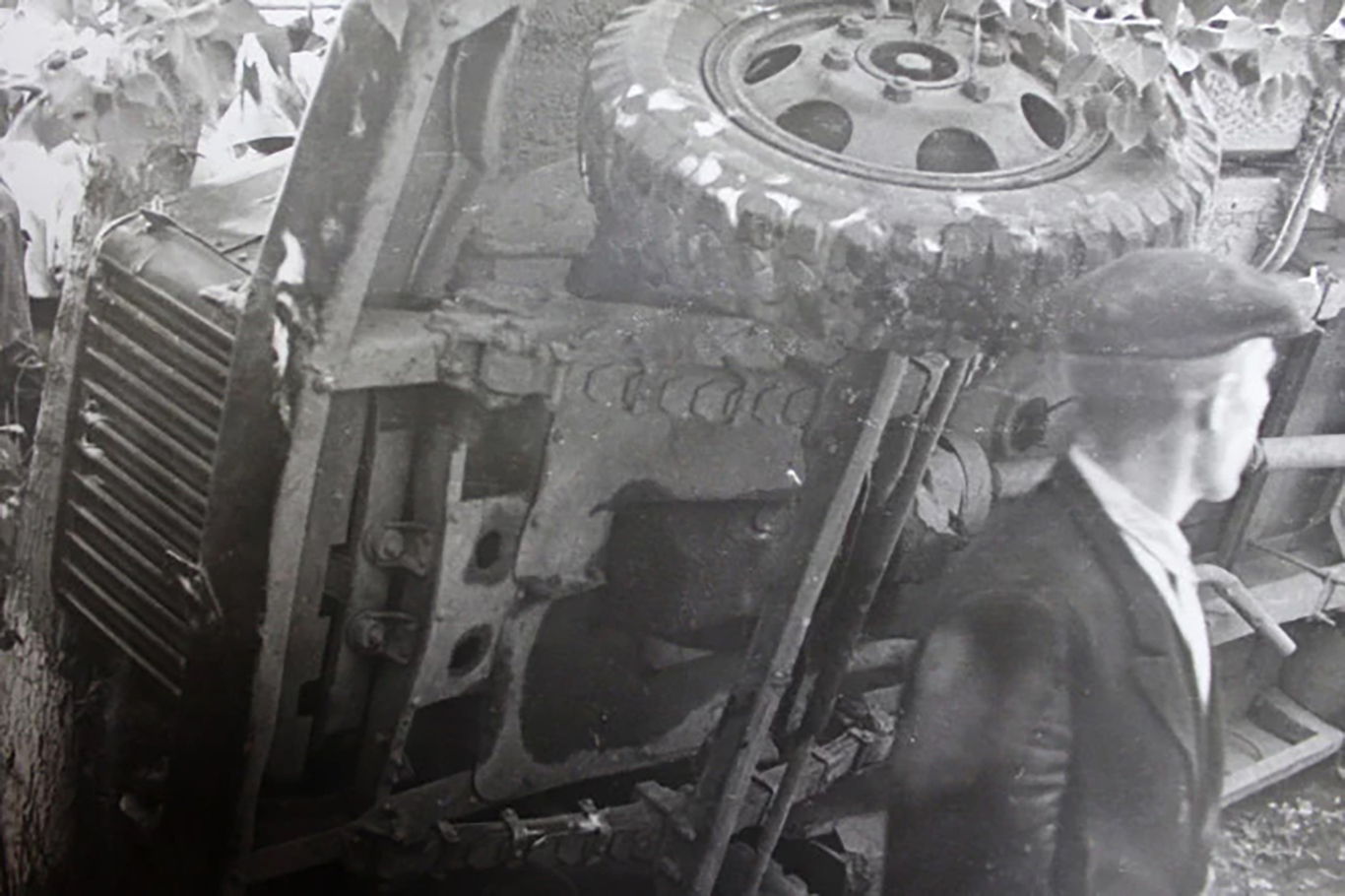
Vladimir Kozlov, who reconstructed the details of several “anti-Soviet riots” of 1961, describes in his book the typical structure of riots: private conflict → police intervention → rumor of injustice or murder → crowd explodes with anti-police emotions and attacks symbols of power.
The reason was almost always insignificant: the arrest of a drunk, an accident, a fight in the hostel or at a dance. But the historical context surrounding the event is much more significant: the return of people with camp experience, restless disabled front-line soldiers, the growth of street violence and the weakening of fear of the authorities after the “debunking of the cult of personality.”
The catalyst for the rebellion was usually people offended by the authorities with a front-line or camp background. They were also found in Biysk. According to the materials of the criminal case, the Trubnikovs’ scandal with the police escalated into a pogrom thanks to several market regulars, war veterans, who stirred up the crowd with calls for “justice” - to beat, kill, slaughter “these bastards.”
It is known how strong the hatred of “these bastards” is among the people—you just need to be able to properly channel the destructive energy of collective resentment. The disabled people from the Biysk market were masters of social manipulation. Due to the absence of some limbs, they themselves did not take a direct part in the violence, but they gave valuable instructions on how to properly overturn a police car and how to cut the hoses to firefighters who came to disperse the crowd.
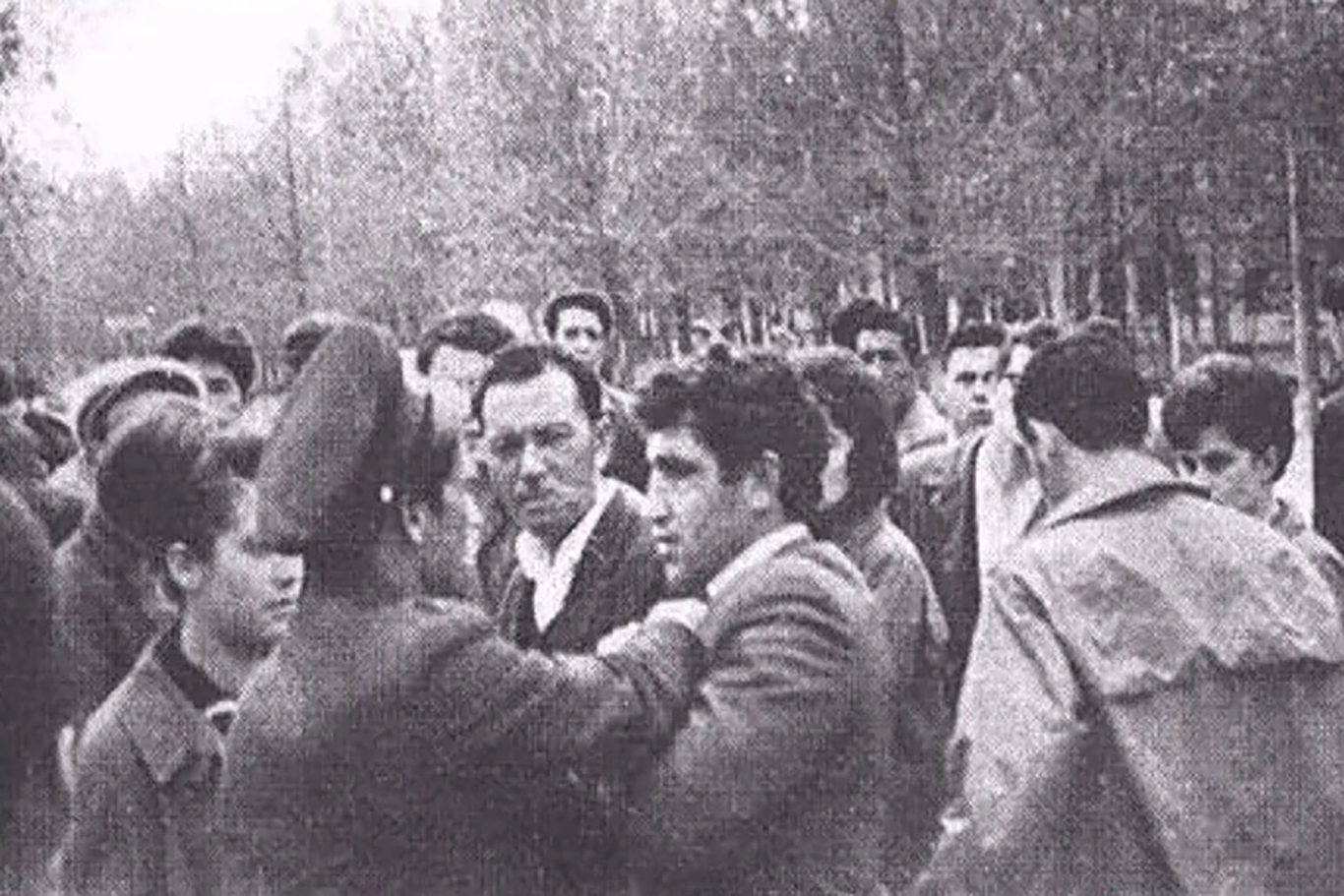
It is interesting that while the crowd was smashing the duty room and trampling the policemen, all this time KGB agents were recording people’s actions on film. The photographs were presented in court and then kept secret for a long time.
Despite it being Sunday, the authorities did not sleep. The chairman of the city executive committee, Garkavy, arrived at the market square quite soon. Following local tradition, he tried to make a speech by climbing onto an overturned car. But he was booed and kicked out of the “tribune”. The people did not want words, but “justice.” That is, violence. According to the recollections of old-timers, no demands were made to the authorities.
Everything was spontaneous. For many participants, the pogrom was not some kind of continuous action, a movement towards a specific goal - rather an unusual attraction in the center of the market square.
He came up and took part, walked away and drank.
For example, driver Mikhail Pankin “just like that” drove into the crowd around an overturned car and became the leader of the protest for twenty minutes. He turned to policeman Zosima, who was locked in the car: “Come out and give your soul to the people!” And then he reached inside to take the policeman’s pistol. Two shots rang out - already to kill. Pankin received a bullet in the leg, and a man standing next to the car was mortally wounded.
They dragged Zosima out and tried to trample him to death. But he was saved by the appearance of soldiers who dispersed the crowd with machine gun fire into the air.
Thus ended one of the most senseless Russian riots of the 20th century.
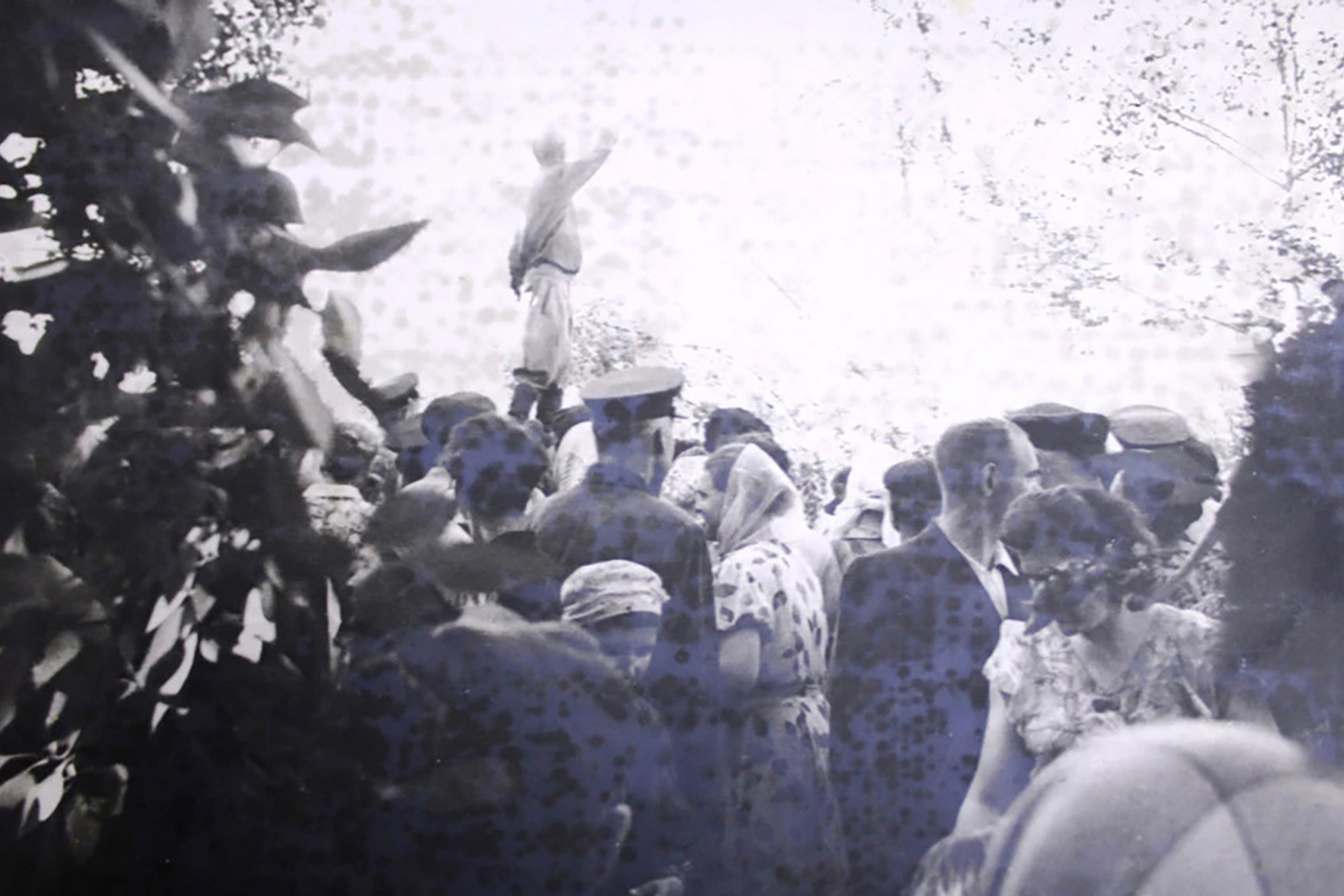
Just a month after Biysk, mass unrest began in Aleksandrov (Vladimir region). The reason for the outbreak was very similar - the police detained drunken conscripts. But Alexander’s plot developed much more dramatically. A crowd of 500 people first took over the police station and burned the passport office, and then headed to the city prison to “free the prisoners.” It was a real assault, no less violent than the capture of the Reichstag. And by the way, among the pogromists there were participants in the Berlin operation of 1945.
The battle lasted about an hour. 22 guards returned fire, and the attackers lost four people killed. But they didn’t run away. Instead, they poured gasoline into empty bottles, threw Molotov cocktails at the prison windows, and tried to ram the gates with set fire cars and a motorcycle.
The attackers again did not put forward any political demands. The main motive for the pogrom was hatred of the police and sympathy for its victims.
Cinema played an unexpected role in the events of Alexander. Not far from the site of the street battles, spectators were leaving the last film show, where something heroic was shown about the fight against the Nazis. The art of Soviet propaganda to evoke “noble rage” in people deserves high praise. But that evening in Aleksandrov the rage turned against the Soviet regime itself.
Robert Hornsby, author of the book Protest, Reform and Repression in Khrushchev's Soviet Union, writes that under Khrushchev the Soviet regime deliberately expanded the space of acceptable social behavior.
At the same time, the elites clearly did not expect that the forms of feedback from the people would be not only sold-out crowds at the Polytechnic Museum, but also spontaneous riots, when the crowd suddenly went wild with the idea that, having gathered together, there was no need to be afraid of the authorities.
Different layers of society lost the former fear brought up by Stalin in different ways. The intelligentsia responded to the call to dream of communism. Pop poets, fiction by the Strugatskys, films by Khutsiev and art songs appeared.
The deep people living at the bottom of Soviet life had a completely different picture. There freedom was expressed primarily in violence. “Street hooliganism” was taking place. The people knew for sure that under Stalin prices were reduced, but under the current government it’s the other way around. In the summer of 1962, factories in Novocherkassk rebelled against price increases. There events developed according to a more organized revolutionary scenario. There were also plenty of drunken speakers, but there were people who were able to express on paper the emotions of the rebels.
“What liars and hypocrites and power-hungry dogs and oppressors of the people you are. What are you striving for? Stalin and his supporters consistently walked towards communism and led everyone, but did not look at the tricks of capital and did not point their fingers like you, liars,” said a leaflet written by electrician Zharov from the rebellious plant. Zharov was not as lucky as the Polish electrician Walesa. In August 1962, he was sentenced to 13 years for anti-Soviet agitation.
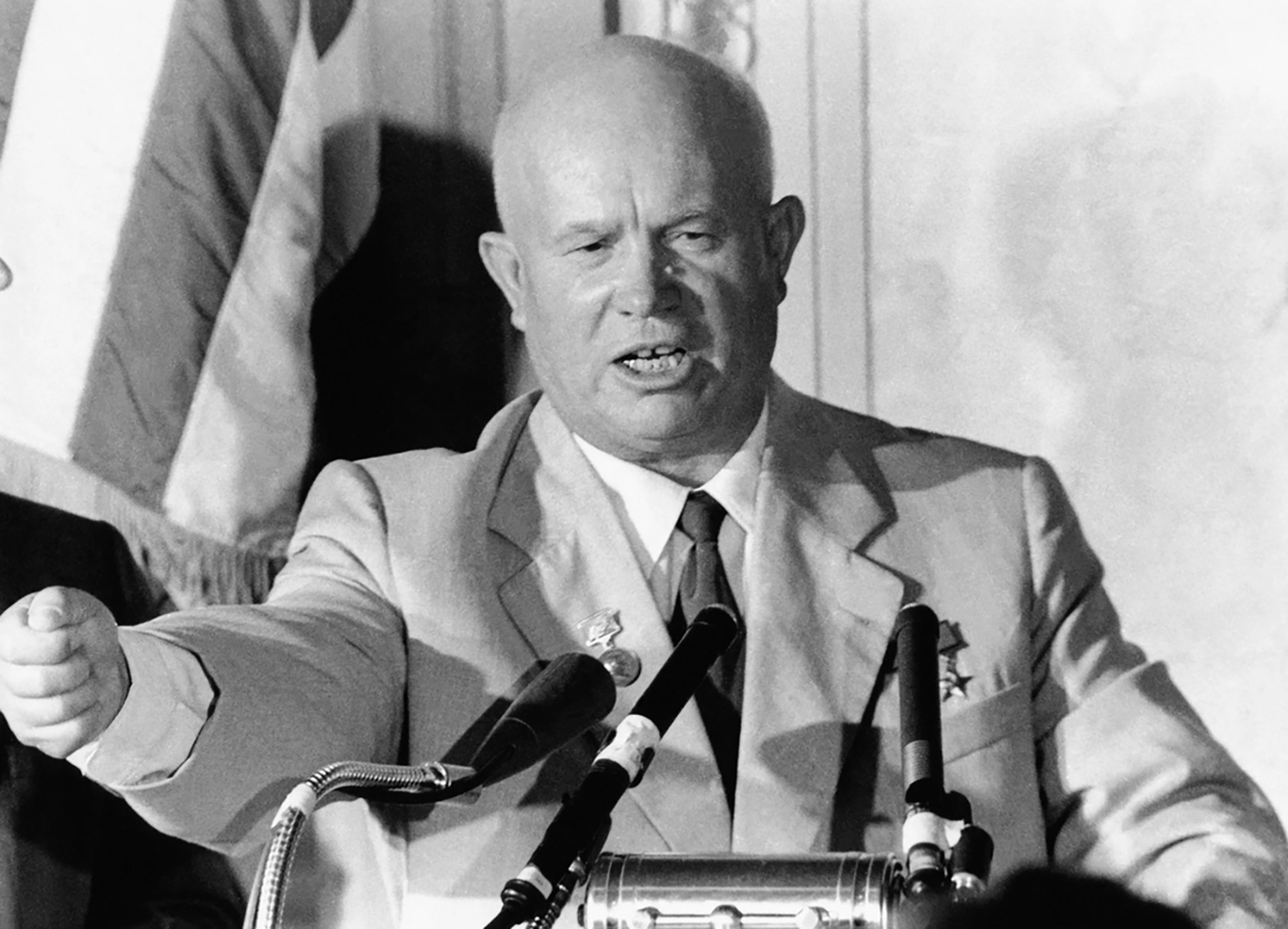
The main addressee of the Novocherkassk leaflet also experienced the disappearance of fear. In October 1964, after a series of riots throughout the country, after a nuclear war almost happened with America and the collapse of agriculture, workmates decided to see Nikita Sergeevich off to a well-deserved rest. Until I messed up even more. Sergei Khrushchev, in his book “Pensioner of Union Significance,” quotes his father’s words allegedly said in a telephone conversation with Mikoyan on October 13, 1964, after a Politburo meeting, where Nikita Khrushchev was asked to leave.
“Could anyone dream that we could tell Stalin that he doesn’t suit us and invite him to resign? There wouldn't be a wet spot left of us. Now everything is different. The fear has disappeared, and the conversation is on equal terms. This is my merit. But I won’t fight,” Sergei Nikitich quotes his father’s words and explains that this was said specifically for those who wiretapped the ousted General Secretary.
Khrushchev really did away with Stalin's practice of preventive terror. However, during his reign, the courts handed down frightening sentences, including the “capital punishment” for organizing mass riots and encroaching on Soviet power.
“In terms of the scope of political repression against dissidents, the Khrushchev regime is incredibly closer to Stalin than the Brezhnev regime,” says Vladimir Kozlov. According to the historian, it was the combination of harsh repressions with romantic promises of imminent communism that made the image of Khrushchev in the public consciousness irritatingly contradictory.
“In 1961, the authorities were still continuing their propaganda experiments. At the same time, the preparation and conduct of the trials actually followed old ideological and political recipes; court verdicts in such cases of mass riots were largely predetermined in high party offices, and not at all in courtrooms. The authorities have demonstrated each time that they can be threateningly dangerous and cruel, but not at all fair,” writes Kozlov in the book “Mass Riots in the USSR under Khrushchev and Brezhnev.”
The people responded with portraits of Stalin on the windshields of trucks. By the way, they survived Khrushchev and disappeared only during perestroika. And then, in the early sixties, the first wave of nostalgia for bygone times, when “there was order in the country,” arose. Around the same time, Mao Zedong called Khrushchev a “revisionist,” accusing him of betraying Stalin’s course. Sensitive to the fluctuations in the international atmosphere, the comrades from the Central Committee realized that the time was coming to use the image of Stalin themselves as an ideological weapon. Of course, after Khrushchev’s resignation. Otherwise, the people who continued to come out with portraits of Stalin at demonstrations even after 1961, when the generalissimo’s body was taken out of the mausoleum and the cities of the USSR stopped bearing his name, would not have understood this.
For provincial officials of that time, Stalin’s portraits on the entrusted territory meant a minus in party karma and a stop sign in the service record.
On November 7, 1963, the administration of Sumgait (Azerbaijan) ordered the police to take away images of the Father of Nations from workers. The people didn't like it. A short riot broke out, during which a portrait of Khrushchev was “desecrated” (stoned). The party leadership was driven from the podium and beaten. The protesters broke the “objects of visual propaganda” and were about to take over the hill, but the arriving troops dispersed the crowd with gunfire.
Popular riots usually did not last long (the record in Novocherkassk was three days), but members of the Politburo less and less liked the idea of using the army to resolve internal conflicts.
The elite came to the idea that peace could be easily achieved if Khrushchev was completely removed from the mass consciousness and “a little Stalin” was added instead.
“The dissatisfied, who, as the events in Sumgait showed, were ready to appeal to the shadow of Stalin, actually seized the initiative, releasing the late dictator on the screens of cinemas and televisions, on the pages of books and newspapers, making him, slightly washed, part of the official system of values,” notes Vladimir Kozlov.
Quiet, stagnant life in the USSR lasted for almost 15 years, until the invasion of Afghanistan by a “limited contingent”. Inside the country, the authorities almost never had to shoot at people. On the contrary, it was possible to feed the population more or less tolerably thanks to the export of hydrocarbons, which were discovered very timely in Western Siberia in the 1960s.
The essence of the new social contract, tacitly concluded under Brezhnev, was expressed in the phrase “if only there was no war.” Everyone laughed at the diction of Leonid Ilyich, who was trying to pronounce “peaceful coexistence.” Anecdotes were told everywhere about the insanity of the “armourbearer in the dark,” for which no one was punished.
But it was precisely the “anecdotization of the leader” that turned out to be a successful form of protest prevention. If under Khrushchev the provincial rebels always tried to get through to Moscow, then the Brezhnev government seemed to be sending a signal to society that it was useless to get in touch with the center. They won't hear. “Hey you up there!” - Alla Pugacheva sang, and everyone grinned knowingly, imagining the deaf and stupid gerontocrats.
Thanks to this trick, the system managed to last an extra couple of decades. By the early eighties, the protest pressed into the psyche of Soviet people gave rise to the phenomenon of mass alcoholism.
Gorbachev tried to fix this. Его «полусухой закон» стал последней репрессивной мерой советской власти.
Свергали ее уже вполне трезвые люди.
Массовые беспорядки и протесты в СССР Козлов В. А. Массовые беспорядки в СССР при Хрущеве и Брежневе (1953 — начало 1980-х гг.). — 3-е изд. — М.: РОССПЭН, 2009. Hornsby R. Protest, Reform and Repression in Khrushchev's Soviet Union. Cambridge: Cambridge University Press, 2013.
Новочеркасск и рабочие выступления Baron SH Bloody Saturday in the Soviet Union: Novocherkassk, 1962. Stanford: Stanford University Press, 2001. Скорик А. П. Новочеркасская трагедия 1962 года. — Новочеркасск: НОК, 2003. Скорик А. П. Новочеркасск 1962 года: документы, факты, версии. — Ростов-на-Дону: Издательство ЮНЦ РАН, 2012.
Хрущевская эпоха и общество после Сталина Taubman W. Khrushchev: The Man and His Era. New York: WW Norton, 2003. Dobson M. Khrushchev's Cold Summer: Gulag Returnees, Crime, and the Fate of Reform After Stalin. Ithaca: Cornell University Press, 2009. Raleigh DJ Soviet Baby Boomers: An Oral History of Russia's Cold War Generation. Oxford: Oxford University Press, 2012.
Поздний СССР и «общественный договор» Юрчак А. Это было навсегда, пока не кончилось. Последнее советское поколение. — М.: НЛО, 2014. Yurchak A. Everything Was Forever, Until It Was No More: The Last Soviet Generation. Princeton: Princeton University Press, 2006. Kotkin S. Armageddon Averted: The Soviet Collapse, 1970–2000. Oxford: Oxford University Press, 2001.