
Translated material
“When we slept in the toilet every day, I thought I was going crazy.” Residents of annexed Crimea tell how they leave the peninsula and why they stay

Residents of annexed Crimea tell how they leave the peninsula and why they stay
“When the Internet is jammed, there is no connection. [There is no electricity], I can’t feed the little one, heat up the food, or mix the mixture,” says Crimean blogger Liza Lazareva in her Telegram channel. “[We have to] prepare a bed for the night in the bathtub for my [one-year-old] son and me.”
Over the past two weeks, Crimeans have faced a gasoline shortage, a lack of railway communication, interruptions in water and electricity, and a shortage of certain goods. The governor of Sevastopol, Mikhail Razvozhaev, actually introduced a curfew (as local residents call it), limiting the operation of supermarkets and shopping centers from 7:00 to 20:00, and catering establishments from 8:00 to 20:00.
Some residents of the peninsula have seriously thought about leaving in the last two weeks, some have already left. “New Europe” talked with Crimeans about their plans in connection with a possible blockade of the peninsula.
Victoria, a resident of Sevastopol, is having a hard time with the restrictions introduced in the city and on the peninsula:
“In recent weeks, I’ve been going a little crazy, because when they screwed us, when [my husband and I] slept in the toilet every day, I thought I was going crazy. Naturally, this all follows the pattern, like a snowball, and it becomes more and more exciting. I bought myself some tranquilizers, I take them, and they seem to make me feel better.
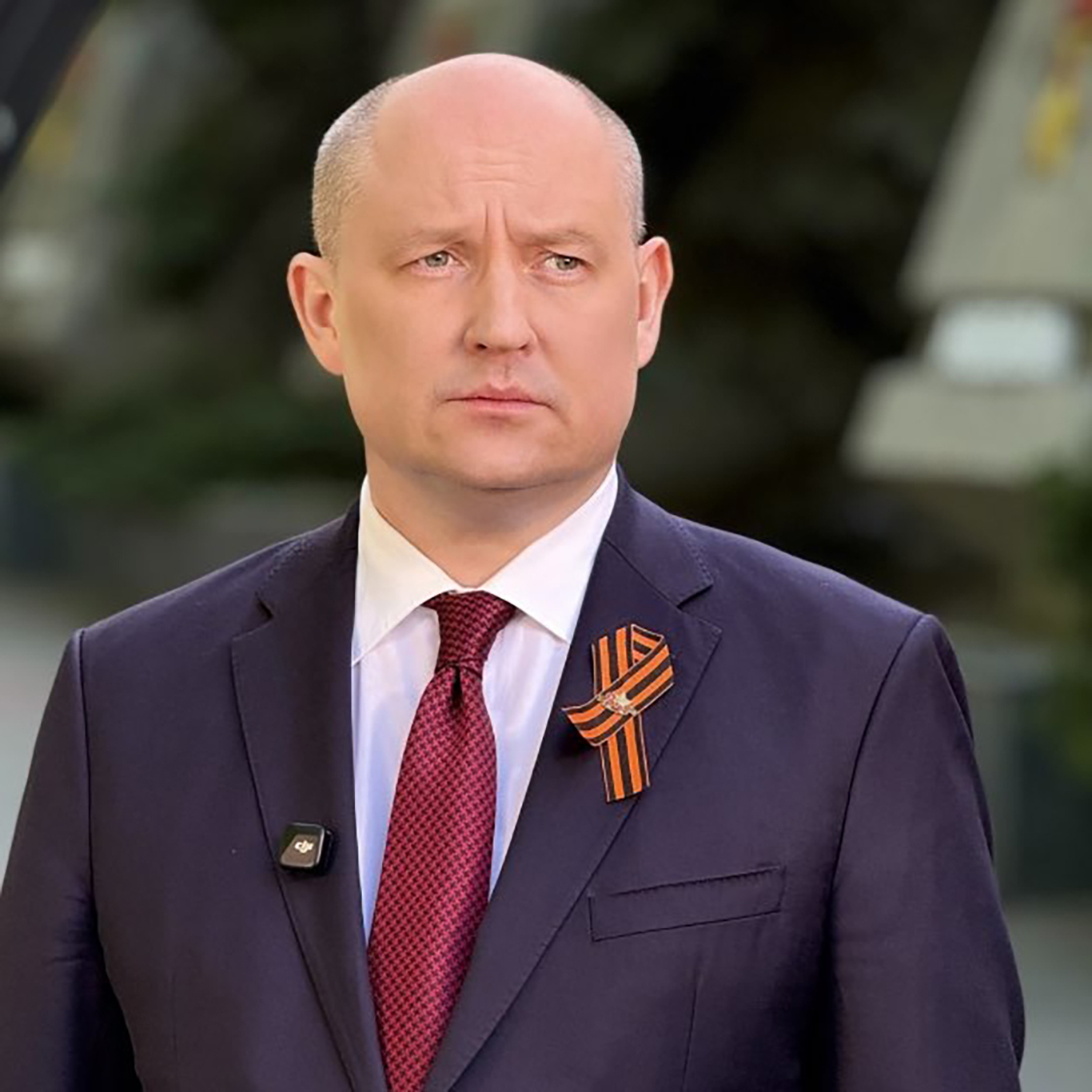
Mikhail Razvozhaev writes daily about the work of air defense, the arrival of drones and notifies about the work of the air raid - Sevastopol residents also notice this. On Thursday, an official said that dry rations are being introduced in kindergartens in connection with saving electricity in Sevastopol: “Due to the situation in the energy system, today the city’s kindergartens will work in a special mode. If you can, please leave your children at home. This will help us reduce the burden and ensure the comfort of children under time constraints. [...] Since there is no electricity, it is now impossible to prepare hot meals. Therefore, children in duty groups will be provided with dry rations.”
“Yesterday they said that the light was on schedule,” says Victoria. — However, they didn’t give us any schedule. Sevastopol is on its own wave. In Crimea, my mother told me, there is also a light schedule. They had no power yesterday from 11:00 to 16:00. Then they turned it on, then turned it off again. In the evening it turned off again for five minutes and was turned back on.
Every day, with every piece of news, thoughts boil in my head: the lights will be turned off, my husband has an online job, how should he work? He will be fired.
The girl is very worried about the arrivals.
“I’m thinking: at least not to die,” she admits. — Now I walk everywhere.
City transport in Sevastopol has changed its schedule: it now runs from 5:30 to 21:00. During an air raid, buses and trolleybuses travel at a reduced speed. Communication between the North and South sides of the city is carried out by passenger boats instead of ferries - they are smaller.
Due to damage to the electrical networks that are connected to some water pumping stations, water outages began. This mainly concerns the northern, northeastern and central parts of the peninsula.
Crimean blogger Lisa says in the channel that she is very frightened by the explosions she hears on the peninsula, fuel shortages and power outages:
“All my thoughts are just about not getting hit by a rocket on my head,” she says in the video. — Or where to find gasoline so that I can always be mobile. It's hell in the apartment, you can't breathe. No air conditioning cunt.
I can’t turn on cartoons to distract [the child]. I can’t open Avito and look at housing. I start to panic.
I was without light the whole day, it was enough for me to realize everything. With a one-year-old baby, without light is unrealistic. In Crimea there will be no gasoline at all, [and therefore] no food.”
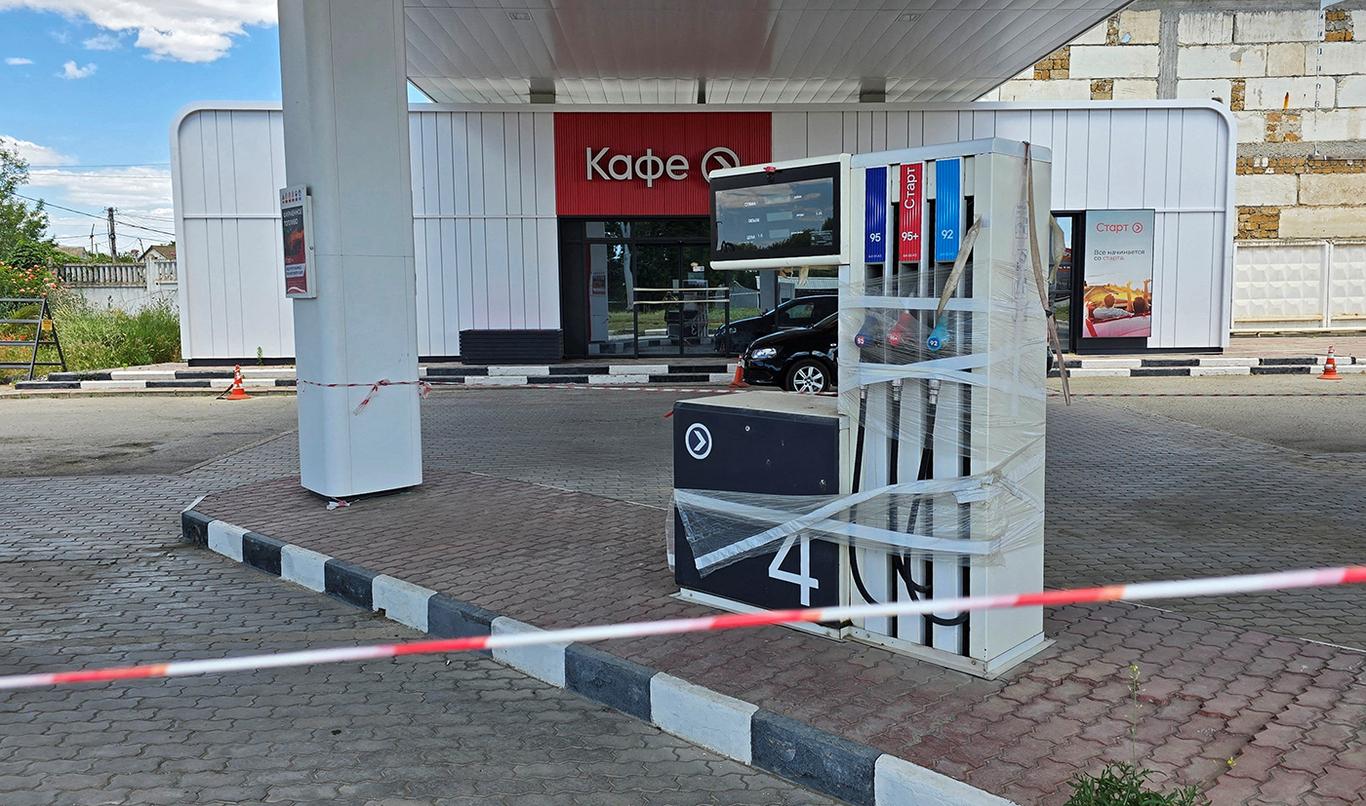
From June 21, the sale of gasoline at gas stations in Crimea was stopped, including with coupons. Similar measures are temporarily in effect in Sevastopol. The city governor, Mikhail Razvozhaev, explained this by the need to save resources. An exception is made only for government services.
Traffic through the crossing between Kerch and Taman has been suspended due to attacks by the Ukrainian Armed Forces, so trucks with goods cannot enter the peninsula: they are asked to travel along the Novorossiya highway through the occupied territories.
“Now I don’t want to reflect on the blog everything that happens. Yes, and for this I might even get an article. It’s like I’m at a dead end, I just can’t find a way out,” writes Lisa. “I see how other people live, show the world to children: the ocean, waterfalls, monkeys, mountains, silence, calm, joy. People live life with their children. Seeing and knowing how it can be, every day I fade more and more.”
Vyacheslav, a freelancer who moved from Russia to the peninsula in 2008, is also afraid of shelling.
— During the referendum in 2014, there was a poster on city billboards: “What’s next?... Even stones from the sky!” We are in our homeland! Residents of Crimea have provided themselves with those very “stones from the sky” for a decade,” he laments. — The sound of MTFs and air defense crews working can be heard throughout the entire area. A person, of course, gets used to everything, so I began to treat raids more calmly, as much as possible in the current situation.
The man believes that the number of problems in Crimea will only grow: he refers to his experience working in the Ministry of Emergency Situations in 2014 - then residents of the peninsula actively used generators during power outages.
“At that time, a large number of diesel generators were brought to Crimea and the temporary supply of light was provided by them,” he recalls. “If the situation repeats, there will be nothing to ensure long-term operation of the generators: there are already serious problems with fuel on the peninsula. I work remotely, so without electricity I would simply lose my job.
Lisa had been thinking about leaving the peninsula for a long time, and once even turned to an online fortune teller to make a decision.
“I went to Tiki-Toki and they were doing tarot readings,” she says in the blog. — A gypsy woman was sitting there, I sent her a rose, I said: Scheherazade, should I leave Crimea or not? I want to live. And she says to me: “Sit in Crimea, your happiness is in Crimea, you will leave Crimea with your dark-haired husband.” So, here I am trying to tell the rockets that it won’t fall on my head, but she’s telling me about love. All my life I lived in my bright and beautiful Crimea. But in a moment, Crimea turned into a place where life became many times more difficult and unbearable.”
Many Crimean residents hide in the bathroom or hallway in the event of a missile attack. The “two-wall rule”—the main principle of safety during shelling or explosions—states that a person must be separated from the street by at least two load-bearing walls. Lisa also follows these rules.
“I’ll leave Crimea with a toilet,” she says. “I filmed the reels with him, and filmed the reels on him, and met the missiles, and saw off the drones. Every time I go to the toilet at night I promise myself to leave. And every morning I forget about it. I'm leaving not because I have fears, I know everything will end very well. I'm leaving because I have a son, and I won't be able to explain to him why we sleep in the toilet again or why I feed him just water at night. I can’t explain why cartoons don’t work and why we can’t go outside.”
Vyacheslav thought about leaving Crimea for a long time, back in 2017–18.
“Large enterprises do not enter Crimea, local analogue companies have no competition that would affect the level of salaries, a general problem with employment, a feeling of isolation not only from the world, but also from Russia,” he lists. “Recently, this has obviously been supplemented by hostilities and related problems: air raids, transport restrictions, price increases, fuel problems.
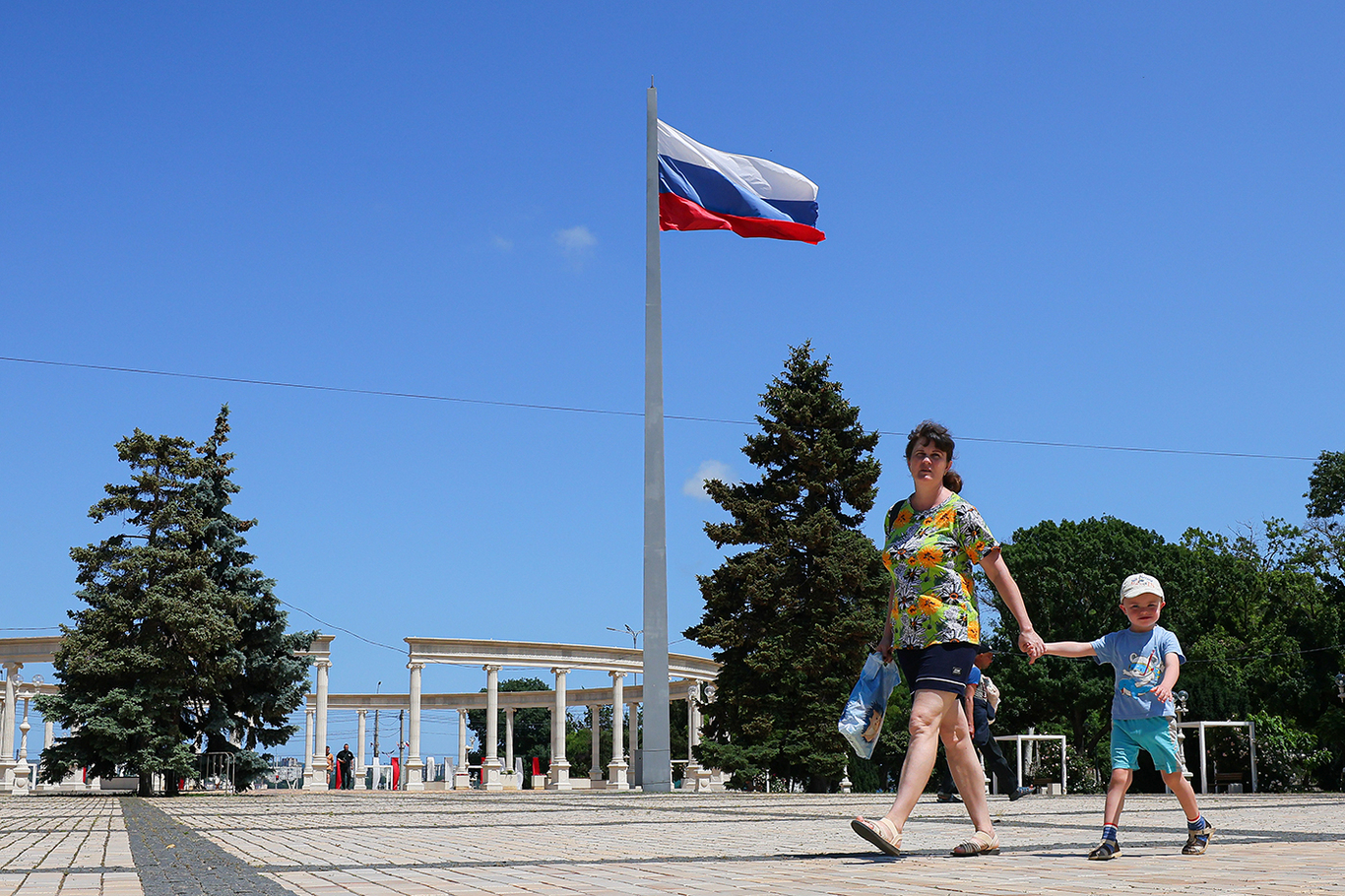
Now Vyacheslav wants to leave - “at least temporarily.”
Crimean Victoria constantly thinks about moving, but doesn’t know where exactly. It’s not safe inside the peninsula, and in Russia too.
“We talked to my husband, he said that we need to be ready to leave if something happens. And then I think: where? Where is it wrong? “Nowhere,” she argues. — We were in Simferopol on Friday. We walked home under shelling. There were queues and explosions were heard. The only thing that differs from Sevastopol is that there is no air raid raid in Simferopol. So this sucks, excuse me. People may not even be aware of it.
The girl could move to the village with her parents near Feodosia, but it seems that it is not so safe there either.
“The other day, a drone exploded in my hairdresser’s yard, during the day, and her windows were blown out—my grandparents live nearby,
- she says. —Where should we move? I say to my mother: “Mom, maybe you should at least stick an armored film?”
According to Victoria, it is quietest now in Yalta and partly on the southern coast.
“I heard that it’s also booming in Sudak—other relatives live there.” If you go to the side, then there is Feodosia, Primorsky, where everything flies. In the other direction - Evpatoria, it’s the same there. Honestly, I don’t even understand where it’s safe. Apparently, it’s probably just to move to another planet, I don’t know.
On Instagram she sees Crimean bloggers leaving: some for Simferopol, some for Moscow , and some are thinking about leaving for Belarus.
Victoria also thought about Moscow - she talked with her husband, but two days later there was a powerful attack by disembodied people, and the couple changed their minds.
“There are shellings and explosions everywhere: in Saratov, Penza, Voronezh, everywhere,” the girl summarizes.
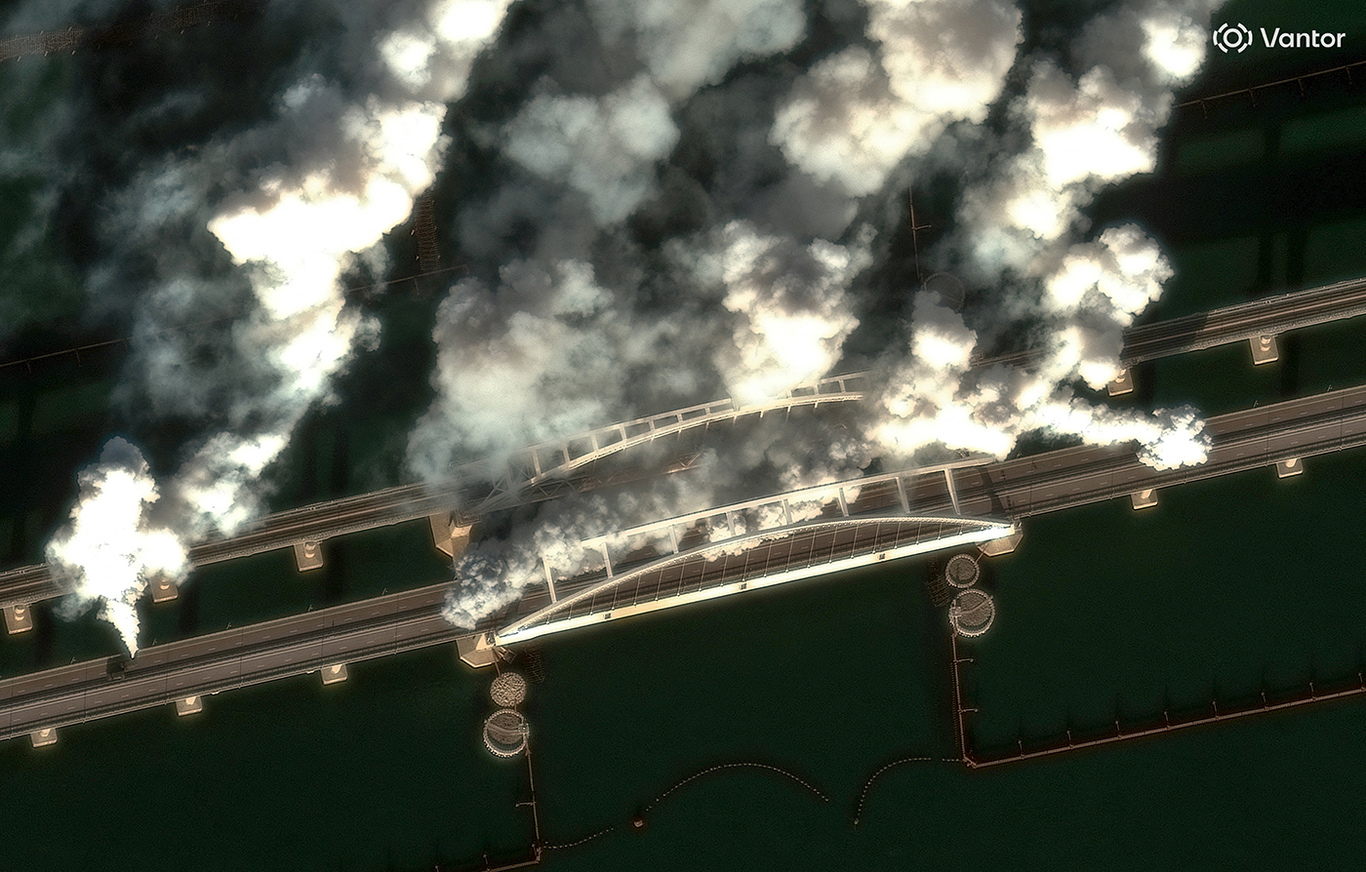
Those who have finally decided to leave are faced with logistical problems: there is no gasoline, you can drive across the bridge, but the drive takes a long time because of the queues; in addition, traffic is periodically blocked.
Rail traffic on the peninsula has been suspended. Only the Kerch South station, located near the Crimean Bridge, is operational. Buses run inside the peninsula.
Vyacheslav is considering several options for leaving.
“I will proceed from the current situation,” he says. — I managed to save up a supply of gasoline so that I could go by car, but I am planning to go by bus and then by train.
Blogger Lisa went out by car: first she drove with her son and mother to Sudak, where she stayed overnight in an apartment - driving across the bridge at night was scary.
“I turned the wheel for a long time,” she says in her blog. — I got behind the wheel at 10:30. In the queue [for the bridge] everyone is swearing, men are jumping in line. We were driving on the bridge and heard voices, I lowered the window, and an alarm started right on the bridge. The bridge was closed. I stood on the bridge for three hours. Got out from behind the wheel at 20:30. I barely made it."
The girl is worried that she left her relatives in Crimea, but her one-year-old son is the main argument for leaving.
“Even if there is no light, the whole family will survive, but not Bogdan,” she writes. “I was without light for one day, and the screams were non-stop. A day without light was absolute hell, then I packed my things.”