
Translated material
Busification in the style of "Storm". In Penza, unknown people in camouflage, together with police officers, are conducting raids on men to be sent to war. We publish eyewitness accounts

In Penza, unknown people in camouflage, together with police officers, are conducting raids on men to be sent to war. We publish eyewitness accounts
Russian propaganda often talks about how in Ukraine men are caught on the street, put on buses and forcibly sent to the front. Exactly the same thing happened at the end of last week in Penza and several cities in the Penza region. Men were detained on the streets and then pressured into signing a contract with the Ministry of Defense. The raids were attended by representatives of security forces, as well as unknown persons dressed in military camouflage. Novaya Gazeta Europe talked about this.
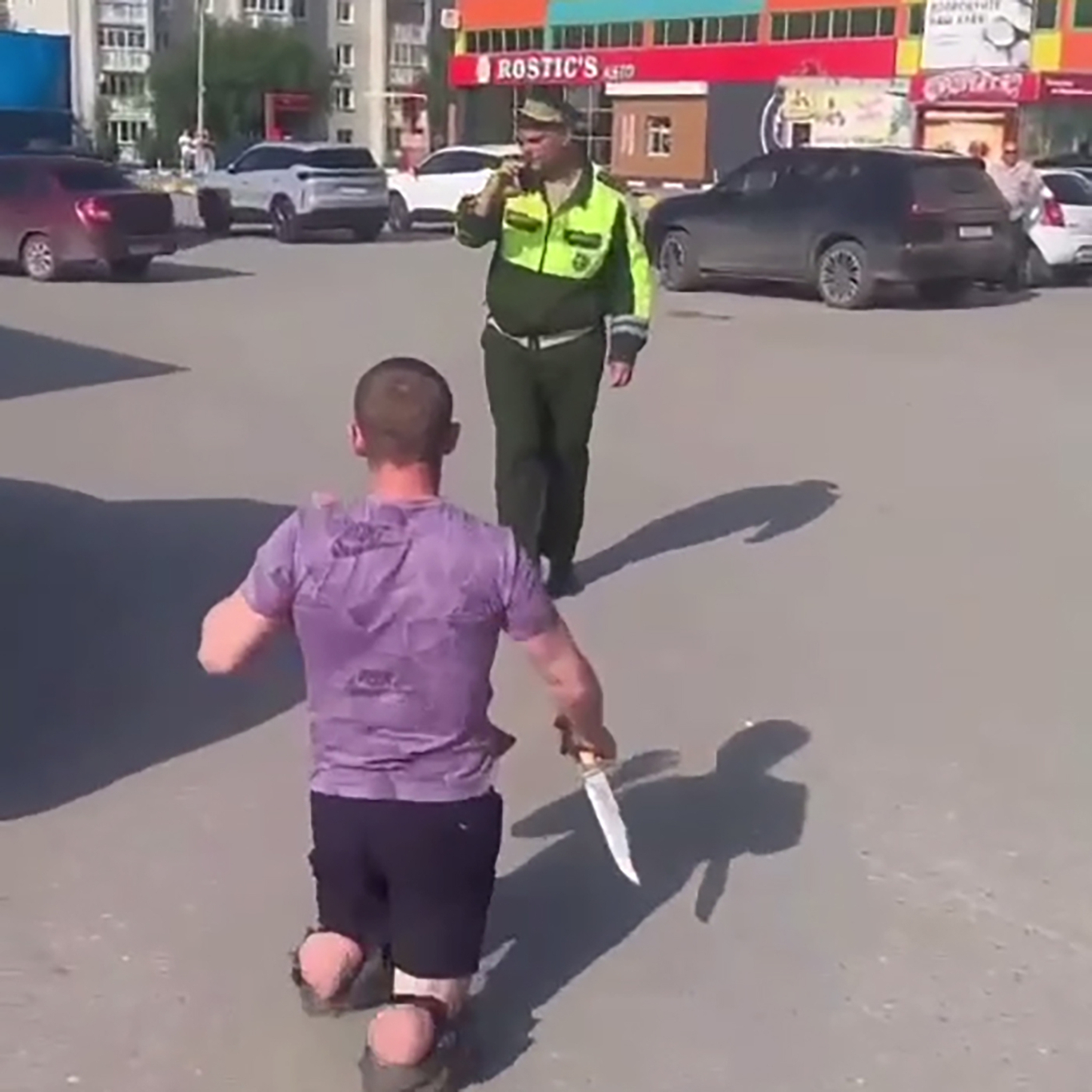
“Let me stick a knife into you?!” The mothers have no more children left! What will you tell the mothers then? So that I don't see you again! They’re standing here, catching young people who can’t speak up for themselves!” — a video has gone viral on social networks with a legless disabled man chasing military police officers in a wheelchair near a shopping center with a large kitchen knife. Also in the video were a military-colored truck with the letter “Z” painted on it and a strong man in camouflage without identification marks.
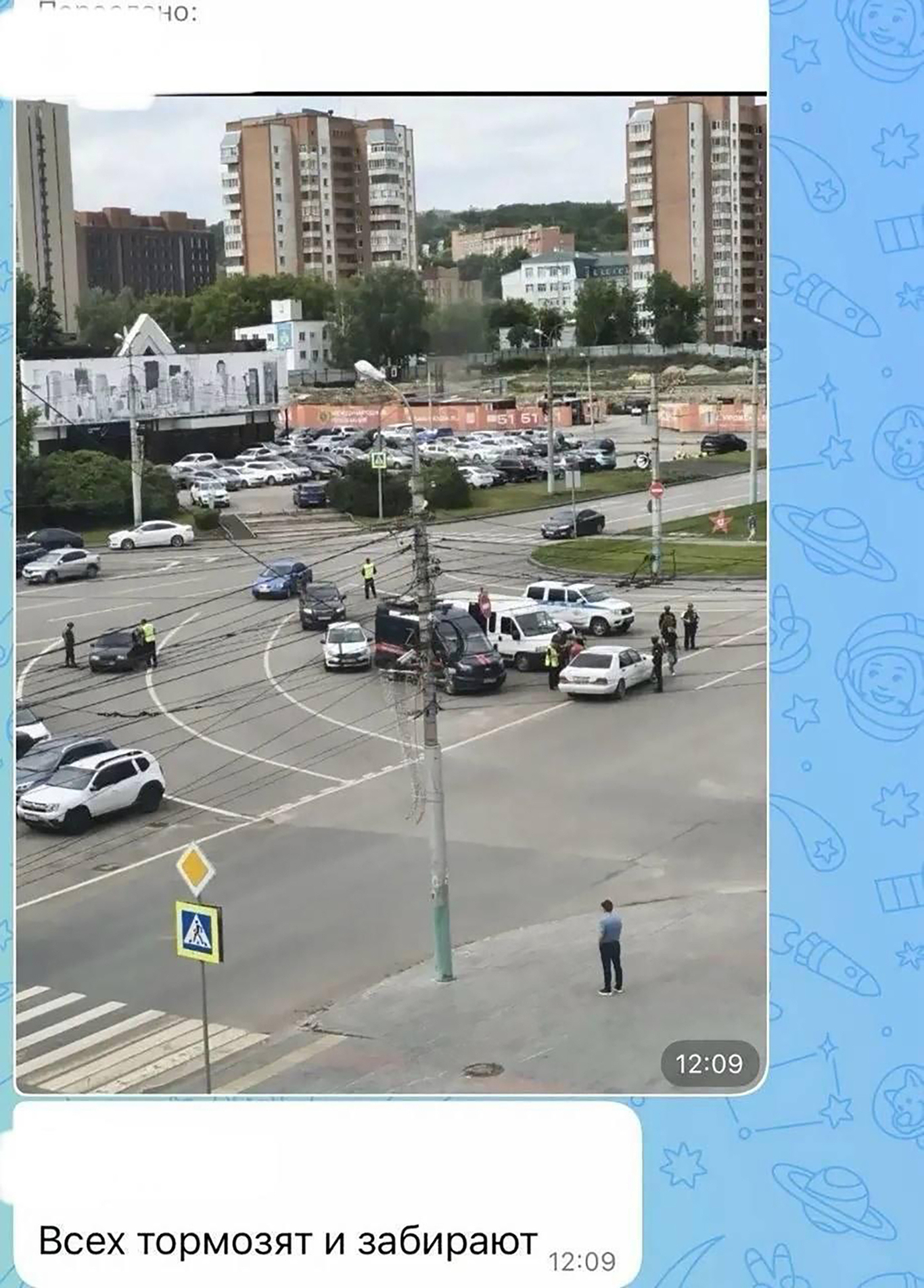
Other videos and photographs showed people in patrol uniforms, traffic police, and a car with the inscriptions of the Investigative Committee. (Last year, military investigators from the Investigative Committee identified persons who had recently received Russian citizenship and had not registered with the military.)
“You are complete bitches! You forced them to sign contracts! You left children without fathers, you scum! Damn you! Shoot, crush us, we won’t go anywhere!” — in another video, a crowd of women at night blocks a minibus in which men in civilian clothes are sitting. Behind the wheel and next to the car there are people in camouflage uniform without insignia. The video ends; it is not clear how the conflict ended.
“I saw them a couple of times last week.” We rode on a green “loaf” with tinted windows; it had civilian license plates, but people in military uniforms got out of it.
Here in Serdobsk, somewhere since May, mercenaries from Lugansk were riding in a pickup truck, the license plates had a “Storm” frame ( assault unit of the Russian Armed Forces. - Ed. ). They said about them that they sell people to the military registration and enlistment office for money,” says a resident of the Penza region.
The interlocutor of Novaya Gazeta Europe showed a photograph of a car with the inscription “Storm” just above the license plates.
— On our embankment in the center, young people constantly drink. A minibus drove up there, and some men in civilian clothes got to the bottom of the guys. Part of the company was dragged onto a bus, while others fled to the private sector. On Pobeda Avenue, police stopped cars en masse: they inspected Lada Grants and other brands popular among young people. Two men in their 50s were drinking at home, one went for more and didn’t return. Two days later he calls from the Rostov region: he says they are taking him to war,” says a civil activist from Penza.
He was out of town at the end of last week, and he is retelling stories that his friends and relatives are discussing.
— Penza distinguished itself last year too; in July, almost the entire city (except for the Arbekovo microdistrict) completely turned off the mobile Internet and did not turn it on again. There were no white lists then, only later they appeared and started working. There was no street WI-FI either, only then they started installing it. There is still no Internet in almost the entire city - only white lists, and even then not always. True, VPN helps a little to bypass jammers, a civil activist tells Novaya Gazeta Europe.
He notes that the Penza region is not in good standing with the federal authorities. In 2024, the ex-governor of the region was sentenced to 12 years for corruption.
— I think that shutting down the Internet and raids with forced signing of contracts are all attempts by the regional authorities to show their good side, to curry favor with Moscow,
- the activist suggests.
The administrator of the Telegram channel “Operational Review,” citing his sources in the Ministry of Internal Affairs of the Penza Region, told Novaya Gazeta Europe that local police carried out more or less typical activities for many Russian regions to recruit people to war.
The situation worsened due to the participation of unknown persons in camouflage: they drove around the Penza region in civilian cars with license plates from other regions. They were dressed in pixel ( military camouflage - editor's note ) without identification marks; the Penza security forces were forbidden by the leadership to question them.
The administrator of the Operational Review says that local security officials suggest that the unknown persons in the pixel may be related to the Russian Community. However, in the VKontakte group of the Penza branch of the Russian Community, the topic of raids on men was not raised at all.
“They say there was a team to collect from the streets those with previous convictions who are not registered with the police, alimony debtors, marginalized individuals, and so on and so forth. They were pressured to sign contracts, and the excess of the performer came out, they went too far. Either they were trying to carry out some plan, or some fool from the authorities decided to distinguish himself,” notes the administrator.
Ekaterina Mizulina, head of the Safe Internet League, called the information about the raids fake, saying that law enforcement officers were conducting scheduled raids in the region. Komsomolskaya Pravda also published notes that there are no raids for sending to the front, but there are standard activities of the security forces.
The Ministry of Internal Affairs for the Penza region issued a statement that the regional police are working as usual, and videos that are distributed with the aim of stirring up the situation may be followed by “prosecution in accordance with the law.” At the beginning of the week, the telegram channel and chat that residents of the Penza region created to collect information about the raids were deleted.
According to the anti-war project “Go Through the Woods,” at the time of deletion, the chat had 1,200 subscribers. Over four days - from Thursday to Monday - “Go through the forest” received 1,913 requests, mainly from the Penza region, with questions about what to do in the event of attempts to be forced to be sent to the front.
— There is no logical explanation why Penza. Perhaps the local authorities were trying to cover some KPIs imposed from above in this way. In addition, as they wrote to us from the Penza region, residents there generally have a negative attitude towards the regional authorities, and local publics also picked up the topic,” says Ivan Chuvilyaev, a representative of “Go Through the Forest.”
He notes that in the Penza region they decided to quickly achieve with the “stick method” what they had previously convinced of with the help of “carrots”.
“We acted quite simply: we decided to combine two tactics that have been used for a long time. On the one hand, there are the raids that used to be on conscripts, on the other hand, the contracting of men with debts, criminal records and other vulnerabilities. Previously, they were targeted and offered to pay off their debts or expunge their criminal record,” he explains.
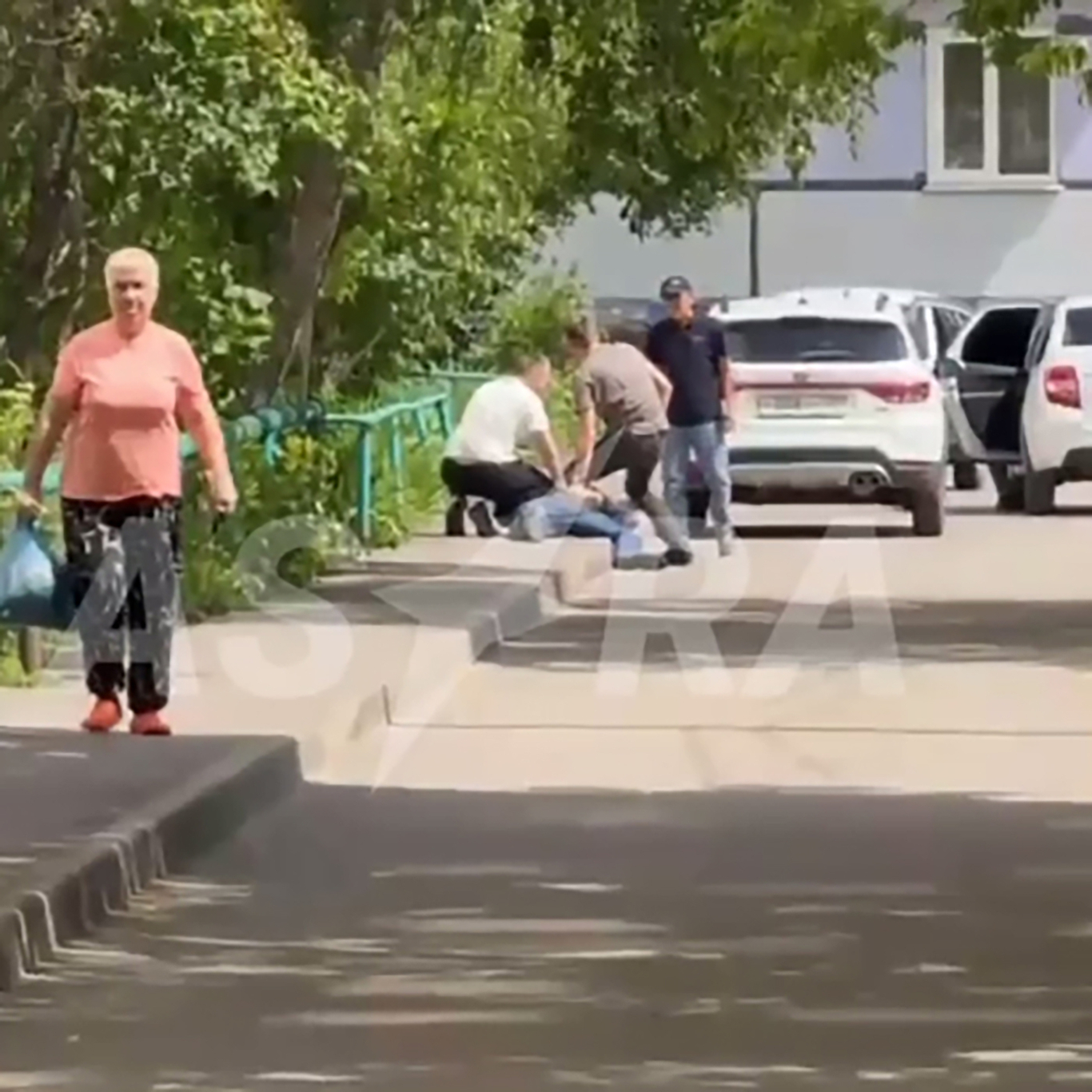
Chuvilyaev notes that those for whom relatives came to the police departments after arrest were quickly released. It is still unknown how many people were forced to sign contracts.
“There was a case when a person was detained while intoxicated. They slipped a piece of paper: he thought it was a detention report and signed it. And it turned out to be a contract. You should always read what you sign,” he notes.
Artem Klyga, a lawyer for the Conscious Objector Movement, noted in a conversation with Novaya Gazeta Europe that this is not the first time that the practice of hiring certain “contractors” for war recruitment has been used. Often these are former military personnel, and they receive compensation for bringing people to sign contracts.
— We call this vulnerable groups: people with problems with alcohol or drugs, debts, criminal records. They are trying to put pressure on them because they assume that perhaps consent will not be difficult to achieve. It will be enough to promise to solve their problems,” Klyga notes.
Novaya Gazeta Europe is monitoring the situation.