
Translated material
Does Europe now have sovereignty: features of Chinese dominance in the era of rare earth metals
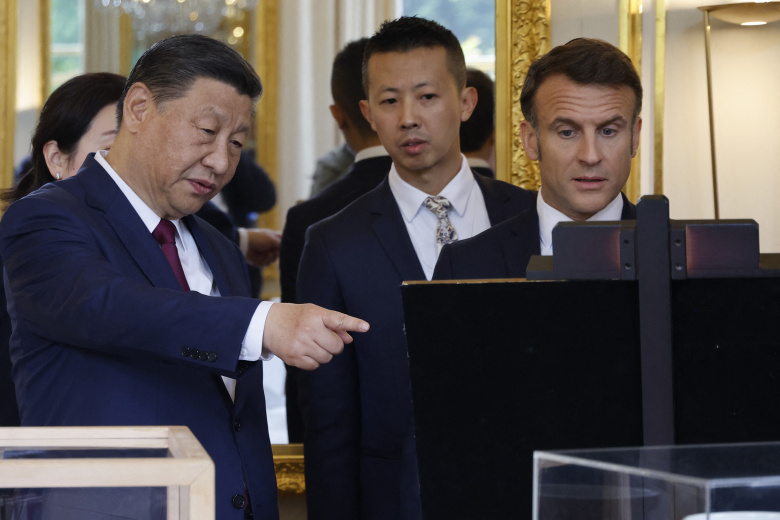
Chinese President Xi Jinping reminds French President Emmanuel Macron of the EU's dependence on China.
Photo by LUDOVIC MARIN / POOL / AFP
Even 20 years ago, the EU was confident that China would follow the path of Japan, South Korea or Taiwan. The world factory will produce cheap goods, buy European technology, depend on Western markets and gradually move towards a liberal economy. The opposite happened. Estonian journalist Denis Antonov believes that China not only integrated into the world economy, but also forced it to integrate into China.
According to the European Commission, China remains one of the EU's largest trading partners, with daily trade between the parties amounting to more than €2 billion. At the same time, China controls a significant part of the world's supply of rare earth metals, lithium processing, and the production of batteries, solar panels and electronic components. Europe suddenly found itself in a situation that was previously associated exclusively with Russian gas, only now the dependence turned out to be much deeper.
Targeted strikes on the EU
Brussels has been avoiding the word decoupling—a complete severance of economic ties—for several years now. Instead, the more cautious term de-risking is used, and the reason is clear: it is impossible to sever relations with China without serious damage to Europe itself.
Subscribe to read in full
Subscribe to Redefine.Media to read Republic
Subscribe [You can pay with a Russian or foreign card. The subscription is renewed automatically. You can unsubscribe at any time.]
Where does the subscribers' money go?