
Translated material
Red Book people and their turtle god
By some miracle, Nikolsky’s turtle has survived to this day. A contemporary of dinosaurs, the only land turtle in Russia lives in a small area from Anapa to Sochi, and its number does not exceed six thousand individuals. This figure is critically small, but the population continues to decline rapidly: turtles die during development, under the wheels of cars and at human hands. And only volunteers are involved in saving these amphibians. The most famous rehabilitation center in the Krasnodar Territory is located in the village of Supsekh - there the Gurashkin family set aside part of the house for a hospital for turtles, and made a turtle shelter on their plot. Over the 13 years of work, the Gurashkins released more than two thousand Red Book turtles into the wild. Reptiles are delivered here at any time and in any condition. And when they can’t bring them, the owner of the center, Lana, gets into the car and rushes to pick up the sufferers herself.
The unexpected joy of Valentina Alexandrovna
That morning the turtle god sent rain to Anapa. It walked like a thick and dense wall, stopping people and cars. When the valve in the sky was slightly tightened, a bus from Novorossiysk floated into the bus station. The last to emerge from it, clutching a box to her, was pensioner Valentina Aleksandrovna.
“I brought you my joy,” she said and began to cry.
Joy is a turtle. A middle-aged male, of average fatness and the same upbringing. Valentina Aleksandrovna talks about the latter with a slight feeling of awkwardness, because this spring she realized: the turtle’s lack of good manners is associated with a lack of love. Not human - turtle. Having stepped on her own heart, the pensioner decided to return her pet to the wild. But she did it competently: she contacted Lana so that she would examine the turtle and transfer it to the reserve.
At the same time, Joy did not agree to simply give it away - she wanted to see with her own eyes where her boy would live, what he would eat, and how trustworthy his neighbors were. Lana did not resist - her house and turtle are always open to guests. While we were getting into the car, Valentina Aleksandrovna handed over bags: one with hay - Joy, when she sleeps, likes to hide her nose in it; the second with lettuce grown especially for the turtle; in the third - seasonal berries.
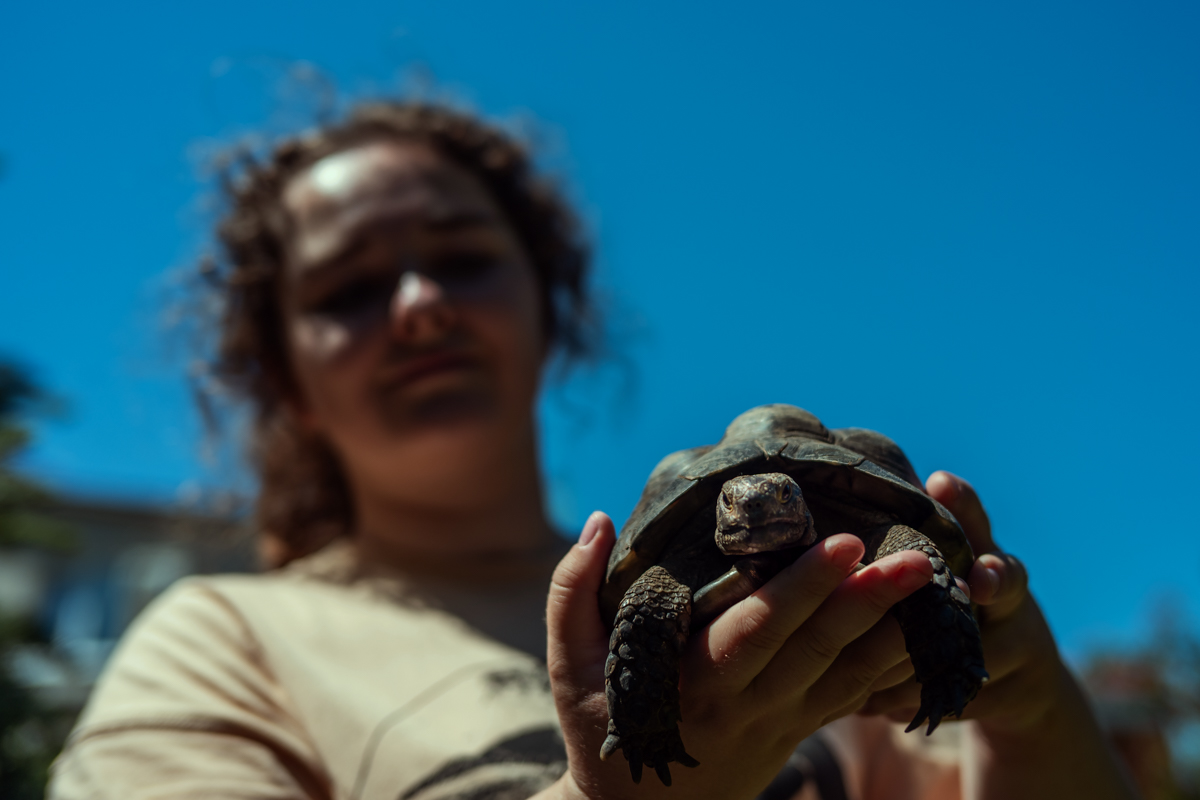 Mediterranean turtle subspecies NikolskyPhoto: Vigen Avetisyan for TD
- He loves strawberries very much, please give it to him... I’m so worried - how will he, a pet, get food in the reserve? Will you teach him?
“Instinct will teach you,” Lana reassured. - We are now in breeding season. Males do not eat for weeks at this time. And your boy will only think about girls.
“That’s why I’m letting him go,” Valentina Alexandrovna’s tears stand very close. “Although I became attached as if I were my own child.” He lived with me for eight years! At first I thought that he himself was a girl. He's handsome. That’s what I told him: “You are my beauty, you are my joy!” So it remains - Joy...
Valentina Aleksandrovna recalled how she, a nurse at a resort clinic, walked early in the morning from duty. And she saw a box running across the road towards her gate as fast as she could. We are used to turtles being sleepy and barely crawling, but this one is so nimble and rushes along. Valentina Aleksandrovna also quickened her pace - she opened the gate and let the sprinter in. And from then on I started running on my own: I flew home after work. She fed, bathed, remembered what the turtle liked and didn’t like. And she helped.
If the new pet needs to dig a hole in order to hibernate in it for the winter, Valentina Aleksandrovna will dig up the soil herself three times in the place that Joy has determined. The turtle begins to crack the first, still expensive, cherry with interest, and Valentina Aleksandrovna hurries to the market. If the pet likes the owner’s slipper, he will give it away too.
It all started with a slipper that closely resembled a turtle. Joy tormented him so much, pushed him so hard and brought out songs near his nose (Mediterranean turtles gently meow and sing in courtship games), that it was clear: without a mate, Joy would be lost. And then Valentina Alexandrovna had to move from Anapa to Novorossiysk - there was little space in the garden, the soil was rocky and there was not a single amphibian soul around... Joy had no hope of finding love.
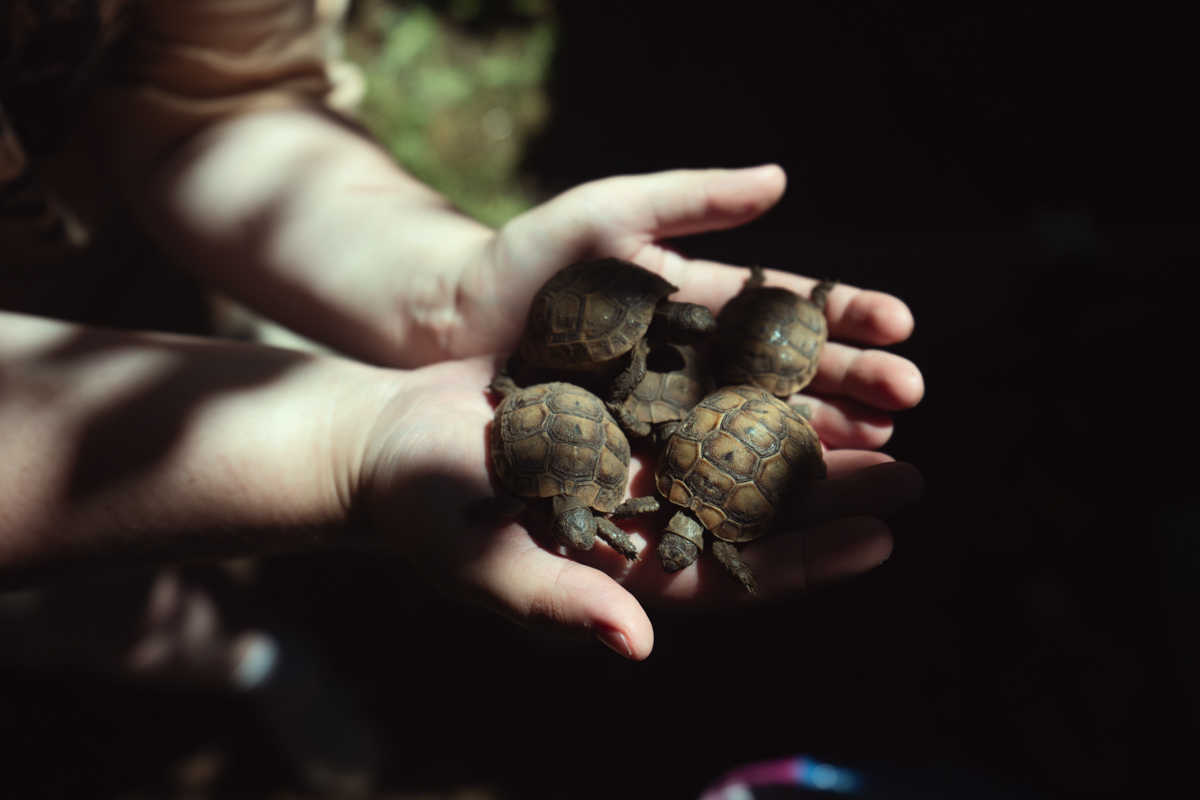 The turtles are in the hands of Evelina, Lana’s daughter. Evelina is studying to become a veterinarian and dreams of saving dolphins. Photo: Vigen Avetisyan for TD
“So I brought him,” Valentina Alexandrovna lamented.
And she asked and asked how he would be in Utrish, what dangers awaited him. Lana replied that the main thing the turtle would have there was freedom. Lots of sun, greenery and love.
- But he’s so attached to me! When I came home from work, he heard my steps from afar and greeted me! When he wanted to play, he bit his legs...
- Yes, they become attached to people and places. And they miss him, but over time he will get used to the new conditions. And good on you for taking such good care of him. But even more well done that they brought it to us. Such turtles should live in nature. They are the same age as dinosaurs. They lived in our area five million years ago. And we came to their territory.
Turtle harvest and its consequences
The question of how we came has tormented Lana all her life. The daughter of a Soviet soldier, she traveled half the country as a child: Sakhalin, Anadyr and, finally, Anapa. Here, in a protected forest, the then young Lana saw a live turtle for the first time. The girl was amazed by the fleet-footed tortilla herself and how her life worked. These turtles did not swim, during the winter they dug quite deep holes for themselves and went into hibernation, and in the spring they laid eggs and released hundreds of tiny turtles into the world.
Lana didn’t take a single turtle home then: she clearly understood that here, in the forest, they had the best possible life. And tearing a turtle out of nature is a crime.
Lana trained as an animal engineer-veterinarian. I was even planning to go to graduate school, but the nineties crept up. In science they didn’t pay money - Lana went into business, selling computer equipment. Despite the fact that veterinary medicine has not gone away: to hold someone over, treat someone, warm them up - you are always welcome. And then she and her husband bought a plot of land and began building a house. And it turned out that in their future yard, in the garden, amphibians had lived from time immemorial. We had to collect them in buckets and take them to a safe place, into the forest.
But the turtles walked and walked.
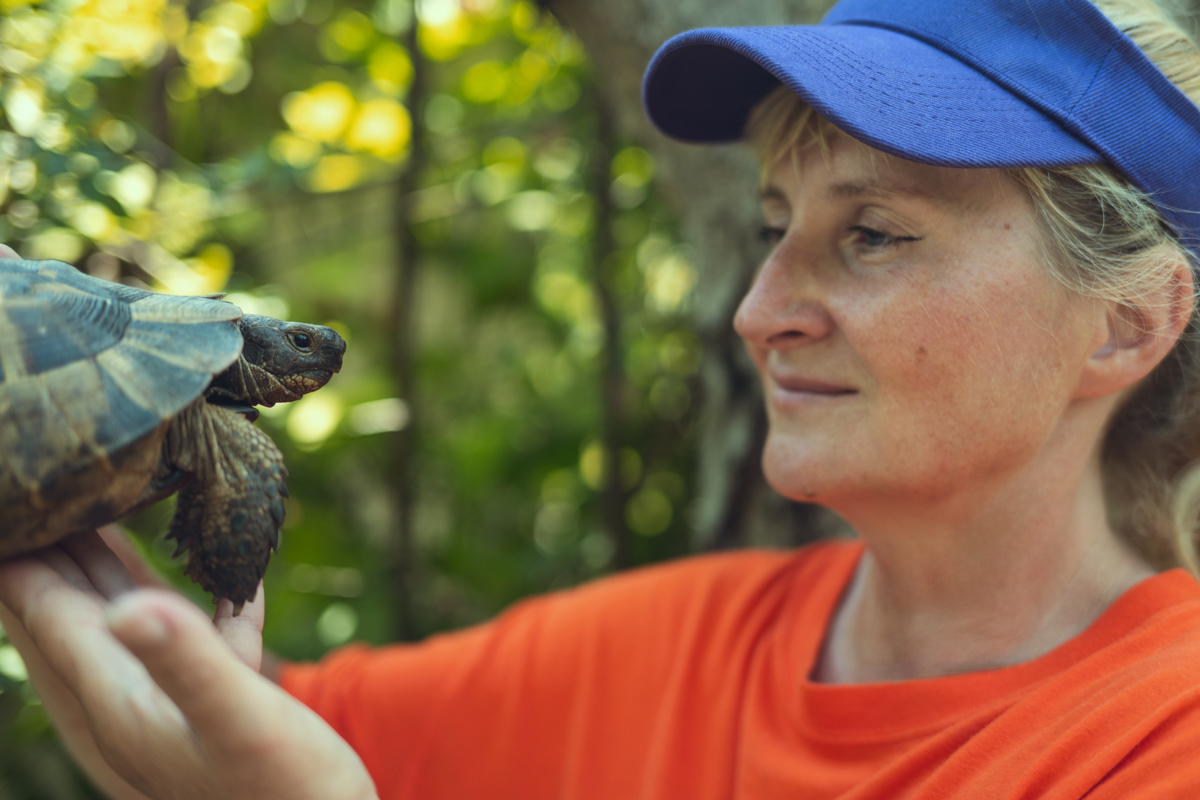 Lana and the turtlePhoto: Vigen Avetisyan for TD
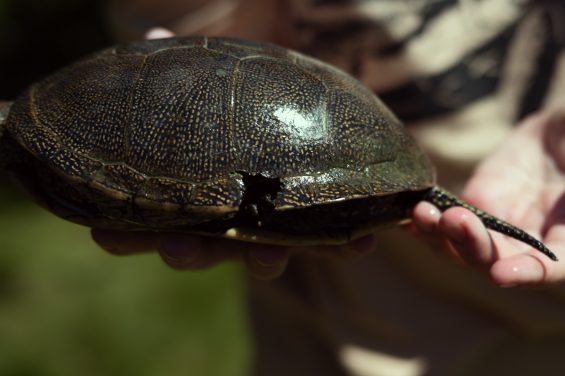
And then a large construction project began in Anapa, residential areas grew like mushrooms after rain. New roads and cars appeared - turtles kept getting run over and had to be treated more and more often. Lana had to develop a knowledge base on the anatomy and physiology of amphibians. Learn to perform operations, patch cracked shells, treat kidneys and colds. Word of mouth began to work, they began to bring her sick turtles: found or bought on occasion, with thinned or cracked bones, torn off paws, blind eyes... And when Lanin’s business closed, she completely went into turtles.
They learned about her work in the Utrish nature reserve. At first they helped and advised, and in 2018 they offered to conclude a cooperation agreement free of charge. The Turtleman Gurashkins were taken under the wing by Mark Pestov, candidate of biological sciences, coordinator of the Society for the Conservation of Amphibians and Reptiles. He also encouraged the family to apply for a grant to the Presidential Fund for Nature. For some miraculous reason, the Gurashkins won the grant. We launched a large educational effort and purchased additional equipment for the home hospital: postoperative boxes, a shadowless surgical lamp, and medications.
This was the first money the center received from the state. And indeed the first. Lana says they don't accept donations - her card isn't even linked to her phone. Why? He doesn’t want headaches: any funds running through the accounts will cause questions, and therefore problems.
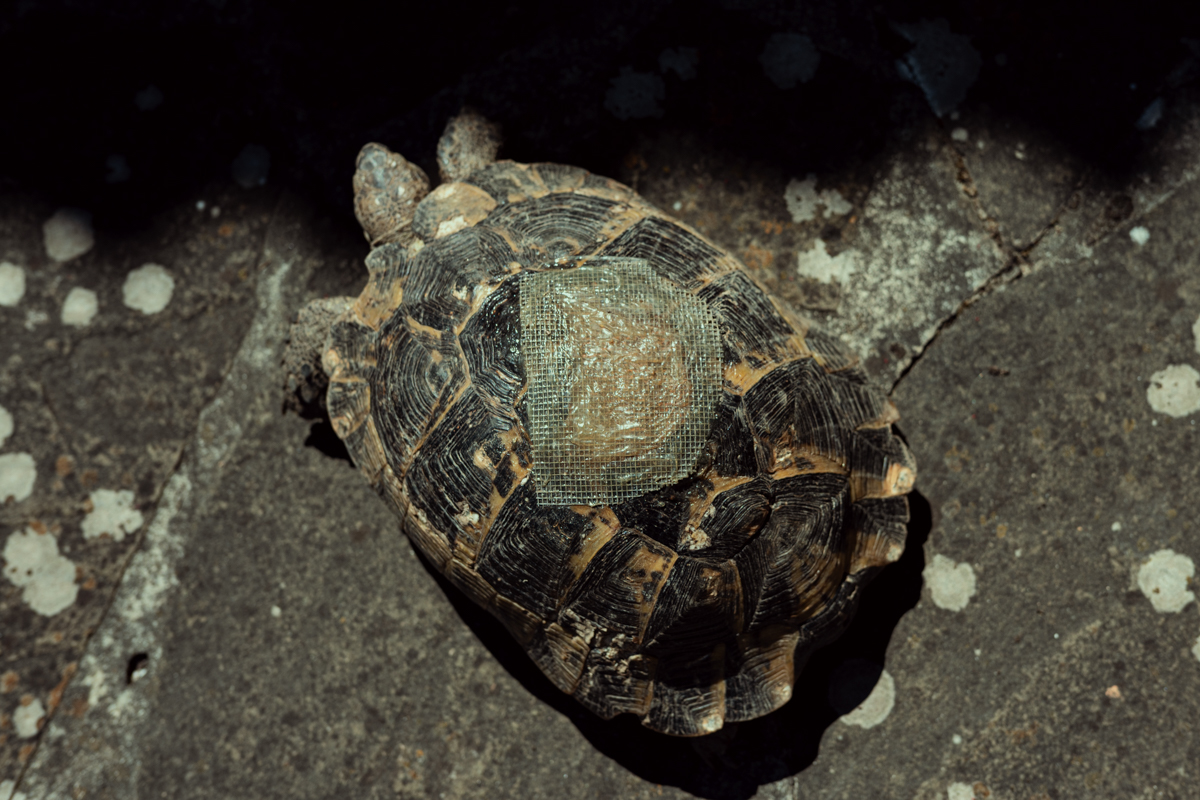 A patch prepared using a special technology (kept secret)
“And so they perceive us as animalistic,” he laughs.
—What do you use to feed and treat turtles?
— Our main concerns with them are in the warm season. Then I collect grass for the turtles every day. I buy fruits and vegetables while I don’t have my own. Then they themselves eat what falls from the trees and grows. And expenses... I have a programmer husband. He spares no expense on animals. What money is there - he assists me during operations when my daughters are away!
The Gurashkins have set aside part of the house for a reptile hospital. When they built it, they, of course, did not include such a division in the plan. But here, apparently, the turtle god intervened again - at the design stage he laid out both a separate entrance and windows facing the turtle garden. He also suggested to Lana what needs to be done for the wintering heaps for the amphibians remaining in rehabilitation - these are hills collected from river soil, peat and mulch (dry leaves or hay). Well, it would be nice to build a shelter for the turtles. And also organize a nursery, plant all the fruit trees necessary for food and add wild herbs to the plot: turtles vitally need colza, bean peas, clover and dandelions.
- And you did all this yourself?
- Not in a day, in years. But now we have good conditions for amphibians. So, Valentina Aleksandrovna, don’t worry! Now we’ll take a couple more individuals and you’ll see everything.
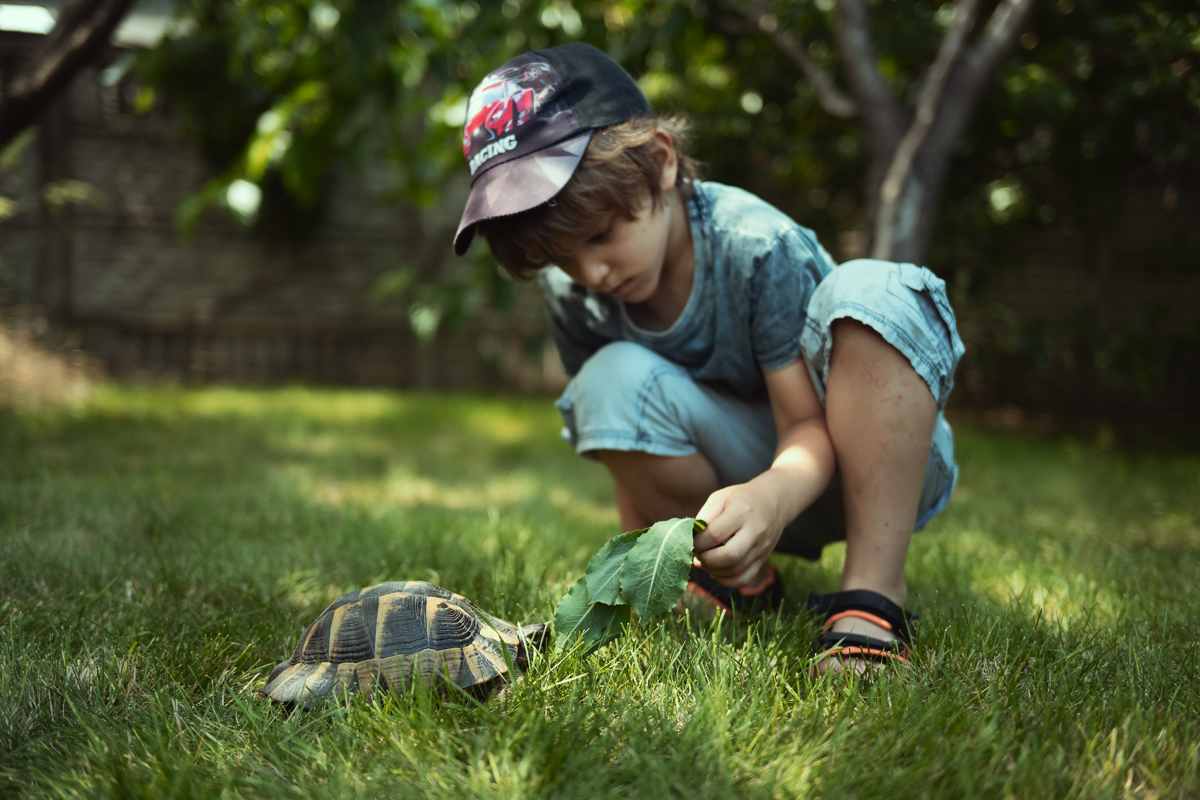 Lana conducts excursions where children can meet turtles. Photo: Vigen Avetisyan for TD
Not natural selection
The first turtle is given to Lana from a private home. The owner found her in the yard. As soon as the female appears near Joy, he almost jumps out of the box. The owner persuades the pet to take control of itself, but the male is deaf to the admonitions.
“I should upset you, but he will apparently break up with you easily,” Lana glances at Valentina Alexandrovna. “We’ll bring him another beauty now, but we have as many as fifty of them in our garden.” The guy will be busy."
In fact, in the next yard, not only a beauty awaits us, but also two boxes of babies. These are all the rescued children of Albina Karimova. Harvest of the last few days.
Albina lives in the village of Anapskaya. It is low here, warmer than above, and almost always humid. Turtle paradise. And when construction projects approached it, turtles began to die en masse - under the wheels of cars or at the hands of the people they wandered into. Albina is trying to stop this. In the early morning, when the turtles eat the dewy grass and crawl out onto the road, she collects them from dangerous places. And he passes it on to Lana. Large turtles are examined and taken to the reserve. And the babies need to be raised at home: their shell is very soft, and in the wild, turtles often become prey to predators.
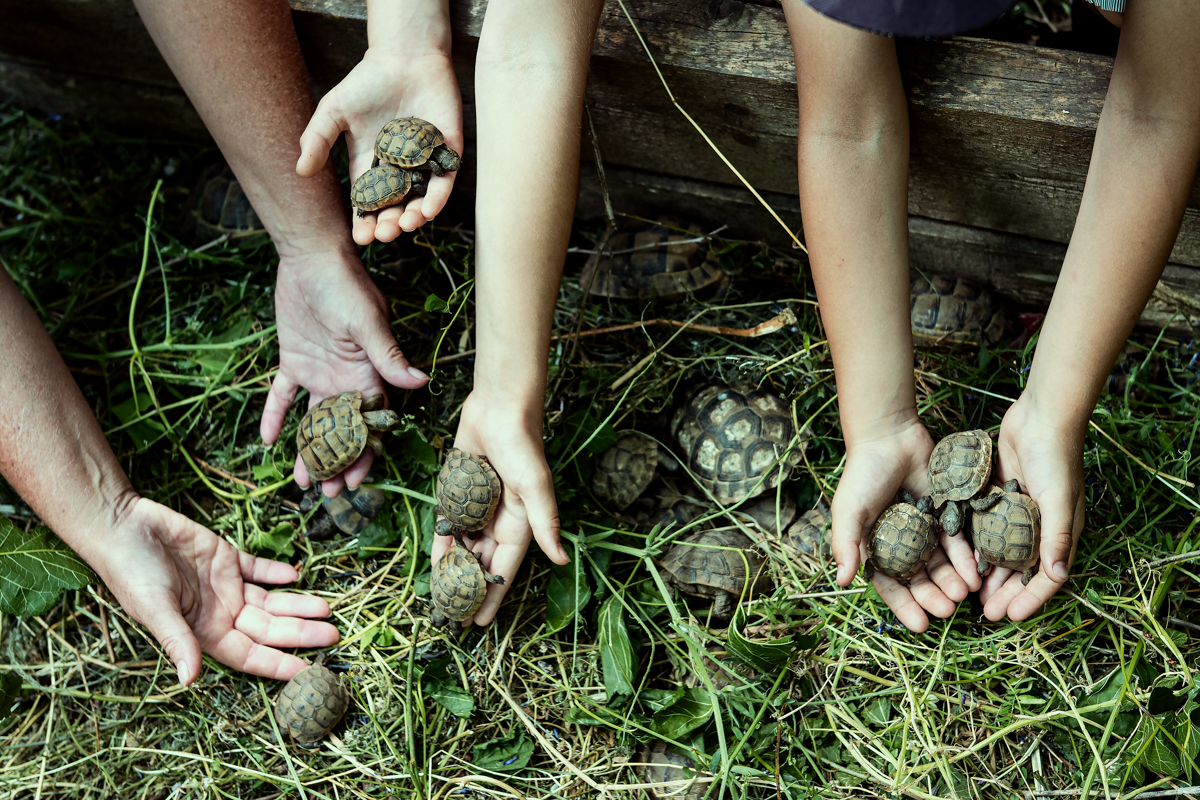 Little turtles in the hands of little excursionistsPhoto: Vigen Avetisyan for TD
Knowing Albina’s hobby, the neighbors bring turtles to her. Some, however, chuckle: they say that the matter is stupid, natural selection is taking place. Calm Albina explodes at these words: if a turtle was eaten by a hedgehog, this is natural selection, but if it was tortured or crushed by a person, this is not natural selection.
— Before moving to Anapa, we lived in the Urals. I worked in private security, I was on duty at the control panel. And I haven’t worked here for five years, I’m gardening and collecting turtles,” she says. - It happened by accident. In the first days after the move, I noticed that there were a lot of crushed turtles on the road. It was painful to watch. And when I found out that they were also listed in the Red Book, it was as if there was no choice. I have time, I have the opportunity - I need to help them. Now the turtles are coming! I don’t know what leads them to my yard. Maybe smells?
“Turtle god,” Lana jokes. - He brought you to Anapa.
“Well, yes,” Albina laughs. “We had never been here before we moved; we chose the place with our fingers in the sky.” And so they refused here.
— How many turtles have you saved in five years?
- Somehow I didn’t even count... In the first two days I remember exactly - 40 pieces. And then it was smaller, but I collected it almost every day during the season. Hundreds, right? Or to a thousand?
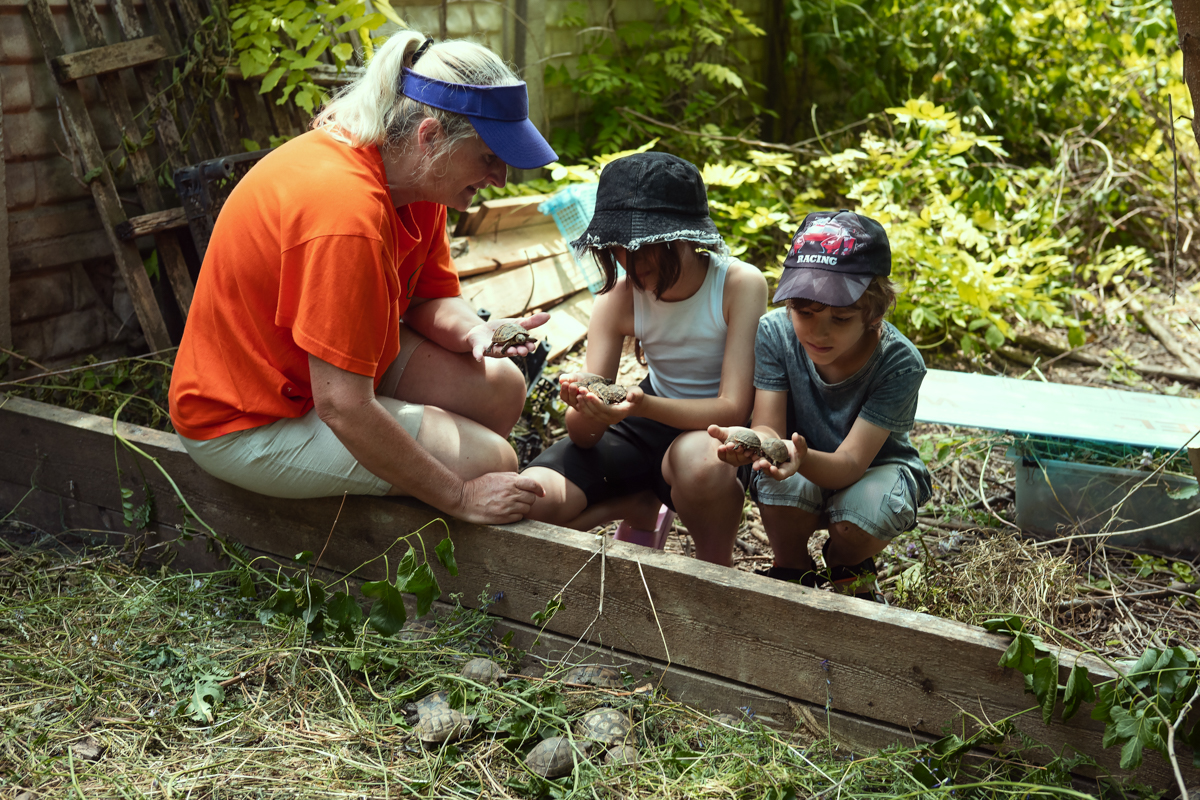 Children study small turtles with Lana during an excursionPhoto: Vigen Avetisyan for TD
The turtle can't cry
We are taking away two boxes from Albina. Lana hides them in the trunk, but Joy senses that something is happening behind his shell. They brought someone smelly and new and didn’t let me see it. Valentina Alexandrovna strokes him.
We are finally going to Lana's house. Everything there was as described: the garden was given over to a turtle shelter. Nikolsky's Red Book Mediterranean tortoises share territory with Central Asian tortoises - they are common and are often kept in homes. But people get tired of them too. They bring the sick and abandoned to Lana. And she is looking for good hands for these sufferers.
While we were looking around, Joy rushed from turtle to turtle, hitting each one with his shell, looking into their eyes. If he was ignored, he didn’t get upset: he ran over to someone else. In nature, Nikolsky's turtles walk about two kilometers a day. And Joy comes running all four.
“For now, I’ll at least make him a place to sleep,” Valentina Aleksandrovna says quietly.
And he begins to dig a hole.
* * *
And then the sun comes out.
The sun for Nikolsky’s turtles is no less important than proper nutrition: the rays strengthen the immune system. And no ultraviolet lamps can replace them - Mediterranean turtles raised in aquariums suffer from rickets. Pyramids rise on their shell, and this is very bad. Because the carapace (shell) of turtles is not a “removable house”, but fused ribs and spine. And these pyramids are curved bones that both ache and hurt. Moreover, the entire carapace system is penetrated by blood vessels and nerve endings. The turtle even feels the touch of grass. And when people scratch memorial inscriptions on the shell or drop the reptile, it experiences hellish pain. And turtles cannot be painted - this is guaranteed to lead to severe disability for the animal.
Lana doesn't like to talk about such cases. And they almost never write about abuse to their daughters on their social networks. Except that they lost it when a turtle covered in coins was delivered to the center. There were imprints of numbers on the shell - the reptile was used as an “amulet of happiness.” And when they had enough of playing, they threw them off the High Bank onto the rocks. A half-dead turtle was operated on at the center, the carapace was molded again - and then a miracle happened. The sufferer began to recover, ate well, became happier, and received a permanent residence permit at the rescue turtle. Such a crippled animal cannot be released into the wild.
— Together with the Utrish Nature Reserve, we conduct classes for schoolchildren, and at each one I hear: “We have a turtle living at home. We love her, she's part of the family." At the same time, the animal suffers. And I explain how. In addition to improper feeding, lack of protein and vitamins, such turtles cannot hibernate. Well, imagine being forced to sit on a chair night after night. This is torture. The nervous system and internal organs suffer, and metabolism is disrupted. The turtle feels bad, but he cannot tell you about his trouble, because he does not scream or cry. Therefore, you can show your love for your pet only by returning Nikolsky’s tortoise to nature. Bring it to us.
- What are the benefits of them for nature?
— I often get asked this question. And if you really want to, you can find the answer, indicate the place in the ecosystem. But I don’t understand why every animal has to justify its existence? There are so few Nikolsky turtles today that we have only one task left - to save them.
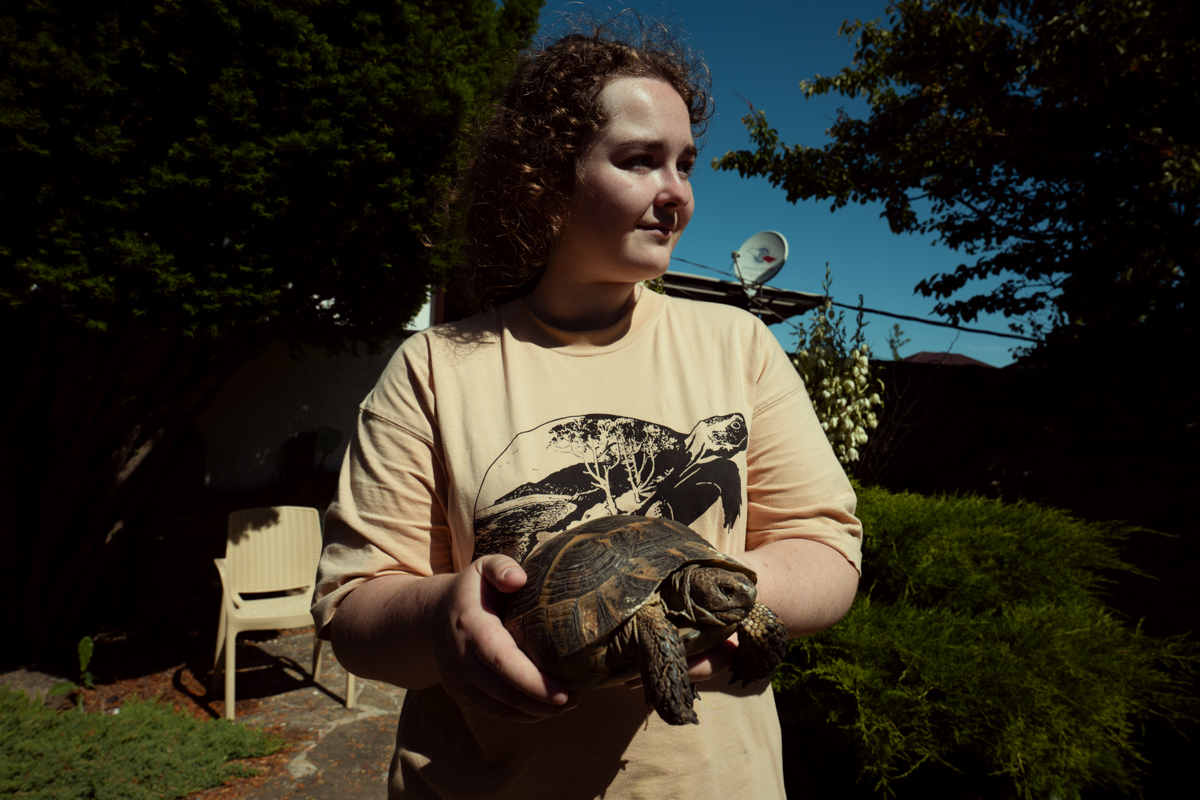 Evelina and the turtle Roza LvovnaPhoto: Vigen Avetisyan for TD
About imprisonment, flight and longevity
Every year, about 300 individuals are admitted to the Nikolsky Turtle Rehabilitation Center in Anapa. Those that stay for a long time receive names. Many have personal stories.
For example, Zechka. A favorite of the inhabitants of a colony somewhere in northern Russia. It’s a mystery where the little turtle came from in the zone. But she honestly spent the entire term with the owner. She went for walks in the green courtyard next to the church and ate grass grown especially for her by the prisoners. When her man was released, he decided that the accidental prisoner should also receive freedom. I found volunteers, they sent Nikolsky’s turtle to Anapa. She was already 40 years old at the time, but the prisoner’s rehabilitation went well and she received a second life in the reserve.
Another amazing story is about a flying turtle. If adult Nikolsky turtles grow to an average of 30 centimeters, then babies of the first year resemble a walnut. So the crow mistook the little turtle it found for a nut, brought it to its nest and flew away. The new tenant in the bird house did not like it and left. At first he climbed up, then he flew. Fortunately, the landing was soft: a man walked past the tree from which he was flitting. And he took the baby to the rehab center.
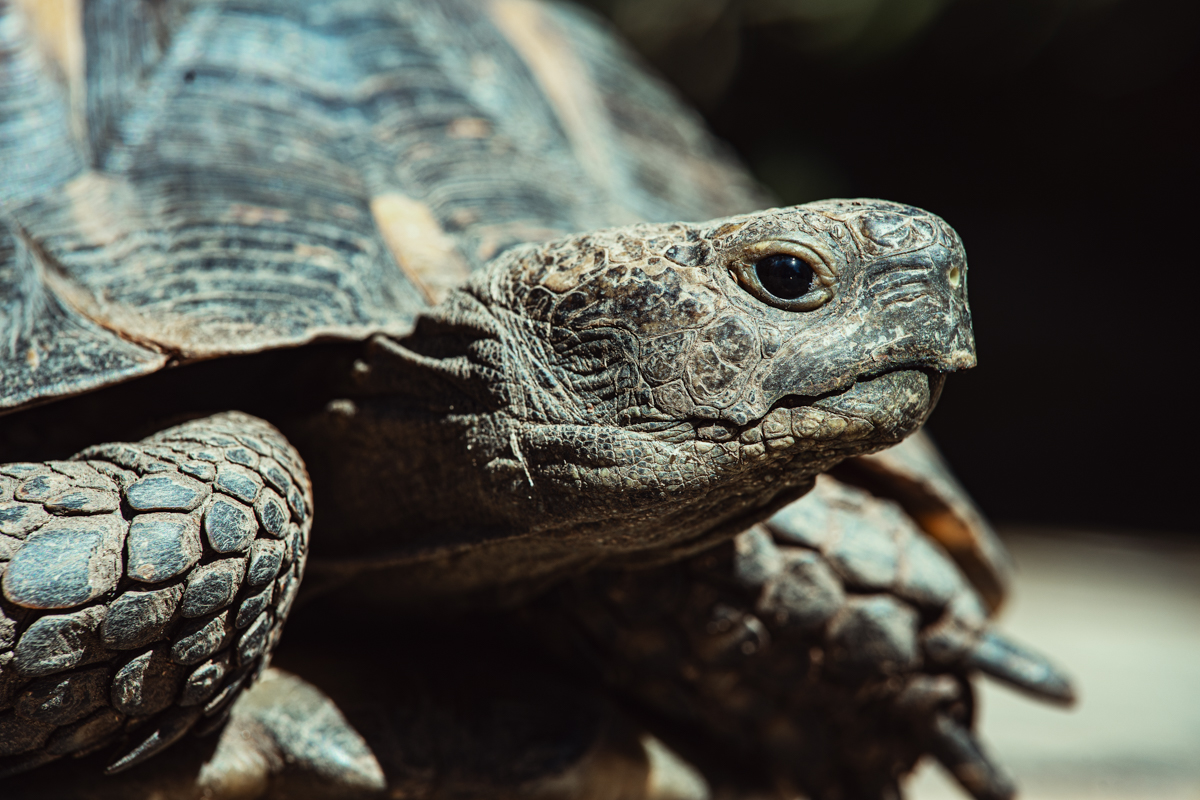 Rosa Lvovna. Mediterranean tortoise subspecies Nikolsky, Red Book tortoise. This is the oldest turtle, a long-liver. Photo: Vigen Avetisyan for TD
Well, the third story is about Rosa Lvovna. Nikolsky's turtles live on average 50 years. And Rosa Lvovna is already over seventy. She came to the Gurashkins after the death of her owner, and since she had become accustomed to the same yard for half a century, it took her a long time to adapt. And when she finally chose a place for herself and hoped that she would live like an old man, they began to build a hospital for dolphins next to her property. Rosa Lvovna was upset, but did not give up. Каждый день она приходит в свою солнечную Мекку, осматривает подслеповатыми глазами двор и укоризненно качает головой: «Ишь, чего удумали…»
И дельфины тоже
История с госпиталем у Гурашкиных сложилась тоже из-за черепах — центр спасения дельфинов «Дельфа» передал им найденыша. Лана приняла и сказала: «Если что, и по другим вопросам обращайтесь». «Если что» случилось скоро — люди нашли выброшенного на берег дельфина-азовку. Лана схватила чемодан скорой ветеринарной помощи и понеслась. На месте оказалось, что дельфин попал в рыбацкие сети, поранился, измучился — Лана его подлечила, и спустя девять часов красавчик уплыл.
Так семья спасателей черепах стала дружить со спасателями дельфинов. А закончилось все дельфиньим госпиталем — крытым бассейном с морской водой и лабораторией, которые построила на участке Гурашкиных «Дельфа». Он вот-вот откроется. И тогда сбудется мечта младшей дочери Ланы Эвелины. Девушка учится на ветеринара, занимается научной работой. Ее очень хвалят и отмечают особый талант. Лана не удивляется: дед Эвелины был хирургом, дома огромная медицинская библиотека — и семья надеялась, что Эвелина станет человеческим доктором. Но черепахи изменили все. А потом к ним добавились дельфины.
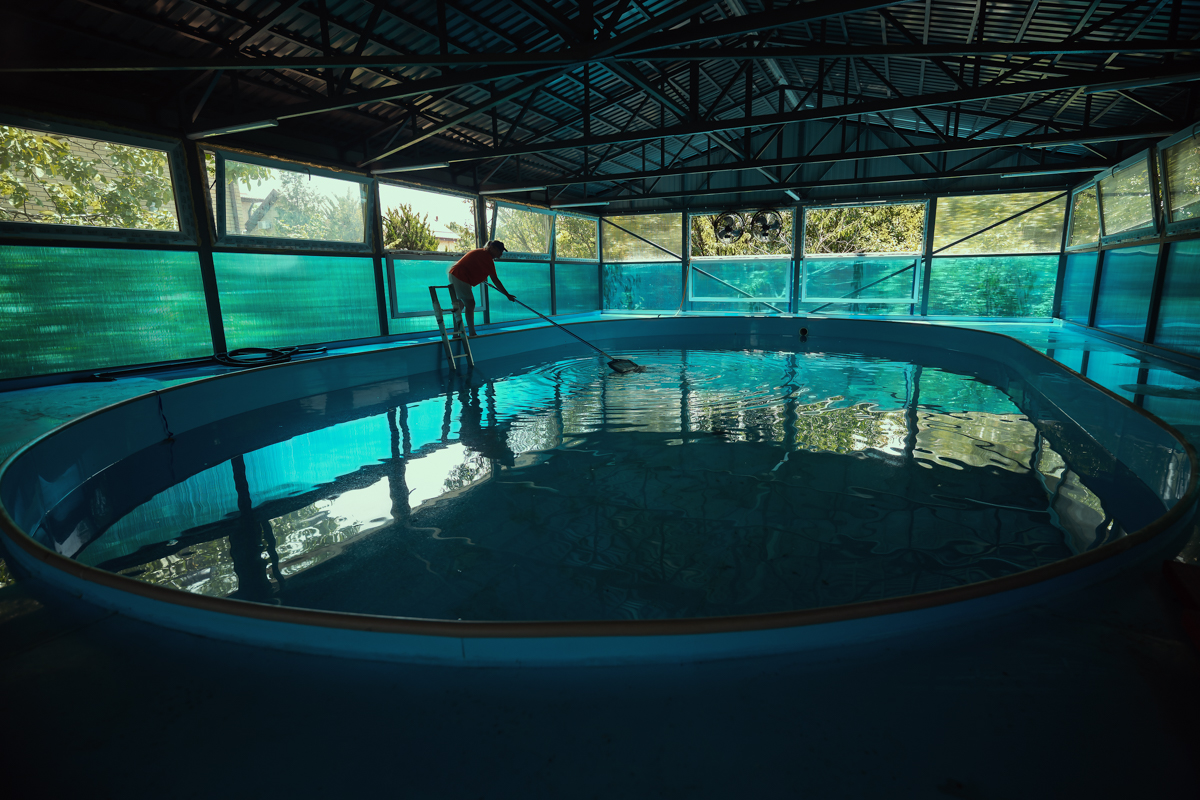 Лана чистит бассейнФото: Виген Аветисян для ТД
«Для Эвелины лечить дельфинов — это профессиональная планка, к которой она стремится. Необычная у нас девочка, какой-то совершенно “краснокнижный” человек», — рассказывает Лана.
Я же замечаю, что все Гурашкины краснокнижные. Старшая дочь, хореограф-балетмейстер Ангелина, во время выпусков земноводных после реабилитации тащит в гору на своих балетных плечах по пять коробок с черепахами. Притом что вес одной особи около трех килограммов.
У отца семейства, Константина, коробок в два раза больше. Лана тоже не отстает — и все это пешком, потому что машина в лесистых горах не проедет. Когда черепах много, к семье присоединяются добровольные помощники.
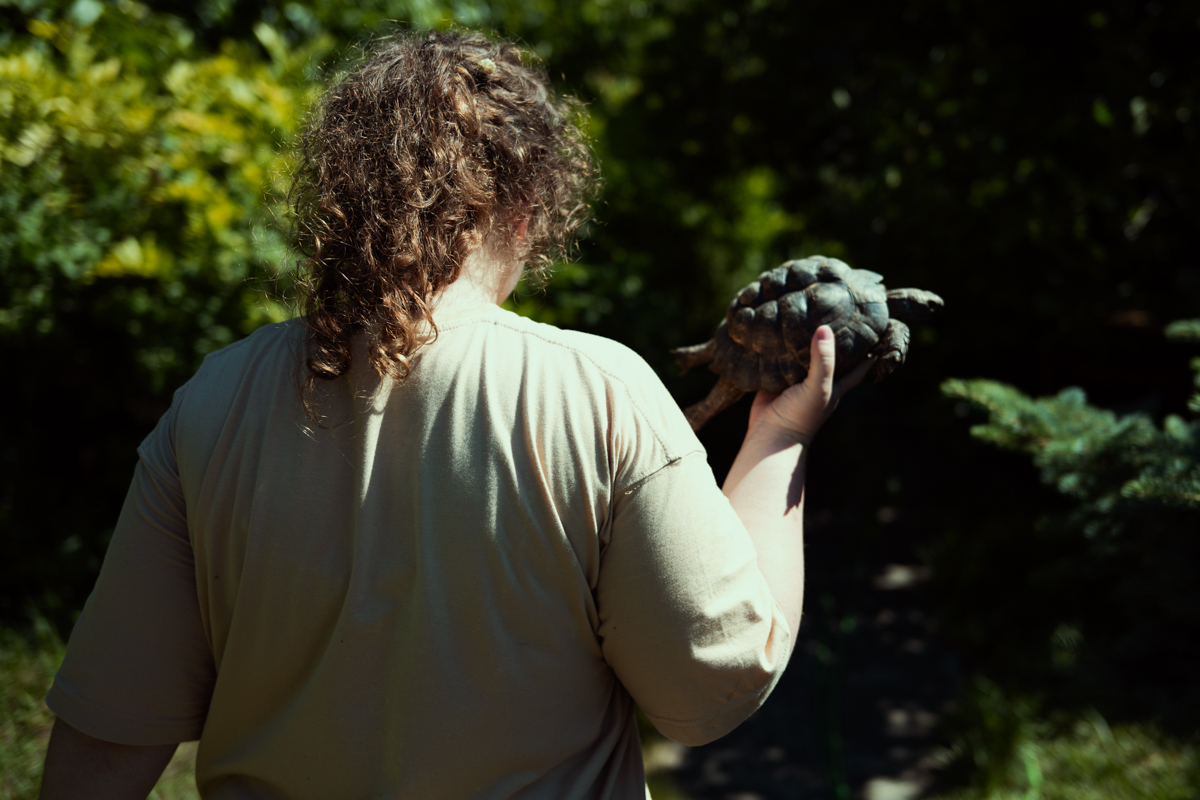 Эвелина несет черепаху в вольерФото: Виген Аветисян для ТД
— Меня поражают наши люди. Недавно я встречала в пять утра поезд из Москвы. Семья из Северодвинска была у нас на отдыхе, купили на рынке черепаху. Приехали домой и уже там поняли, что она краснокнижная. Оплатили ее доставку в Анапу! Или приезжала к нам на поезде черепаха Никольского, для которой выкупили целое купе. Так она и ехала — одна, в окружении фруктов и салатов. В дороге черепахи не едят, но вид и запах пищи их успокаивает. Кстати, меня часто спрашивают про черепаший суп.
— ?
— Да, так и говорят: варим ли мы из них суп? I answer. Во-первых, нам бы это и в голову не пришло. Во-вторых, для тех, кто так делает, — в наших черепахах живут паразиты.
— Но некоторые, я слышала, варят…
— Людей больных на побережье много. И к ответственности их, к сожалению, не привлечешь. Законы о защите краснокнижных животных есть, но они не исполняются. Мы тут бьемся, чтобы наших черепах на «Авито» не продавали, что уж говорить о другом. Надо распространять информацию, надо образовывать людей. И объяснять, что при таком отношении наши внуки это древнейшее реликтовое животное могут и не увидеть. А это как-то не по-человечески.
* * *
К концу дня, когда солнце подсушило траву, черепахи из своих норок вылезли. Радость между тем прошел первичное медицинское обследование. И получил хорошую выписку: лет ему (это считается по кольцам на панцире) оказалось 25, а весил красавчик 2,5 килограмма. Здоровье его у доктора нареканий не вызывало. Поэтому в ближайшее время черепаха уедет в настоящую жизнь. И конечно, найдет там любовь. И свободу.