
Translated material
Sixty-eight towels by Witold Gombrowicz: books of the week
What to ask at bookstores
Yuri Kulikov about Voinovich, Peter's tax reform and a previously unpublished novel by Witold Gombrowicz. As always on Fridays, the editors of Gorky read the most interesting new book releases of the week for you.
All of us, since February 24, 2022, have found ourselves in the face of advancing barbarism, violence and lies. In this situation, it is extremely important to preserve at least the remnants of culture and support the values of humanism - including for the sake of the future of Russia. Therefore, the editors of Gorky will continue to talk about books, reminding our readers that there is still a place for thought and fiction in the world.
Yuri Kulikov. Rock. Vladimir Voinovich: biography episodes. M.: Eksmo, 2026. Contents . Fragment

During his lifetime, Vladimir Voinovich did not bronze, did not climb on a pedestal and did not shake over manuscripts, but he left behind an archive: twenty-seven gray boxes, they are also “collected works in four bags” - something that the author himself treated in such a characteristic way for him, could not sooner or later not be useful for composing his portrait against the background of the era. The same characteristic characterizes the physiognomy of the book’s hero, who always preferred the particular to the general, precision of detail to big words, humor and common sense to pathos, and therefore it is not surprising that both the Soviet regime and the cult of Solzhenitsyn aroused equal disgust in him. Voinovich's political position is inseparable from his style of writing; he was primarily motivated not by an abstract idea, but by the impossibility of reverence with a serious face where a normal person would inevitably laugh. Irreverence, elevated to a principle, has yielded such abundant results that when today you re-read “Chonkin,” published at the end of the USSR in a monstrous, by today’s standards, multimillion-dollar circulation, it takes your breath away - for something like this in our time and in our steppes, without much thought, it’s scary to think that (and the author, back in the dark years, dragged this manuscript to the “New World”, they studied it there and politely replied that, well, excuse me, somehow it doesn’t suit us very well!). In general, a real transgression, like Genet and Bataille.
“After the collapse of socialism, Voinovich was asked whether it was possible to write satire in modern Russia. He confidently answered: perhaps. "The Soviet Union was a giant mental hospital," he explained, but an organized mental hospital. And now the patients were told that everything was allowed to them."
Manvir Singh. Shamanism. Ancient religion in the modern world. M.: Alpina non-fiction, 2026. Translator from English Olga Chueva. Content
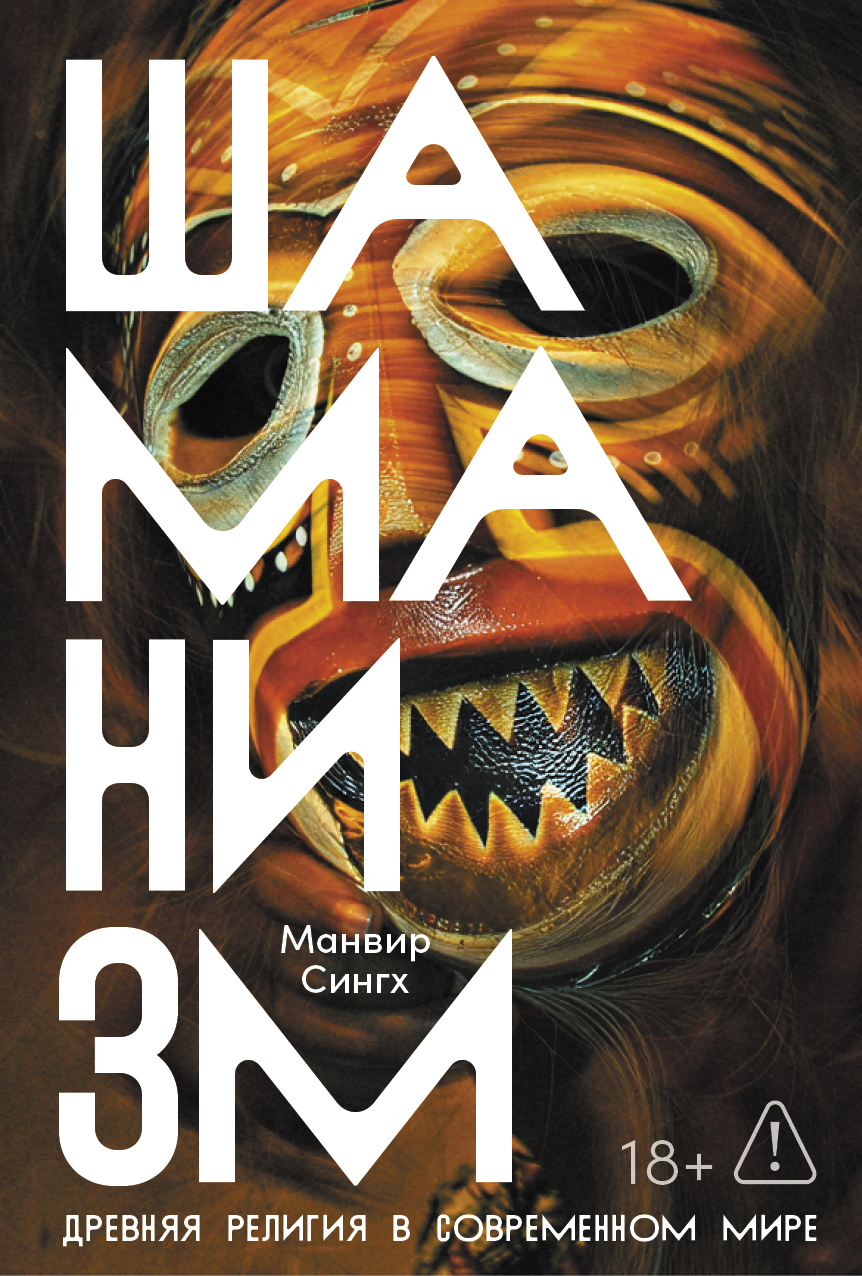
Shamanism is often perceived as the spiritual cradle of humanity and is associated with the so-called beliefs of primitive peoples. Anthropologist Manvir Singh calls this view the “Pokémon theory of religious history”: they say that shamans, like Squirtle or Bulbasaur, are an evolutionarily early form of servants of the supernatural, which were replaced by more advanced priests, bishops and ayatollahs. As you might guess, Singh himself adheres to a completely different point of view, seeing behind shamanism a complex of practices and ideas inherent in human nature as such and therefore having a “timeless” character.
To justify this view, the researcher divides the story into two parts. The first is devoted to fieldwork in Indonesia, where the author lived among the Mentawai people, studying their witchcraft and healing practices. This is the most ethnographic and interesting component of the book, where much attention is paid to the performative side of the shamanic profession. The second “traces the paths of shamanism through centuries and social contexts.” And this is where the problems begin.
Warning the reader against the convergence of distant truths, Singh himself finds analogues of shamanism in rather unexpected phenomena. For example, financial analysts who make predictions about market dynamics turn out to be the same shamans in this perspective, since they help their “flock” cope with uncertainty and subjugate the future with the help of specific rituals - okay, this analogy is funny. But when the author, for example, points out that the biblical prophets, Jesus and the Apostle Paul are also a kind of shamans, well, then you begin to doubt his ability to give clear definitions and distinguish the essential properties of phenomena from the properties of secondary ones.
“Asset managers are not the only pseudo-experts of this kind. Sports commentators, political analysts, economic forecasters - society is teeming with actors who dress up in impressive and convincing costumes to convince an anxious public that they can guess the future. When my friend Sandeep told my brother Sanjeev about this similarity, he jokingly dubbed them “hedge wizards.” This term connects the mystical with the mundane and accurately captures the essence of reinsurance decisions on which so many superstitions rest. That’s what I’ll call them: hedge wizards.”
Evgeny Anisimov. Collected works in ten volumes: T. 4. Tax reform of Peter I. Introduction of the poll tax in Russia 1719–1728. M.: New Literary Review, 2026. Contents
An outstanding specialist in the history of Russia of the 17th–18th centuries writes about a seemingly boring event from the era of Peter I - the tax reform. It would seem that we are talking about the technical replacement of one method of collecting taxes by another: instead of the yard, the “male soul” becomes the unit of account. However, as the author clearly demonstrates, this innovation resulted in a major social restructuring. The state learned to count people differently - and at the same time it began to distribute responsibilities differently, consolidate dependencies, draw boundaries between classes and control the movement of subjects.
Anisimov reconstructs in detail the course of the reform: from the crisis of the household system and the development of new projects to the census, audit, and the fight against concealment and escape. Early imperial Russia appears as a huge accounting machine that stumbles, contradicts its own instructions, conflicts with local customs, but ultimately changes the life of the entire country.
Therefore, the main plot of the book is connected not only and not so much with the money that the state needed to fight, but with the price that society paid for turning the population into an object of regular registration. And the price turned out to be high, since the capitation tax, according to Anisimov, fits into a number of institutions that gave Russia in the 18th century recognizable features - serfdom rigidity, military-police logic of management and the habit of seeing a person as a unit of duty.
“...it is necessary to take into account that not every peasant, often burdened with a family, could flee to Siberia, the Don or abroad. Not every fugitive wanted to get there. As is known, a huge number of fugitives settled in the interior of the country, in palace, synodal, landowner estates, and on state lands. Here the fugitives started families, relatives, settled down, paid taxes “in equality” with other peasants - in a word, they “grew” to new places. The evidence hit these peasants the most painfully. For them, both the transfer to the previous owner and the removal were a real disaster.”
Witold Gombrowicz. Obsessed. St. Petersburg: Azbuka, 2026. Translation from Polish by Irina Adelgeym
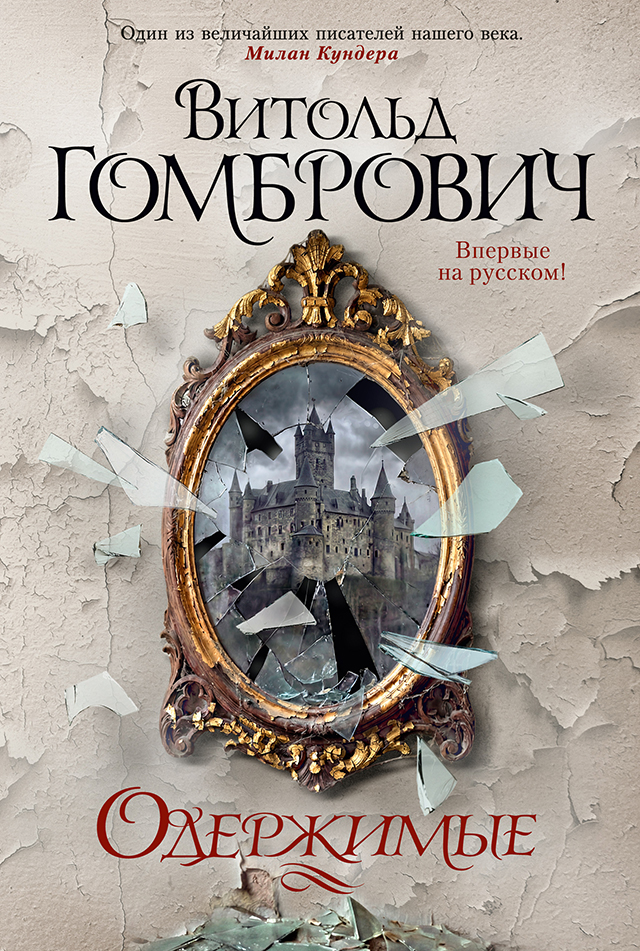
“Ferdydurke”, “Space”, “Pornography” and an impressive volume of the Argentine diaries of Witold Gombrowicz are very good. What do you think of the previously unpublished novel in Russian, “The Possessed” (not to be confused with the work of the same name by Albert Camus)? A very good novel. Even if it was written in the genre of pulp literature. One can only envy the historical sense of the great Polish modernist, for whom this novel became a ticket to the ship of eternity (that is, across the Atlantic). And then back.
The premise is this: young coach Marian Walczak goes to the Polyka estate to visit the talented tennis player Maya Ocholowska. On the way, he sees the strange Prince Golshansky, who is frightened by something, reads someone else’s letter from Maya, and then at the estate he discovers that he and Maya not only play tennis equally frantically, but are generally frighteningly similar in some way. Nearby looms Mysloch Castle - the dilapidated lair of a crazy, dying family.
No matter what anyone thinks about Slavic modernism, this novel - piercing, precise, strong - of course, was not translated into Russian for nothing: Gombrowicz himself called it “reading material for cooks.” This is why this publication is valuable, combining in itself all the intentions that the author put into it, as much as he hated the philistinism and despised it. The most astute reader will find in this book a hanging stick, from which a large tree of Gombrovian prose will then grow, similar to an absurdist sparrow.
“Convincing that Grzegorz was now downstairs, he opened the heavy door of the old kitchen and, crossing the threshold, stood for a long time, carefully watching from afar the towel, which in the light of the lantern trembled and vibrated - monotonously and convulsively. Then Kholyavitsky looked around the room with the beam of his flashlight and tried to overcome the strange disgust that this place evoked in him. And then suddenly he was afraid that he was standing like that and listening to who knows what.
“I’ll end up going crazy too,” thought the secretary.
He crossed several adjacent halls and found himself in a room prepared for the professor. Grzegorz had already made the bed there and placed a small table, a washbasin, a lamp, and a jug of water. Kholyavitsky took the lamp, carried it into the old kitchen, placed it on the table... and again froze for a moment, listening.”