
Translated material
About breaking and breaking
Once again about the “publishers’ case” and about Pavel Ivanov, who was given a prison term

Photo: Anatoly Zhdanov / Kommersant
First a few quotes.
QUOTE ONE
“The then editor of the magazine, a prominent Trotskyist Alexander Konstantinovich Voronsky, treated me extremely attentively, wrote several laudatory reviews of my literary work and introduced me to the main circle of writers grouped around him...Voronsky was closely associated with writers Vsevolod Ivanov, Boris Pilnyak, Lydia Seifullina, Sergei Yesenin, Sergei Klychkov, Vasily Kazin. Somewhat later, Leonid Leonov joined Voronsky’s group, then, after writing “Duma about Opanas,” Eduard Bagritsky...
Voronsky at first pointed out to me and other writers that we are the salt of the Russian Land, tried to convince us that writers can merge with the masses only in order to draw the stock of observations they need. But they can create in spite of the masses, in spite of the party, because, according to Voronsky, it is not writers who learn from the party, but, on the contrary, the party learns from writers...”
QUOTE TWO
“...back in 1919 I became a member of the Writers' Union, which united writers of the same sentiments as I had, that is, people entrenched from the revolution...In the fall of 1922, a number of writers were invited to Moscow by telegram from Kamenev. Kamenev suggested that we organize a writers' association, a publishing house and an almanac. In a conversation with Kamenev, essentially speaking, no political demands were made to us; we were made independent owners in the publishing house...
After some time, the first organizational meeting was held in Kamenev’s office, at which instructions were given that we could write and print anything. The main task of the writers' artel was to gather around itself all the newly arriving writers. The actual leader of the artel was the then editor of Krasnaya Novi, Voronsky. Our counter-revolutionary aspirations, in particular mine and Zamyatin’s, completely coincided with Voronsky’s sentiments and his literary philosophy.”
QUOTE THREE
“I believed that it was my civic duty to give truthful testimony against people who, strictly speaking, were and are probably now engaged in anti-government activities, violating the Constitution of the Russian Federation. Back in 2023, I spoke in the State Duma about this, asking for the government to introduce censorship of book products, and now I believe that this is necessary. Therefore, there is no pressure, this is a conscious act. I believed that it was necessary to identify people and give all the necessary information to the investigation!”
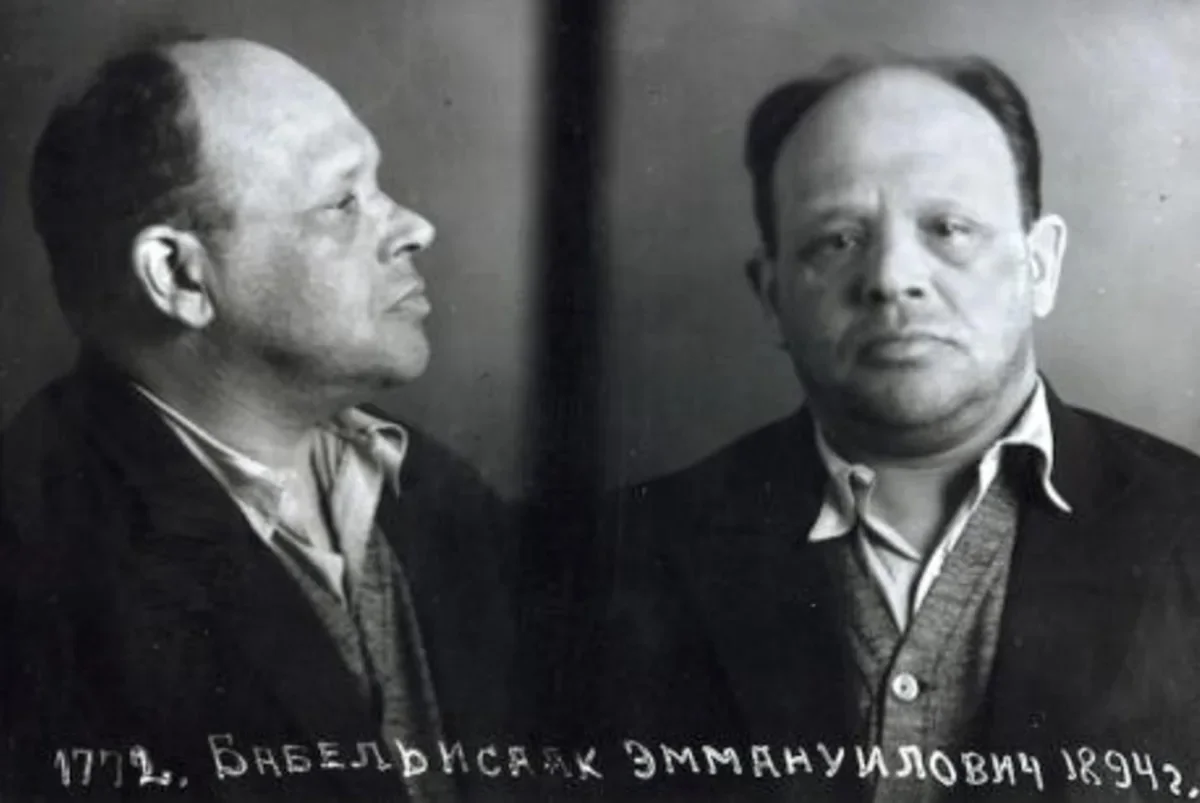
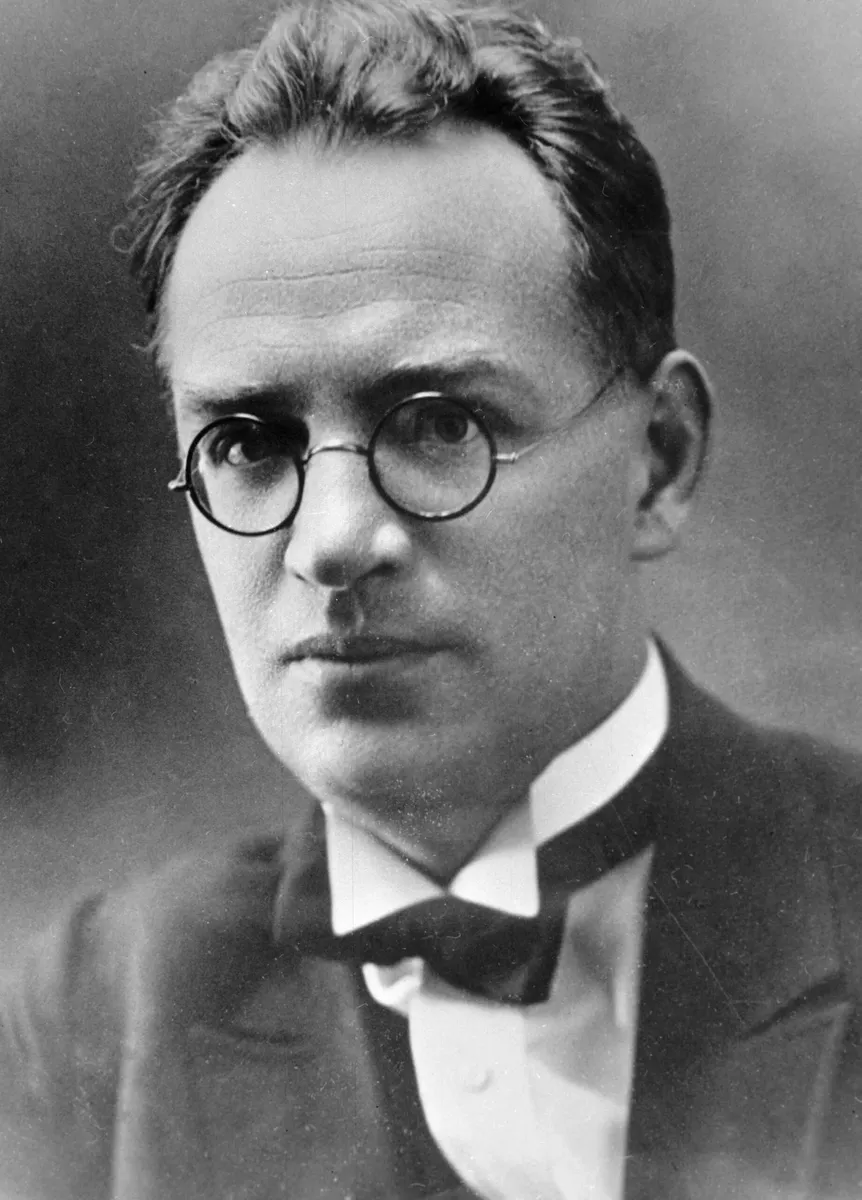
Does it really look like it?
- The first quote is from the interrogation protocol of Isaac Babel .
- The second is from the interrogation protocols of Boris Pilnyak .
- The third is from the testimony of the former sales director of the publishing house Popcorn Books Pavel Ivanov (quote from Mediazona*).
Babel was arrested in 1939. Pilnyak - in 1937. Ivanov was arrested in 2025. A little more than a decade was not enough to reach 100.
I just want to say: nothing changes. What we seem to have left forever, we come to. Well, yes, now it’s not the 37th, now it’s the 26th, softer, who would argue, but!
In fact, some things are, of course, changing. Technologies, regimes, weather change. People change. Only the methods of operation of the repressive machine remain unchanged. It is not enough for her to condemn, it is not enough for her to physically torture a person. It needs to be broken, to take the person out of a person, so that only the shell exists, and the personality does not live.
Let me remind you that the defendants in the “publishers case,” which arose a little more than a year ago, are accused of organizing the activities of an extremist organization using their official position (Part 3 of Article 282.2 of the Criminal Code) (“an extremist organization” in this case is a “LGBTQ movement” banned in the Russian Federation and, according to experts, a non-existent**). According to investigators, from November 2023 to September 2024, the defendants published and sold books, including the ill-fated bestseller “Summer in a Pioneer Tie,” after the publishing house had formally withdrawn them from sale. Thus, they allegedly involved readers in the activities of a banned organization.

That is, scribes were accused of selling books.
“It should be emphasized that the books themselves are not prohibited, and the Eksmo publishing house was not held accountable for “LGBT propaganda.” Nevertheless, the prosecution believes that such actions are not an administrative offense, but a crime,” notes lawyer Maxim Olenichev*, who was quoted by the First Department*.
“This political criminal case is aimed primarily at censoring the book market and intimidating publishing houses that publish literature that is not approved by the state,” -
Olenichev emphasizes, and it’s hard to disagree with this.
But in this case, besides the obvious absurdity, there is something more. His deliberate demonstrativeness. The case appeared a year and a half after the “international LGBT social movement” was recognized as an “extremist organization” (Supreme Court decision of November 30, 2023) and a month after a series of searches in the country’s best independent bookstores, where literature was seized that was suspected of “involvement” in LGBT and feminism.
Until that time, the punitive authorities had not particularly affected the book sphere: even administrative cases were still rare (in 2026 this is already a common occurrence). Undesirables were not allowed to attend festivals, their performances were disrupted - yes, this has already happened. It's unpleasant, but survivable. Apparently, it was necessary to show the stubborn and slow-witted that the laws should be taken seriously and not keep any figs in your pockets.
And even the comparative leniency that the court showed towards the defendants (they were sent under house arrest, not to a pre-trial detention center) is also demonstrative. It was as if they showed us who is in charge here, who makes the decision to execute or pardon.
The practice of show trials is an old invention. In Soviet Russia, Lenin even called for them to be carried out so that it would be discouraging. This is how many trials against the clergy were organized. In 1922, the right-wing Socialist Revolutionary trial took place, which became the direct predecessor of Stalin’s show trials. Under Stalin, this practice flourished. It is not for nothing that after the trial of Pavel Ivanov, many remembered the “Moscow trials” - three open trials in 1936-1938 of former senior functionaries of the CPSU (b).
A show trial always has a dual function: punitive and propaganda. In the “publishers case” both are present - it is necessary not only to punish, but also to show .
Well, the show achieved its goals. The frantic cleaning of bookshelves began precisely with the “publishers’ case.” Then they did everything themselves, no one needed pushing, everyone became understanding. They didn’t even spare Lenin - they included him in one of the censorship lists for being “opium for the people.”

But after the quick, one-day, shameful trial of Pavel Ivanov, fear turns into horror.
I will not retell his testimony; Mediazona did this exhaustively. I am far from condemning or justifying Ivanov and I am glad that he was given a suspended sentence (four years) and the man will not end up in a colony. I hope that those whom he mentioned will also pass from this cup.
The point is different. Why did the “publishers’ case” initially cause such a stir? After all, this is not the first repressive act, and it seems milder than others. What's special about it?
The fact that this matter affected ordinary people. When the state persecutes its opponents - oppositionists, public figures who have opposed the government for years - this is bad, but understandable. When a country at war suppresses pacifist sentiments, this is bad, but logical. When an authoritarian government does not allow any dissent, this is bad, but familiar.
But when ordinary citizens are imprisoned, everyone becomes scared. Because it is unpredictable and irrational. Because there are few oppositionists, but there are many ordinary citizens. We are all ordinary citizens.
And after the “publishers’ case” it became clear to all of us that they could come for anyone. It finally dawned on us that the repressions are indiscriminate, that this machine can mow down anyone. We realized that from now on we are not protected by anything - neither by law, nor by morality, nor by justice. Whether you are guilty or innocent, you are still in danger. Here's how it works.
However, there is no such thing as too much fear. The point is that we are not just witnessing another repressive and completely unfair case. We now know what the system can do to a person. We didn’t just listen to the verdict, we saw a broken, crushed man, feverishly trying to survive - yes, at the expense of others. They showed it to us in every detail.
This is the real horror.
We don't know what they did with Ivanov. Maybe nothing. Babel and Pilnyak were broken much more harshly, but we don’t have the 37th, do we? However, just the realization that you could be put behind bars for many years can cripple a person.
By the way, Eksmo’s quick response is also an example of extreme intimidation. What needs to be done so that the publishing house itself emphasizes that its censorship is the best in the country? I quote from the official statement of Eksmo: “We especially emphasize: our internal regulations for multi-level verification and examination of book products are standard and are recognized as exemplary in the entire book industry.”
The creepiest thing is this. When we read a stream of news about the latest arrests and trials, we do not relate these events to ourselves. We sympathize with those arrested, we are outraged by those who arrest, but we look at these events as if from the outside. It’s like with shelling: we are horrified by images of bombings, we ardently empathize with the victims and injured, but when air defense starts working in close proximity to your home, the sensations become completely different.
It is very scary to fall into the millstones, but it is worse to be ground by them. And this probability, unfortunately, is no longer equal to zero for anyone.
In one of his lectures, Dmitry Bykov* once put two phrases side by side. One statement is a quote from Nadezhda Mandelstam: “You should ask questions not from those who broke, but from those who broke.” The second is from Fazil Iskander: “Those who didn’t break were broken badly.” “This is cruelly said, but accurate,” said Bykov.
Now we can evaluate the accuracy of these phrases ourselves.
SEE ALSO
Books are banned in Russia
Books by “foreign agents” are being withdrawn from sale, lists of “extremist literature” are rapidly expanding, new requirements of anti-drug legislation oblige Russian and world classics to be labeled with toxic labels.
It became known that the Ministry of Culture is creating a special repository for “destructive literature” on the basis of the Russian State Library named after Lenin.
You can follow the repressions against books by periodically looking at the page of the Novaya Gazeta special project “Fahrenheit List” . Here, the authors of the culture department catalog books banned in the Russian Federation and their authors with easy navigation and search.