
Translated material
I'm heading into the storm
Can a weather forecaster win a war? About the British-French historical drama "Pressure"

Still from the movie "Pressure". Source: kino-teatr.ru
The film Pressure, a British-French historical drama by Anthony Maras (Hotel Mumbai) based on the play of the same name by David Haig, has been released in Russia. The military epic accumulates in the headquarters rooms, the fate of the world is decided with the help of a barometer and weather charts and spills out onto the coast of Northern France.
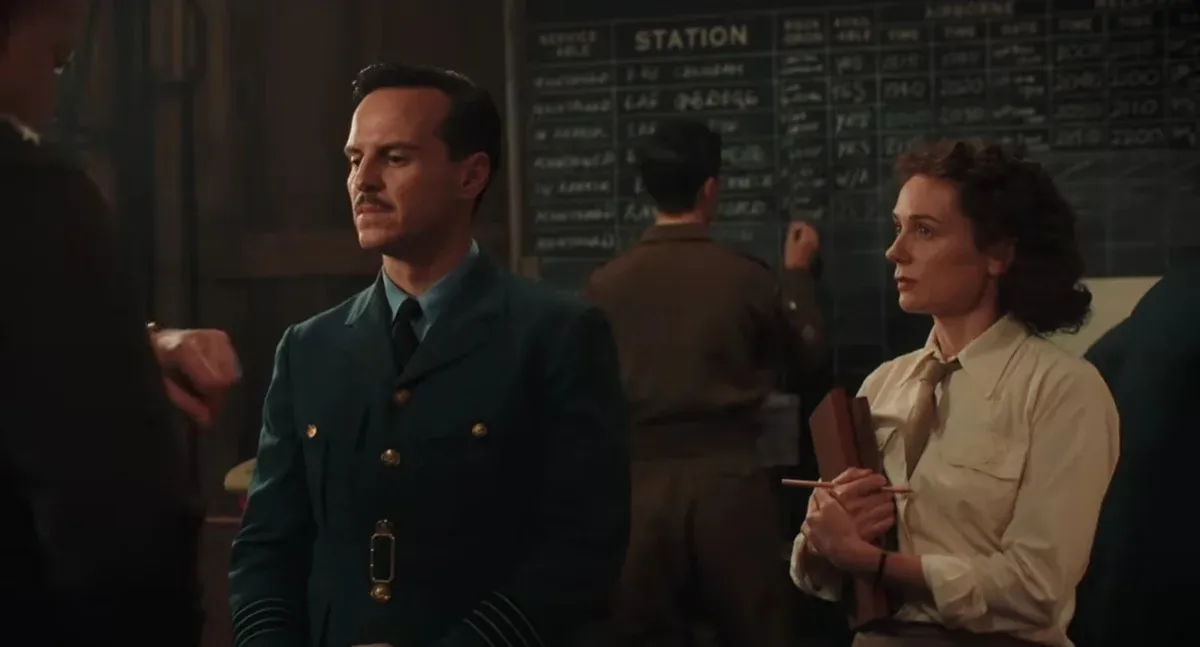
The plot of the film focuses on the critical 72 hours of June 1944. Operation Overlord (the landing of the Western allies in the anti-Hitler coalition in Normandy) is completely ready, there is no time to hesitate - the enemy can regroup and fight back. 156 thousand soldiers, including 24,500 paratroopers, are ready to land. However, the leading Scottish Allied meteorologist, Captain James Stagg (Andrew Scott), arrives at the headquarters of Supreme Commander Dwight Eisenhower (Brendan Fraser), who, relying on complex analytical calculations, comes to a disappointing conclusion: on June 5, the originally scheduled D-Day, not only will rain, but also a monstrous storm with three-meter waves that will destroy the landing party. This cracker and upstart doesn’t care that the sun is hot outside the window and there is no wind. That his expert opinion infuriates the high command: “We must wait to destroy the landing?” This seems tantamount to admitting one's own helplessness. In addition, Stagg’s point of view is categorically not shared by the American meteorologist and Eisenhower’s longtime adviser Irving Crick (Chris Messina). A charming wit who carefully studies maps and weather graphs of different years, but in the end draws conclusions... which his superiors expect from him. This line makes the story more than relevant: “Pressure” reflects the political climate of the modern “post-truth” era. Public opinion is not formed by expert knowledge, even facts are questioned by default, and news flows from TV screens and monitors through the filters of ideological attitudes and stable semantic frameworks - frames.
In addition, no one at headquarters likes Stagg: he is inconvenient, unsmiling, uncommunicative, rude, even tough. Scotsman, in a word. It seems that for him cloudiness, temperature, atmospheric pressure, wind strength are more important, more interesting and, despite all the variability, more honest than people.
And few people realize that at this very moment, when he is conjuring over meteorological maps and peering into the cirrus clouds, the hospital where his pregnant wife is located is bombed, and Stagg cannot find out anything about the fate of his loved ones.
The real battle takes place behind the scenes of the theater of operations.
Eisenhower and his arrogant British colleague Bernard Montgomery (Damian Lewis) perceive the armchair rear and rational scientist almost as a traitor to the fully prepared mission.
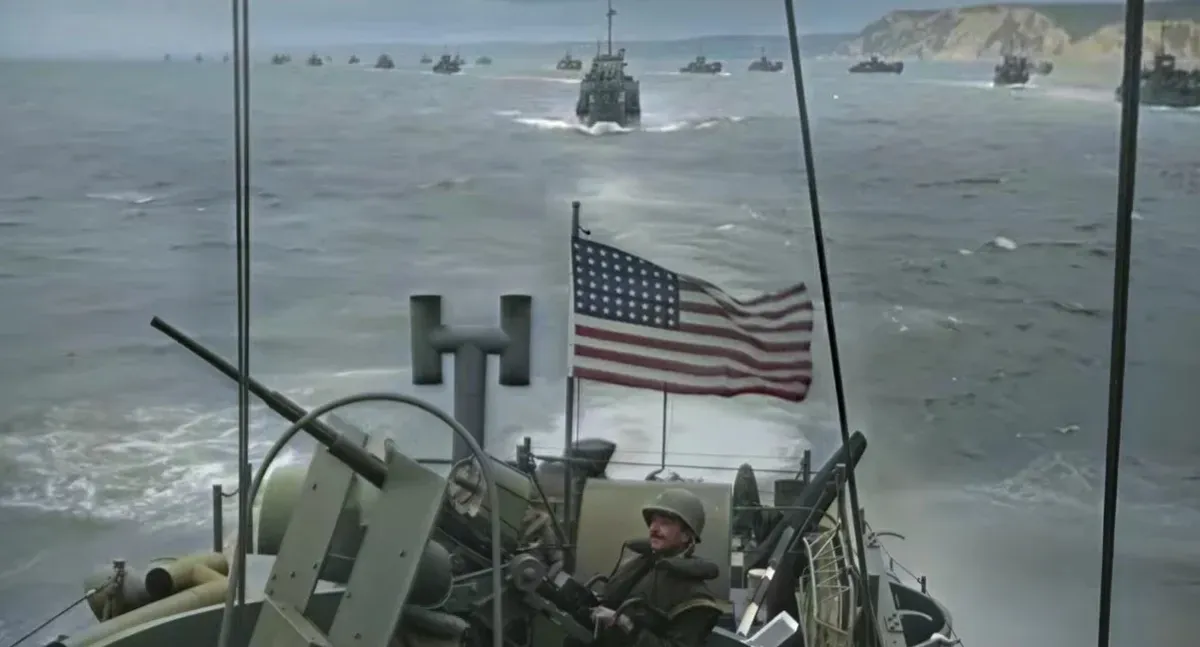
Seemingly abstract disputes about the weather - and tens of thousands of lives are at stake. The element itself here acts as an equal participant in the war, as do the people who are trying to tame it in unpredictable conditions by making a forecast. Andrew Scott as James Stagg is the absolute premiere of the film. His hero seems to be gradually emerging from the armor of categorical judgments, turning into the embodiment of irreconcilable scientific ethics. Scott plays a man whose devotion to facts comes into sharp conflict with the authority of the generals and the doubts of his subordinates. He has restraint and magnetism. Brendan Fraser transforms into a leader who is literally torn between the hard-won need to attack the enemy, the colossal responsibility and the need to trust an unfamiliar scientist. Fraser adds humanity and humor to his hero, avoiding the image of a faceless, bossy functionary. The character is especially good when he demands that the sun come out, which is so necessary for the military to carry out an operation.
The film's title works on two levels. This is the atmospheric pressure that dictates the rules of the game, and the colossal psychological pressure of the burden of responsibility lying on the shoulders of the main characters.
Maras manages to create a tense, claustrophobic thriller. Even knowing or checking on Wikipedia that the landing did take place on June 6, the viewer is gradually immersed in suspense inside the gloomy walls of boring military offices.
The film can be reproached for being somewhat straightforward, as if the authors are afraid to deviate even one iota from the main plot by adding details to the complex fate of their heroes.
Yes, and meteorology as the main plot engine is somewhat glitchy, the story stalls in places in cyclical, repetitive meeting scenes, where Eisenhower demands answers, Crick insists on attacking, and Stagg stubbornly corrects him and puts him in his place.
When the action jumps out of the headquarters thriller on the coast, the climax - the invasion itself, the battle scenes - seems secondary, reminiscent of Saving Private Ryan or Dunkirk, but not as impressive. And Stagg’s personal drama is used more as a routine emotional lever than as a deep psychological line.
Verdict.
“Pressure” is a strong, intelligent, but linear war drama that successfully shifts the focus from battle action to intellectual confrontation. The story of how the dedication to his work, science and fortitude of one scientist changed the course of world history.
By the way, in the USSR there was a film “I'm going to the storm” by Sergei Mikaelyan based on the novel by Daniil Granin.
In fact, with the same conflict - an ethical confrontation between two talented physicists. The dispute between friends, Sergei Krylov (Alexander Belyavsky) and Oleg Tulin (Vasily Lanovoy), who dream of “controlling the thunderstorm,” revolved around acceptable methods in science, careerism and fidelity to scientific truth.
Living on an island with changeable weather, the British are believed to be the most obsessed with its forecast. But how can one not remember Iskander’s wonderful story about the mania of Muscovites and their fellow citizens to “check the weather.” People don’t have to go into battle or fight for the harvest tomorrow. But they listen with bated breath to the TV - listening to weather forecasters, so that the next day they can catch them inaccurately.
MORE ABOUT CINEMA
Larisa Malyukova runs a telegram channel about cinema and more. Subscribe here .