
Translated material
The poetics of denunciation
To the portrait of the Russian informer in general and the poet Nikolai Stefanovich in particular

Drawing: Pyotr Sarukhanov / Novaya Gazeta
(18+) THIS MATERIAL (INFORMATION) WAS PRODUCED, DISTRIBUTED AND (OR) SENT BY A FOREIGN AGENT DMITRY LVOVICH BYKOV OR CONCERNES THE ACTIVITIES OF A FOREIGN AGENT DMITRY LVOVICH BYKOV.
A first-class investigation by Natalya Gromova, a literary critic with an education as an archivist and the precise intuition of a psychologist, has just been published: “Poets of Nightmarish Times.” It is dedicated to the fate of Nikolai Stefanovich, who was responsible for the arrest and death of Daniil Zhukovsky (a brilliantly gifted young man, the son of Adelaide Gertsyk). Stefanovich denounced Daniil Andreev, his wife Alla, and the Christian poetess Natalya Anufrieva. They tried to justify him for a long time, they claimed that he was allegedly forced out of testimony against his friends during interrogations - nothing of the kind: a study of the archives shows that all his denunciations were completely voluntary. In addition, they were not dictated by envy - Stefanovich considered himself a poet no worse than Anufrieva. There is some special emotional torment here, a dark secret, Smerdyakovism of a special kind.
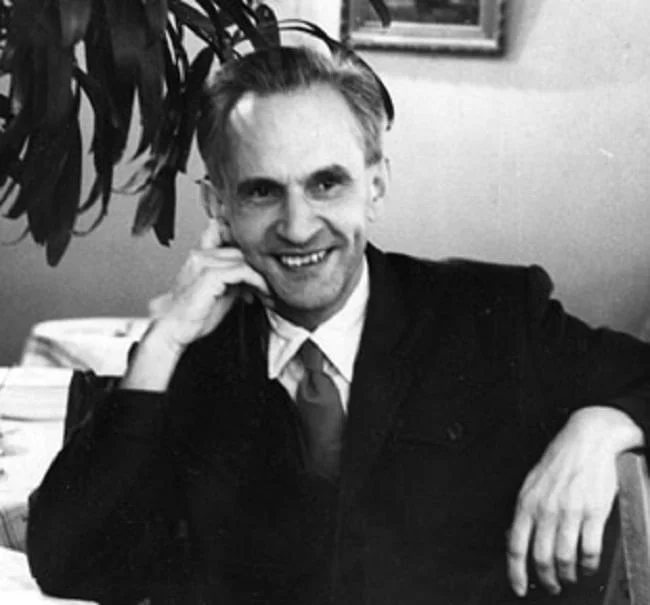
It seems to me that I can add some accents to deciphering Stefanovich’s motives and mental makeup. I will say right away that his poems do not endear me to him, and I clearly see in them the same spiritual insufficiency that manifested itself in his complete lack of moral reflection. A man with the rudiments of conscience could not hand over such people and in such numbers without any coercion - especially if we remember that he certainly knew their value; live peacefully after this, publish, prepare books - even more so. Therefore, we are dealing with an undoubted moral deformity, and it was our time that revealed the roots of this pathology. It is unique in its clarity, in the complete absence of those justifications that broken, crippled people of the Stalin era could refer to.
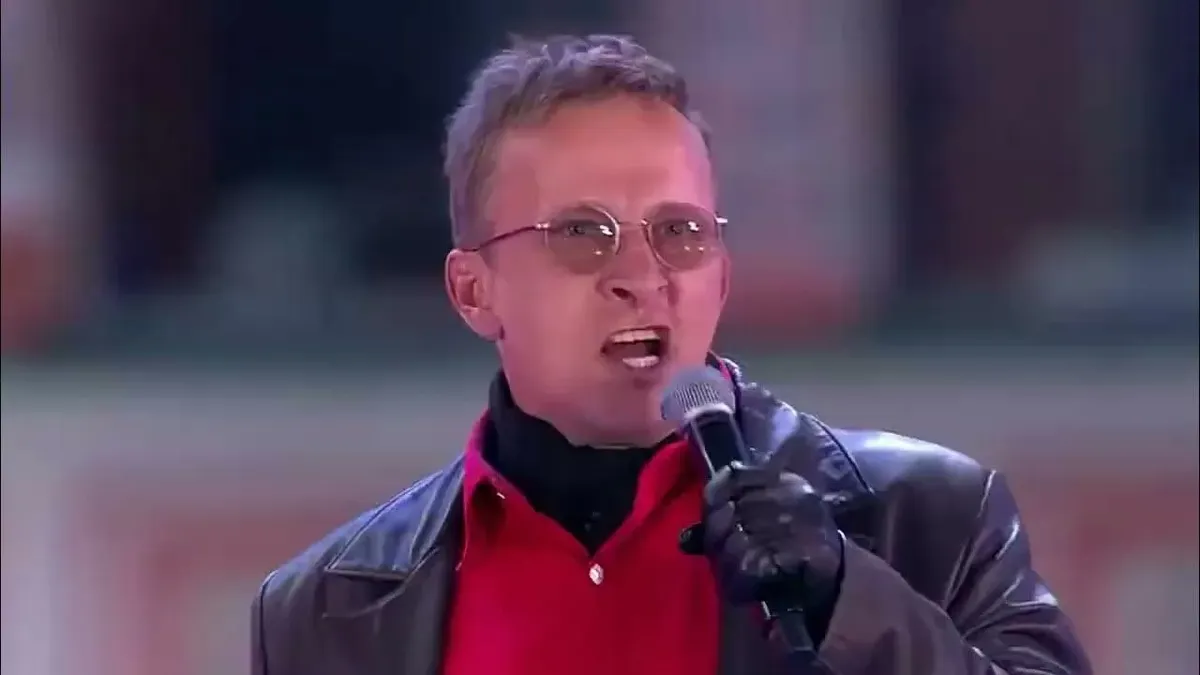
The current baseness is being committed out of good will and with maximum spiritual comfort, as well as with full awareness of the immorality of all these denunciations and rejoicings. Today's informers also lack the shyness that can be discerned in Stefanovich. On the contrary, in the behavior of the so-called “Union of February 24”, in the statements of Okhlobystin, Bogomolov, German Jr., there is an almost demonstrative, proud shamelessness on the verge of exhibitionism. A person of mystical consciousness would suggest that this is somehow included in the terms of the hellish contract - one must sin not only “shamelessly, unrestrainedly,” but also visually, broadcastingly. However, it is quite possible that everything is even more prosaic: with these loud confessions and appeals, with this impudence of cynicism, they are trying to drown out a deep and ineradicable feeling of their own wrongness.
And the origins of this agreement, which the forces of hell offer to the so-called representatives of creative professions, are also quite obvious: feeling the fatal insufficiency of their literary capabilities, the incompleteness of realization, the inaccessibility of true ups - these characters are trying to gain by falling.
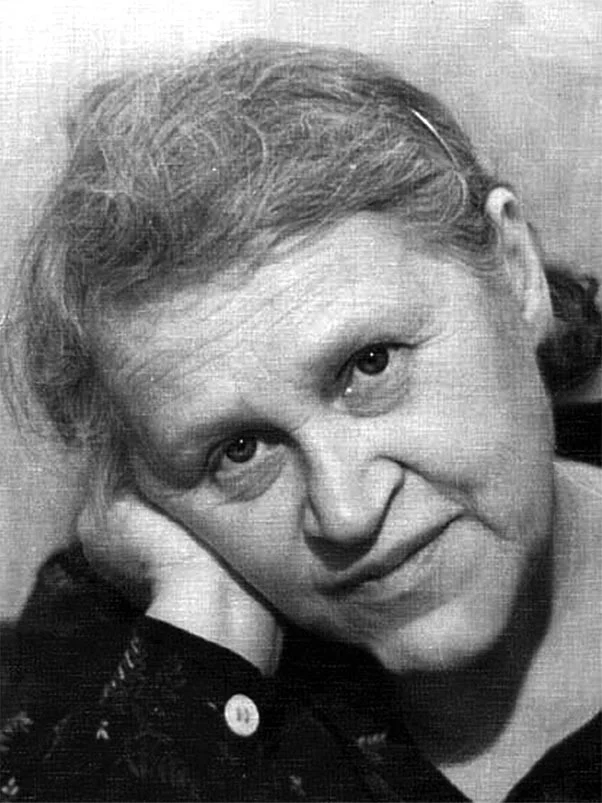
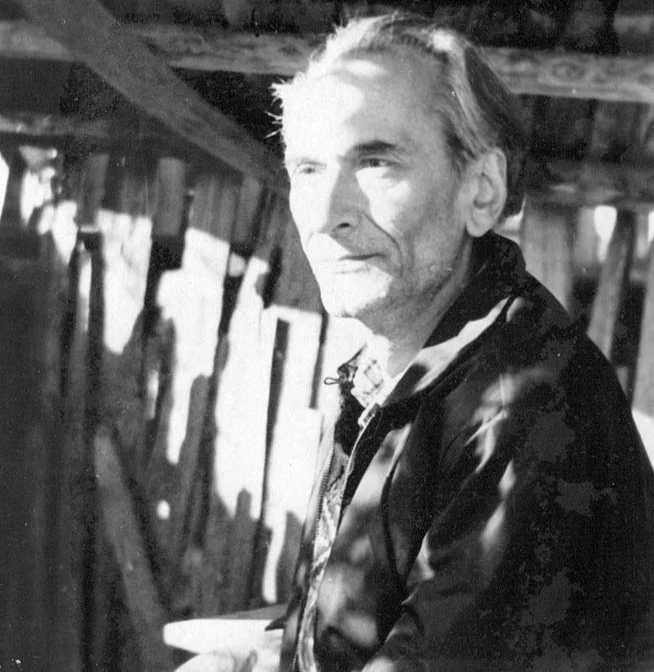
The ecstasy of fall is the main temptation of any villainy committed by a half-talented, half-realized author. He thinks that the devil will fill him with the lack of energy that he has always felt; and in fact, a careful reading of Stefanovich’s poems reveals precisely their anemia, which was so clearly reflected in his appearance. Their external resemblance to Daniil Andreev is illusory: Andreev’s appearance, even in his dying photographs, breathes with inner strength, and in his poems his feeling of being an outcast - a feeling quite noble for demonic eras - never turns into a wounded, offended consciousness of inferiority. With Stefanovich, everything screams about this inferiority. Even his best poems are nothing more than a run-up before take-off (and sometimes a heavy blow, a splash on the ground, wings dragging helplessly). He was drawn to Pasternak because he felt a bright harmony in him: just like the Black Masks in Leonid Andreev’s play are drawn to the fire. Daniel completely inherited his father’s intuition - it’s just a pity that he was afraid to believe his own premonitions.
Let's look at several examples of how this happens with Stefanovich, since the corpus of his texts is available on the Internet.
And everything is the same down to the smallest detail,
To every crack on the saucer...
When I hear: “Boy! Hey!" —
I can't help but look back.
This is cobbled together from two seemingly incompatible sources:
Another insult is being pulled from the saucer
Sleepy child
And I have no one to sulk at,
And I am alone on all paths.
(Mandelshtam, 1933)
The shadow from the hut is slanting
Marks half a day.
I heard someone shout: “Sanya!” —
He shuddered, no, not me.
I'm looking for something very simple.
The same downpour, apparently,
Been there even before the Nativity of Christ, -
(1977)
Oh, our life has a meager basis,
How poor is the language of joy!
Everything happened before, everything will happen again,
Like smoke flying from a chimney
The Milky Way stretches above the world...
On such a night before eternal life,
(1937)
Already the second one. You must have gone to bed.
In the night the Milky Way is a silver eye.
I'm in no hurry, and lightning telegrams
Know God, who is clear through and through,
Bye to portfolios, theses and books,
Things haven't been closed yet
(1942)
When nature's last hour strikes,
The composition of the parts of the earth will collapse:
Everything visible will be covered by waters again,
And again a combination of seemingly incompatible sources:
* * *
The whole world is beaten and sold into slavery,
And someone is called to separate
From sound, sound and generation from generation,
From a moment to a moment, from an inch to an inch.
And, grinning and gawking,
Drooling dirty rubles
Dense crowds in museums
Sticky pus flowed.
And they recognize you with a fox-like grin,
Like the depths of heavenly chalk,
That the whole universe depends
From every whim of a squirrel.
And some are gray, some are gloomy,
How grace fell upon us
Iron formula dictatorship,
Three dimensions are arbitrary.
We don't see anything as a whole
What is here we do not see there,
And even your own body
The shamelessness of buying and selling,
Advertisements and signs are lies...
- When, Lord, when will
(1937)
The bread is poisoned and the air is drunk.
How difficult it is to heal wounds!
Joseph sold into Egypt
To the market! The stomach is screaming there,
There for the hundred-eyed blind man
Your mind is more valuable than a penny
In vain he prophesies in the square
Harmony hungry son:
He doesn't want good news
And let over our deathbed
The crow will fly up with a cry, -
Those who are more worthy, God, God,
Someone penetrated into the secret thoughts,
Hemming and gluing something to the case,
And in a loop of reliable evidence
Will I forget the horror of loss,
Animal roar and human swearing?
And invisible lips repeat,
(no date)
“...Sleep soundly, executioner and executioner!
Smile more lovingly at each other!
You, oh gentle, you are meek, you are quiet,
Virtue... Your virtue
We went blind knitting, but we knit...
Wait - the loops will accumulate,
O Russia, like Job in the Bible,
You've been stripped to the bones,
And the bottomless abyss of destruction
I will not be afraid of death,
No spears, no arrows of rain, -
That's what the Bible says
You will say: you can pull out such coincidences from any poet, just as borrowings before any postmodernism were found in hundreds of composers: after all, there are only seven notes, and not much more lyrical themes. The only question is what Stefanovic adds to it.
Its main theme is precisely disembodiment, the absence of one’s own voice, the consciousness of one’s irrelevance in the world and the same emptiness after death (obsessively frequent descriptions of posthumous decomposition - and an uncertain, purely declarative faith in the resurrection; however, if the second coming occurs, no one will recognize Christ either - this motif is repeated repeatedly). His poetic speech is a synthesis of the intonations of all Russian unofficial poetry, from Tarkovsky and Lipkin to Obolduev and Barkova, who, by the way, is especially similar to him in her sense of restlessness in the world, and also, according to various slips, not without reason (only here we are not talking about cooperation with the authorities, but about camp participation in persecution - for example, Ivinskaya). What Stefanovic lacks at all is a sense of freshness, celebration and enlightenment; What he has in abundance is self-pity, from childhood to old age.
I think: what if it’s not my fault after all? What if I adapt all this to a ready-made answer? You never know, for example, they slandered Alexander Lokshin (and what hell sometimes breaks loose in his music!) - and his son proved his complete non-involvement in the denunciation. But Gromova’s book dispels the last doubts, and with all the desire to sympathize with Stefanovich, who, apparently, was truly deeply unhappy all his life, the fate of his victims, and above all the brilliant and pure Daniil Zhukovsky, is incomparably more terrible; I can’t imagine with what suffering he could have redeemed his participation in their tragedy. And this participation was not passive, but voluntary and ardent, even passionate.
One can guess about his motives: once in a lecture on the poetics and pragmatics of denunciation (no matter how you hide from this fact, today it is the most widespread Russian genre) I suggested that selfish interest is most often absent here, envy or vindictiveness plays a secondary role, and not in the first place is the completely understandable desire to deflect the blow from oneself, that is, to be in time earlier. Of course, this does not justify Stefanovich, but with his constant and acute sense of his own vulnerability, even damnation, he could be guided by this: “Not me!” - like Orwell's Winston.
However, it is precisely the observation of today’s Zeta writers - primarily the most voluptuous informers like Igor Karaulov, who is well known to me personally and who has sharply degraded literary - that suggests that it is precisely the feeling of one’s own inferiority and the passionate desire to “get better” that prevails here.
Maybe the whistling in the ears during a rapid fall is the sought-after music of the spheres? Indeed, in all the Z-literati who have clung to the state in order to assert their primacy, precisely this incompleteness, a fatal deficiency, is felt. The poetry of Maria Vatutina is the same arithmetic mean of women's lyrics of the seventies and nineties, with the addition of a civic motive in the spirit of Lyudmila Shchipakhina, like Stefanovich's lyrics of the thirties and forties. The poetry of Vadim Stepantsov, who started out quite well, is an endless repetition of his own motives and a consequence of the creative crisis of the mid-nineties. Daniel Orlov, Sergey Nosov, Pavel Krusanov, Anna Dolgareva, Anna Revyakina - all this is at best unconscious, and at worst involuntary and irresistible secondary; and the motives of all these passionate propagandists of Russian aggression, lovers of torture cellars and trench selfies are by no means only selfish. Here is the most serious ambition - in the absence of the ability to hear the voice of God, to please the devil and take advantage of his protection.
Actually, this theme has long been reflected in Russian poetry: “When I was sailing in a stormy sea and my ship sank, I cried out: “My Father, the Devil, save me, have mercy, I am drowning.” Fyodor Sologub, however, had much less reason to consider himself a strong second rank and ask the prince of darkness for help; however, reading, for example, Elena Danko’s memoirs about the last years of Fyodor Kuzmich, you will inevitably think about the strange games of this “sorcerer and sorcerer” with others, as well as the extent of his disgust for people. In several of Stefanovich’s poems this “smoke without fire” appears, drawn, however, from Vertinsky; but it seems that this is the very case when smoke is by no means without fire, and a hellish one at that.
It would probably not be worth disturbing the ashes of Stefanovich, who is very little known as a poet (and, it seems, Yevtushenko, out of his usual kindness, overestimated him); but the thing is that without mentioning his participation in several destinies, it is impossible to remember either Zhukovsky, or Anufrieva, or Daniil Andreev. And there is some truth in the fact that the poet, so passionately (and sincerely) preoccupied with the thought of his disappearance without a trace, is remembered primarily as a provocateur and informer. This is a good lesson for many of our contemporaries, who, before our eyes today, are bending over backwards to ensure just such immortality for themselves. And it is guaranteed to them - the devil always fulfills his obligations in this regard, it is he who always deceives with creativity.
However, while the archives are not open, despite all the meticulousness of Gromov’s work, there is always a chance that maybe Stefanovich didn’t do it... or maybe it didn’t happen voluntarily... In such a case, even in the most transparent and meticulously researched stories, a bit of doubt always remains. And I would prefer to be wrong, because such abysses of decline as the stories about Stefanovich, his slander and harassment presented here, still greatly lower the bar for our ideas about humanity. You always want to maintain hope in human nature, even when, as today, it demonstrates its limitlessness in both directions. But it seems that three stories of the same type are too much. And in the case of Stefanovich, we can only console ourselves with the fact that he himself spent his life in a full-fledged and unalloyed hell - which, however, he captured in rather banal texts, as befits clients of the father of all lies.
* Included by the Russian authorities in the register of “foreign agents”
This material was published in the twentieth issue of Novaya Gazeta. Magazine". You can buy it in the online store of our partners.