
Translated material
Failed successor. Former Defense Minister Sergei Ivanov died
The former head of the presidential administration, former Minister of Defense Sergei Ivanov died at the age of 73, reported the VTB United League, of which Ivanov was the honorary president. The reasons are not specified in the message. This is the first death in the circle of long-time and close friends of Vladimir Putin, who played an important role in governing the country. In 2007, Ivanov, along with Dmitry Medvedev, was seen as a potential successor to Putin.
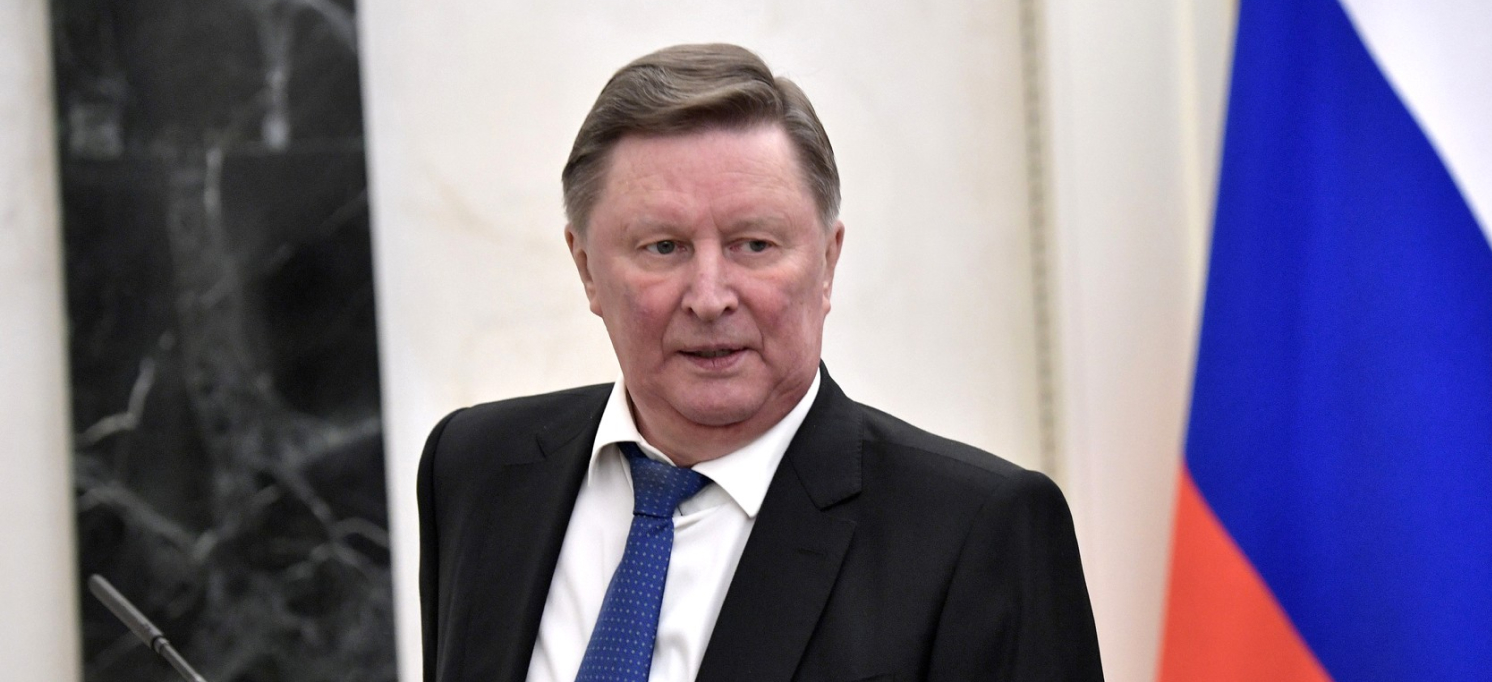
Recently, sources familiar with Ivanov said that he was seriously ill. In February 2026, Putin signed a decree releasing Ivanov from his last, ceremonial post as special presidential representative for nature protection, ecology and transport, which Ivanov had held since 2016. Soon after this, the official was also relieved of his post as a permanent member of the Russian Security Council, which he took in 1999 before Putin came to power.
Sergei Ivanov is one of the most famous, but not the most influential, senior officials of Putin’s first terms. He is a St. Petersburg resident, a career intelligence officer, and has known the current president of Russia for half a century.
In the late 1970s, Ivanov briefly served with Putin in the same unit - in the First Department of the KGB for Leningrad and the region. But their paths soon diverged - unlike Putin in the GDR, Ivanov worked in foreign residencies of the “first row” - Great Britain, Finland, then Kenya.
After the collapse of the USSR and until 1998, when Putin headed the FSB and took Ivanov as his deputy, Ivanov continued to advance in the ranks of the foreign intelligence service. In 2001, after the Kursk submarine disaster, he was appointed Russian Minister of Defense in place of Igor Sergeev, becoming the first civilian Minister of Defense in Russian history. In 2007, Ivanov was replaced by Anatoly Serdyukov.
In the second half of the 2000s, during Vladimir Putin’s second presidential term, Sergei Ivanov, along with Dmitry Medvedev, was considered one of the two main candidates to succeed him. Two and a half years before the elections, in November 2005, Putin appointed Medvedev and Ivanov as deputy prime ministers. Observers clearly perceived this as the beginning of a competition for successors - although Ivanov’s acquaintances now claim that Putin did not want to transfer power to him. Then Vedomosti, with reference to Ivanov’s acquaintances and colleagues, wrote that Putin was afraid of Ivanov because of his abilities and merits in the residency. Be that as it may, Medvedev eventually became Putin's nominal successor.
In public opinion, his loss to Medvedev was associated with the “Sychev case” - the tragic story of a conscript soldier crippled by his “grandfathers” in the army. Ivanov reacted to the first news about the tragedy with the legendary quote “In our country, hazing begins in kindergarten.”
In 2011, as Putin prepared to return to the presidency, Ivanov headed the presidential administration, serving in this position for five years. In 2016, he ceded his post to Anton Vaino, and he himself became the president’s special representative for ecology - it was a non-binding position in which Ivanov, for example, opened ecological crossings for animals over highways and took care of tigers and leopards, for which, according to numerous testimonies, he had a special sympathy . The media wrote that Ivanov’s decision to leave for a quiet job as a special representative was his own: he was greatly influenced by the death of his eldest son Alexander, deputy chairman of VEB, who died while swimming on vacation in the UAE in 2014.
Ivanov has earned a reputation as an honest intelligence officer and security officer - restrained, overly cautious and unquestioningly following the line of his superiors. He had no taste for political games, nor any talent for public speaking. However, even former US Secretary of State Condoleezza Rice spoke positively about his professionalism.
Ivanov’s main mark on Russian history will remain the leadership of the Ministry of Defense: he was the first civilian in this role in the history of modern Russia and the “father” of the modern contract army. However, in this role, Ivanov chose not to make sudden movements. Therefore, in a military-tactical, military-technical and ideological sense, his term at the head of the Ministry of Defense is considered an era of stagnation and missed opportunities. This was fully demonstrated already in the 2008 war with Georgia, and now in the war with Ukraine.