Translated material
Russia and Ukraine exchanged prisoners of war according to the formula “160 to 160”
Most of the Russians released are former prisoners
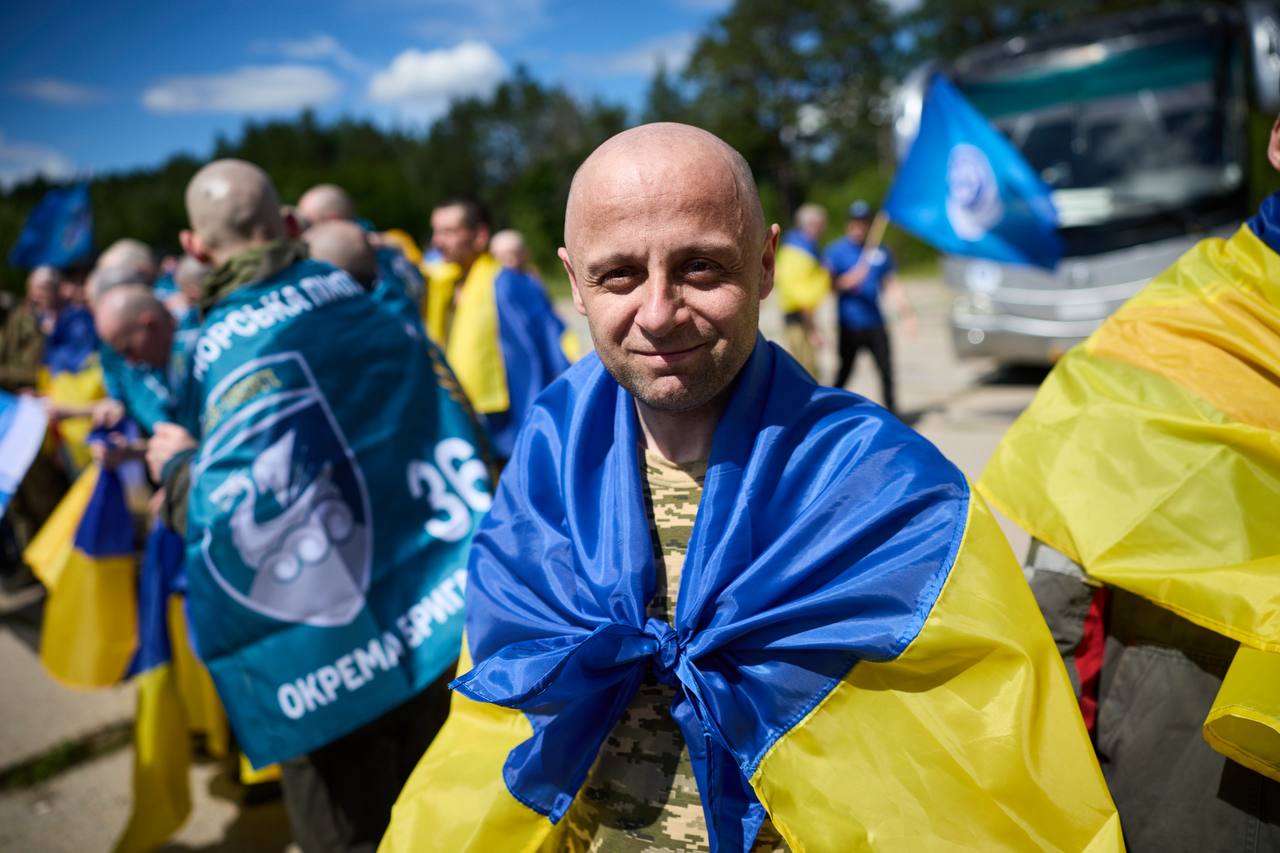
Russia and Ukraine carried out another exchange of prisoners of war according to the “160 to 160” formula. This was reported by the Russian Ministry of Defense and Ukrainian President Vladimir Zelensky.
The released Russian servicemen were sent to Belarus and then to Russia for further treatment and rehabilitation.
The United Arab Emirates again acted as a mediator in the exchange.
In order not to miss new texts from “Layout”, subscribe to our telegram channel
Among those released are defenders of Mariupol and Azovstal.
According to Zelensky, Ukrainians have been in Russian captivity since 2022. The defenders of Mariupol and the Azovstal metallurgical plant returned home, as well as military personnel who were captured in the Donetsk, Lugansk, Kharkov, Zaporozhye, Kiev, Chernigov and Sumy directions.
The Ukrainian side, like the Russian side, confirmed the mediating role of the United Arab Emirates.
Ombudsmen discussed new exchanges
The Commissioner for Human Rights in Russia, Yana Lantratova, said that after the exchange, she discussed further humanitarian contacts with the Ukrainian Ombudsman Dmitry Lubinets. According to her, the Regional Ombudsman considers it necessary to carry out exchanges of prisoners of war and the return of civilians as often as possible.
“Today we talked about the need to do exchanges of prisoners of war as often as possible, and, most importantly, humanitarian actions to reunite families and return civilians,” Lantratova said.
Dmitry Lubinets, in turn, said that the main task remains to accelerate the return of Ukrainian citizens from Russian captivity. According to him, during the meeting with Lantratova, they discussed additional mechanisms for organizing exchanges, searching and verifying missing persons, monitoring the conditions of detention of Ukrainian prisoners of war, as well as issues of releasing civilians.
Separately, Lubinets handed over to the Russian side a letter from relatives of Ukrainian soldiers who survived the explosion in the colony in Yelenovka, and raised the issue of their return. In addition, the ombudsmen discussed the mutual transfer of letters and parcels between prisoners of war and their families, and also agreed on the further expansion of humanitarian cooperation.
In order not to miss new texts from “Layout”, subscribe to our telegram channel
Sixth major exchange since the beginning of the year
The previous exchange of prisoners between Russia and Ukraine took place on June 5, when the parties transferred 185 people to each other. Before this, exchanges took place on May 15 according to the formula “205 to 205”, on April 24 – “193 to 193”, on April 11 – “175 to 175” and on February 5 – “157 to 157”.
Before the first exchange in 2026, the parties did not exchange prisoners for almost five months - the previous one took place on October 2, 2025, using the formula “185 to 185.”
Relatives of Russian prisoners of war criticized the principle of forming lists
The leader of the public movement “Our Way Out,” Irina Krynina, told Novaya Gazeta Europe that 87 of the 160 servicemen who returned to Russia were previously identified by relatives through the Ukrainian project “I Want to Find.” According to project representative Alexander Sementsov, the received confirmation of captivity helped the families achieve official recognition of their prisoner of war status .
According to the project, 131 out of 160 Russian military personnel spent no more than a year in captivity, so after treatment, most of them could theoretically return to military service.
According to Sementsov, almost all prisoners of war (93%) who returned to Russia signed a contract with the Ministry of Defense from prison. 82% of prisoners faced a criminal record or the threat of imprisonment.
About 46% of those who returned to Russia signed a contract because of payments, another 24% - under duress. Because of patriotic feelings, only 6% of prisoners went to war, says Sementsov.
Krynina called on Yana Lantratova to explain the principles of forming exchange lists. According to Krynina, priority should be given to those who have been in captivity longer or who are seriously injured.
“It is unacceptable to return to their homeland first of all those who can then be sent back to fight again,” Krynina emphasized.
Previously, “Verstka” talked about how former prisoners who disappeared at the front are massively recognized as “unauthorized leavers” in order to be deprived of payments. Commanders do not hide this practice, explaining that this is an instruction from the Ministry of Defense.
Photo: Former Ukrainian prisoner of war, June 26, 2026. Telegram channel of Vladimir Zelensky
You can support “Layout” from any country in the world - it is still safe and very important. We really need your support now
How to help us