
Translated material
“When you forget the tyrant’s middle name”
Three new books of the week - three visions of the past: “The Dream of the Jaguar”, “The Death of Stalin” and “Such an Impossible Life”

Collage: “Novaya Gazeta”
The history of Venezuela appears as a beautiful and sometimes cruel myth. The island of Ibiza, which holds clues to the origin of life on Earth (but this is not certain). The death of Stalin, returning freedom and asking the unanswered question: what was it?
Miguel Bonnefoy. "Jaguar's Dream"
- Translation from French: Nina Khotinskaya
- NoAge
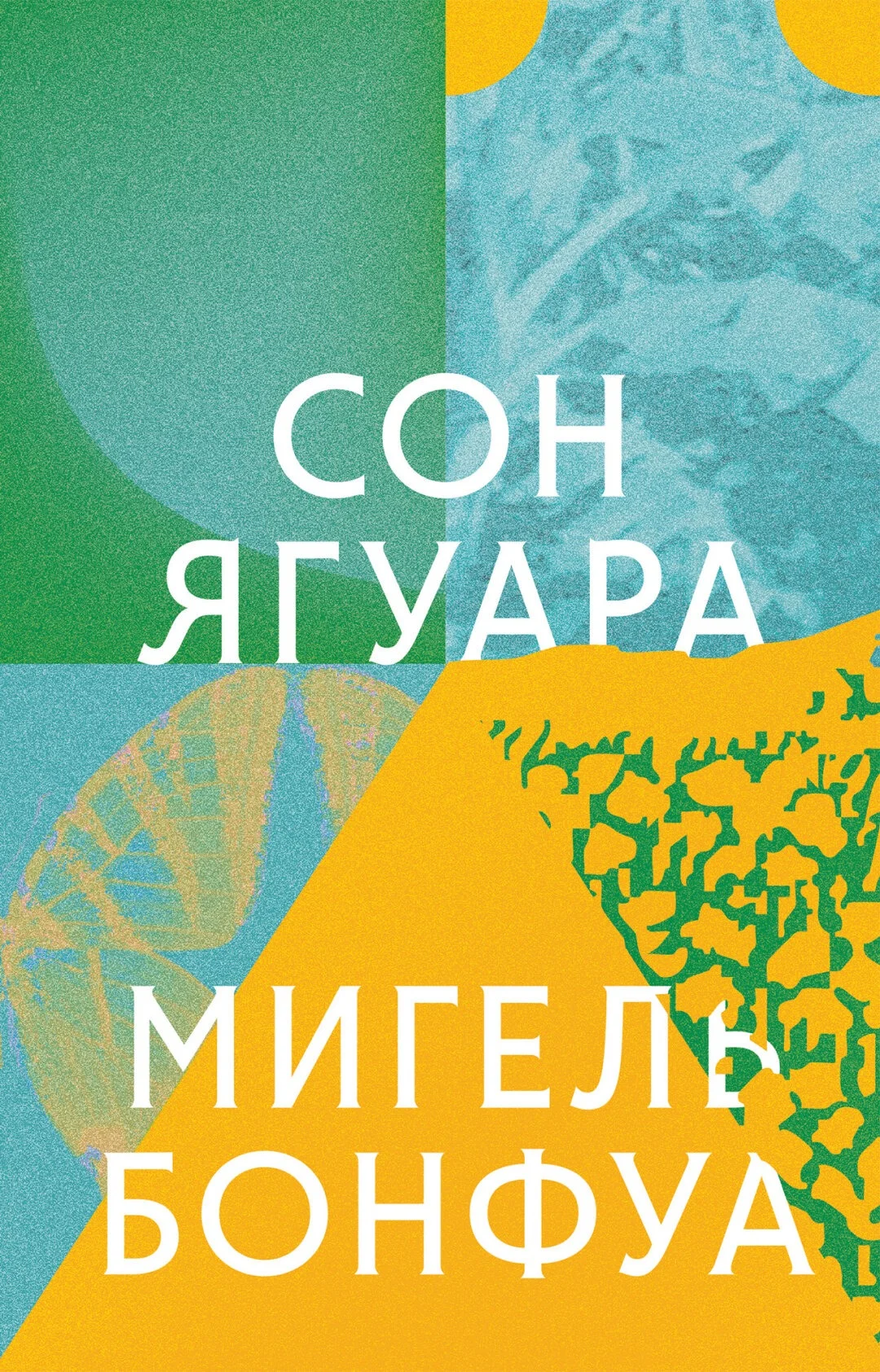
A little big Latin American novel, which is always so awaited in Russia. There is no escape from the benign shadow of One Hundred Years of Solitude, and it seems that in Venezuela, where the action takes place (or stops), as in the fictional Macondo, time seems to be absorbed by the space around it: the jungle and the huge lake in the heart of the country.
This novel could be called a family novel. Because it describes the history of a family. But the word “history” is much more important here. The text begins as a picaresque novel, continues as a social novel, and turns into a novel of growing up and generational conflict.
Reading “The Dream of a Jaguar” is incredibly interesting, but at some point you catch yourself repeating the story told in it. Some dictators are replaced with enviable consistency by others, repressions subside only for a while, and the family cannot be a reliable rear (for some reason they dream of it in this capacity in modern Russia).
This novel contains many familiar images of Latin America:
excessiveness, a riot of shapes, volumes and colors, a kind of gigantism of nature and people living with a scope and sincerity that we have forgotten and accomplishing the almost impossible. And last but not least - detachment, which allows us to describe the transition to modern civilization.
All this is in dialogue with the great cultural tradition: our own - and the European one, for which the heroes sometimes yearn. And yes, they want to go to Paris, although for them it is more imaginary than real.
But behind this lies another layer of the novel - the left-wing political dimension of Latin American literature. Moreover, it manifests itself everywhere: the heroes become doctors, including in order to serve the people, one of their descendants goes to an underground revolutionary organization (and after leaving it, begins a spiritual search), and in general, the sympathies of both the author and the narrator are on the side of the left.
Thinking about this, I catch myself with a strange impression. Perhaps only writers from Latin America have retained something like an ethical right to write seriously about the leftist movement (meanwhile, in Russia the leftist idea seems to have almost exhausted itself, primarily in moral terms). For them, in the words of Julio Cortazar (also an emigrant in Paris), this is still a serious game.
And it still seems that the main character of the novel is time. Is it because this heaviness and viscosity of time was once an instrument of enslavement? And the liberation of time (everyone lives in their own, and it is multiple) triggers both political and other liberations? Reply to the reader.
Matt Haig "Such an Impossible Life"
- Translation from English: Ksenia Chistopolskaya
- "Livebook"
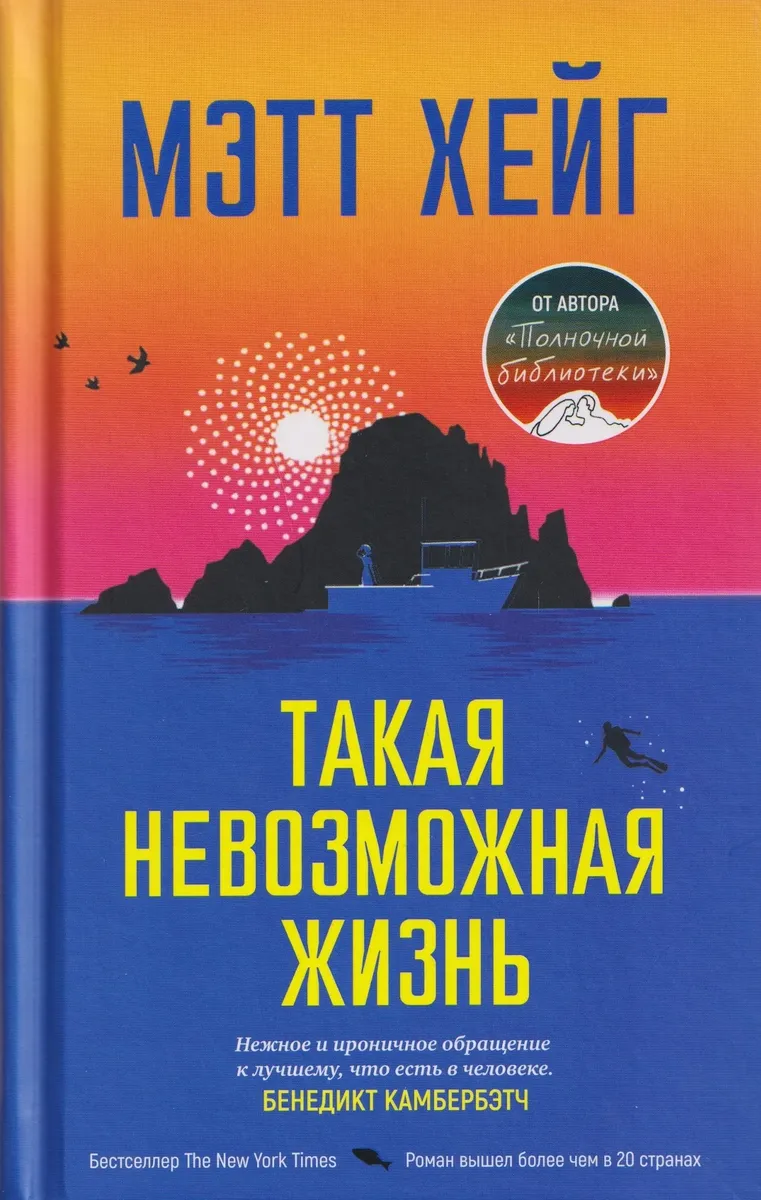
Matt Haig is one of the most popular writers in the English language. He has been translated into Russian for a long time and well, his latest novel was recommended by Benedict Cumberbatch himself, it became a bestseller and was included in several authoritative lists of the best books of the year, and now it is in Russia.
I’ll start with an almost detective story with a tragicomic overtone, which is important not only because the book is interesting to read, but also for understanding some of the key themes in English literature. History is as old as modern times. An elderly Englishwoman, Grace, lives alone, having buried her son and husband, and, contrary to our idea of cheerful European old men, she is not at all eager to travel. However, at some point she takes off for Ibiza, where an almost casual acquaintance from her university years left her a small house before she died. (I’ll note in passing that in Russian the correct word is “Ibiza,” with the emphasis on the second syllable, but the norm just won’t take root.) It’s clear that adventures (and even transformations) await Grace, but the most valuable thing in a novel written in the first person is the ironic and quite serious author’s thoughts about what is truly important, put into the heroine’s mouth.
Sad irony:
Although Grace constantly talks about the intrinsic value of life (even if she no longer finds it as interesting as before), one gets the impression that she still needs some kind of push to give meaning to what is happening.
Let at least a trip, which, unfortunately, our pensioners cannot even dream of. But, as you might guess, what is more important is what Grace will discover on the island.
And here Matt Haig enters into a roll call with the most famous insular work of English literature - the great and terrible "The Magus" by John Fowles. I will leave it to the attentive reader to trace all the parallels and limit myself to the main one. To understand themselves, the British - as inhabitants of the island - must go to the island. In this, John Fowles polemicized with the literary tradition, which willingly sent its heroes to the continent. In “Such an Impossible Life” a transformation also occurs, and it is also, of course, mysterious - although not as gloomy as in “The Magus.” Some artificiality of the plot and situations (starting from the title, which refers to numerous “beautiful lives” in cinema and literature) is natural here. But the most interesting thing in the novel is different.
This is the underside of Ibiza, which suddenly appears not to be the most popular island in the Mediterranean for party people (and the heroine politically correctly refrains from condemning them), but one of those places where life on Earth arose a long time ago. Folklore motifs are obvious, which have again become unusual for modern Westerners. Conservative and, as it were, ethnographic discourse tells us that even a cult vacation spot has something like a lining that, of course, contains many secrets, even at the level of bio- and geology. It is no coincidence (and let this be the only spoiler) that something that Grace encounters, she herself calls presence, hardly realizing that it reproduces the main term from the philosophy of Martin Heidegger. What kind of presence this is and how to deal with it is for the reader to judge, for whom it is difficult not to recommend this very summer and very reflective novel. If only in Russia they wrote something about awakening the consciousness of heroes during rest...
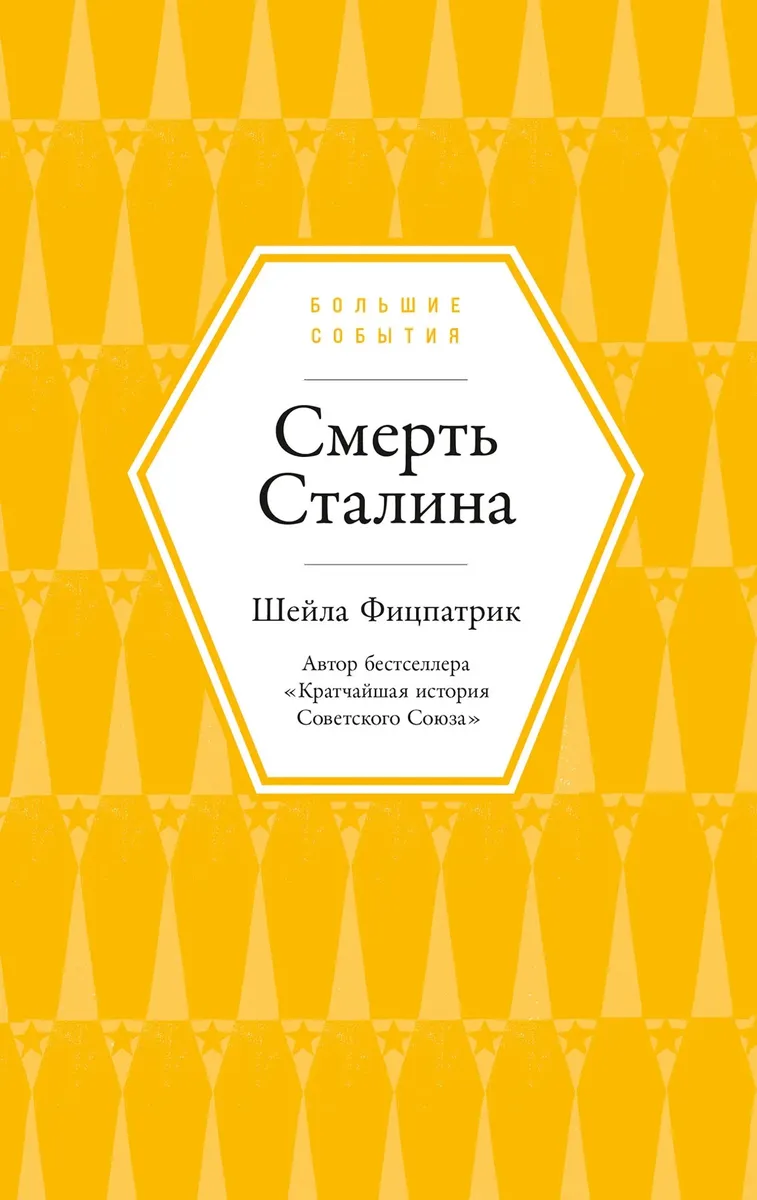
Sheila Fitzpatrick. "The Death of Stalin"
...Freedom -
This is when you forget the tyrant's middle name,
and the saliva in your mouth is sweeter than Shiraz halva,
and although your brain is twisted like a ram's horn,
nothing drips from the blue eye.
It is not for the sake of beauty that I quoted these lines far from Brodsky’s political poem itself (although, as is now clear, he, with brilliant poetic insight, guessed August as the main month of crisis in Russian history). The debate about who influenced whom more—Stalin on the Soviet system or the Soviet system on it—will probably not subside as long as people continue to think about tyranny. And the eminent historian Sheila Fitzpatrick provides some very important food for thought with her small but insightful book. And to use the metaphor of the Apostle Paul, this is no longer milk, but solid food. It's about time.
As the title suggests, the study centers on the historical event of the death of a dictator. It is clear that it cannot be taken out of context, and the book traces Stalin's revolutionary career, his rise to power and his accomplishments at the head of the world's first socialist state. But this is context, but what is in it?
Today, some historians are moving away from the idea that anything resembling socialism existed in the Soviet Union under Stalin. In their opinion, it was Stalinism: a completely special political, economic and social regime (to admit this means not to discredit the idea of socialism). And Sheila Fitzpatrick in many ways aligns herself with these historians: the figure and—one would like to say—the body of the leader are too closely intertwined.
And here it is difficult not to think about what perplexed the Bolsheviks themselves - about the so-called role of the individual in history. In the classical interpretation, they proposed not to overestimate it, meanwhile the party itself very quickly acquired a pronounced - excuse the banality - leader character. And Stalin himself, throughout his 30 years in power, seemed to refute this very underestimation of the “role of the individual in history.” As if he didn’t have enough of the fact that everything was named after him (or even a period in Russian history, inseparable from world history). I repeat: historians admit that he managed to build a special regime. The cult of personality and generally exaggerated attention to the power of the sovereign really brings Stalin closer to some medieval rulers.
But history has moved forward since then, and it is no longer enough to shout:
“The king is dead! Long live the king! Stalin is what is described as "Stalin". He is not equal to his era - it is more complex, wider and deeper than all the efforts of the person who, as it were, gave it its name.
And although this era must also be left in the past - like the entire Stalinist legacy - and given an unambiguous ethical assessment, it is still important to understand that it could have happened without Stalin. Even if he tried to prove the opposite.
And Sheila Fitzpatrick comes to a somewhat paradoxical conclusion. Despite the fact that the 20th century was the most “massive” in world history, the death of one person can change everything. Here you inevitably begin to think about the change of power. About the price of the bizarre relationship between the political regime, society and the state. And what does the longevity of the “national leader” cost?
However, I have gone off topic. Because “The Death of Stalin” is, first of all, a good popular science historical (sorry for so many epithets) study, which is now oh so lacking on the Russian book market. At the same time, the book is small and leaves a feeling of understatement, which seems especially important here. Because it is still up to the readers to draw their own conclusions. This is what I carefully encourage by mentioning only the main consequences of the death of one person. Stopping the “doctors’ case” and other illegal processes. The beginning of the so-called Beria reforms, which the all-powerful head of the state security agencies carried out in order to stay in power. And just a few months later - a truce in the Korean War, the bloodiest conflict since 1945... All this happened without Stalin.
Max Volodin