
Translated material
Napoleon
Legendary coach Tamara Moskvina celebrates her anniversary on June 26

Tamara Moskvina. Photo: ITAR-TASS
Olympic champion Salt Lake City 2002 and current president of the Figure Skating Federation Anton Sikharulidze calls her Tamarochka. This may sound somewhat familiar, but it very accurately describes a charming petite woman, in whom it is difficult to recognize a coach at first glance. Too intelligent and tactful, Moskvina is not like most ice mentors. She does not jump near the side during the performances of her players. And after that he doesn’t kiss or hug them, but only shakes their hand, considering all this calf tenderness as unnecessary window dressing. Does not criticize judges, preferring to analyze his own mistakes. After all, she doesn’t wear expensive furs, which her friends at the workshop love to flaunt in. I once asked Tamara Nikolaevna about her negative attitude towards such outfits. “A long time ago there was an astrakhan fur coat. Made to order. But I only wore it a few times. And then I gave it to my sisters. She’s so heavy…” explained Moskvina, who is lightweight and prefers suits, and added that “at competitions you need to be different from your colleagues.”
She was also different when she herself twirled loudly on the marvelous oval platforms. True, the graceful single skater named Bratus is poorly remembered. Although Tamarochka, for a moment, is a five-time national champion (1962–1966), as well as the first performer of the Biellman, one of the most difficult spins in figure skating. But the difficulties never frightened the girl who grew up in a tiny basement room in a military dormitory in Leningrad. In 1965, in Kyiv, the diligent and impetuous quiet woman (a unique case!) took two golds at once - in the solo category and in pairs with Alexander Gavrilov. Well, the brave dreamer, born on the fourth day of the war, jumped into world skating history, of course, with Alexei Mishin, with whom she formed a sports union at the insistence of her husband and mentor Igor Moskvin.
In one of his interviews, Igor Borisovich humorously talked about how he worked with his wife and her partner: “Tamara has a very strong desire to lead. Therefore, when she became particularly angry about something and tried to object, Mishin would lightly pat her on the shoulder and whisper:
“Tamarochka, even if Moskvin comes up with complete nonsense, if we carry it out in a coordinated manner, it will turn out to be a hundred times better than waving our arms, raising our voices and trying to prove something. So let’s go plow.”
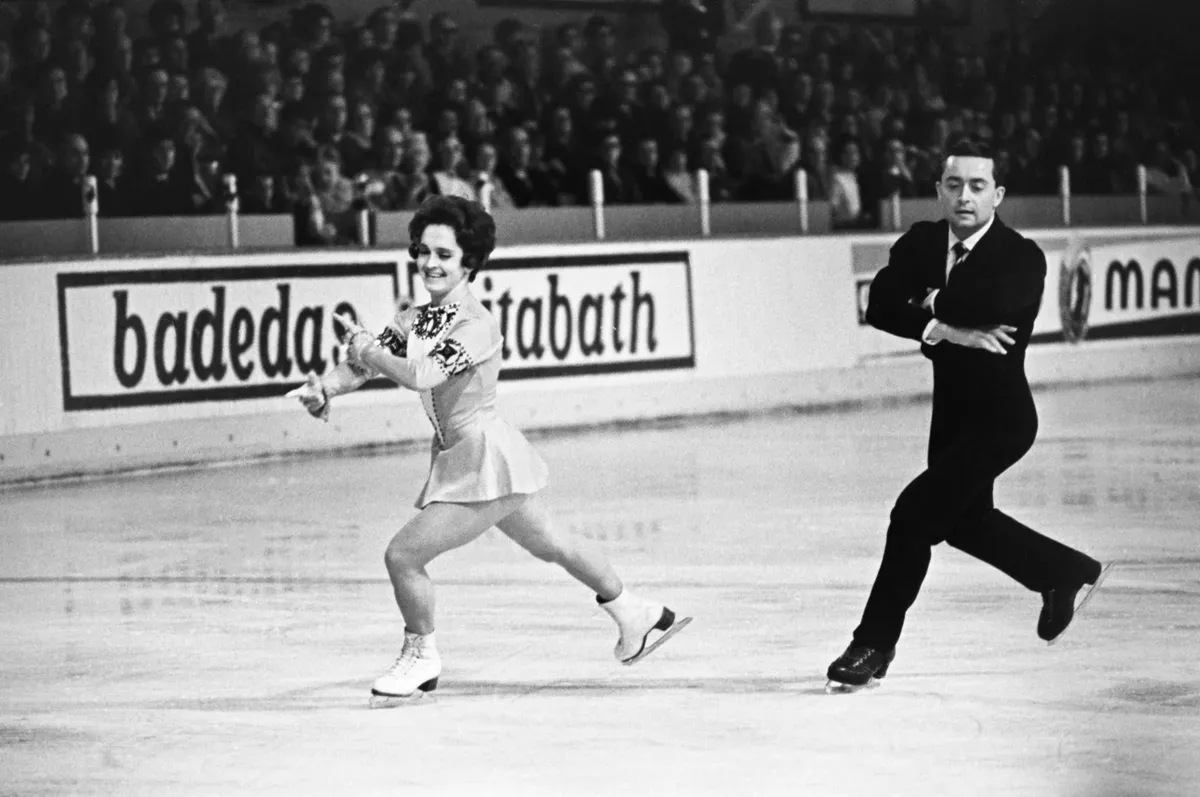
Yes, their tandem was inferior to the leaders of that time in artistry and charm, purity of lines and refinement of movements. But due to non-trivial jumps, their programs looked cheerful and daring. For example, more than half a century ago, Tamara and Alexey were the only ones who performed a double Lutz. In 1967, at the Union Championship, they reached the second place. And in Swedish Westeros, unexpectedly for many, they became vice-champions of Europe 1968, losing only to the unsurpassed Lyudmila Belousova and Oleg Protopopov. Experienced fans probably haven’t forgotten how at the award ceremony the intellectual Mishin comically glided next to the radiant Toma in a knitted sweater, trousers and civilian boots, since he had time to change clothes, not hoping for medals.
Unfortunately, things didn’t go well at the Olympics in Grenoble (in a short performance Tamara missed her jump, and in a free “time” Alexey touched the ice with his hand). But a year later, at the continental forum in Garmisch-Partenhirchen, they grabbed bronze, and at the planetary fair in Colorado Springs 1969, they famously silvered their skates, only failing to cope with the rising stars - Irina Rodnina and Alexei Ulanov. But at the USSR Championship in Leningrad, a bright couple unlike anyone else (see “Gypsy Girl” performed by them) defeated both the inimitable Belousova and Protopopov, and the phenomenal Rodnina and Ulanov. And after international starts, I decided to go overboard. Because Moskvina, as she herself said, needed to defend her dissertation and have children.
She, who never sat idle (Alexey Mishin said that his active companion did not chat even on the subway, but was either studying English, or knitting or taking notes), generally everything was on schedule. And Tamarochka, who graduated from the Lesgaft Institute of Physical Education and gave birth to two daughters, came to coaching consciously. Although she had a complex for quite a long time, trying to find her niche, competing at first, oddly enough, with her dear husband. By the way, after at a training camp in Kazakhstan, Tamara Nikolaevna’s wards - future Olympic champions Elena Valova and Oleg Vasiliev - collided during a warm-up with Igor Borisovich’s students - Larisa Selezneva and Oleg Makarov, as a result of which the two Olegs fought and Makarov, who broke Vasiliev’s jaw, was disqualified - the Muscovites almost divorced. They lived together for 56 years, Igor Borisovich died in 2020. And that scandalous episode is the only dark spot in the career of the wise lady, who does not know how to swear and conflict from the word “absolutely.”
Have you heard that Tamara Nikolaevna, who also managed to finish music evening school in piano, had athletes run away with a scandal? And that’s what’s important. The world of figure skating is a kind of snake kingdom, where there is betrayal and dirty scams. But friendly and unenviously independent Moskvina, who managed to buy and master a computer at the dawn of the 80s, never weaves intrigues and always competes honestly and openly. She has cultivated and is cultivating her ever-blooming garden and reaping a harvest for which there has been no ceasing demand for five decades. It was to her, capable of raising her to the skies without a whip, that people came for their blue dream even from overseas. Remember the Japanese woman from Funabashi? And even if the director herself believes that she made a mistake with the international duet, at which everyone laughed for a long time, but Yuko Kawaguchi and Alexander Smirnov are two-time Russian European champions.
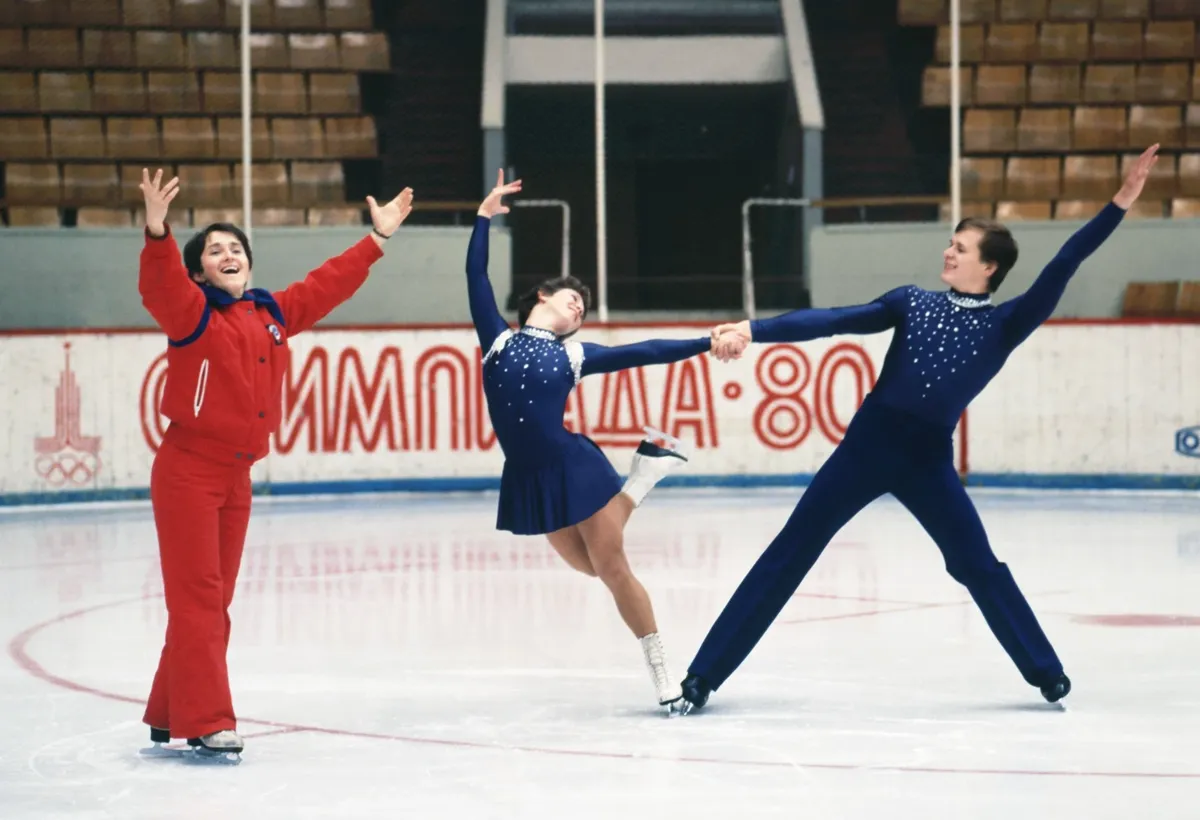
Do you know how many valuable roundels the graduates of Associate Professor Moskvina’s magic academy won at world and continental rallies, as well as the Olympics? Sixty three! And in pair skating, this is an absolute record (it is noteworthy that Moskvina was included in the Figure Art Hall of Fame before Tarasova). By the way, Tatyana Anatolyevna once said this about her comrade-in-arms:
“No one has done so much for the development of this species and brought so many new things to it as Tamara. Where she works, the rest have nothing to do.”
Here are the most remarkable (and by no means all) fruits of her inspiration: Irina Vorobyova and Igor Lisovsky, Natalya Mishkutenok and Arthur Dmitriev, Elena Bechke and Denis Petrov, Oksana Kazakova and Arthur Dmitriev, Elena Berezhnaya and Anton Sikharulidze, Anastasia Mishina and Alexander Gallyamov... But when asked which of her couples she considers the best, Moskvina, possessing the rare ability to adapt to each skater, understand his soul, heart and motivation and ultimately reveal his talent, usually answers briefly: “I don’t compare them... A new student is a new mountain. I teach and grow with them.”
But jewelry ascents and capture of pedestals are only, excuse me, one sparkling side of the coin. The genius and greatness of the energetic and perspicacious Tamara Nikolaevna, in my opinion, lies in the fact that she does not just raise gold medalists, composing masterpiece scenes for them, but participates in shaping the personality of her exclusive and adored students. Here is another quote: “A coach is obliged to educate not only an athlete, but also a person. Even if a child does not turn out to be a high-level athlete, he must leave our group as a good citizen. This is my position." I’ll add on my own behalf: a position that evokes the deepest respect.
For example, with her former students Sasha Boykova and Dima Kozlovsky, who conquered the old world peak in 2020, you can discuss the work of Dostoevsky and Blok. And this, whatever one may say, is a level. After all, the ice in the life of jumpers of all stripes, you see, will melt sooner or later, but the desire to think will remain. Look how the same Kozlovsky once described an impeccable teacher: “She is not just a coach. She is an educator, producer, strategist and statesman rolled into one. Napoleon of figure skating. He always sees what will happen, sees exactly how it will happen, and knows how to act in such a way as to be ready for it. Moskvina never imposed any style of behavior on us. But it creates situations in which you unwittingly begin to behave in a way that helps the result. ...And you would have to be a fool not to use such a tremendous experience of a woman who has gone through all the phases that are possible in sports. And she didn’t just pass, she won...” And at the same time, as she herself emphasized, she never opened the offices with her foot. Moskvina is also firmly convinced that forcing others to do everything the way you want is not the most important thing in life...
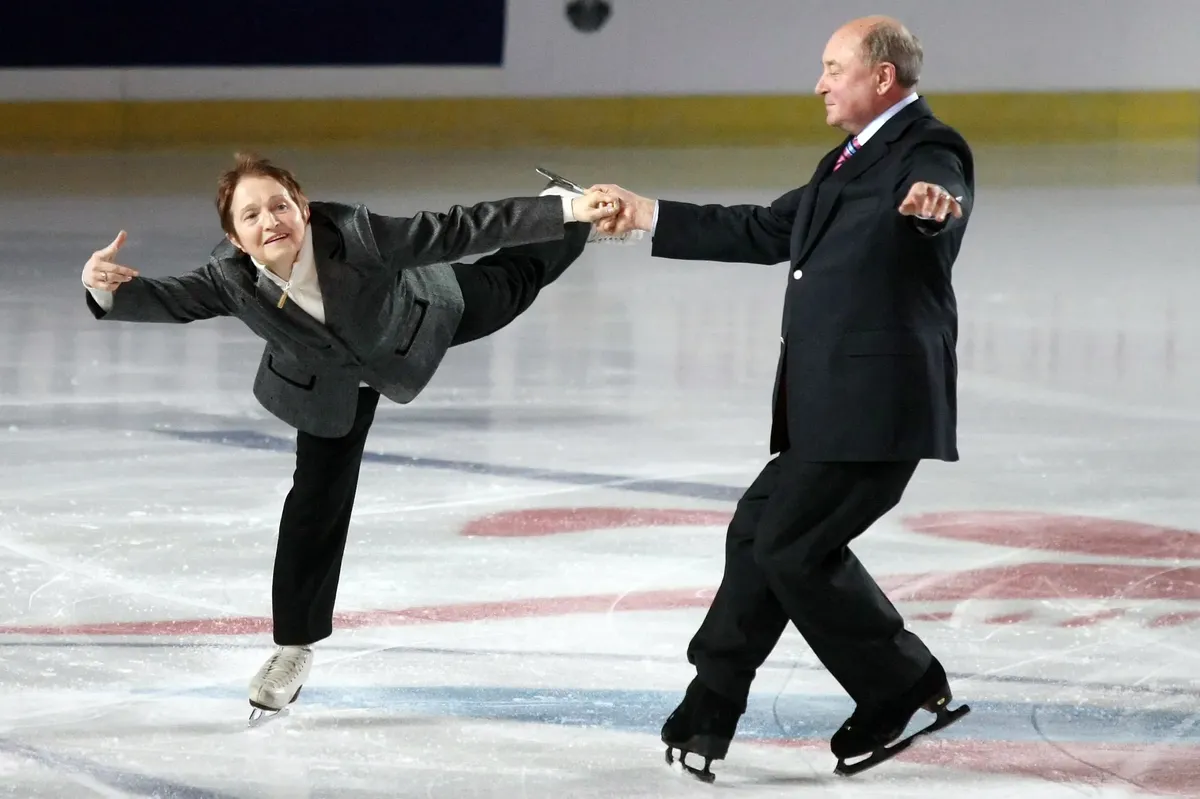
...The sport of the infinitely benevolent and in demand by the community of the jagged skate with heels of the hero of the day, whom younger colleagues today cannot keep up with on the stairs, will, it seems, never end. Charming Leningrad Tamara still easily does forearm stands, drives a car dashingly and still leads bright kids to big victories.
At the end of December, Tamara Nikolaevna played the turtle Tortilla in Ilya Averbukh’s ice show “Pinocchio”. She played in such a way that the audience gave a standing ovation to Moskvina, who delighted the audience with her performance of the swallow, wonderful spirals and flip jumps. After the number, the coach picked up the microphone and said: “The role of a 300-year-old turtle is played by a young, almost 85-year-old girl.”
This material was published in the twentieth issue of Novaya Gazeta. Magazine". You can buy it in the online store of our partners.