
Translated material
Broken light
At MAMT, the premiere of the ballet “Anna Karenina” is an intimate reading of Tolstoy’s masterpiece, heartbeat accompanied by the sound of wheels

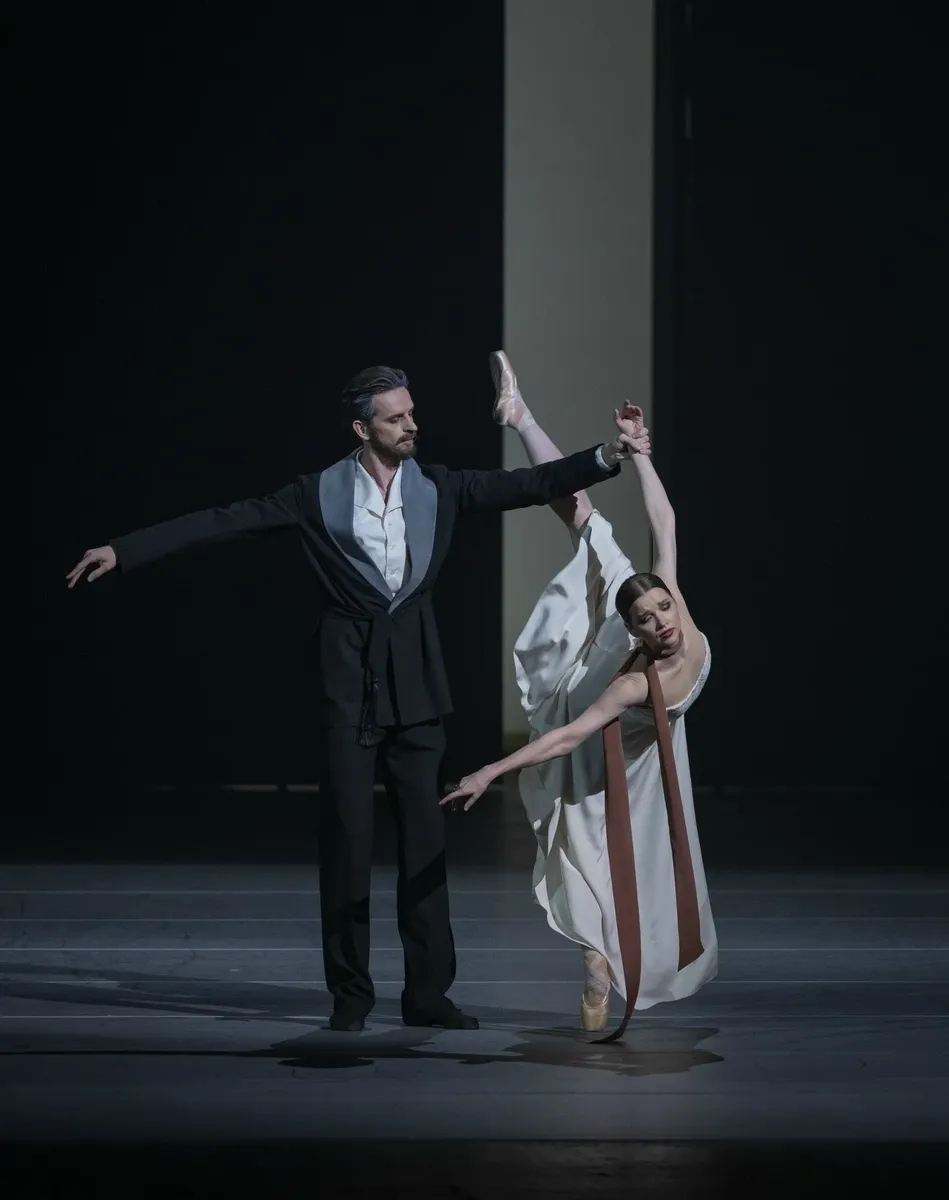
Scene from the ballet Anna Karenina. Photo: MAMT / Alexander Filkin
The history of this ballet began in 2019, when Ilya Demutsky, commissioned by the Chicago Joffrey Ballet, wrote a large-scale canvas for choreographer Yuri Posokhov, and then the performance was an unprecedented success. Demutsky's music sounded under the arches of London's Covent Garden, causing an enthusiastic response from the British press; in Chicago it became the nerve of a spectacular and passionate psychological thriller about the steady movement of fate. Directed by the outstanding choreographer Yuri Posokhov, multimedia projections and moving scenery instantly transferred the action from ceremonial ballrooms to rapid horse races, setting the overall dizzying rhythm of the action.
The Moscow Academic Musical Theater named after K.S. approached the material differently. Stanislavsky and Nemirovich-Danchenko. The artistic director of the MAMT ballet, a young and ambitious choreographer Maxim Sevagin, consciously abandons the usual ballet elegance, pomp and outward showmanship. He focuses on the main theme of the novel - the theme of irresistible love - a universal prism through which Tolstoy explores the meaning of human life, existential choices, and the conflict of the individual with society.
This two-act performance is an extremely attentive, concentrated, almost intimate reading of Leo Tolstoy’s masterpiece.
At the same time, the new “Anna Karenina” is not a retelling of the plot about fatal passion. This is a chamber statement about the two poles of existence. Based on the libretto written together with playwright Andrei Zolotarev, Sevagin builds the performance on the counterpoint of the main cross-cutting themes of the novel. On the one hand, there is Anna (Natalya Somova), at first a prosperous, self-confident lady of high society. But after an unexpected meeting with Vronsky (Herman Borsai), an unprecedented all-consuming feeling that flared up like a torch knocks the ground out from under your feet and burns you. It's like a heart attack and rapid heartbeat, reminiscent of the fatal clatter of train wheels. Burning to the ground, caught in a whirlwind of destruction and nervous tension, she tries to hold on, but flies towards doom.
On the other hand, there is Levin (Evgeny Zhukov), whose line here acquires full, creative weight. This is the path from existential despair, unrequited love and loneliness, which he tries to drown out with the hardships of village work, to finding harmony. Here is Kitty, whose party is also blooming with new colors, at first a pink fluttering cloud - the haze of youth. Rejected by Vronsky, Kitty (Elena Solomyanko) grows up, having gone through disappointment, gradually becomes attached to Levin, looking for harmony and quiet happiness in life with him.
Colliding these two worlds, the choreographer refuses moralizing. He is attentive to each character: even the cold Karenin is not just an obstacle here, and he is not an emotional invalid, but a tragic figure, whose “status”, emphatically classical plasticity reveals a person who loves in his own way, but does not know how to express it.
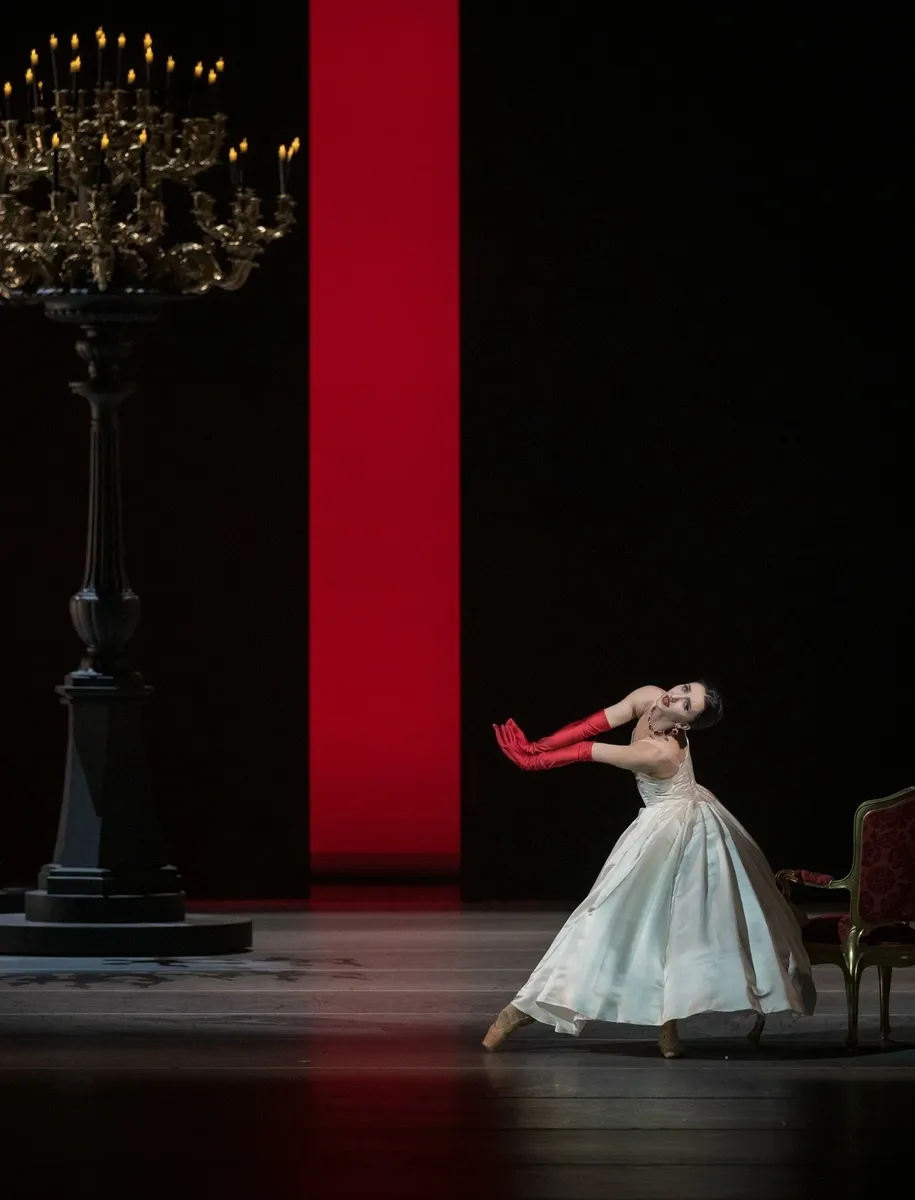
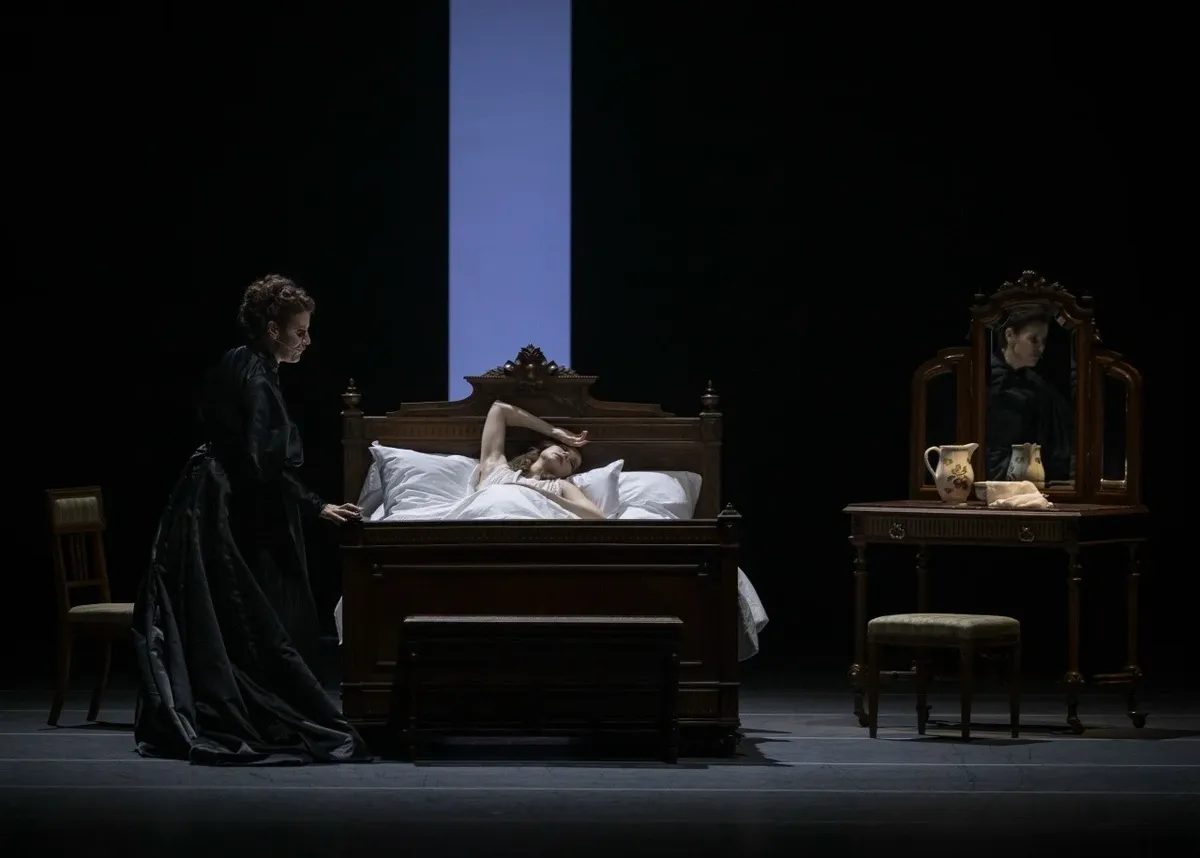
The aesthetics of minimalism reign supreme in the performance. The set design by Vladimir Arefyev and the lighting score by Oleg Strashkin are a triumph of metaphor over literality. There are no fake trains or lavish decorations of St. Petersburg living rooms here. The stage space turns into a psychological landscape. Recamier couch - Anna's bedroom. Wagon with hay - Levina village. The station is a dim lantern against a black background. Karenin’s office, where the exiled Anna makes her way, shrinks to a desk and an empty, oppressive “black square”. Theater - velvet chairs and huge candelabra.
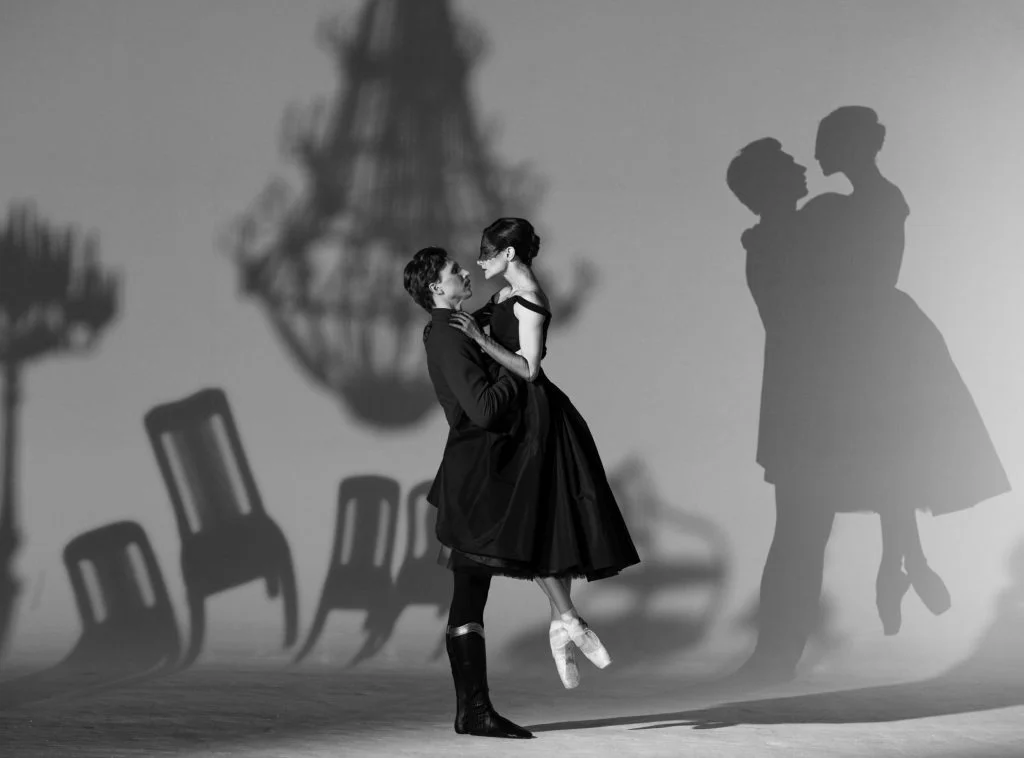
And a giant chandelier with a thousand candles, slowly creeping down from the darkness of the grate, setting the trajectory of fate.
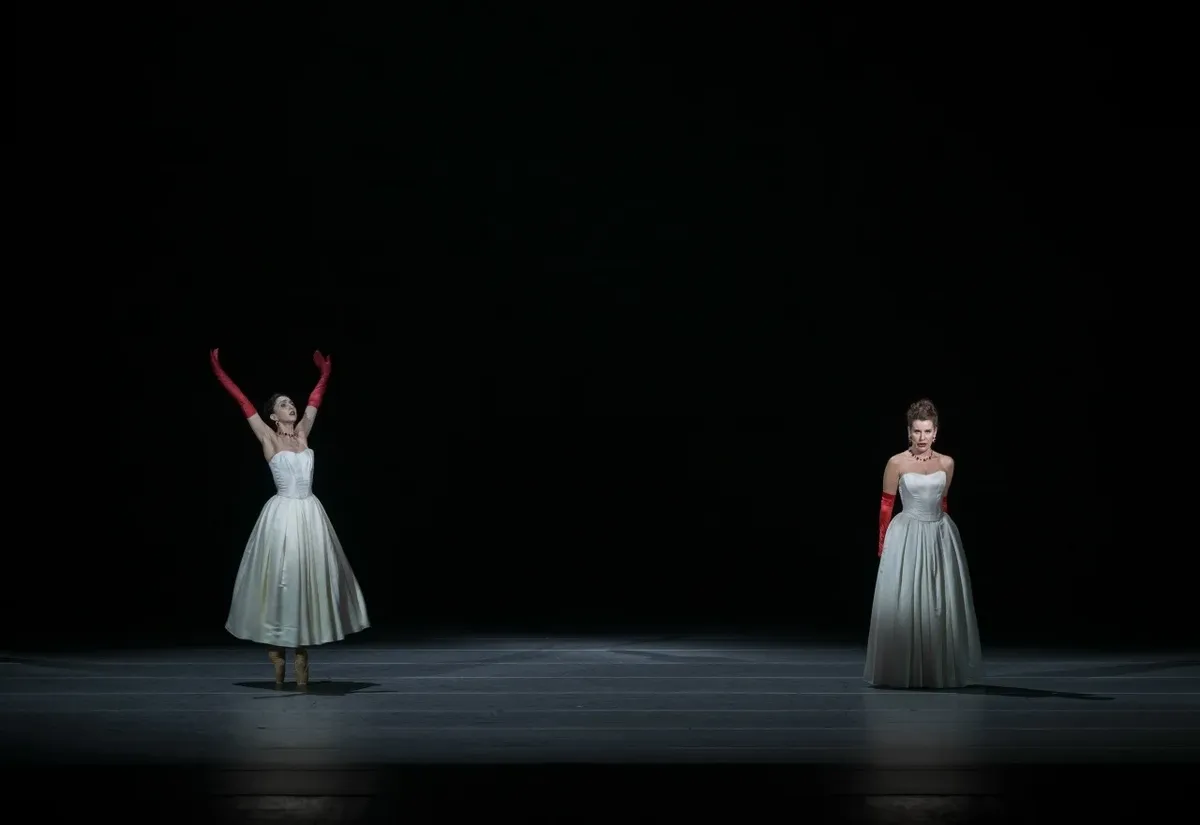
Light in this performance is a full-fledged ruthless character. In the scene in the theater, when Anna suddenly appears in a dazzling white dress and scarlet gloves (an image of vulnerability and fragility that breaks the heart), a beam of light defiantly snatches her out of the twilight. He literally cuts her off from society, from Vronsky, as later from Levin, Karenin (Ivan Mikhalev) and from her son. Light isolation demonstrates how the heroine gradually becomes invisible to the world, left alone with her haunting, spinning top theme (a haunting woodwind solo).
Or the duet of Anna and Karenin as an attempt at explanation. But Anna has a scarf-noose around her neck... And suddenly a quiet lyrical piano solo. Her plea is to let her and Seryozha go .
Sevagin’s choreography is based on classical vocabulary, but for all its romance and flight, it is devoid of academic smoothness or the usual “white ballet” steps. The movements are syncopated, tense, they convey internal fractures. Anna in a black lace dress suddenly hovers over Vronsky, like a black bird anticipating death. Her movements are a plastic fracture, the external drawing reflects the psychological state of the heroine.
This internal drama is brilliantly supported by the restrained costume design of Irina Serova (EDEM Couture). Abandoning museum historicism, the artist created color codes for each character and clean, almost graphic silhouettes. Corsets, noble taffeta, fine lace, chiffon, green cloth of Vronsky's uniform. Anna's image changes, reflecting her transformation: from a confident socialite in a black silk dress with a lace blindfold at the ball - to a broken woman in the theater or in Karenin's office, when she is deprived of the opportunity to communicate with Seryozha, and the high walls of the backdrop move down, leaving only a narrow slit of light.
One of the strongest directorial moves is the “triangle” line. Psychologism reaches its peak in the scene at the bedside of Anna, who is dying after giving birth. Pas de trois, a dance of three - Karenin, Vronsky and Anna - is not just rivalry, jealousy or forgiveness. This is a dance of deep reflection, of people forever connected by invisible threads of guilt, love, misunderstanding.
The motionless Anna flows from hand to hand - these are two sides of the same trap: there is no way out between duty and passion.
And when Anna, in childbirth fever, finds herself in a white bed - at the edge of life, the choreographer comes up with a micro-dance for her hands, this is a dance-prayer.
Demutsky's music in the neo-romantic style is a reflection of the internal conflicts and transformations of the characters. The music does not follow the Chicago score. The sequence of numbers has been changed, and Demutsky wrote a number of episodes specifically for the new production, shifting the semantic accents.
This has a lot to do with how the choreographer builds the dramaturgy of the performance. He relies on expression and experience, while at the same time not forgetting about the key moments of the novel and their delicate interpretation. There are practically no avant-garde solutions here. The score is based on a system of leitmotifs.
Two cross-cutting themes will be especially memorable: the spacious melody of Anna’s all-consuming love and the theme of a hostile society, ragged, syncopated, and in a crescendo acquiring the effect of a cinematic impact. But the main emotional outburst unexpectedly becomes live vocals.
Fragments of “folk songs” composed by Demutsky, which are performed by the opera soloist, either in the role of housekeeper Agafya Mikhailovna, or as a reflection of Anna’s inner world, are not an ethnographic background (it is not Tolstoy’s text that sounds here, but the words of folk songs). The song sways like waves, pushing apart the conventional “walls”, breaking free.
This scene reminded me of an episode from War and Peace, in which Natasha Rostova visits her uncle after a hunt. And when her uncle plays a Russian dance song on the guitar in the evening, Natasha, despite her aristocratic French upbringing, unexpectedly for everyone begins to dance perfectly, with a genuine Russian spirit. And here the chanting vocals are the voice of the earth itself, the voice of fate. And Anna's voice. When this song sways like a wave in Anna’s moments of despair, it creates a changeable effect that reflects her confused inner feelings, hopes, fears, reckless crushing love.
The voice does not illustrate the plot; it mourns the heroine even before she throws herself under the wheels. But the rhythm of inevitable fate, born in the drum group at the races, here acquires primordial, pagan power.
An exact metaphor was found for the tragic ending in the play, the image of Death - a falling and breaking lantern hanging over the platform. And this, together with the light chord, is a strong solution.
But further, as in the novel, the code is connected with the happy Peisan life of the Levin family. Everything is perfect in music. This is a lullaby. It contains the light of a new life - the offspring of Kitty and the Levins, and crying. In the stage interpretation, the dance in the soft sunset light of Levin and Kitty looks somewhat syrupy. Although very close, in the center of the stage, a broken lantern remained lying.
Broken light.
Despite some shortcomings (I actually had a chance to watch the dress rehearsal), “Anna Karenina” at MAMT is a performance that, following Neumeier, Plisetskaya, Eifman, Posokhov, confirms ballet’s right to deep, adult reflection. Refusing flashy modernism and Hollywood scale, Maxim Sevagin and Ilya Demutsky created a work where minimalism hides the endless depth of the restless human soul, seeking harmony and love. This is a romantic but extremely careful reading of a classic that, a century and a half later, continues to sound as if it was written yesterday.
About the right to feel and love freely. And the highest and most unpaid price for this right.