
Translated material
What else needs to be screwed on? And who to clone?
How the St. Petersburg International Legal Forum corrects reality

XIV St. Petersburg International Legal Forum. Photo: Petr Kovalev / TASS
No matter what happens inside and outside, the flow of fateful forums, discussions, and debates does not dry out in our fatherland. In recent days alone, the Primakov Readings, a meeting of the Valdai Club and the St. Petersburg International Legal Forum have taken place, stepping on each other’s heels. There are respectable speakers everywhere, from the first echelon. Before Sergei Lavrov had time to finish his speech on one podium, Dmitry Medvedev had already ascended to the other. The piquancy is that the indicated formats are largely similar in meaning, problems, and rhetorical techniques.
There are, however, nuances. SPBILF takes the lead thanks to its ability to generate responses and memes.
The collective thought of the servants of Themis is moving in the direction indicated by Saltykov-Shchedrin - the people should be kept in constant amazement.
The very beginning was already promising. Deputy Minister of Justice Vadim Balanin said: cohabitation without marriage threatens the national security of the country. The public did not even suspect such fears. The number of threats, as well as prohibitions, is increasing at cosmic speed.
In the global plan of reshaping reality, history is one of the most important. What previously looked like a particularity turned out to be a pattern. The year before last, members of the forum staged a trial of Vera Zasulich. She, one of the first Russian Social Democrats, an activist of Narodnaya Volya, was accused of connections with Europe, terrorism, and even (this is not a joke) of commercialism.
Last year, the Decembrists, who celebrated their 200th anniversary, were pilloried. Pushkin looked into the water: “Your sorrowful work will not be wasted.” He, the work, was noticed by the Minister of Justice Chuychenko, who found “virtually nothing positive” in the rebellion. He also did not approve of the legitimate government - it was too liberal. Although, I believe, the political regime of Nicholas I may seem like that only to today's decisive jurists.
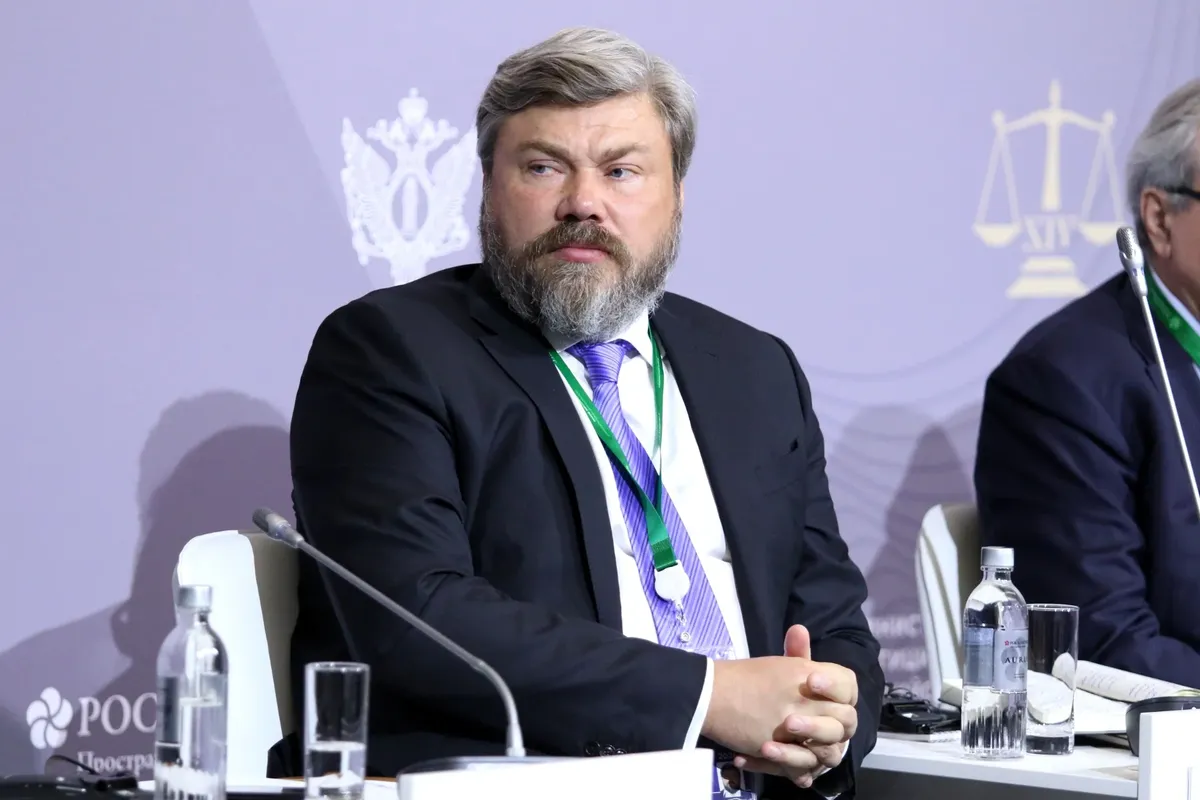
In 2026, they continued to restore order to the past. One of the important sessions was called: “1905: revolution and reforms. History lessons." The two Konstantins, the founder of “Tsargrad” Malofeev and the same Chuychenko, are both unanimous and categorical in their assessments: the flywheel of the revolution could have been stopped, the Minister even knows exactly how it should have been done: “If we are letting go of something somewhere, then we need to tighten it on the other side.”
So, the best minds set about arranging history. While the correct textbooks will still be written and the necessary special storage facilities will be built, legal scholars have already here and now identified the dominant theme of past failures - the weakness of power. This is what their message looks like to the current rulers, who are constantly obliged to “tighten up” something for the sake of balance. The emperors suffered the most from Malofeev. The fiery orator struck Nicholas I for being too soft towards the Decembrists (as if they had been exiled not to the Siberian mines, but to Courchevel), and Alexander II for liberal reforms, and only Alexander III was able to reassure the newly minted historiosophist. However, “Tsargrad” can do anything. But the rector of the Russian State University for the Humanities, Andrei Loginov, immediately made a scientific discovery: it turns out that under Nicholas II there was an “unprecedented humanization of the regime.” The moderator of the session, Mikhail Shvydkoy, tried to somehow switch the speakers from slogans to business conversation, but, alas, it did not work out.
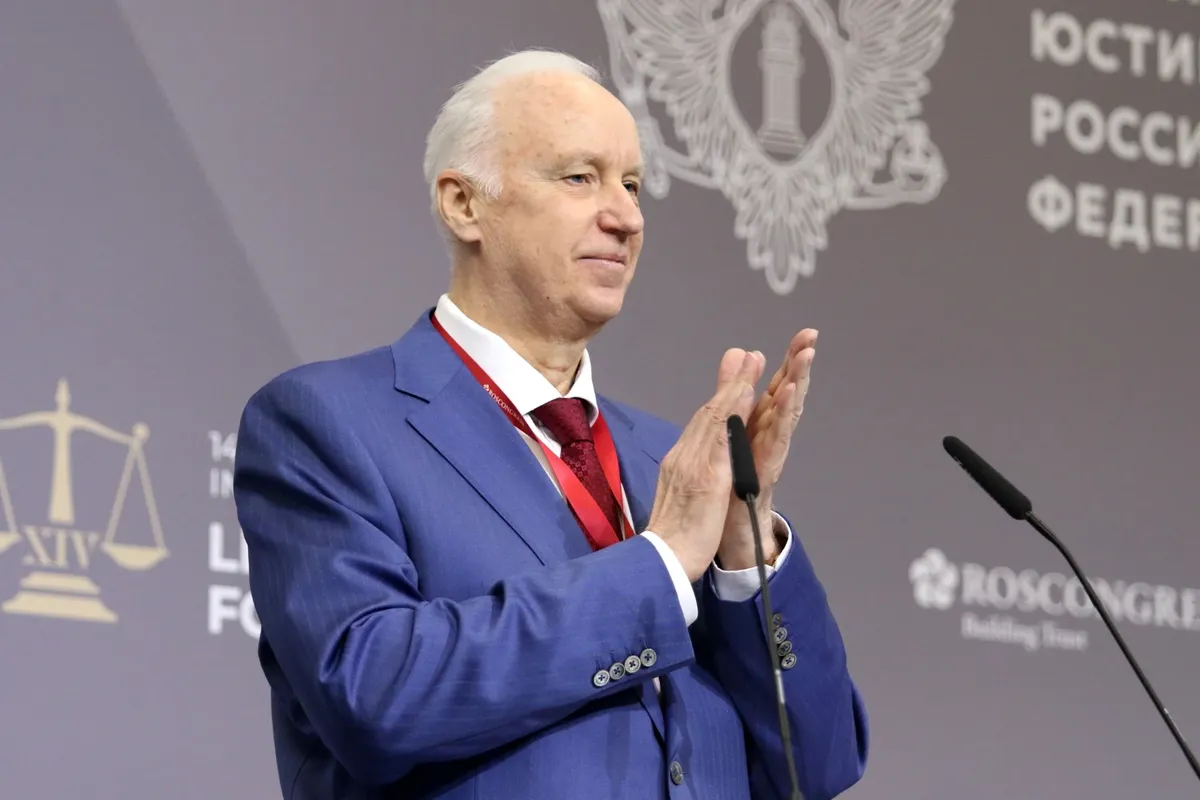
Toward the end of the forum, an interesting plot twist occurred. The head of the Investigative Committee, Bastrykin, became the violator of the convention and the main star of SPBILF-2026. His speech was generally varied and extensive, but let us dwell only on the historical context. Previous speakers, I repeat, recognized almost the entire liberation movement inspired by the West as disastrous for Russia. In such an atmosphere, Alexander Ivanovich reads his poem, which, in fact, breaks out of its harmonious concept. Already the initial magical lines demonstrate a different view of my native history: “I want to go back to the Union in which I was born. Having dumped the heavy burden of deception, free yourself from dreams.” Some roughness of style, meter, syllable (after all, this is not a forum for defenders of the Russian language) is compensated by a large and bright feeling. But the USSR would not have existed without the above-mentioned liberation movement.
But that's not all. Bastrykin sang loudly, victoriously: “And Lenin is so young and young October is ahead.” I dare to remind you that Vladimir Ilyich was also born not from the foam of the sea, but from a revolutionary element, objectionable to jurists. The Decembrists, Herzen, Narodnaya Volya are the forerunners of the leader of the world proletariat. The public's reaction was hot - she gave the head of the Sledkom a round of applause. Someone shouted from the audience, they say, we don’t have enough such leaders, unfortunately, you are alone, and the country is large. Bastrykin parried the attack with lightning speed: “I need to be cloned. Are there any doctors? The question remains open.