
Translated material
Uni. Patronage of the church, exile, criminal case. The history of Yerevan State University - a famous private university, which was recognized as extremist in Belarus

Patronage of the church, exile, criminal case. The history of Yerevan State University - a famous private university, which was recognized as extremist in Belarus
Now Belarusian students of the European Humanities University (EHU), which is located in Vilnius, are being searched. A criminal case has been opened, and human rights activists do not recommend that those associated with the university return to Belarus. The Viasna Human Rights Center is already aware of more than 60 searches, not only of students, but also of university graduates and former teachers. The only thing unknown is the article of the Criminal Code of Belarus under which the case was opened. But, most likely, this is Article 361-1 (“creation of an extremist formation or participation in it”) or 361-4 (“promoting extremist activities”). There cannot be any other options, because on April 14, the Supreme Court of Belarus recognized the Yerevan State University as an “extremist organization.”
And once it seemed that nothing could happen to this university. It opened in Minsk when no one knew Lukashenko’s last name. And then it began: deprivation of a license, expulsion, work in exile. And now there is extremism, a criminal case, more than a hundred immediately expelled students and vague prospects. "New Europe" tells the story of EHU. It is indicative: all this can happen to any emigrant university.
Yerevan State University is one of the first private universities in Belarus. It opened for applicants in 1992, with eight faculties, including theology, which was unusual and new for the post-Soviet republic. It was the Belarusian Orthodox Church that was something like a “roof”, and this added confidence that everything would be fine with the university. At that time, however, no one could even think about revoking the license, or in general that Belarus would become first a presidential republic, and then a dictatorship. But the Orthodox Church has always been a serious player, and if it takes a new educational institution under its wing, this is a guarantee of success.
Actually, the concept of the new university was invented by two people: Doctor of Philosophy Anatoly Mikhailov, who became the rector, and Metropolitan of Minsk and Slutsk, Patriarchal Exarch of All Belarus Filaret. We decided to create a university with in-depth study of the humanities and social sciences and foreign languages. The co-founders were the Ministry of Culture and the Ministry of Education of Belarus, the Minsk City Executive Committee, and the National Academy of Sciences.
“I entered Yerevan State University at the Faculty of Arts in 1998, during its “golden” years,” recalls graduate art critic and art curator Elvira Koroleva. “Back then we all wanted something innovative.” The word “European” was like a magnet. State universities seemed to be the stronghold of Soviet academicism, but here there was both European and humanities. And languages were taught intensively, and invited teachers from Europe came. For example, a curator came who worked with Chagall’s granddaughter. She brought this granddaughter to us, who came to Minsk at that time. This kind of practical training provided more than academic lectures could provide. That is, the university met modern requirements. Even now it is very easy for me to work in Europe thanks to my studies at Yerevan State University. But, of course, theology in faculties that had nothing to do with the study of religion was strange. I still remember the resentment towards the priest, who gave me a “B” for my prayer. I thought I read it well.
The then EHU students were confident that, even if they did not receive the classical education that was given in state universities, they would become sought-after modern specialists who would know exactly what the modern world is breathing and where it is moving.
Education at Yerevan State University was considered “exportable”, that is, graduates could easily find work abroad. Two buildings in the city center and one of the diocesan buildings, given by the church to the theological faculty - not every university could boast of such areas. However, it expanded not only in square meters.
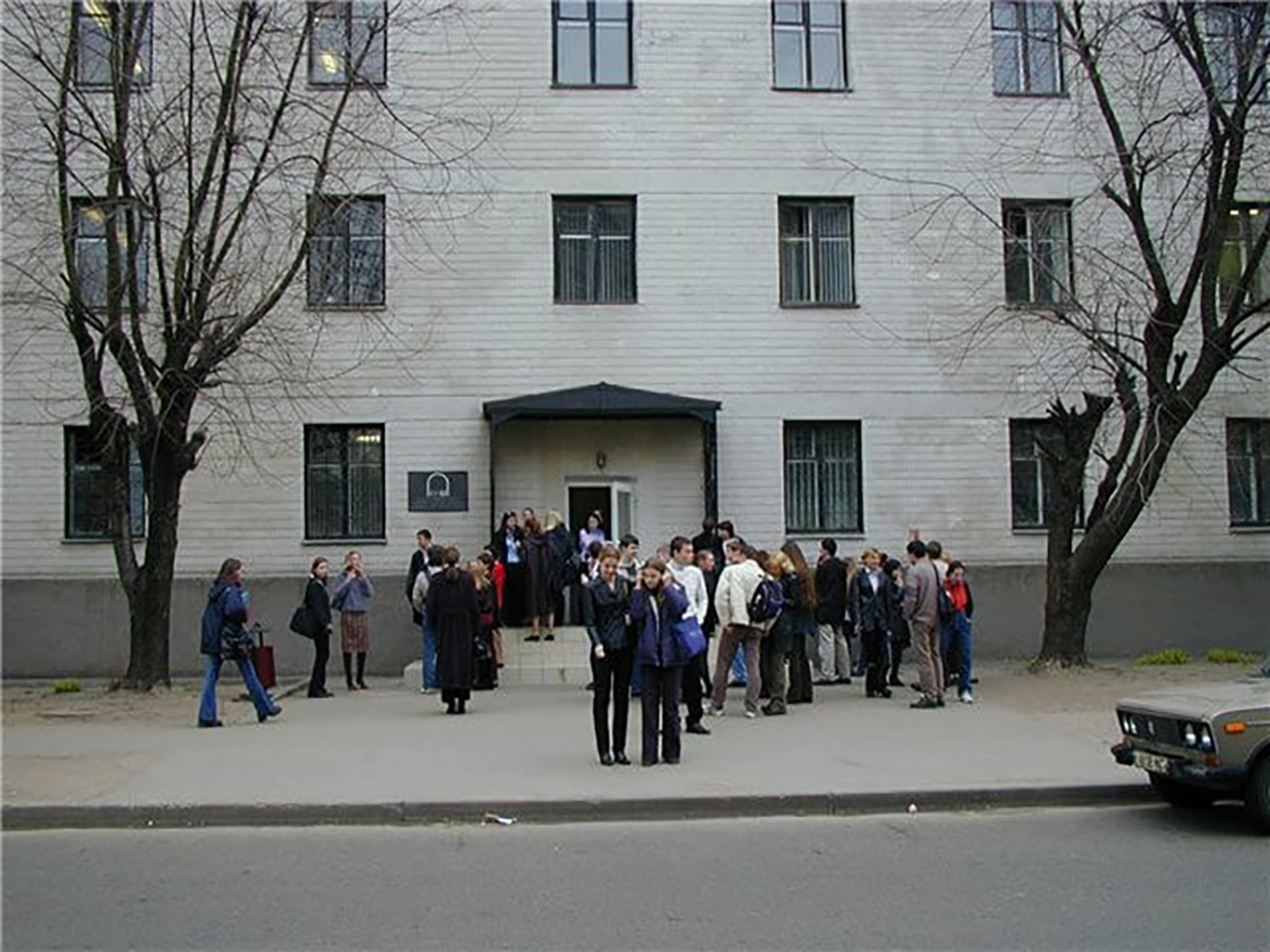
Thanks to the French Embassy in Belarus, a French-Belarusian faculty was opened at Yerevan State University in 1993. Thanks to the US Embassy - in 1995 a center for American studies. Thanks to the German Embassy - in 1997, the Institute for German Studies. The MacArthur Foundation gave a grant to open a center for gender studies, and the Open Society Institute gave a grant to reconstruct the building. Prosperity oozed through the university walls. The church patronized. There were no alarm signals coming from anywhere.
“We were convinced that nothing could happen to EHU,” recalls Elvira Koroleva. “Also because a large number of children and mistresses of officials studied with us.” This was perceived as a good sign: the official would not send his lady love or daughter to a sinking ship. We knew that we were not very popular in the academic community, but we didn’t even think about the fact that the university could be closed.
However, on July 27, 2004, the Ministry of Education of Belarus revoked EHU’s license to provide educational services. The Ministry’s decision stated that Yerevan State University was not certified based on the results of a routine audit, since it “did not meet the requirements for university-type universities.” The university was accused of training students on the basis of “experimental curricula that do not meet the standards for higher education specialties.”
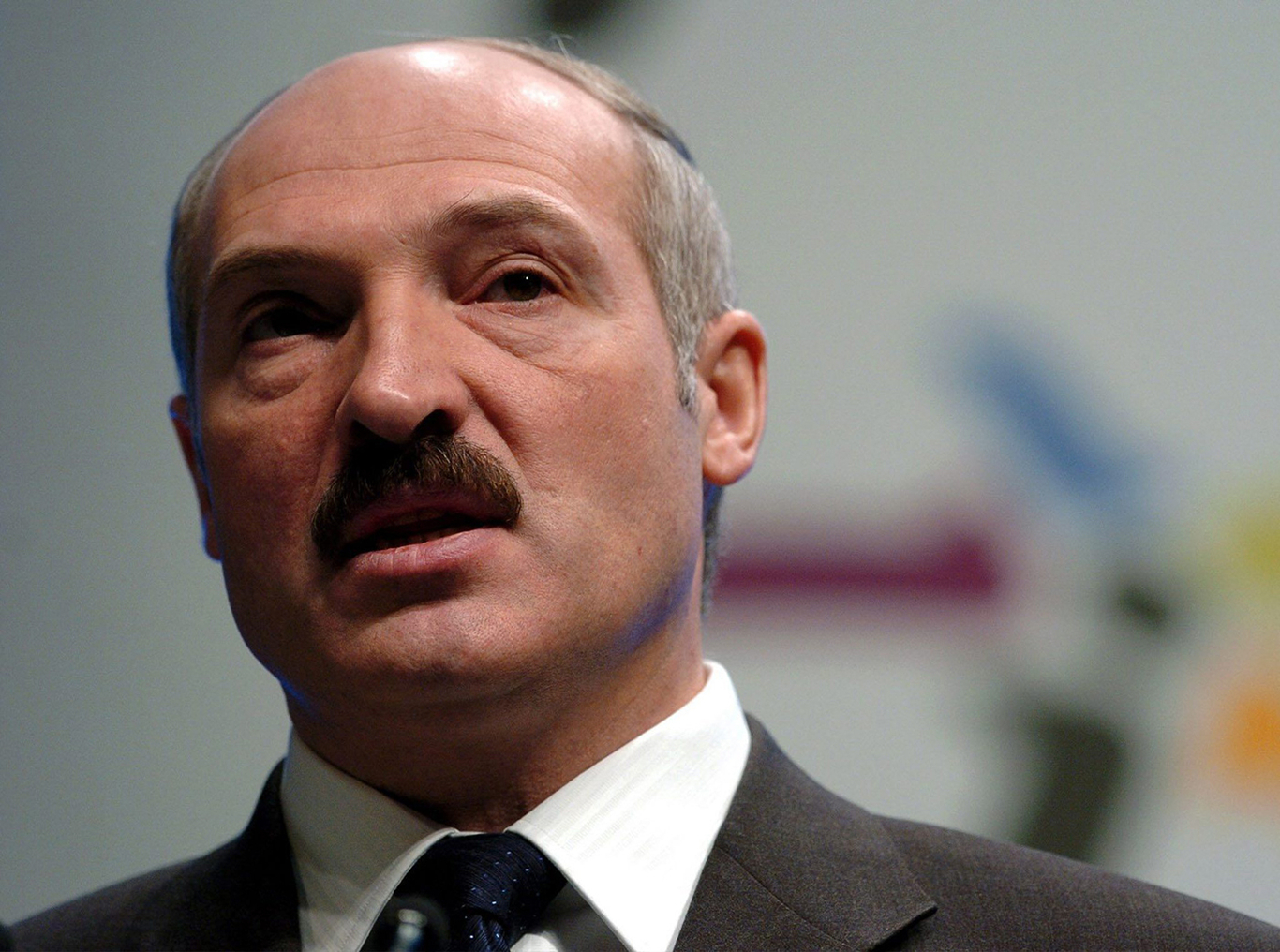
Lukashenko soon explained why EHU was banned. During a trip to Brest in September of the same year, he spoke to Brest students and said: “When it [EHU] was opened, it was an interesting and attractive project for young people and for the state: many foreign lecturers came, trips abroad for students who studied there, European diplomas and so on. This is the external facade. But there was also an implicit main idea - to prepare here, in Belarus, at the European Humanities University, first of all, a new Belarusian elite, which would eventually lead Belarus to the West. It turned out that Westerners in the center of Minsk are preparing future leaders, the elite.
But what about the rest of the Belarusian universities - Brest, Vitebsk, Gomel, Mogilev, not to mention the leading Minsk ones? Who are they preparing - servants, slaves for this very elite?”
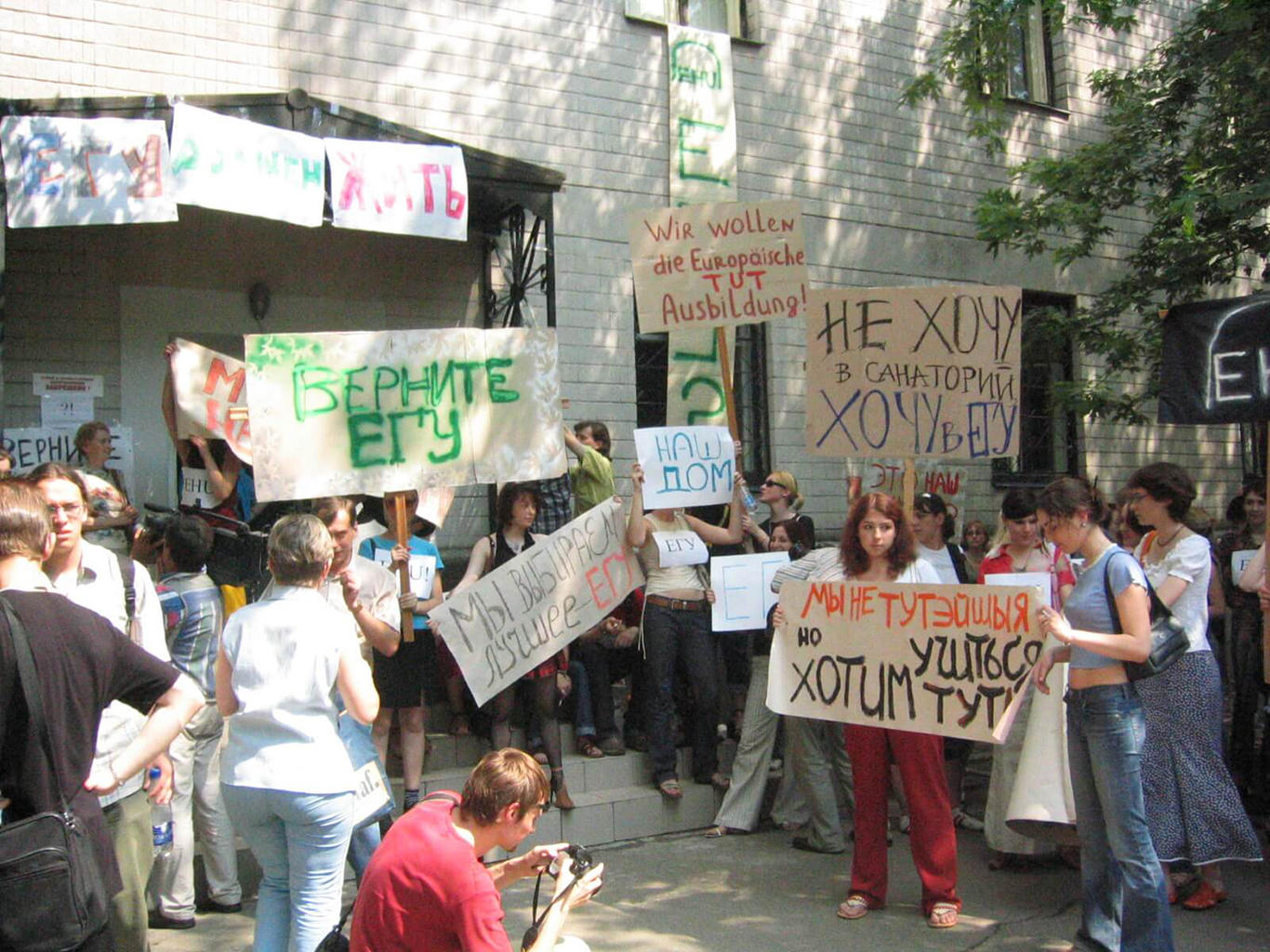
The day after the license was revoked, students picketed the university building. They held posters “Bring back YSU”, “Our home is YSU”, “We choose the best – YSU”. And on August 2, students held an action on Oktyabrskaya Square in Minsk. They sat on the ground and read books: we will still study, even if it’s on the street.
However, the university did not remain on the street - Lithuania accepted it. Teachers switched to a suitcase lifestyle: while remaining in Minsk, they came to Vilnius on a rotation basis, gave their lectures and went back. And the very faculty of theology, which was supported by the Orthodox Church, transferred its entire staff to the Belarusian State University.
“YSU sold Europe to Belarus, and Belarus to Europe,” says the famous Belarusian culturologist Maxim Zhbankov, a former teacher at Yerevan State University. — But you can’t sell Orthodoxy in Europe, so it’s not surprising that theologians remained in Belarus. And nothing else changed. The fact is that it was not just a university that moved to Lithuania - a certain administrative system that did not feel the need for modification moved. It very comfortably ensured its existence in the regime of authoritarian administration. That is, the field project had no incentive to develop. On the contrary, it was important to remain in the role of a small candle factory, a small private educational institution, in order to successfully sell its Belarusian otherness. And it sold really successfully because it included a political aspect: “we are helping victims of the regime.”
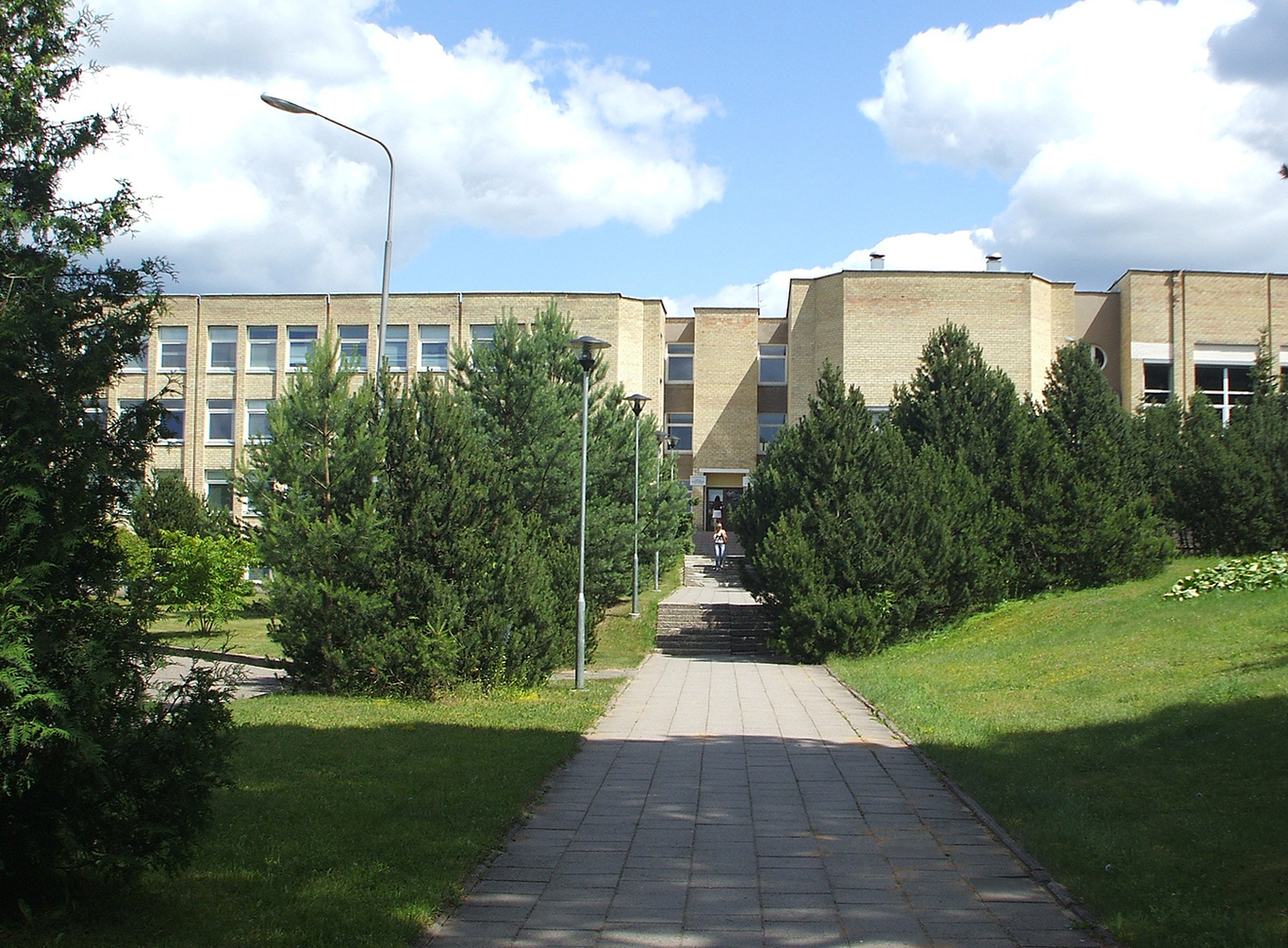
Since there were few victims of the regime in 2004, the world was actively involved in helping EHU. The donors were the European Commission, the Nordic Council of Ministers, the governments of Lithuania, Poland, Estonia, the USA and other countries. In 2017, the building of the Augustinian monastery in the Old Town of Vilnius was transferred to the university.
Conversations that the university is not developing, the quality of education is falling, and that the administration has taken away the main legacy from Belarus in the form of a totalitarian style of leadership, were suppressed and not brought into the public space. If Lukashenko vilified EHU from the podium, don’t be like Lukashenko, don’t criticize.
Nevertheless, even through the aura of inviolability, details of internal functioning, similar to the functioning of Lukashenko’s system, emerged. In 2014, a group of teachers who created the faction “For a New Yerevan State University” and fought for reforming that same administrative-command system was fired from Yerevan State University. The contract with the chairman of the university senate, Pavel Tereshkovich, was terminated ahead of schedule. Among those fired was Maxim Zhbankov.
“We then tried to achieve basic protection of the rights of teachers,” he recalls. — The simplest example: our women had children while working at Yerevan State University, but did not receive maternity leave or the payments they were entitled to. By the way, after we were thrown out of there, those who remained - those who did not support our protest then - felt better. That is, we worked as consumables. It was a protest of the minority in favor of the majority. You could say that this was a sketch, a rough timeline of what happened in 2020 to all of Belarus, when all democratic institutions, like our university senate, were authoritarianly destroyed. In that situation, the majority of the Senate supported a direct conversation with the administration and the fulfillment of our basic demands. And there was a part of frightened and loyal conformists - mostly professors who had something to lose, for example, a mortgage. And when we went into conflict, this conformist part did not support us.
After the dismissal of the rebel teachers, the YSU Senate became an advisory body instead of a governing body. The controller of academic ethics and procedures of Lithuania pointed out to the management of EHU the illegality of the decisions, but the practice of dismissing those who disagreed continued . On October 1, 2019, students began the academic year with a protest: in the morning they gathered in front of the university building with posters “Bring back YSU!” - with the same ones that we went out with in 2004 in Minsk. Then the demand to return Yerevan State University was addressed to the Lukashenko administration, and now to the administration of the university itself. The student representative office put forward demands: the return of dismissed teachers, the return of powers to the senate, the making of transparent personnel policies, the abolition of the tightening of financial rules (during the summer holidays, the university increased tuition fees by 400 euros per semester).
After the protest, students continued to talk about the administration's pressure on their representation. And then 2020 came, and the fight for our rights went beyond the walls of the university - then the whole of Belarus protested. Due to the fact that Yerevan State University was no longer geographically accessible to the Belarusian security forces, they could not close it again and arrest everyone. Although many students, having arrived home in the summer, ended up in Akrestsin for participating in marches.
In 2023, Yerevan State University was rocked by a scandal: student Tatyana Borisova accused teacher Sergei Seletsky of harassment. In response, Sergei Seletsky stated that the student was a mentally ill person and tried to commit suicide. Posts from other girls accusing Seletsky began to appear online. As a result, ESU convened an independent commission to investigate the incident, which recommended dismissing the teacher.
Seletsky was fired, but Tatyana Borisova was also expelled : “no person, no problem.” As a result, both Seletsky and Borisova were reinstated through the courts.
Seletsky was fired in December 2023, and in October 2024, a Vilnius court decided to reinstate the teacher in his position and pay him compensation in the amount of 40 thousand euros for nine months without work. And in October 2025, the court declared Tatyana Borisova’s expulsion unlawful and ordered Yerevan State University to reinstate her. True, he refused compensation: for these two years Tatyana worked at a factory and in a museum, so there was no “downtime” like Seletsky’s.
On April 14, 2026, when it seemed that everyone in Belarus had already been imprisoned, and some had already served time and got out and the security forces seemed to have nothing else to do, the Supreme Court, at the request of the Prosecutor General’s Office, declared Yerevan State University an extremist organization. YSU, according to the prosecutor’s office, interacts with representatives of various terrorist and extremist organizations, and its goal is “to commit attacks on the independence, territorial integrity, sovereignty, foundations of the constitutional order, public security of the Republic of Belarus.” The prosecutor's office claims that "the criminal actions of a number of its teachers and graduates are confirmed by materials of criminal cases on inciting social hostility and discord, conspiracy to seize state power, calls for restrictive measures, as well as the commission of other serious and especially serious crimes."
Searches and criminal cases became a natural implementation of the decision of the Supreme Court of Belarus. After being declared an extremist organization, there are no other scenarios in Belarus.

“In fact, it all started not in April, but earlier,” says YSU student Leonid (name changed). — Even before the start of the academic year, the website and social networks of Yerevan State University were recognized by the Belarusian court as extremist materials. Then the university gave some reaction to this: students were asked to clear their browser history, unsubscribe from EHU pages on social networks, and leave all groups and chats while crossing the Lithuanian-Belarusian border. But after YSU was recognized as an extremist organization, there was no such reaction. Students themselves come up with instructions in their own chats and advise each other on how to avoid criminal prosecution in their home countries. They give advice on how to hide bank transactions; they ask parents, if there are any university documents stored at home in Belarus, to destroy them. There was some statement from the rector condemning the illegal act of the Belarusian court. But we exchange information in student chats, and basically everyone writes that the university is not taking any measures to protect students. Many sent letters to the rector’s office, but personal responses to students mostly “expressed concern.” And most simply do not know what to do, since there are no clear instructions. By the way, judging by messages in chats, searches were carried out both among the 2019 graduates and among those who were expelled altogether. We meet with human rights activists, but we don’t have high hopes for the university leadership.
By the way, if previously Belarusians made up 95% of the students, now, according to the rector, they are 74. The rest are Russians and very few Kazakhstanis. Meanwhile, punitive cooperation between Russia and Belarus is in full swing. And how much the decision of the Belarusian court can affect the fate of students from Russia or Kazakhstan remains an open question. There are no questions with Belarusians, everything is clear with them: extremist articles, up to six years in prison.
"Radical maintenance measures"

On May 28, the current rector of Yerevan State University Vilius Shadauskas and other university leaders met with representatives of Belarusian civil society at the Lithuanian Foreign Ministry. The main motive of the rector’s speech was the grim situation (he said) after the university was recognized as an extremist organization. This meeting was also attended by some former Belarusian political prisoners expelled from Belarus. Including Social Democrat Sergei Sparis, who served five years for “mass riots.”
“When I heard that Yerevan State University is very protective of the anonymity of its students, it really cut me off,” says Spareesh. — What kind of anonymity is it these days? Especially considering the mass arrests associated with all kinds of chats and correspondence in instant messengers. I asked what management was going to do, but did not receive a clear answer. Because it simply doesn't exist. If the university has become one of the targets for repression, then there will be repression. Representatives of the university said that after Yerevan State University was recognized as an extremist organization, more than 100 students had their documents taken from there. But in Belarus the law has retroactive effect. And if searches come to those who graduated from the university before 2020, then voluntary expulsion will not change anything. And statements about the anonymity of students sound at least irresponsible.

Если 20 с лишним лет назад судьба ЕГУ была уникальна — «нулевые» теперь принято считать вегетарианскими временами, и изгнание университета было чем-то действительно из ряда вон выходящим, — то сегодня траектория стала типичной. В Беларуси после 2020 года закрыли еще несколько частных вузов и почти все частные школы. В России признали нежелательной организацией целую образовательную систему International Baccalaureate и ликвидировали университетские программы Liberal Arts. Аресты преподавателей и студентов стали обыденностью в обеих странах. Эмигрантские учебные заведения сегодня тренд, а не уникальное явление. И транснациональные репрессии — тоже тренд.
— Когда вуз существует на литовской территории, в ее юрисдикции, то на него вполне естественным образом распространяются те стандарты и принципы, которые определяют систему высшего образования в Литве, — говорит Максим Жбанков. — И вот тут возникает задача эффективного тактического маневрирования, с которой ЕГУ успешно справлялся. То есть, с одной стороны, мы же не литовцы и потому отношение к нам должно быть более снисходительным (мы в изгнании, что с нас взять). С другой стороны, когда речь заходила о внятной политической или гражданской позиции по отношению к ситуации в Беларуси, могу сказать точно, что ЕГУ не работал на свою страну, провозглашая при этом, что готовит кадры для будущей Беларуси. Он не мог защитить ни своих сотрудников, ни своих студентов. И когда я слышу сегодняшние заявления руководства — «мы предпринимаем радикальные меры по защите и поддержанию…», — я воспринимаю это как белый шум. Это такая квазисоветская имитация деятельности, которая воспринимается как информационные помехи.
И на фоне этих информационных помех студенты в своих чатах придумывают, как спастись от тюрьмы.
PS «Новая-Европа» отправила в ЕГУ свои вопросы, но ответа так и не получила.