
Translated material
“Private Chalk”: a portrait of a parodist in his youth
About Mel Brooks' autobiography
On June 28 of this year, the outstanding Hollywood comic director Mel Brooks celebrated his centenary and did it not on the other side of reality, but on our sinful earth - which is not a reason to read selected passages from his autobiography All About Me! My Remarkable Life in Show Business? Moreover, the creator of “Young Frankenstein” (1974) and “Space Eggs” (1987) himself is not at all against his memoirs being distributed to all and sundry. At the request of Gorky, Gleb Kolondo took on this task.
All of us, since February 24, 2022, have found ourselves in the face of advancing barbarism, violence and lies. In this situation, it is extremely important to preserve at least the remnants of culture and support the values of humanism - including for the sake of the future of Russia. Therefore, the editors of Gorky will continue to talk about books, reminding our readers that there is still a place for thought and fiction in the world.
Mel Brooks. All About Me! My Remarkable Life in Show Business. New York: Ballantine Books, 2021
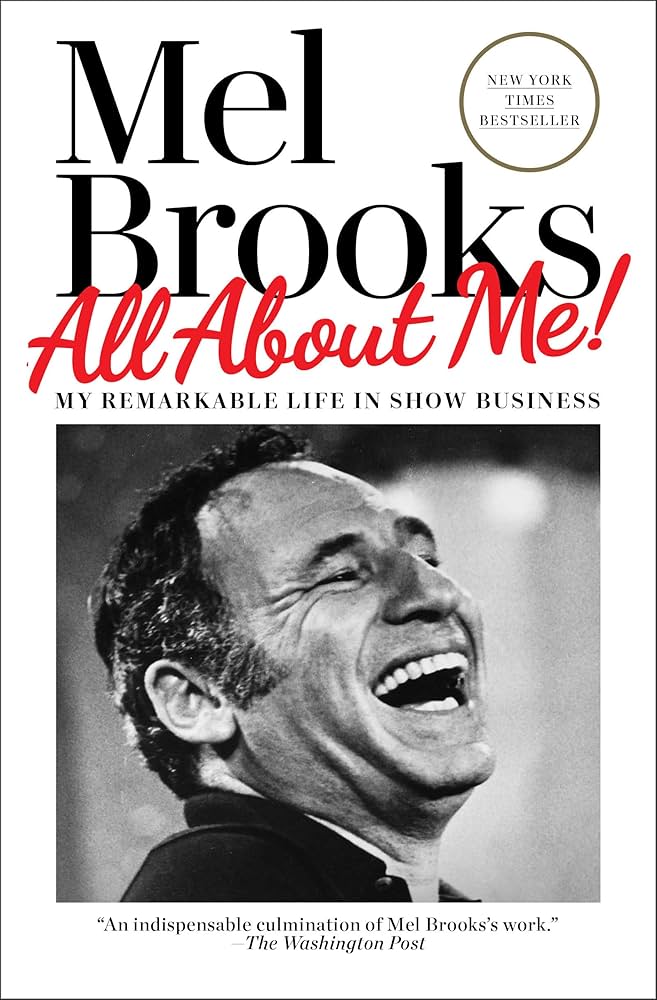
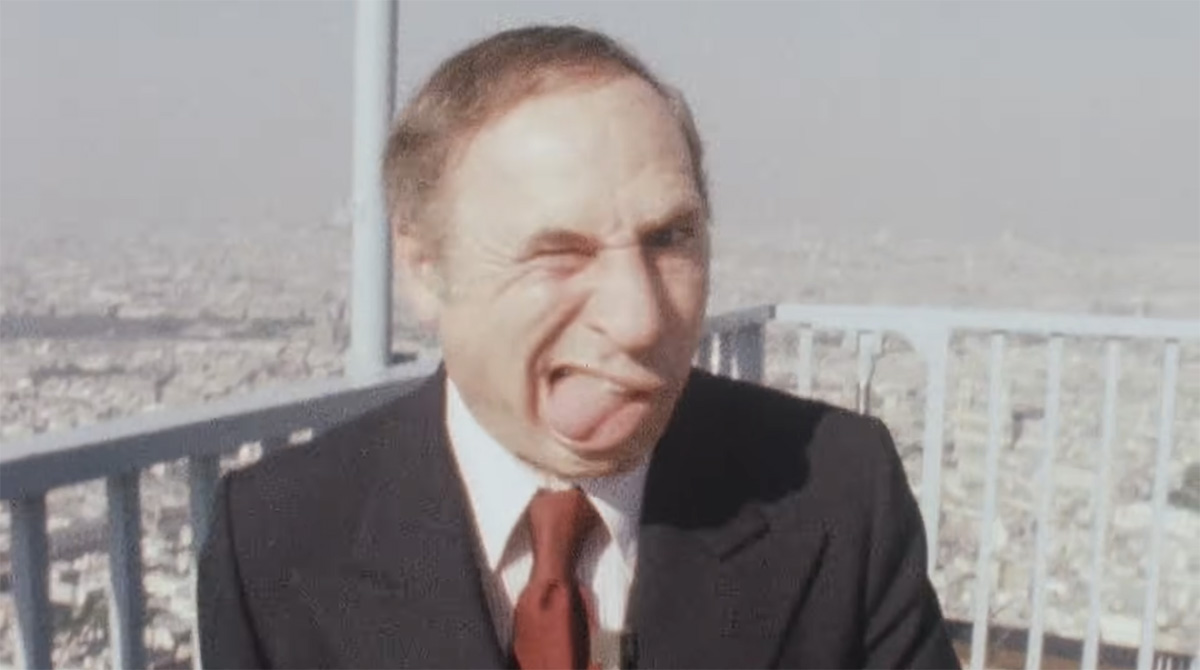
Melvin Kaminsky, better known as Mel Brooks, was born on June 28, 1926. And now it’s June 26 outside the window again, though it’s already the 21st century, and he’s still with us. And even, judging by the recent documentary mini-series “Mel Brooks: The 99-Year-Old Man” (2026), he is quite cheerful and active, jokes, funny puffs out his cheeks and sticks out his tongue. God bless you.
Brooks considers himself primarily a writer, despite the fact that he wrote his first book when he was already over 90. Before that, there were only dramatic texts, which brought their author many awards, including an Oscar for the screenplay of the film “The Producers” in 1969.
In 2020, bored in self-isolation, Brooks, on the advice of his son, writer Max Brooks, began writing down stories from his life - the book All About Me! My Remarkable Life in Show Business. And although it was not published in Russian, it is not difficult to find the text on the Internet and try to retell on your own at least some of the parts that interest you.
Since Brooks's creative biography can be studied through accessible films, TV series and stage performances, the greatest interest is in the first part of the book, in which he writes about his childhood, youth, military service and participation in World War II. Let's read together. It is not for nothing that the maestro calls in the preface:
“Put it all out! Tell everyone! Let everyone you know hear about all the terrible things I've done. Shout about it at every corner!”
Whatever you say, Mr. Brooks.
The land of happy endings
Mel Brooks grew up in Brooklyn during the Great Depression in a poor Jewish family: himself, three older brothers and a single mother, Kate. Her husband and father of the family, Max Kaminski, died when Mel was two years old. Later, with his usual dark humor, he commented on this, coming as a guest to one of the many evening television shows.
“HOST: When you were two years old, you lost your father.
BROOKS: That's not true. I didn't lose my father.
Puzzled silence in the studio.
BROOKS: My father died. If he were lost, we would simply send people to look for him.
Everyone's nervous laughter."
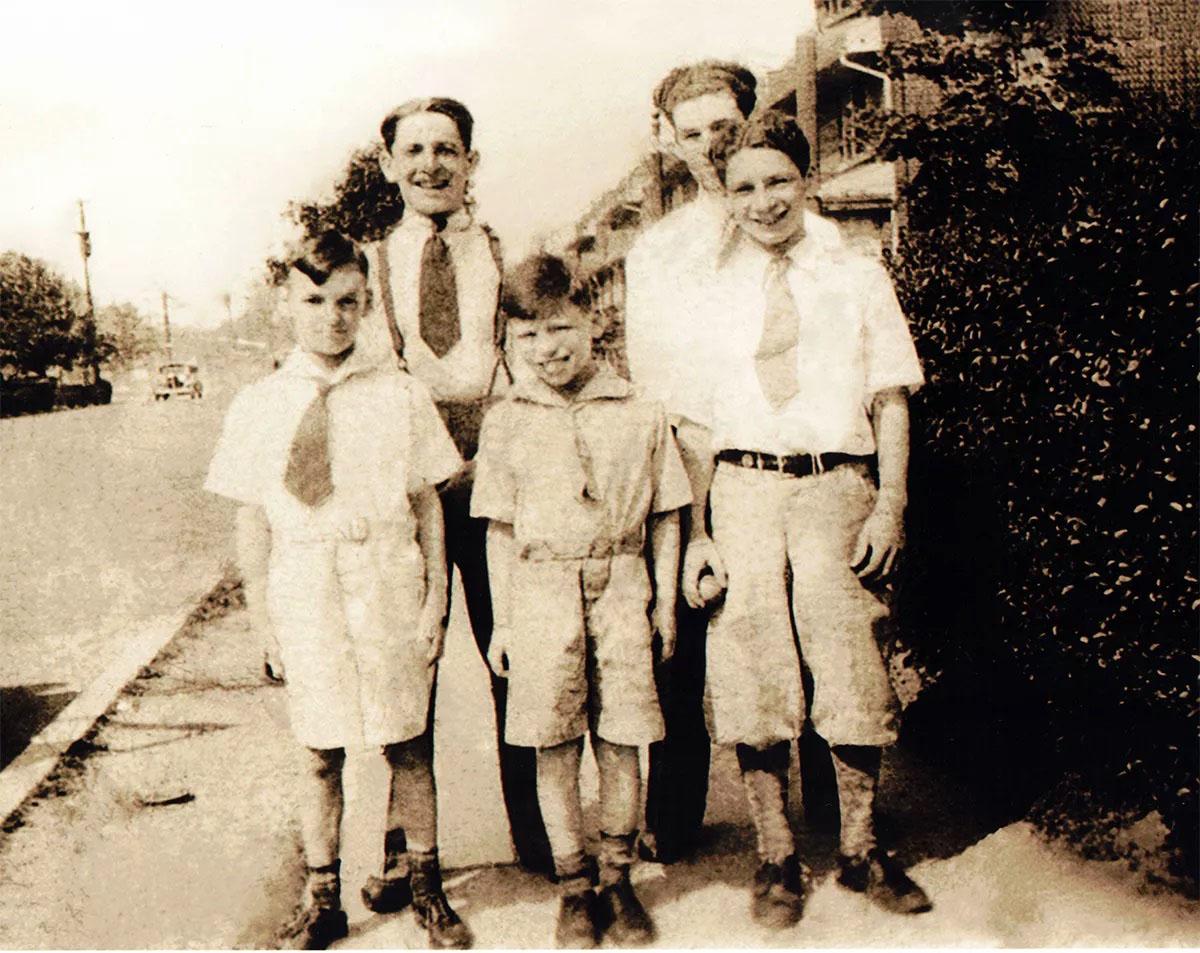
In addition to jokes, which Mel was good at from the cradle, cinema saved him in his childhood. In his autobiography he writes:
“ I was looking forward to Saturday morning. The cinemas opened at ten o'clock - at that time the guys and I were already there. For one small ten-cent coin you could get two full-length films, TV series, racing, newsreels, cartoons and announcements of future premieres. It was magic. We escaped the real world (which had terrible things like homework) and entered a land of happy endings where dreams came true. Nothing could compare to the movies."
Today, going to the cinema is more expensive, but you can go on vacation to the land of happy endings, thereby amusing your psyche, tired of reality, at home, fortunately, there are plenty of old Hollywood films on the Internet. If we talk about specific names, Brooks in those years preferred to lighten the mood with films with Fred Astaire, Marx Brothers comedies and short films with the participation of the Three Stooges.
Frankenstein in Brooklyn
But you should be careful with horrors. Little Mel Kaminsky saw the famous “Frankenstein” (1931) by James Whale with Boris Karloff in the title role when he was five. That same evening, before going to bed, the boy demanded that the windows in the house be closed, because otherwise Frankenstein’s monster “would climb up the fire escape, grab me by the throat, kill me and eat me!”
It was a hot summer, it was impossible to keep the windows closed, and Kate began to reassure her son:
“Okay, Mel, let's say the monster actually decided to eat you. But think about how much trouble he will have to go through to get from Europe to Brooklyn. He will not be allowed on a train or bus, hitchhiking is also excluded - no one will put a monster in their car. Let's say he found a boat and sailed to New York. But he doesn’t know how the metro works, and if he starts asking people, they will simply run away from him without looking back! And even if he eventually shows up on our street, he will be so hungry from the road that he will most likely climb through the first floor window and eat all the Rothsteins from apartment 1a. After that, he will have no reason to climb the stairs to the fifth floor to eat you too.”
Many years later, working on the film Young Frankenstein (1974), Brooks did the same thing - deconstructing the Gothic plot, translating it into everyday life and turning fear into laughter. Probably, the train on which the scientist gets from America to Romania ("Stop New York, next stop Transylvania") migrated straight from my mother's story into the script. And the little girl, who, after meeting the monster, does not die, as Wale did, but ends up right in her crib, where she calmly falls asleep.
Open windows policy
When Mel was six, he needed to go to the toilet in the middle of the night. It would seem like nothing like that, but in a large family this can lead to comical incidents.
"My brother Bernie was in the bathroom, so I knocked on the door and screamed, 'Bernie! I want to write! I want to write! I want to write!'
From behind the door came: “Busy! Busy! Busy!
It looks like he didn't write there, but did something more serious - you couldn't count on getting inside. What other options are there? Sink! But I'm too small to reach it. And as luck would have it, there is no bucket or other suitable container nearby. I'm desperate. I can't stand it anymore, I feel like I'm going to burst. What to do, what to do...
A! I know!
I see an open window. I quickly run up and pee right into him, performing a perfect arc.
I start singing the song “Cheek to Cheek” by Irvine Berlin: Heaven, I'm in heaven... and my heart beats so that I can hardly speak."
Everything was going great until the boy heard an excited noise. Looking down, he found his mother and all the neighbors under the window, who had already gotten a little wet.
Brooks remembers that the Bronx had an “open window policy” at the time—families looked out for each other and looked out for neighborhood kids. But such a policy sometimes backfired on the little freedom-loving rascals.
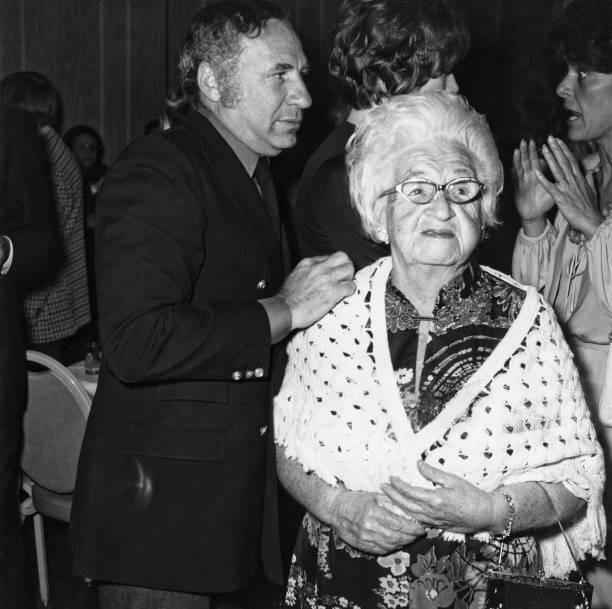
It must be said that this story is suspiciously reminiscent of an episode from almost any Mel Brooks comedy. One of two things: either Brooks lived by the laws of farcical drama from childhood, or, while working on his autobiography, he chose not to change his profession, remaining a comedian and not a historian. After all, this is logical: everyone should mind their own business.
Toy robbery
Having become a little older, Mel once attacked a store with a weapon, from which he had previously stolen the same weapon.
Melvin Kaminsky and his friends liked to go to the Woolworth store, where everything cost five and ten cents. For Brooklyn kids in the 1930s, this was a lot of money, and most often they preferred to avoid the unpleasant procedure of payment. This was not called “stealing,” but simply “taking.” Let's go, they say, take something - for example, a yo-yo, a whistle or a small chocolate bar.
Woolworth once put on display a toy replica of movie cowboy Roy Rogers' revolver. You can’t fit something like that under a jacket, and Mel, unable to control the desire to become as cool as the black-and-white guy from the big screen, came up with a very complex criminal scheme: take off the sweater, throw the sweater at the gun, pick up the sweater with the gun, leave the store.
At first everything went smoothly, but on the way out of the store the “cowboy” was grabbed by the collar. Tearful pleas to spare the “fatherlessness” led to nothing - Brooks’s acting talent at that time was not yet sufficiently developed. And then the future author of the parody western “Blazing Saddles” (1974) decided to take a desperate step:
"I reached into my sweater, pulled out a toy gun and shouted, 'Get away or I'll shoot you in the head!' The seller saw the gun and jumped back. I ran as fast as I could and jumped out of the store. I never returned there again and hoped that he did not remember my face. Most likely, the seller did not live in our area, but came to work from Queens or somewhere else.”
This ended his criminal career. But the sweater still caused trouble for its owner: one day, during a game of stickball, Mel took it off and, so as not to be stolen, hid it under the large fender of a 1936 Chevrolet parked nearby. Who knew that while the game was going on, the Chevrolet would start and drive away with the sweater. Mel then had to chase the car all over Brooklyn - he managed to catch it by force. If we can learn anything from Brooks' autobiography, it's that we should be very careful with sweaters.
Brave guys
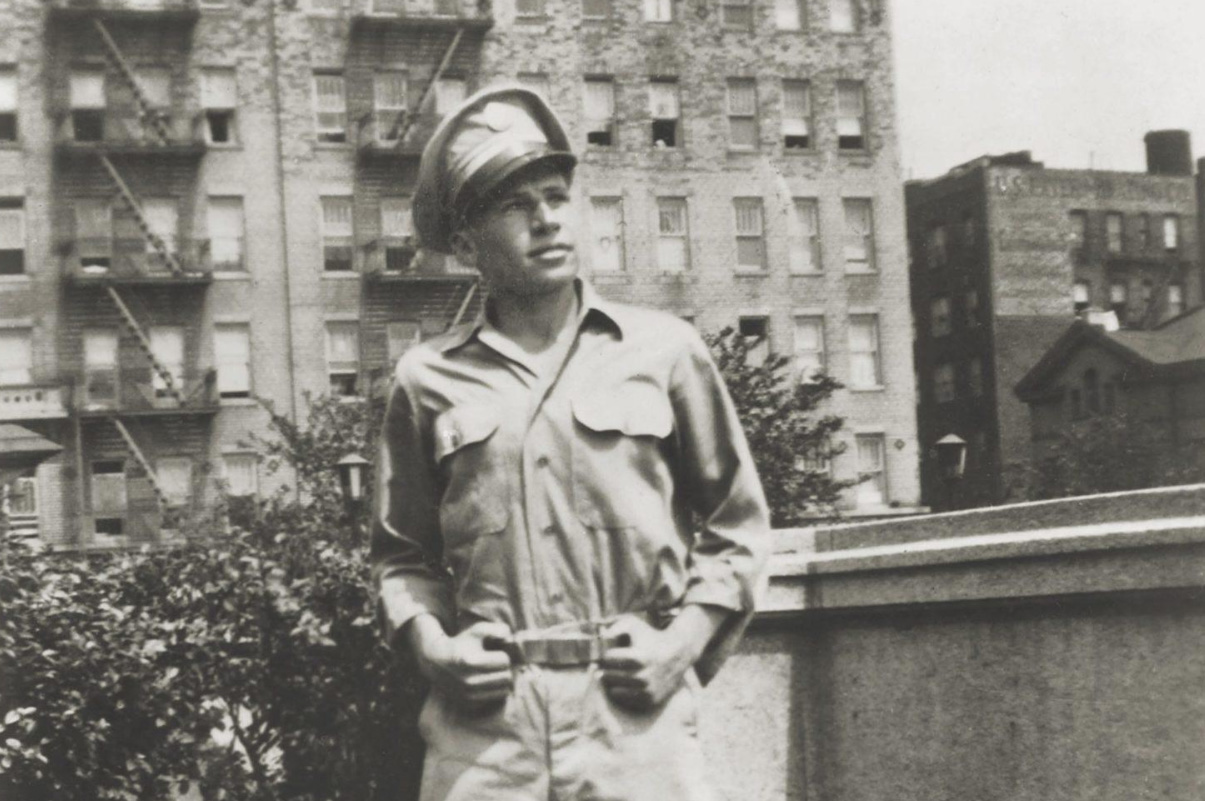
In 1944, Melvin Kaminsky was drafted into the US Army, where he was entrusted with real weapons. But for some reason the result still turned out funny.
“One day I was on patrol with my platoon and we found a box of German rifles near an old railroad track. And of course, next to them was a box of ammunition. That's why we organized a competition. There were white ceramic insulators hung on telephone poles, and anyone who knocked one down received a dollar from each. I was good at it. I had earned about twenty-one dollars when suddenly an order came over the radio: “Return to base immediately!” »
Upon returning, Mel and his platoon found the base on edge. The company commander reported that army communications had been interrupted - “probably the Nazis damaged the wires.” Looks like shooting telephone poles turned out to be a bad idea.
The way out of the situation was obvious: Private Kaminski and his comrades immediately volunteered to go in search of enemy snipers. The commander saw them off, brushing away a stingy tear with pride - it’s gratifying to know that such brave guys are serving under your command.
Breaking the fourth wall
Another time, he was less lucky - the cheerful warrior was entrusted with driving a truck, without explaining how to turn correctly in such a vehicle:
“It turns out that when you're driving a truck and you're about to make a turn, you need to move to the side a little bit to get the rear wheels to follow the front wheels, leaving enough room to complete the turn. And so I approach the turn next to the camp headquarters. Without thinking, I sharply turn the steering wheel. I hear a rumble, feel a push and turn around. I see the corporal sitting at his desk in the headquarters, admiring the sudden view of the blue sky and wondering where his fourth wall went - the wall that the back of the truck crashed into.”
“So how do you like it in the army? - asked the corporal.
- And what?
“I hope you like it, because you will serve in it for the rest of your life, repairing the damage caused.” At a private’s salary, you can pay it back in about a hundred years.”
The corporal did not keep his threat, but Brooks was so impressed that he waved away the announced century sentence and seemed not going to stop - that’s what discipline means. True, he didn’t become any more careful: it’s a rare Mel Brooks film that doesn’t break the fourth wall.
Survive Victory Day
Soldiers are such a people: to fight, to fight, to celebrate, to celebrate. In both cases it is better to be on guard. On the eve of Victory Day, Mel Kaminsky received a proposal from a colleague to celebrate the end of the war in an unconventional, but, as it turned out, reasonable way.
“At the beginning of May 1945, my unit was stationed in the small German town of Baumholder in southwestern Germany. We occupied a small German school. I had a colleague with me named Richard Goldman, who later became a famous tax lawyer. Richard was very smart. Much smarter than me. Because on VE Day, that glorious day when the war in Europe ended, he took me to the school basement and showed me some packed rations and a bottle of wine that he had procured for us.
- Why is this still necessary?
Goldman explained:
“It seems that the shooting is over and we can put the weapon down.” But tomorrow, when Victory Day is officially announced, everyone will go crazy and start shooting into the air to celebrate. In a state of euphoria, they will forget that everything that rises up, according to the law of gravity, must fall back, and bullets will rain down in hail from above on everyone below. Therefore, we will spend the next twenty-four hours in this basement, exchanging the joy of victory for the banal opportunity to survive.”
Brooks concludes: “Thanks to Richard Goldman’s insight, I’m still here.”
Songs from captivity
All four of Kate Kaminsky's sons served in World War II - and all returned alive. True, one of them, Lenny, was captured, where he remained for nineteen months. From there, Lenny managed to give his family a record of the song performed by him.
“The Red Cross went to the prisoners of war and did a wonderful thing: they recorded their voices and sent these recordings to their loved ones back home. Lenny loved to sing, so he recorded a song called “Miss You.” My mother would turn on this little cardboard record every night and cry. Every evening! Finally I said, “Mom, Lenny is still alive, so maybe sometimes we can just hold the record in our hands? Maybe we don’t have to play it so often? I can’t hear him sing anymore!”
We loved Lenny very much, but to be honest, he was a little out of tune."
Yellow ears
In 1966, Mel Brooks underwent a physical examination. The nurse, having looked in all the necessary places and finally reaching the ears, exclaimed:
- Mr. Brooks, I've seen a lot of ears, but I've never seen them so yellow inside! Did you have jaundice or any other illness as a child?
- No, no, this is not a disease. These are Camel cigarettes.
“At the beginning of our service, we had to undergo basic training on working in an artillery crew. For two weeks I had to endure incredibly loud howitzer explosions. But I was lucky: one of the junior commanders gave me excellent advice.
He said, "Listen, buddy, the earplugs they gave you are no good. You just need to break a cigarette in half, roll the ends tightly and put them in your ears. It's the best remedy for loud noise."
And he was right! I survived those two weeks without damaging my eardrum.
I was demobilized in 1946. Twenty years later, my ears were still bright yellow from Camel cigarettes. Well, I guess it’s a small price to pay for not losing my hearing.”
Decide for yourself whether to consider this story product placement or anti-advertising for Camel.
Happy ending
February 1945. Private Kaminski in Normandy. He and his companions were accommodated in a farmhouse with hospitable hosts, a married couple and their son Henri.
“The farmer and his family were very kind. A little boy named Henri was riding around the yard on a tricycle; he became friends with me and looked for me everywhere. Probably because I treated him to chewing gum and chocolate. He kept calling me by name: “Private Mel, Private Mel!”
Thirty-five years later, Brooks, who was then working as a producer on David Lynch's The Elephant Man (1980), by chance found himself back in Normandy and decided to visit that same farmhouse.
“The farmhouse had been repainted and a few things had changed, but overall it was the same as when I was in uniform. I knocked on the door. It opened, and a huge man with a large black beard appeared in the doorway. I said in broken French: “I was a soldier in '45, I served here, I lived in the bedroom upstairs.” His eyes widened, he swallowed hard and shouted, "Oh my God! Private Chalk?"
And I answered: “Little Henri?” He impulsively hugged me and almost crushed me with his huge, bearish hands. During my absence, little Henri managed to grow up a little.
It was one of the best days of my life. Henri showed us around. He treated us to all sorts of deli meats, cheese and raised a toast, pouring glasses of the magnificent French apple brandy for which Normandy is famous - Calvados.”
A perfect ending to a Mel Brooks coming-of-age movie that someone might want to make one day. In terms of mood, it will be a little similar to Vladimir Motyl’s film “Zhenya, Zhenechka and Katyusha” (1967), only with a happy, tearful ending.
Unless, of course, you count the afterword.
Afterword
Concluding his memoirs about the war, Brooks notes that the army can teach you to stand firmly on your own two feet. True, he adds: “Of course, if you manage to stay alive.”