
Translated material
"Epic Fury" did not match "Roar of the Lion"
How Netanyahu got what he wanted for a long time, but was left with nothing

Benjamin Netanyahu. Photo: JNA Press / Sipa USA / TASS
Israel failed to turn military successes into diplomatic victories and was pushed aside. But does this mean that he lost? There is such a genre in politics - a Pyrrhic victory. This is when you win a battle while losing an army. This is exactly what happened in the Middle East in 2026. Israel destroyed Iranian infrastructure, destroyed IRGC commanders, lost some of the support of its main ally - and discovered that the truce had been concluded without it. On February 28, 2026, the United States and Israel began launching joint strikes on Iran. The American operation was called "Epic Fury", the Israeli one - "Roar of the Lion". Sounds great. Serious in a military way. It was this sense of the historical significance of the moment that played a cruel joke on the organizers.
What Trump Really Wanted
It's important not to confuse what Trump said with what he wanted. These are usually two different things. When the American president agreed to a joint operation, his logic was simple: a few quick strikes - and Tehran would capitulate, Hormuz would remain open, and Trump himself would accept congratulations by the summer. There was a fresh example in memory of Venezuela, which fell like ripe fruit at his feet.
Reality turned out to be more expensive. Iran did not capitulate—it hit back. It blocked the Strait of Hormuz, through which up to a third of the world's oil traffic passes. Launched 680 ballistic missiles and thousands of drones. Gasoline prices in the US jumped from $2.98 to $4.22 per gallon. Inflation surged just as Trump was telling voters it was over. The midterm congressional elections in November were rapidly approaching, and ratings were falling just as rapidly. For a man whose political identity was built on “victories” and “deals,” a protracted war was a toxic asset. Trump wanted to come out - quickly and with the face of a winner.
Netanyahu vs Trump
One of the main intrigues of this war is not the confrontation with Iran, but what happened inside the “union.” Netanyahu has been striving for one thing all his life: a joint US-Israeli strike on Iran. In February 2026, the dream came true. The irony is that it was then that it became clear: he and Trump want fundamentally different things.
For Trump, the strike was a pressure tool to get a deal. And Netanyahu needed a change in the regime of the Islamic Republic, which vowed to destroy Israel, a cleansing of Hezbollah, and the elimination or maximum weakening of Iranian proxies.
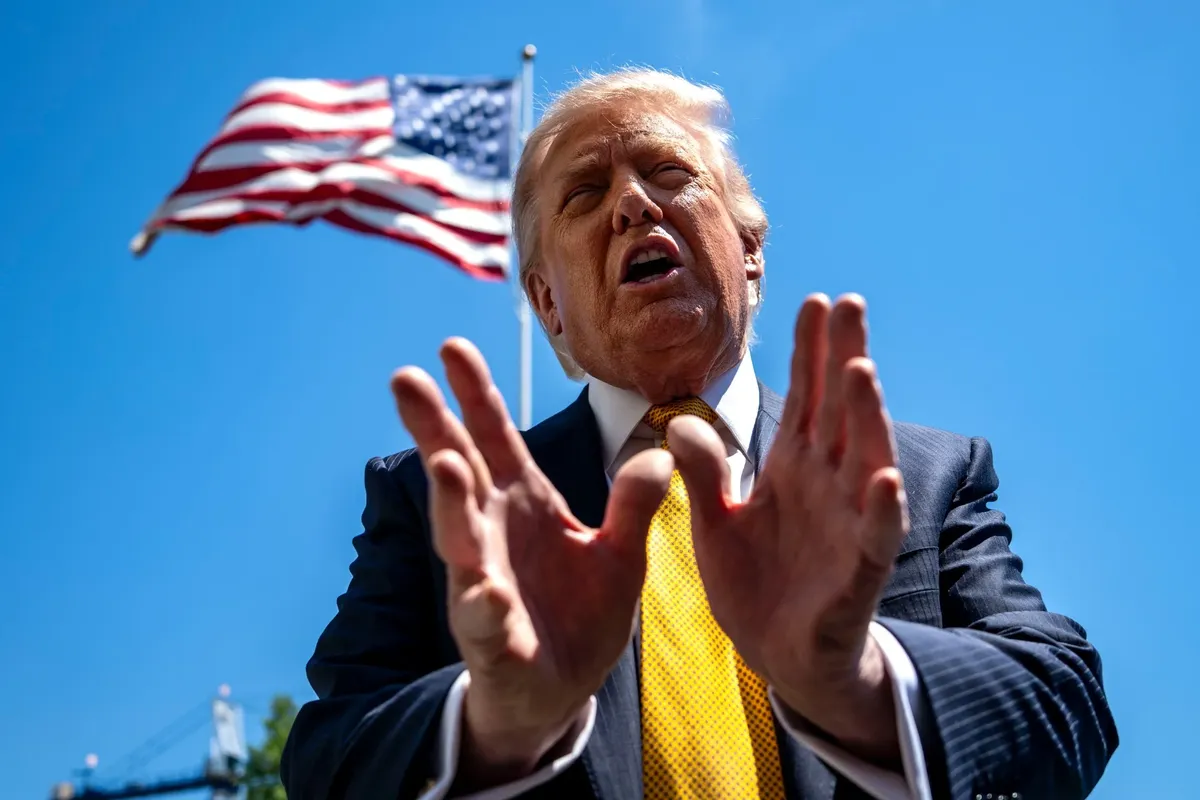
When it became clear that Trump was ready to negotiate without fulfilling Israeli conditions (elimination of Iran's nuclear and missile programs, refusal to support proxies), Netanyahu, reacting to Hezbollah shelling, ordered the bombing of the suburbs of Beirut, threatening the fragile truce.
Trump took this as an attempt to disrupt the negotiations.
In a telephone conversation, according to sources, Trump shouted at the Israeli prime minister, using expressions outside the diplomatic dictionary, paraphrasing: “Bibi, you have to be very careful, because very soon you may find yourself alone.”
Vance then added that "a country of ten million people cannot solve every security problem by simply killing everyone in its path." This was a break in the “one union” narrative.
Betrayal or just business?
In Israeli political discourse, the word “betrayal” was used frequently against Trump in June 2026. How justified? The honest answer is half.
Trump did not turn against Israel ideologically, military aid worth $3.8 billion a year did not go away, and strikes were carried out on Iran’s nuclear facilities. But the final memorandum did not include anything that Jerusalem considered mandatory: no restrictions on Iranian missiles, no demands to stop funding proxies. Trump stopped the war where it was convenient for him - before achieving Israeli strategic goals. Is it considered a “betrayal” if the divergence of interests between Trump and Netanyahu, which has always existed, simply became obvious?
Surveys only confirm the scale of the problem. The Pew Center has recorded that 60% of Americans have a negative view of Israel. According to Gallup, there are now more Palestinian sympathizers than Israeli sympathizers for the first time in a long time.
Israel has managed to irritate both liberals (over Gaza) and the MAGA right (over the war with Iran). This is called diplomatic skill in reverse.
At the same time, a survey of Israeli institutions - Agam and the Hebrew University - showed: 92% of Israelis themselves consider Iran the winner in this confrontation.
Will Hezbollah disarm?
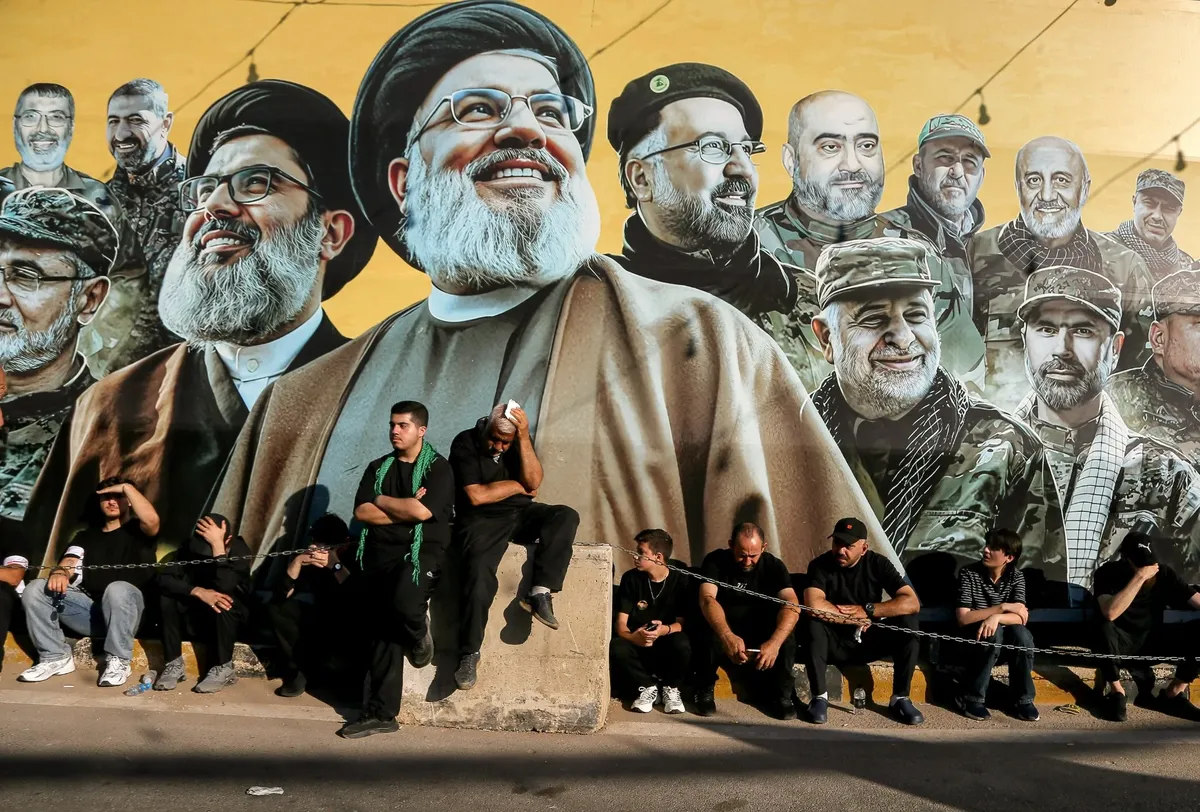
The answer is predictable, and the Israelis will not like it. Hezbollah will not disarm. This pro-Iranian movement in Lebanon has existed for four decades, survived several wars and the liquidation of its leaders. It has taken its roots too deeply - in parliament, schools, hospitals in Lebanon.
On June 3, with American mediation, another ceasefire agreement was concluded with the creation of “experimental zones” under the control of the Lebanese army. June 19 - a new truce mediated by the United States, Qatar and Iran. Already on June 20, the parties accused each other of violating it. Hezbollah is transforming, leaving some zones, retaining arsenals in others and not disappearing anywhere. Without deep cleaning it won't go anywhere. And there is no one to carry it out - it is too expensive both politically and militarily.
Diplomatic victory for Iran
Here is the most important and the most inconvenient. Iran emerged from the war physically destroyed and politically victorious. The damage is at least $270 billion, according to the Iranian government itself. Khamenei and a number of senior commanders of the IRGC were eliminated.
But, as a result of the negotiations, Iran did not concede on a single key point: the missile program remained outside the negotiating field, the nuclear infrastructure was preserved, and support for proxies was not prohibited.
Moreover, sanctions are being lifted, and the restoration of the Iranian economy will likely be financed from a regional fund of $300 billion. At the expense of the Arab monarchies of the Gulf. The war was started by the USA and Israel, the USA and Israel bombed, and Saudi Arabia and the Emirates will pay.
The consequences for the region are serious. Before this war, the threat of an American strike was the main deterrent for any regional player. Now it works worse. Everyone will remember this lesson.
The Arab monarchies of the Gulf found themselves in the humiliating position of allowing the Americans to use their bases, receiving Iranian missiles in return, and now having to pay for the reconstruction of Iran.
According to Reuters, the outcome of the war was a “shock” for them. They will build relations with Tehran with much more caution and less reliance on the American “umbrella” - its reliability has just been publicly questioned.
The Abraham Accords to normalize relations between Arab countries and Israel have faltered: Arab governments now have concrete reason to question whether friendship with Jerusalem is worth Iranian missile attacks on their own territory.
The main beneficiaries are China and Russia, who spent nothing. China continues to buy Iranian oil and invest in the country's economy. Moscow solemnly welcomed the settlement and offered itself as a “mediator” - both countries received the main argument: American hegemony in the Middle East has cracked, and an alternative exists.
What happens next
Fact: neither regime change (although such a goal was not officially set - the point was to “shatter it ” ), nor Hezbollah’s disarmament, nor long-term control over Lebanon happened.
Yes, in forty days Iran lost more than in the eight-year war with Iraq, the “axis of resistance” was seriously damaged, nuclear facilities were damaged. But the diplomatic price for Jerusalem also turned out to be high: damaged relations with Trump, accelerated erosion of support in the United States, the absence of the necessary points in the memorandum - and Arab neighbors who are not particularly warm towards Jerusalem.
Relations between Israel and the United States are moving into “friendship with questions” mode. No one will officially break the union, the money will continue to flow - but the Middle East is moving towards a multipolar scheme, where the role of the United States is no longer absolute,
Iran remains a force to be reckoned with, and Israel is no longer an unsinkable aircraft carrier under the US umbrella, but another regional state.
Trump, of course, will declare all this his victory. He can. In general, this is perhaps the only thing in this story that you can be absolutely sure of.