
Translated material
“Turned out to be a commonplace rat.” A corruption scandal is developing around one of the RDK commanders. Former comrades accuse him of embezzling a large donation

A corruption scandal is developing around one of the RDK commanders. Former comrades accuse him of embezzling a large donation
Rumors that a major RDK commander was involved in some not entirely pure story began to spread back in May, moreover, from like-minded people. A native of Voronezh, neo-Nazi Artyom “Hurricane” Krasnolutsky, also fighting on the side of the Ukrainian Armed Forces, wrote in his Telegram channel, without going into details, that Alexey Lyovkin, a well-known musician in far-right circles and a key figure in the corps, may be involved in the embezzlement of a huge donation. And he demanded that the leadership of the RDK expel Levkin from the ranks of the RDK. “Now I am giving the leadership the opportunity to either take a step themselves and publicly expel the rat, or, together with them, dive into such a tub of shit that it will be impossible to wash off. The scandal will be enormous, questions will arise not only from the outside, but also from ordinary participants, and I think we can forget about the influx of fresh recruits,” Krasnolutsky wrote.
Three weeks later, Krasnolutsky finally voiced his claims publicly. “New Europe” understands what the right-wing radicals have not shared.
All this looked rather strange, because before Levkin and Krasnolutsky were friends - at least in public. They advertised each other’s Telegram channels, took pictures together, and exchanged curtsies. Levkin and Krasnolutsky have a lot in common. Both are open neo-Nazis and admirers of Adolf Hitler, who moved to Ukraine from Russia after the events of 2014 for fear of ending up in prison. In Russia, Krasnolutsky was known as a participant in projects associated with Maxim “Tesak” Martsinkevich, and Levkin gained fame as a musician - the leader of the neo-Nazi black metal band “M8L8TH” ( aka “Molot” or “Molotkh.” - Ed. ).
Judging by the tone of Krasnolutsky’s post, who now called his former comrade-in-arms a “Tver buffoon,” it was clear that the conflict was unlikely to resolve itself. In addition, Krasnolutsky threatened that if there was no reaction from the leadership, he would soon publish all the facts justifying his sharp attacks, but he postponed this point several times.
On June 5, Hurricane again made a more specific statement. “While the organization (RDK) was collecting 100 hryvnia for the repair of a pickup truck,” he wrote in his channel, “and ordinary soldiers were giving their lives in the landing, someone was spending multimillion-dollar funds on their better life.” Soon, however, he deleted this post, citing a corresponding request from the leadership of the RDK.
Finally, on June 17, Krasnolutsky published a detailed article in which he outlined all his complaints against Levkin and the leadership of the RDK. According to this text , Krasnolutsky allegedly met with the leadership of the Corps (which in the text he jokingly calls “IDF”). The leaders, Krasnolutsky claims, “agreed with our arguments and promised to punish Levkin within a week and announce it publicly,” but did not keep their word. “Levkin did not pass the most important test - silver, and to be more precise, he turned out to be a banal rat,” writes Krasnolutsky. “The only thing surprising in this story is the scale of the misappropriation.”
According to Hurricane, in the summer of 2023, when RDK was starting its journey and was in dire need of funds, Alexey Levkin received a generous donation from one of his fans.
An unknown, but apparently very wealthy, like-minded person gave him 400 thousand dollars, “without demanding any reports.”
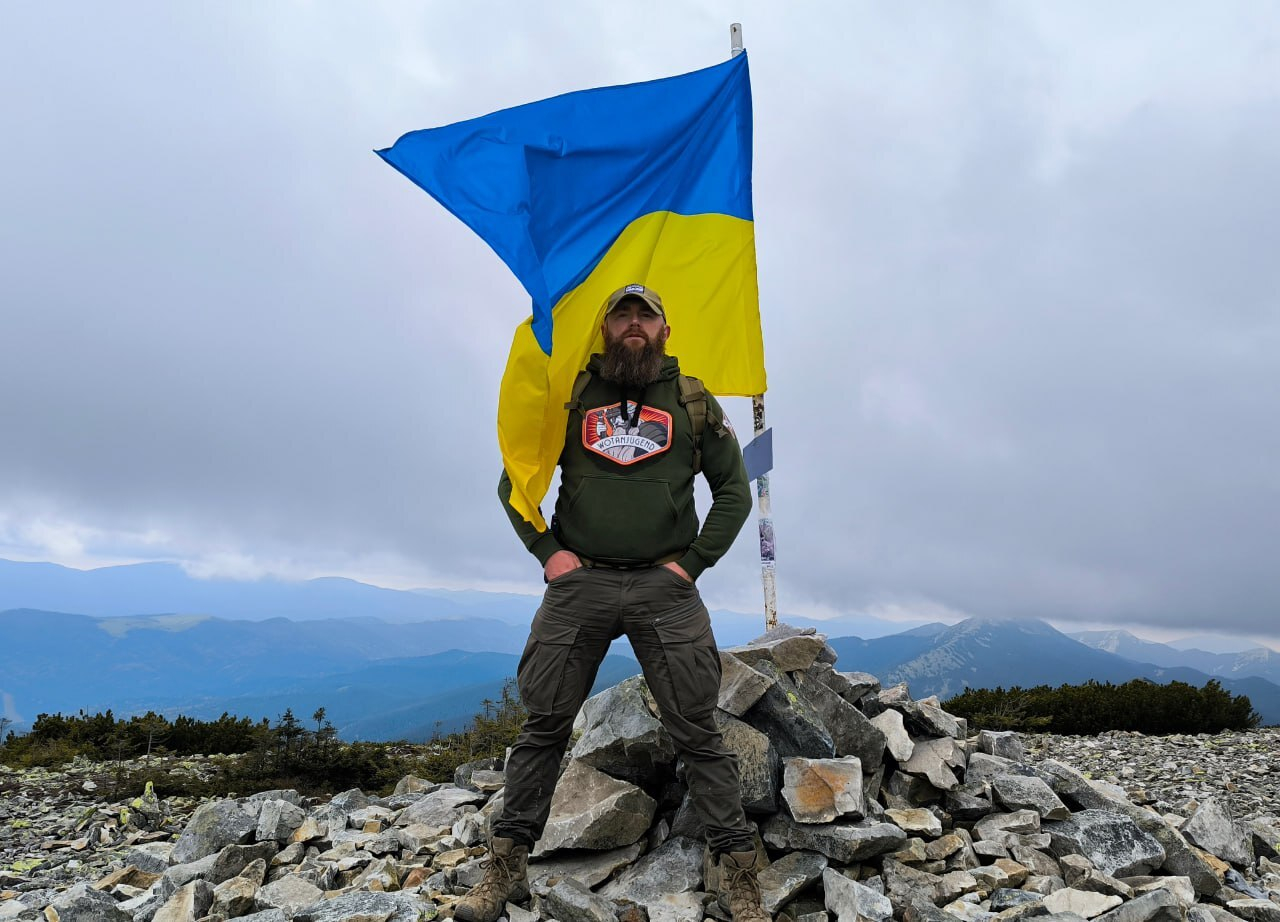
According to Krasnolutsky, in a personal conversation with him, Levkin then noted: “The war will end and weapons will be hung on the wall, but creativity will live forever.” And he decided to spend the money on his own project, known as Wotanjugend, a nationalist resource associated with Alexey’s musical projects.
“In particular, for the construction of a hotel for project participants, namely for visiting activists and those who have nowhere to live. Levkin also voiced the idea of spending part of the funds on the production of his own drones,” writes Krasnolutsky.
However, according to his words, Levkin never did anything that was promised. Assembling drones turned out to be too expensive; instead of a hostel for activists newly arrived in Ukraine, Lyovkin built himself a “manorial estate in Irpen” for 250 thousand dollars. Well, he allegedly used the rest of the money at his own discretion. And only 50 thousand of the 400 donated were spent on cars for the corps, Krasnolutsky claims. “How are you, ordinary RDC soldiers? When is the salary and how much should I put into the common fund? - the author is ironic.
It is still unclear who the donor was and what he thinks about the current situation. However, according to Krasnolutsky, the secret admirer was allegedly dissatisfied with how the money was spent. At the same time, Uragan claims, even before the open publication of the claims, Levkin “contacted the philanthropist to clarify the situation,” and then stated that the money was given specifically for his projects, which means he will use it as he sees fit.
Hurricane is not satisfied with these explanations. “Just think about what kind of spiritual prostitute you need to be in order to sing songs about the immortal values of Honor for two decades, and then, in the midst of the war, at the moment of the birth of your own unit, collecting donations for pickups and requiring huge investments, when ordinary soldiers did not receive a salary for months, offer to use such a huge amount for some ephemeral movement, but even here you brazenly deceive, hide and spend everything on yourself,” — Krasnolutsky is indignant.
The management of RDK does not comment on the situation. Alexey’s closest comrade, RDK commander Denis Kapustin, only casually said under one of his posts that “the leadership urgently asked (and is asking) us not to react to attacks and provocations.” Levkin himself has still not publicly responded to these claims. However, it is known that he responded to Krasnolutsky personally - he published fragments of the musician’s voice messages in his Telegram channel.
“Well, of course, I figured out how to spend all the money. I invested them in a business that works and makes [profit]. <...> The house is small, it works as a point for carrying out projects. All the spaces there are occupied for business. We are doing projects there that allow us to take out mortgages for other people when citizenship becomes available. And help with payments, you know? That is, it is much more rational than gathering people [to live in one house]. Well, how do you collect them? Everyone has girlfriends and stuff. This is not a working scheme. These are not children, but grown men,” Levkin explained why the hostel never appeared.
But former like-minded person Lyovkin is not convinced by these words, and he expresses doubts that Wotanjugend, on which the money was spent, is a real project, and not Alexey’s personal brand. To understand how valid these doubts are, it is necessary to turn to his history and the biography of Levkin himself.
Levkin was born in Tver. There, in 2003, he put together his own group, which later became iconic for the entire right-wing scene. There is a video of their first performance on YouTube. This is not at all what you expect to see: there are no “skins” on stage. On the contrary, Levkin, then a thin, long-haired young man, performed his first hits surrounded by informals, such as the neo-Nazis drove through the streets of Moscow and Tver in those years.
The lyrics of the early “Hammer” refer the listener to pagan rituals and unity with nature. They contain a lot of abstract images, folklore allusions and pompous phrases. It was probably his interest in paganism that led Levkin to the far-right movement. Alexey became close to the local branch of Russian National Unity (RNE), which actively flirted with both Slavic neo-paganism and Orthodox fundamentalism; visited the Kirov “Nazi Magus” Dobroslav.
In 2006, Levkin and his associates were arrested for the first time. As it turned out, the Tver group RNE was behind a series of attacks motivated by national hatred.
The leaders were charged with four murders. The gang members received long sentences, and its leader Dmitry Orlov received a life sentence. What was Levkin’s role in all this is unclear, but he escaped punishment: he was declared insane and spent some time in a mental hospital.
Upon his release in 2011, the young man began to actively develop his musical and ideological projects: the group M8L8TH and the online project Wotanjugend (“Youth of Odin” - so named by analogy with the Hitler Youth). The timing was perfect. By the early 2010s, the Kremlin realized how profitable it was to involve the ultra-right in domestic politics. The authorities deliberately allowed radicals to wage street terror. The hands of the ultra-right could deal with critics of the authorities, journalists and activists. But it was not an alliance. The ultra-right continued to remain opponents of the current government; with its tacit consent, they simply did its dirty work for it - and, for a while, remained safe.
Against this background, the forces of the ultra-right grew not only on the streets, but also in the media. Neo-Nazi Maxim “Tesak” Martsinkevich, who had already been convicted more than once, was a star of social networks and regularly attended all kinds of talk shows. In 2011, he released his book “Restruct,” which outlined the principles of the movement of the same name. In 2012, the website of the right-wing publication Sputnik and Pogrom was launched, perhaps one of the most popular right-wing resources in the history of modern Russia.
Compared to them, Levkin’s projects were not so successful, however, they also found their audience. While Tesak and his followers were “hunting pedophiles,” Lyovkin, apparently, was reading the works of Miguel Serrano and Julius Evola, whose “criticism of fascism from the right” required remarkable intellectual effort, exceeding the capabilities of ordinary skinheads. M8L8TH, for which Levkin wrote the lyrics and music, was the embodiment of radical ideas in which the history of Nazi Germany was perceived as a glorious but bygone era of heroes.
The Hammer tracks were filled with references to the Third Reich, World War II and Scandinavian mythology, which was presented as an alternative to “Jewish” Christianity.
In parallel, another project of Levkin was developing - the same Wotanjugend, which at that time was a kind of small “university” for right-wing radicals. According to the story of Ivan Mikheev, one of the co-founders of the project, “Wotan’s Youth” was created as a response to the “leftist infection” and leftist nationalists like “Volnitsa”, but there was never ideological unity in the project, everyone promoted their own “topic”.
According to Bellingcat, in later interviews while in Ukraine, Levkin described Wotanjugend as primarily an online entity that was "too violent to be represented in the public sphere" as an active physical organization. At the same time, Wotanjugend at one time showed itself in the offline space. For example, in 2012–2013, neo-Nazis who sympathized with the project took part in the “Russian March” under the Wotanjugend flags.
Wotanjugend materials were distributed through the website and the VKontakte group, where by 2014 there were 40 thousand subscribers. The authors of the articles - not only Levkin himself - talked about history, philosophy and racial theory. Wotanjugend was distinguished from many other right-wing projects by its emphasized elitism. Young men with shaved heads from residential areas suddenly started talking about themselves as an aristocracy of spirit and “high youth.” In addition, concentrated right-wing extremism, the glorification of murderers and terrorists like Anders Breivik or BORN, became the hallmark of the project.
The original project did not survive the events of 2014. It is known that some ultra-rightists from Russia visited Kiev during the protests and were in every possible way interested in the political processes in the neighboring country.
For some, the Maidan caused concern, for others - a burning interest. The dispute over Ukraine has quarreled many and has actually split the nationalist movement in Russia.
Wotanjugend was no exception. According to the SOVA research center, in October 2014 there could have been at least two groups of interests within the project. The pro-Ukrainian part of the leadership consisted of Alexey Lyovkin, Roman “Zukhel” Zheleznov and Ivan “Fritz” Mikheev.
Who the people were who promoted the alternative, by no means exclusively pro-Kremlin agenda, is still unknown. However, they managed to take over the Wotanjugend public page on VKontakte and present the conflict as “expulsion of traitors.” An anonymous person who spoke on LiveJournal on behalf of a supposedly “original project” accused his opponents of “Orangeism” and working for Ukrainian Jewish oligarchs.
“If anyone is worried that we (Wotanjugend) will now flirt with the Kremlin officialdom in defiance of the Ukrainian officialdom, then he is mistaken. The public has been and remains the hammer of NS ideology,” the anonymous “schismatic” emphasized.
A pro-Ukrainian group, which included the real creators and ideologists of the project, stated that the group on VKontakte was hacked and captured by the special services. Ultimately, Levkin and his comrades were able to retain the brand for themselves - they created a new website and moved to Telegram. However, the “movement” itself, if it existed, ceased to exist. The new Wotanjugend has transformed into a platform for distributing Lyovkin’s work and projects friendly to him.
In 2015, Alexey Lyovkin finally moved to Kyiv, where he began to establish connections with local far-right groups and revive his projects after all the troubles. As the musician himself told Radio Liberty, he joined Azov and fought for some time in the southeast of Ukraine. Around the same time, Tesak’s closest associates arrived in Kiev: right-wing movement stars Sergei “Botsman” Korotkikh and Roman “Zukhel” Zheleznov, who was previously mentioned in the press as one of the admins of the original Wotanjugend. Other acquaintances of Levkin also arrived: Ivan “Fritz” Mikheev and, already in 2017, Denis Kapustin, known to many as the founder of the White Rex brand and the mixed martial arts tournament of the same name.
The crowd of Russian far-rights based in Kyiv was growing and seeking to establish itself as a political force. In October 2015, the so-called “Russian Center” arose, which declared its goal to be “the dismantling of anti-Russian tyranny and the restoration of Russian statehood, based on the imperative of loyalty to the monarch and historical Russia.”
Judging by the program and symbolism of the movement, it was an attempt to reconstruct in a modern form the numerous organizations of White emigrants of the 20th century.
All three, Levkin, Zheleznov and Mikheev, dressed in white shirts, actively participated in the work of the center: they gave lectures and promoted the project through their social networks. However, the “Russian Center” remained in little demand in Russia, and even more so in Ukraine, as a circle of dreamers. Judging by the website, by 2019 the center’s offline activity had almost completely ceased , and by that time Lyovkin himself had moved to the congenial right-wing radical youth organization Centuria, affiliated with Azov.
Meanwhile, the circle of old acquaintances was torn apart by conflicts. One by one, Levkin's friends dropped out of the game. In 2017, Roman Zheleznov left the movement after he was beaten and publicly insulted by one of his Ukrainian “colleagues.” According to the story of blogger Anton Skald, the conflict actually occurred out of nowhere: Zukhel’s Ukrainian comrades allegedly “did not appreciate” one of his statements. What exactly the locals didn’t like is unknown, however, Skald claims, they decided to “ask” him.
Zheleznov was unable to respond to the claims, became nervous and ended up becoming the hero of a humiliating video. None of his former comrades stood up for him. Against this background, he was forced to “unsubscribe,” that is, to leave the movement of his own free will.
Ivan “Fritz” Mikheev was in the past known as the leader of Kirov neo-Nazis and an adherent of views unusual for this environment. He was a vegan and a hardliner ( followers of this philosophy preach abstinence from sex, drugs, alcohol, nicotine and even caffeine. - Ed. ). Mikheev spoke a lot about the “green” agenda, trying to rethink it in his own way.
At the same time, Mikheev did not shy away from street violence: in Russia he was convicted of attacking visitors to a punk concert with a group of comrades.
He also made his mark in Ukraine, where on January 19, 2016, he and Zukhel attacked an anti-fascist picket in Kiev, held annually in memory of Russian lawyer Markelov and Novaya Gazeta journalist Baburova, killed by the Nazis.
According to Bellingcat's investigation and Mikheev's own statements, in tenths he was one of the founders of Wotanjugend, along with Levkin, and invested a lot of effort in the development of the project. Having moved to Ukraine, Mikheev found himself on the sidelines and soon disappeared from the information field. As it turned out in 2020, the reason for this was a conflict with Levkin.
В 2020 году «Фриц», желая восстановить справедливость, опубликовал свое заявление, в котором рассказал, что в 2015 году против Лёвкина и его товарищей готовилось уголовное дело. Михеева как одного из активных идеологов Wotanjugend пригласили на беседу в органы. Бывший лидер кировских неонацистов не скрывает, что имел с силовиками «особые отношения». При первом же визите к следователю «Фриц» дал показания против Лёвкина. А выйдя на свободу, предупредил того о надвигающейся угрозе уголовного преследования. Этим, считает Михеев, он спас Лёвкину жизнь. Дав показания, Михеев спешно покинул РФ и перебрался в Украину, где пытался получить политическое убежище. Он просил Лёвкина о заступничестве, но тот даже не удосужился написать письмо в его защиту. Дело в том, что Wotanjugend, по словам Михеева, в 2015 году вот-вот собирались признать экстремистской организацией. И он, хотя и был одним из наиболее активных авторов, формально в ней никогда не состоял. Перебравшись в Киев, Михеев просил Лёвкина это письменно подтвердить. Но, по его словам, тот только развел руками: в организации никто не состоял, ее вообще не существует.
«И ведь дело-то было не в Москве 2015-го, а в Киеве 2019-го! Что ему грозило? Это было просто дном и театром абсурда, о котором стоит знать всем, кто думает, будто поддерживает существующую организацию, а не бренд Алексея для зашибания бабла на футболках!» — рассказал Михеев в социальных сетях.
Как видно по дискографии , дела у Алексея всё это время шли неплохо: он активно записывал новый материал, выступал на одной сцене с ведущими европейскими наци-музыкантами и успешно торговал футболками в России; до 2022 года заказать мерч можно было напрямую из Киева, не опасаясь уголовного преследования. «Катался как сыр в масле, купил квартиру в центре Киева и держал наци-бизнес с оборотом в круглейшие суммы», — описывал его положение бедствующий Михеев. Теперь, если очередной бывший единомышленник добьется желаемого (и дойдет до нужных кабинетов), творческое будущее Лёвкина может оказаться под вопросом.