
Translated material
Volga region: the price of war. Fuel collapse, Bashneft sale and destroyed house in Syzran
Last week, drones attacked Bashkortostan, Orenburg and Nizhny Novgorod regions. The fuel crisis continues in the Volga Federal District, and farmers are beginning to panic on the eve of the sowing season. The authorities of Bashkortostan sold part of the republic's stake in the Bashneft company for 14.8 billion rubles. In Syzran, residents of a house damaged by a UAV strike were left without the promised compensation. These and other news are in the weekly column “Volga region: the price of war.”
Attacks on the Volga Federal District
Last week was not without UAV attacks in the Volga region. Nizhny Novgorod region, Orenburg region, Bashkortostan - attacks were carried out simultaneously on key energy, military-industrial complex and oil refining units. And behind every drone “shot down” or “intercepted,” as the governors claim, there is real destruction and even human lives.
On the night of June 24, UAVs attacked the Nizhny Novgorod region. Governor Gleb Nikitin reported in his Telegram channel: air defense destroyed 23 drones. And then, separated by a comma, there is a postscript: “There is no critical damage to the industrial infrastructure.” The official clarified that two people died.
The mayor of Nizhny Novgorod, Yuri Shalabaev, added that the cause of death was a strong fire in a residential building. Two more men are in the hospital.
An OSINT analyst for the Astra publication, after analyzing photos and videos published by eyewitnesses, came to the conclusion that a private house, which is located a kilometer from the Elektrokabel NN plant, caught fire in the Kstovsky district of the Nizhny Novgorod region.
On the same day, June 24, the attack hit the Orenburg region. Governor Evgeny Solntsev reported a “massive attack” and assured that the drones were shot down over the industrial zone. According to the Ukrainian monitoring channel Exilenova+, a gas processing plant (Gazprompererabotka LLC) near Orenburg was attacked. Local residents also reported an attack on the helium plant of Gazprom Dobycha Orenburg LLC. The General Staff of the Armed Forces of Ukraine confirmed the attacks on both enterprises.
The very next day, June 25, drones attacked Ufa. The morning in the capital of Bashkortostan began with the closure of the airport and the announcement of an unmanned threat. The head of the republic , Radiy Khabirov, hastened to reassure residents: the attack was repulsed, technological processes were not disrupted, enterprises were operating as normal. And again the usual phrase: “The debris fell in the industrial zone.”
But residents of Ufa filled the network with images of columns of thick black smoke. OSINT analysts from the Astra publication, after studying the video, came to the conclusion that two oil refineries were damaged at once: Bashneft-Ufaneftekhim and, presumably, Bashneft-UNPZ.
Later, Ukrainian President Vladimir Zelensky reported that the SBU struck two oil refineries - Bashneft-Ufaneftekhim and Bashneft-Novoil.
The fuel crisis continues
— Who stole all the gasoline? We can’t get home, we’re sitting in Samara. And there is no gasoline in Samara either,” the girl says in the video.
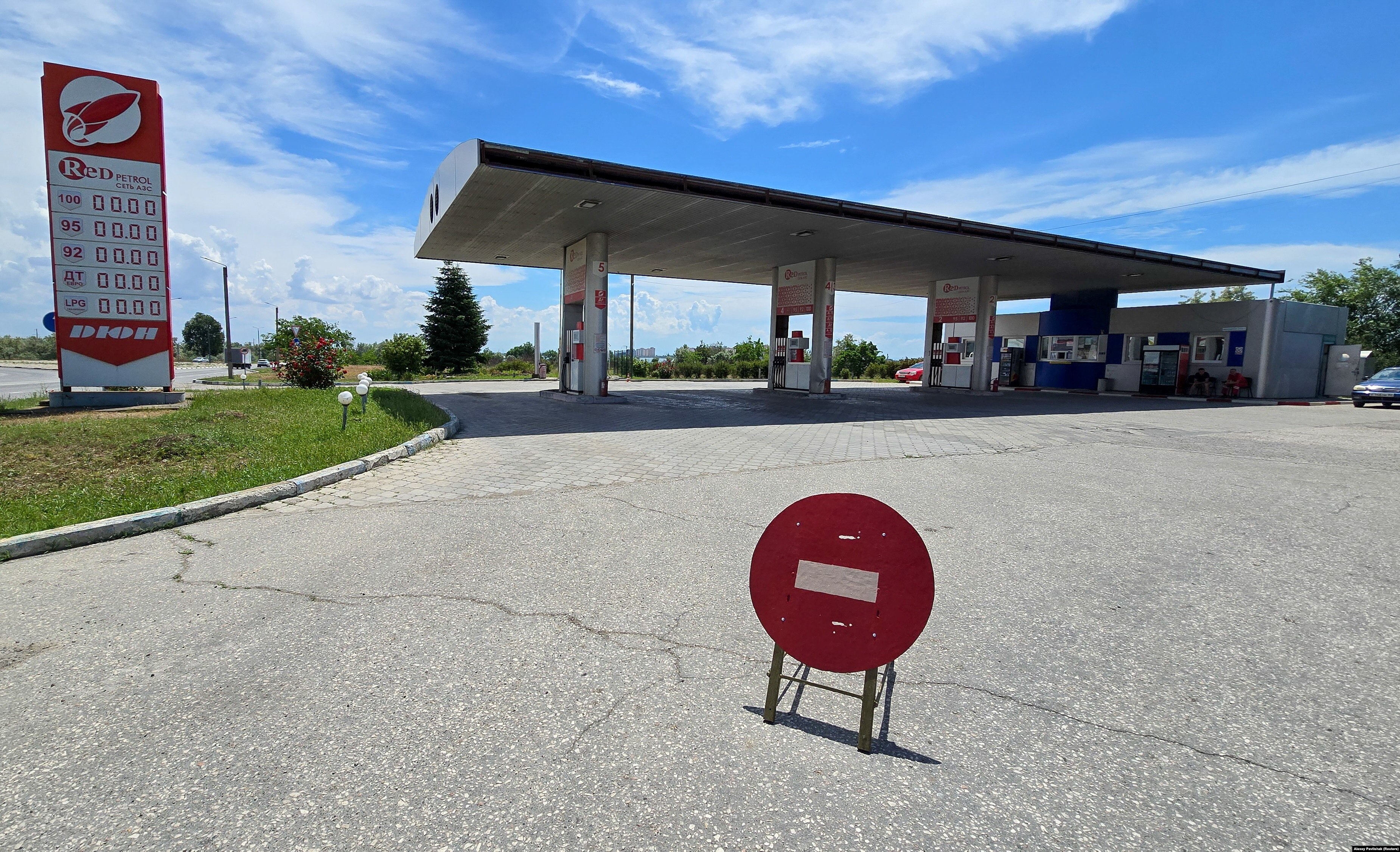
"Who stole all the gas?" - this question seems to be asked by many people in the Volga region at the end of June 2026. Social networks are full of videos from Samara, Saratov, Cheboksary, Kazan and other cities. The plot is the same everywhere: endless, exhausting queues at gas stations, empty gas station displays and gasoline prices, “like in Europe.”
What is happening in the Volga Federal District is not just “temporary difficulties”. Independent analyst of the global energy market Boris Aronshtein in an interview with Idel.Realii said: a full-scale regional fuel crisis has begun in the Volga Federal District. On a five-point scale, where five is national collapse, the Volga region has already come close to four.
We asked Aronstein how authorities in the regions are coping with the crisis.
“They handle it poorly.” Their main slogan (and in this case they do not offer anything innovative) is to drag and not let go: the sale of gasoline to one person, a ban on exports. Please note that all measures are prohibitive. “They don’t propose a single constructive measure—for example, to improve and revise logistics in order to somehow transport large volumes of petroleum products from one region to another,” Aronstein said.
How did the Volga region residents end up in this situation? The answer must be sought in the sky. The increasing frequency of Ukrainian drone attacks on Russian refineries in the spring and summer of this year had a severe cumulative effect. The turning point was the arrival on June 12 at the Taneco complex in Tatarstan and, in general, the June attacks on oil enterprises.
According to Reuters, due to shutdowns of large plants in central Russia, the country lost about a quarter of its total gasoline production in mid-June. Authorities in dozens of Russian regions have already been forced to admit that restrictions on fuel sales have been officially introduced.
On June 23, limits were set in the Saratov and Penza regions. And the next day, Samara Governor Vyacheslav Fedorishchev announced strict measures: for passenger cars - no more than 40 liters of gasoline and 100 liters of diesel per person. The supply of fuel in cans and any other containers has been completely stopped.
— Temporary restrictions will not affect strategic sectors of our economy. Agriculture, industry, urban and special services are not subject to this regulation. They will be fully provided with fuel,” Fedorishchev said.
But even “strategic industries” are in a fever. In the coming weeks, the harvesting campaign will begin in the Volga region, and farmers will panic. At a meeting of the Kurultai of Bashkortostan, acting Minister of Agriculture Ramil Nuriakhmetov said that the authorities “will try to ensure that our farmers have fuel and lubricants during harvesting.”
“Previously, our enterprises bought fuels and lubricants ( fuels and lubricants - “Idel.Realii” ), partly from traders, partly on the stock exchange, partly from Bashneft,” Nuriakhmetov explained. — We see the situation today - that there are certain problems on the fuel and lubricants exchange, and all agricultural producers are now planning to purchase volumes from Bashneft. They allocate us fuel and lubricants limits from May to November of 2,500 tons per month. We are now asking them to increase these limits to 4,000 tons per month.
The fuel crisis is already starting a chain reaction in the economy of the Volga region. As logistics becomes more expensive, everything becomes more expensive. Food products are rising in price every day, says analyst Boris Aronshtein:
- They are already becoming more expensive. They are becoming more expensive because logistics are becoming more expensive, fertilizers, which are one of the petrochemical products, are becoming more expensive. And prices are already rising. They often grow in secret. For example, if previously 10 eggs were sold for the same price, now 9 eggs are sold for the same price. That is, hidden and open price increases are already underway, despite the fact that gasoline is rising in price faster than general inflation, but general inflation is starting to catch up with gasoline price inflation.
Sale of "national treasure"
The fuel crisis and regular drone attacks hit not only the pockets of car owners. They are literally punching huge holes in the budgets of the Volga republics. And in order to plug these holes, regional authorities are taking desperate steps - they are starting to sell off the most valuable things. The most striking example right now is Bashkortostan.
Last week, the acting Minister of Finance of the Republic, Svetlana Malinskaya, officially admitted : the region sold a stake in Bashneft to the state company Rosneft. The official price of the transaction is 14.8 billion rubles. According to the head of the republic, Radiy Khabirov, we are talking about six percent of the shares.
Prime Minister of Bashkortostan Andrei Nazarov tried to wrap it all in a patriotic wrapper. According to him, the assets were sold “with the consent of the country’s leadership” in order to use the money “as our contribution to achieving a common victory.”
But economists and independent analysts see it differently. Experts unanimously say: the real reason for the deal is the deplorable state of the regional budget. As of June 1, its deficit exceeded 12 billion rubles.
Bashkortostan economist Rustem Shayakhmetov formulated the outcome of this deal as follows:
“We are eating away what our previous generations created. Bashneft is our national treasure, thanks to which we lived more or less prosperously in the 1990s. This situation reminds me of how our republican bank Uralsib, which was very successful , passed into private hands . And if this does not stop, then, indeed, Bashkortostan will lose most of the significant assets that could improve the situation in the republic and shape its sustainable development. But we do not have those people who are ready to defend the interests of the republic.
Left without promised help
But the cost of war for residents of the Volga region is measured not only in rubles at gas stations. For some, this is a lost roof over their head, and sometimes even their life. Especially if the house had the misfortune of being within a radius of several kilometers from an oil refinery where UAVs or missiles arrive.
On April 22 of this year, a drone hit a high-rise building in the city of Syzran (Samara region). The impact partially collapsed the entire entrance. Twelve people were injured. Two died on the spot - an adult woman and a child.
As an independent OSINT analysis later showed, this panel is located less than three kilometers from the Syzran Oil Refinery.
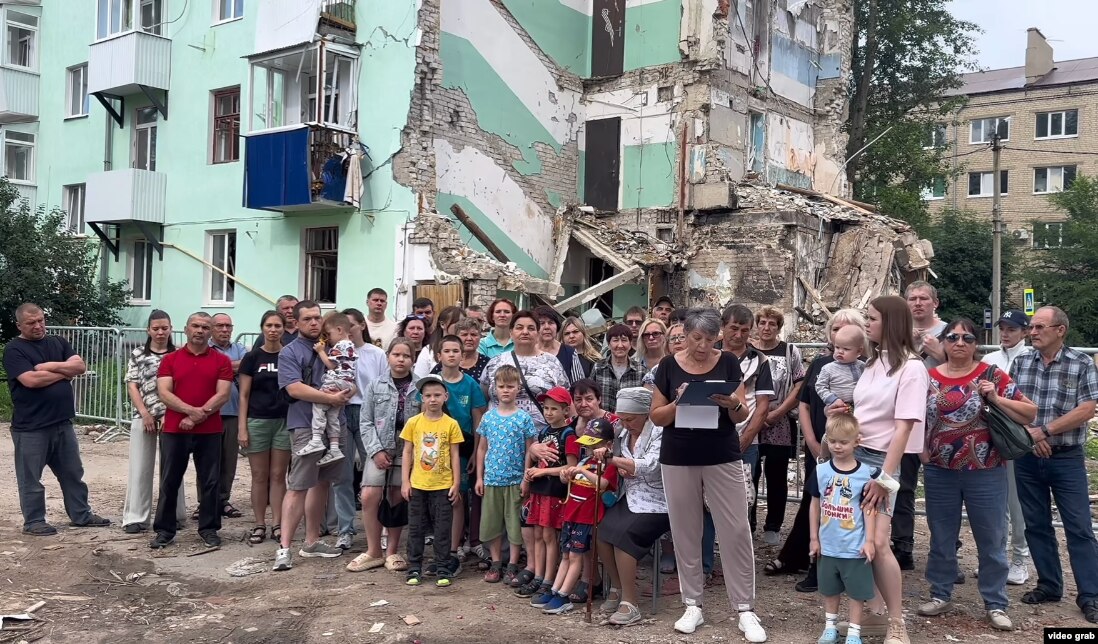
Immediately after the tragedy, Samara governor Vyacheslav Fedorishchev promised to “provide all assistance to the family as quickly and efficiently as possible,” as well as to provide residents with “decent living conditions.”
Two months later, residents of the house recorded a video message to Putin and Fedorishchev.
“We are being forced to calculate according to social norms, depriving us of our legal property. Privatized meters are taken away from many people without payment, including violation of the rights of children, depriving them of the required meters. We ask for compliance with the Housing Code of the Russian Federation and compensation for damage to our property in full. We ask you to take personal control of the situation,” the residents of the house said in the appeal.
Deaths and numbers
Over the past week, Idel.Realii identified the names of 396 military personnel from 15 regions of the Volga region who died in the war in Ukraine. 85 of them are natives of Bashkortostan.
The republic is the leader in the number of identified dead: the war claimed the lives of at least 10,403 military personnel from the republic. Next on the list are Tatarstan and the Perm Territory.
In total, in the Volga Federal District (plus the Astrakhan region) the names of 57,000 dead military personnel are known. In Russia as a whole, according to calculations by Mediazona and the BBC Russian Service as of June 26, at least 229,254 people died.
Subscribe to our channel on Telegram .