
Оригинал материала
The Navalny effect
Hello! This week we focus on how the recent Navalny protests led to a significant jump in subscriptions and donations for independent media outlets and NGOs. We also look at why the Kremlin was irritated by leaks from a recent meeting with top journalists, and we have highlights from a recent interview with Yuri Milner, one of Russia’s most famous investors.
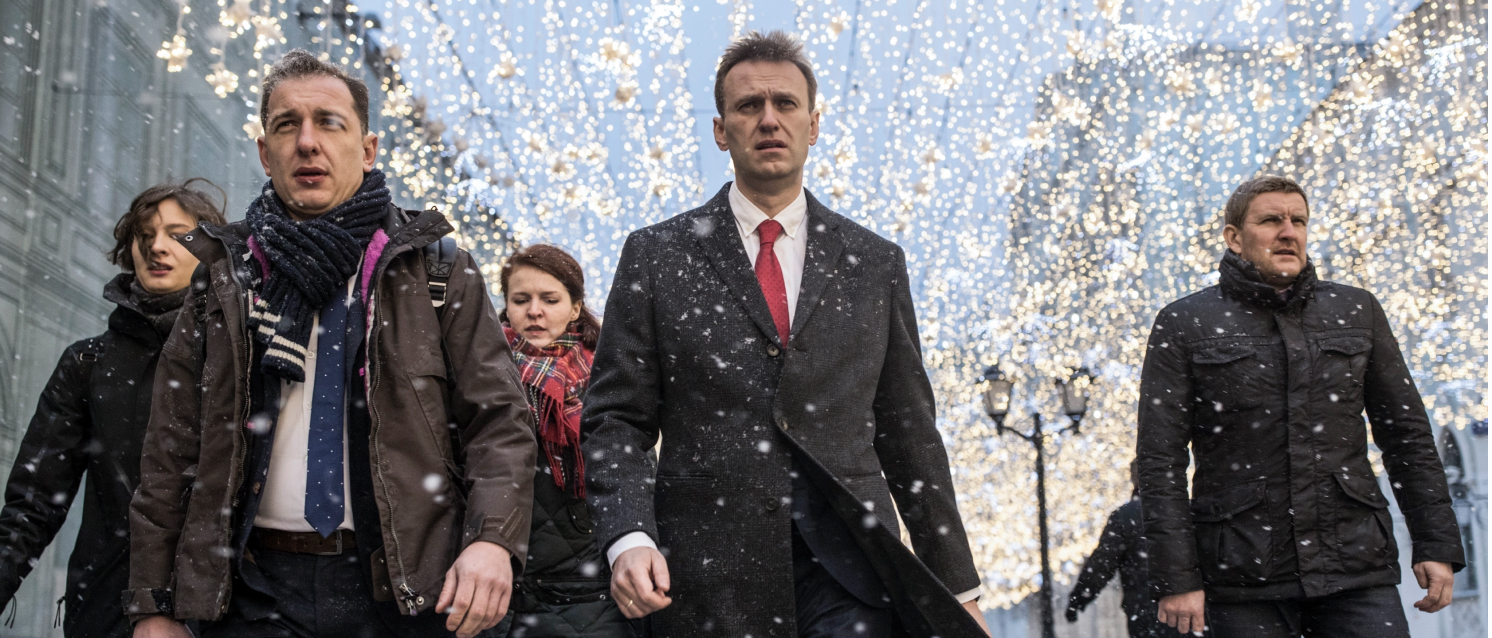
Navalny protests spark interest in independent media and NGOs
The last decade in Russia has seen the emergence of an entire infrastructure of independent media outlets that cover political protests and NGOs that help people detained during rallies and victims of police brutality. The Bell looked at how the current pro-Navalny demonstrations are allowing these projects to attract new audiences, and increase donations.
- As many as 80 percent of Russians are aware of the street protests against opposition leader Alexei Navalny’s jail sentence, according to a recent survey by independent pollster Levada Center. This is the highest such figure for many years. Of course, most people hear about the protests from state-owned TV, which falsely relays how rallies are led by teenagers conned into taking to the streets by Navalny and his U.S. backers. Even so, 22 percent of those polled expressed sympathy with the protests.
- These unprecedented levels of coverage, combined with an aggressive police response, appears to have led to new expressions of solidarity from a large group of people who are nervous about attending demonstrations in person.
- The go-to media outlet for the pro-Navalny audience is Russia’s only independent TV news network, Dozhd, which streams live broadcasts from protests and court hearings. Dozhd founder Natalya Sindeyeva told The Bell that viewing numbers have risen from 1.3 million in June to 2.33 million today. In January and February alone, the network gained another 450,000 online followers and its videos attracted a total 190 million views. For comparison, the YouTube channel for the Russian-language version of state-owned RT attracted no more than 45,000 new subscribers in the same period.
- Dozhd makes most of its money from subscribers and donations and, since August, its YouTube channel has acquired 5,500 new sponsors who make a monthly contribution of up to $10. In the same period, a similar number of people signed up for an $80 annual subscription. In January, 10.2 million people visited Dozhd’s website – 2.6 times more than in December, and more than four times as many as January 2020.
- Media outlet Mediazona has been another beneficiary of the protests. Launched after the large opposition rallies in 2011 and 2012 by two members of punk band Pussy Riot, it specializes in court reporting and investigations of abuses of power by the security forces. It is funded by donations. Since the start of the Navalny protests, Mediazona has seen its number of financial contributors jump by a third and total monthly donations almost double to $50,000. The authorities are taking Mediazona so seriously that editor-in-chief Sergei Smirnov was jailed for 15 days on trumped up charges.
- There are dozens of NGOs that offer support to protesters, but the best-known is OVD-Info, which verifies statistics about arrests, publishes lists of detainees and provides free legal aid. In the past three weeks, more than 11,000 people were detained in Russia, and OVD-Info’s Telegram channel, which offers legal advice, grew its audience to 170,000 people.
- Like Mediazona, OVD-Info relies on donations. There are no figures yet how much they have raised during the Navalny protests, but the number of donors is certain to have grown. In December 2020, OVD-Info raised $50,000 from 7,207 donations.
Why the world should care
Since the anti-Kremlin protests in 2011 and 2012, Russia’s opposition has learned to take care of itself. Now, anyone arrested at a rally knows that there is legal, medical and material support available.
Kremlin oddly jittery over routine media leak
President Vladimir Putin assembled Wednesday the editors-in-chief of Russia’s biggest media outlets for their annual closed-door meeting. The hot topics at the four-hour gathering turned out to be Navalny, possible plans to block Western internet services, as well as the situations in Belarus and Eastern Ukraine. But the big surprise was the Kremlin’s unexpectedly angry response to the way details of the discussion emerged in the press afterwards – despite the fact that they do so every year.
- Usually, Putin meets individually with the heads of the major television and radio stations, but this year it was a general gathering of several dozen people. Three told The Bell what was discussed.
- Putin only gave journalists permission to report one topic: his answer to a question about why there had been no criminal investigation into Navalny’s poisoning. One of those present told The Bell that this was the only time Putin showed any emotion, recalling a September conversation with French President Emmanuel Macron, when he claimed he promised to open a criminal case as soon as Russia was allowed to examine samples taken from Navalny. According to Putin, Macron refused the request. This was the story reported by the state media agencies.
- However, Putin’s answer to a question about the protests following Navalny’s imprisonment did not appear in state media agencies, nor in an almost complete transcript published by Kommersant newspaper reporter Andrei Kolesnikov on Thursday, almost certainly in coordination with the Kremlin. This is odd, because apparently Putin said nothing unusual. According to one of The Bell’s sources, Putin responded: “We all understand that these protests are inspired by the West, that the ‘Berlin patient’ [Navalny] is a pawn of outside powers who continue to pursue their policy of containment. What can we do? Youth is always radical, but the security forces did nothing wrong. We realize that this country faces social and economic problems, and we are working on them, but these antics won’t solve anything.”
- Another issue discussed was the blocking of Western internet services, in particular YouTube (Navalny’s film about Putin’s Palace on the video site has garnered 112 million views). At the end of last year, the Russian parliament passed laws that would allow the closure of foreign internet platforms for “discrimination against Russian media” and state propagandists are constantly calling for this power to be used. However, Putin’s answer suggested nobody will try to block YouTube anytime soon. “After all, this would inconvenience many Russian citizens,” he said. However, there is pressure on Russian internet providers (most likely Yandex and Sberbank) to create alternatives that could rival the popularity of their Western counterparts.
- One participant asked why Belarus is still refusing to integrate with Russia despite Putin’s support for President Alexander Lukashenko when his rule was threatened by protests last year. In reply, Putin admitted there were problems, but did not go into details. After the meeting it was reported Lukashenko will visit Moscow at the end of February to agree another $3 billion loan.
- Russia Today editor-in-chief Margarita Simonyan, who visited the Eastern Ukraine rebel capital of Donetsk at the end of January to urge Russia to take control of the breakaway region, asked Putin not to abandon Donetsk. “We won’t abandon Donetsk,” Putin replied, but he did not comment on the idea of annexation.
A strange detail
Putin meets top journalists behind closed doors every year. And, every time, details emerge in the media as soon as the conversation is over (here is a report from a previous meeting). It would be perverse to expect anything else from a gathering of 50 journalists, and the Kremlin has never previously worried about leaks. But this time there was an unusually hostile response to accounts of the meeting published on Wednesday evening by The Bell and the BBC Russian service.
Simonyan was the first to weigh in, posting Thursday an old proverb: “if you sit down with a pig, you’ll find trotters on the table”. In his daily press briefing, Putin’s spokesperson Dmitry Peskov told reporters the Kremlin was disappointed by leaks that “do not encourage an atmosphere of trust toward the press”. Later that day, Kommersant published an article by Putin’s favorite journalist, Andrei Kolesnikov, including a censored account of the meeting. This could not have appeared without Kremlin approval. Peskov promised Friday that part of the conversation would be published on the Kremlin’s official website.
We can only guess why there was such a reaction. Maybe because the reports spoiled Putin’s plans to annoy Macron (which could have been intended as Russian payback for a September incident when details of a conversation between Putin and Macron about Navalny appeared in Le Monde). Another reason might be that the leaks appeared on the BBC, of which the Kremlin is not a fan. Or, maybe, it’s all connected with a growing anxiety over the Navalny protests and Putin’s falling approval ratings.
Why the world should care
If an official transcript of the meeting is published, it will be well worth putting it side-by-side with reports in The Bell, the BBC and Kommersant. This comparison will help to understand what the Kremlin is embarrassed about, and what it does not want to be discussed in public.
Russia’s best-known investor talks Soviet business, Zuckerberg and outer space
Yury Milner, founder of DST Global, is arguably the best-known Russian investor in the West. A physicist by training, he was an online pioneer in the 1990s and created Mail.Ru, today one of Russia’s biggest internet holdings. Milner teamed up with billionaire Alisher Usmanov in 2009 to buy 10 percent of Facebook, which made him Russia’s biggest investor in Silicon Valley. This week, he gave a big interview to The Bell founder Elizaveta Osetinskaya, the first time he has spoken to the media in such detail for many years. We translated some of the highlights.
[embed]https://youtu.be/x0fxbdoMTgg[/embed]
From the Soviet Union to Wharton School
“My biggest misfortune was that I never became a great scientist. Although I had posters of Einstein, Landau and Hawkings on my bedroom wall [when I was young], I could never get close to their level. Instead, my biggest piece of luck was that the founding principles of scientific research also served me well as an investor… When my scientific career came to an end in 1989, I faced the issue of what to do next. In the USSR, business was only just emerging. Innovation was in the air. But my father convinced me that first I had to study. It was almost by chance that I ended up at Wharton School: the recruiting panel wanted to know if I had any qualifications, any money or any notable achievements. My answer was ‘no’. But then I pulled an ace from my sleeve, warning them that Harvard, their big rival, was recruiting three students from the former Soviet Union and they needed at least one for themselves.”
Starting an e-business in Russia
“The first idea was to do everything ourselves. The internet has three basic business models: e-commerce like Amazon, auctions like eBay and portals like Yahoo. Two of those three ideas were originally joint enterprises between us [Mail.Ru] and Yandex. [Later], we tried to buy a stake in Yandex but it didn’t work out. To a large extent we were competitors and it doesn’t always make sense to accept money from a rival… Joining forces with Yandex was a dream. My dream. The idea was to consolidate market share within Russia and then go and conquer, at the very least, the European market. It seems that this was, to a large extent, a missed opportunity. In the mid-2000s it could have worked. A joint company, in my view, would have been valued at more than $100 billion. That’s a serious global player. But we focused on protecting our own market and building a national internet for Russia. And I think that is [also] a big achievement: a national internet is a unique thing in this world.”
Dealing with Mark Zuckerberg and Jan Koum
“For several years we tried to cut a deal with [Whatsapp co-founder] Jan Koum. But each time we failed, because they weren’t looking for major finance from anyone. But one time, when we were at home in the Valley, I asked for the 10th time and he said: “You know what, I think now is the time.” We shook hands, but never signed anything. It was a purely verbal agreement. Literally, a couple of days later Jan called me and said Mark Zuckerberg had asked him to sell the whole business. He asked for my advice. I was conflicted. Of course, it hurt. But I put myself in Jan’s place and I had to advise him to go with Facebook. When the deal was announced, Koum and Zuckerberg called me. They said that we could still invest in the company even after they had bought it. And at the price that we originally discussed, which was about a third of Facebook’s valuation of the company. I don’t think there have been a lot of deals like that in the history of business. I see it as a confirmation of the philosophical premise behind DST: always put yourself in the founders’ place and proceed from their interests, not yours.”
Investing in the search for extraterrestrial life
“I first had this idea 60 years ago. It was a childhood dream. For the last 10 years it has been clear there are far more planets capable of sustaining life than we ever imagined. In our galaxy alone, there are about 100 billion planets resembling Earth. Science leads us to the conclusion that surely, we are not alone. The essence of our project is that we rent about a quarter of the time of the world’s biggest radio telescopes to look for signals that do not originate from our planet, but from somewhere else. About a month ago, we had the first serious candidate for such a signal. For the first time in many, many years, there was no logical explanation of where it came from. It looks like the signal came from somewhere in the region of Proxima Centauri. This star has a planet called Proxima B. It’s roughly the same size as Earth and it’s possible that there could be surface water there.”
Watching movies with Elon Musk
“It goes without saying that I’m delighted we have a man like Elon Musk. I know him well. We’ve talked a lot about space. And, like me, he has his childhood dreams. I think he has earned his reputation. I can give one simple, personal example. We like to arrange screenings of scientific movies for 100 or so people at home. Once, Elon Musk came along. Suddenly, the projector stopped working. Nobody knew what to do, but Elon got up to look at the projector. Five minutes later, everything was working.”