
Оригинал материала
Four years in a Russian prison for attending protests? It’s even crazier than you think.
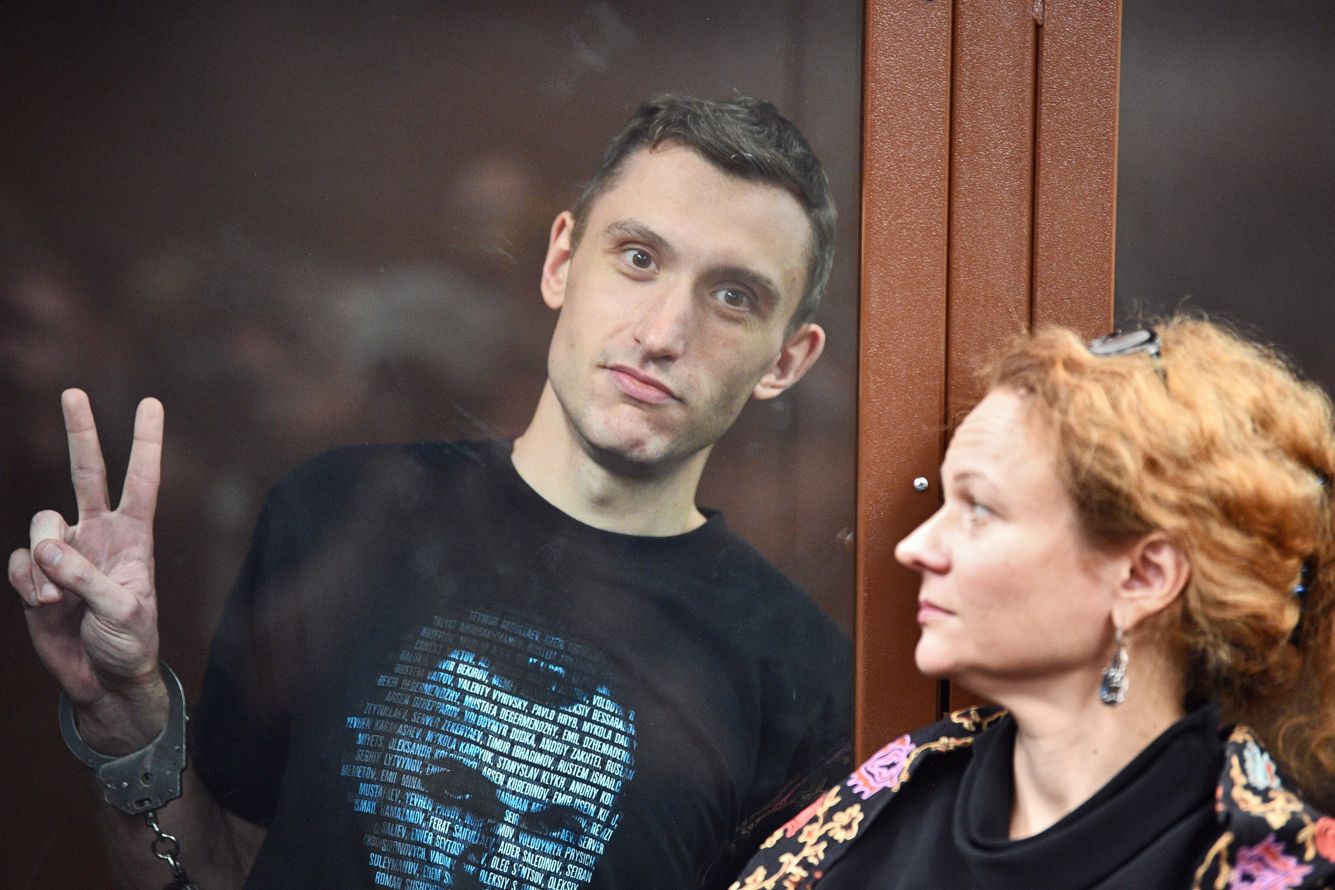
On September 5, Moscow’s Tverskoy District Court sentenced activist Konstantin Kostov to four years in prison. For attending a political demonstration on August 10 in support of free elections in Moscow, Kotov was convicted of breaking Russia’s law against repeated violations of public-assembly statutes. Everything about this case is unprecedented: the investigation, the trial, the severity of the sentence, and the felony statute itself.
Investigators took the case to trial after just a week
On August 12, Konstantin Kotov was charged with repeated violations of Russia’s statute on public assemblies. Before this summer’s Moscow City Duma protests, Kotov attended rallies in support of arrested mathematics graduate student Azat Miftakhov, suspects in the so-called “Network” and “New Greatness” cases, and Meduza correspondent Ivan Golunov, for which he was detained and fined.
Kotov was arrested on August 13, and just two days later his attorney was informed that the investigation was complete. On August 20, officials announced that they’d assembled the “necessary evidence base” and were taking the case to trial.
Kotov’s trial was even shorter: it lasted just two days
His first hearing was on September 3, and the very next day, state prosecutors rested their case and asked the judge to sentence him to 4.5 years in prison. On September 5, Kotov was convicted and sentenced to four years.
The court refused to hear key evidence in Kotov’s defense
The judge refused to review surveillance footage capturing Kotov’s entire route at the August 10 rally. On September 5, the day Kotov’s sentence was announced, the independent television station Dozhd published the video.
The footage makes it clear that Kotov never actually made it to the protest. All he managed to do was exit the subway station and walk maybe a hundred feet with a white sign sticking out of his backpack. Within 30 seconds, police officers grabbed him and escorted him to a police van.
Even Russia’s Constitutional Court has criticized the criminal statute used to lock up Kotov
The offense cited in Kotov’s conviction — Criminal Code 212.1 — partly violates a 2017 ruling by Russia’s Constitutional Court, which recommended clarifying the grounds for criminal liability under this statute (though the court ultimately declined to strike down the law itself as unconstitutional). Justices determined that only violent offenders of this law should be imprisoned — individuals who not only repeatedly violate demonstration rules, but who cause or threaten real damage or harm to others. After this ruling, Russia’s Justice Ministry announced that it has no plans to propose any amendments to the Criminal Code, however, insofar as the Constitutional Court didn’t require any specific response. In Kotov’s case, both the court and the investigators claimed that he posed a danger to others because of his repeated attendance at previous rallies.
Kotov’s sentence is unprecedentedly brutal, even compared to the only other defendant ever convicted of the same offense
Kotov was found guilty of violating the so-called “Dadin Statute,” named after Ildar Dadin — the first and only other person ever convicted of committing this crime. The criminal code first appeared in 2014, and it’s faced unrelenting criticism from politicians and human rights advocates alike for both its excessive severity and the fact that it subjects defendants to double jeopardy, effectively retrying several misdemeanors as a single felony. Both Presidential Human Rights Council Chairman Mikhail Fedotov and Human Rights Commissioner Tatiana Moskalkova have called for the statute’s abolition.
Even Ildar Dadin’s sentence was just two years, despite the fact that he actually managed to participate in the final protest that led to his arrest and prosecution. Dadin’s verdict, moreover, was ultimately overturned, after major news reports about him being tortured in prison.
Konstantin Kotov is now the only person in all of Russia whose criminal record includes a violation of this statute.
Text by Petr Lokhov
Translation by Kevin Rothrock