
Оригинал материала
Why so few COVID-19 deaths?
Low COVID-19 mortality rates in Russia became a major political issue this week. When three Western media outlets reported that COVID-19 deaths have been consistently underestimated, it caused a storm of indignation from Russian officials. The Bell examined official documents that showed Russia compiles its statistics very differently to most European countries. There is no evidence of a cover-up when it comes to COVID-19 deaths.
What happened?
Officially, deaths from COVID-19 in Russia are lower than in any other country in the top 20 ranking for numbers of coronavirus cases (except for Saudi Arabia). As of Saturday, 2,500 people in Russia had died of COVID-19. There have been 272,000 coronavirus cases.
The Moscow Times, the Financial Times and the New York Times reported there were 2,000 “additional deaths” in Moscow in April compared to the average of the last decade. Moscow has officially recorded 600 COVID-19 deaths in that month. The three media outlets suggested that the statistics may have been altered for political purposes.
The reaction from Russian officials was furious, and they denied anyone was manipulating the data. The Foreign Ministry demanded a retraction, and complained to the United Nations and the Organization for Security and Co-operation in Europe.
How does Russia arrive at its COVID-19 statistics?
Russia does not automatically ascribe COVID-19 as the cause of death to someone who has tested positive for the virus in life. The Ministry of Health recommendations are:
- If a person dies in hospital with COVID-19 (after a positive test or symptoms), the body is sent to a morgue. There are no recommendations for those dying at home.
- The morgue pathologist carries out an examination and sends tissue samples for laboratory tests. Only after this is the underlying cause of death officially recorded. The pathologist must decide whether the death occurred from COVID-19, or whether the primary cause was another disease.
- Doctors interviewed (Rus) by media outlet Meduza said the instructions for determining death are written in such a way as to make it possible to hide COVID-19 deaths. Moscow’s Health Department openly said 60 percent of COVID-19 deaths were not from COVID-19, but heart attacks, cancer, leukemia, or renal failure.
While the World Health Organization (WHO) does recommend not automatically classifying the deaths of COVID-19 patients as COVID-19 deaths, it says this should only be done in quite rare circumstances — such as a fatal trauma injury, or massive heart attack. If a person has a chronic illness and dies after testing positive for the coronavirus, the WHO states this should be recorded as a COVID-19 death (the recommendations for Moscow pathologists are the opposite). In addition, the WHO requires member states to publish weekly deaths of those with confirmed COVID-19 — Russia does not do this.
The procedures are very different in other countries. In Germany, if a person with a positive coronavirus test dies, it is automatically registered as a COVID-19 death. In both the U.K. and the U.S. a positive test or a “reasonable degree of certainty” that a person died from COVID-19 is enough to mean it is registered as the cause of death. When you realise this, it becomes clear why Russia’s COVID-19 death rates are so much lower than elsewhere.
Why the world should care Russia does not need a political intervention to manipulate mortality rates lower — simply following official procedures results in comparatively low numbers of COVID-19 deaths. There are very few countries where the cause of death is routinely determined by a pathologist after an autopsy and laboratory analysis. When recommendations are always interpreted to the exclusion of COVID-19, this makes the death rate even lower.
5 more years of Igor Sechin
The influential head of oil giant Rosneft, Igor Sechin, generally tries to avoid the limelight, but this week he was barely out of the headlines. First, Sechin asked President Vladimir Putin for oil subsidies somehow — deliberately or accidentally — getting his figures muddled. Next, he took part in a meeting about a genetics project linked to Putin’s daughter and suggested making Rosneft’s funding tax-free status. Then, it was revealed that the new owner of Rosneft’s former Venezuelan assets was a private security company. Finally — and most importantly – Sechin’s contract as Rosneft CEO was extended for another five years.
Subsidies for Rosneft
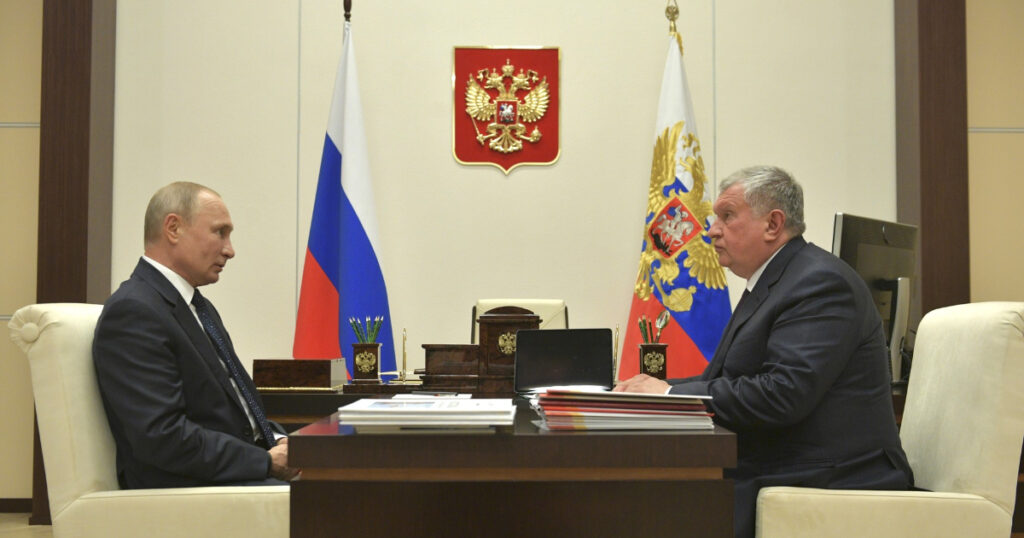
Sechin met (Rus) Putin in person Tuesday to ask for a state handout to help Rosneft while oil prices are low. This was a gutsy move — Sechin was reportedly behind Russia’s decision to tear up an agreement with OPEC in March that sent oil prices plunging.
- In addition to tax breaks, Sechin asked for cheaper pipeline transportation. Sechin complained that, while the price of oil has risen from 1,100 rubles to 1,200 rubles since 2008, the tariff imposed by oil pipeline monopolist Transneft has jumped from 822 rubles to 2,100 rubles per ton per 100km. Sechin said transport costs now make up 32 percent of the oil price. Putin promised to look at the proposals.
- The problem was that Sechin quoted the transport price in tons instead of barrels (there are roughly seven barrels in a ton). Igor Dyomin, an advisor to the head of Transneft could not resist pointing this out (Rus). Transneft has been battling Rosneft for years (their last major conflict (Rus) was about contaminated oil). Dyomin argued Rosneft’s transport costs are 16.8 percent of the oil price on the domestic market; while for exports it averages 13.4 percent.
Genetics with Sechin
Two days after his in-person meeting with Putin, Sechin was at another meeting (Rus) with the Russian leader, this time via video conference. The topic was genetics: Russia is currently implementing a $1.7 billion genetics program and Putin’s reported daughter, Maria Vorontsova, is on the oversight council. In March 2020, Rosneft became an official partner of the program (we wrote about it here). Sechin asked for subsidies at this meeting too: he suggested Rosneft’s investment in the project be exempted from tax.
From Venezuela to Ryazan
Rosneft’s sale of its Venezuelan oil assets to the Russian state in March was one of the biggest Russian oil deals in recent years — even if it was hardly noticed because of the coronavirus. At the time, the buyer was not disclosed, but this week it emerged that the assets are now controlled by a private security company, formerly owned by Rosneft, which is based in the city of Ryazan to the southeast of Moscow. The security company is owned by state-owned Roszarubezhneft, which was set-up on the same day as Rosneft’s exit from Venezuela. It appears Sechin still has effective control of the South American assets.
Why the world should care The fact that Putin met with Sechin in person speaks volumes. And there are many other indications that Sechin remains in the president’s good graces: the day after his meeting with Putin, his contract was extended for five years (he has been head of Rosneft since 2012). From genetics to Venezuela, Sechin’s influence looks set to grow and grow.
Durov shutters blockchain project TON
After two and a half years of work and a mountain of court documents, Telegram founder Pavel Durov announced Tuesday the end of his ambitious TON blockchain project. He admitted it was a defeat for his plans to revolutionize “how people store and exchange money and information” and blamed U.S. global hegemony for the setback.
- Durov’s problems with the U.S. authorities began when the Securities and Exchange Commission (SEC) launched a legal attempt to block the launch of cryptocurrency Gram, part of the TON project, arguing it was a form of security. Eventually, a U.S. court sided with the SEC, making an issuance extremely complicated. Durov has maintained throughout that Gram is not a security. “This court decision implies that other countries don’t have the sovereignty to decide what is good and what is bad for their own citizens. If the US suddenly decided to ban coffee and demanded coffee shops in Italy be closed because some American might go there – we doubt anyone would agree”, Durov wrote in a blog post announcing the end of TON. “Unfortunately, we — the 96 percent of the world’s population living elsewhere — are dependent on decision makers elected by the 4 percent living in the U.S.”.
- It’s not just Durov who is upset: investors poured $1.7 billion into the project. Some of Silicon Valley’s most famous funds were among those who committed money, including Kleiner, Perkins & Caufield and Sequoia Capital. Over the last two weeks, non-U.S. investors have received three letters from Durov with different offers of compensation: the most recent was for 110 percent back in a year’s time, or 72 percent immediately. U.S. investors will only get 72 percent of their money back.
- Investors who spoke to The Bell had different reactions. Some were prepared to wait for compensation, while others believe Durov will be unable to pay them in a year. There are even some who are considering lawsuits in an attempt to secure more compensation than what is currently on the table.
Why the world should care It’s possible that TON’s failure will be a body blow to investor belief in the bright future of cryptocurrencies. Either way, this is unlikely to be the end of the TON story, which looks set to keep rolling on even after the formal death of the project.
Top newspaper’s ties to Rosneft exposed
A joint investigation by media outlets The Bell, Meduza, Forbes and Vedomosti revealed this week how state-owned oil giant Rosneft wields control over Vedomosti, the country’s leading business daily. There have been rumors about such a connection, but we now know that a complex debt chain links the newspaper directly to the oil company. You can read the whole investigation in Russian or English, but below we have a summary with the key points.
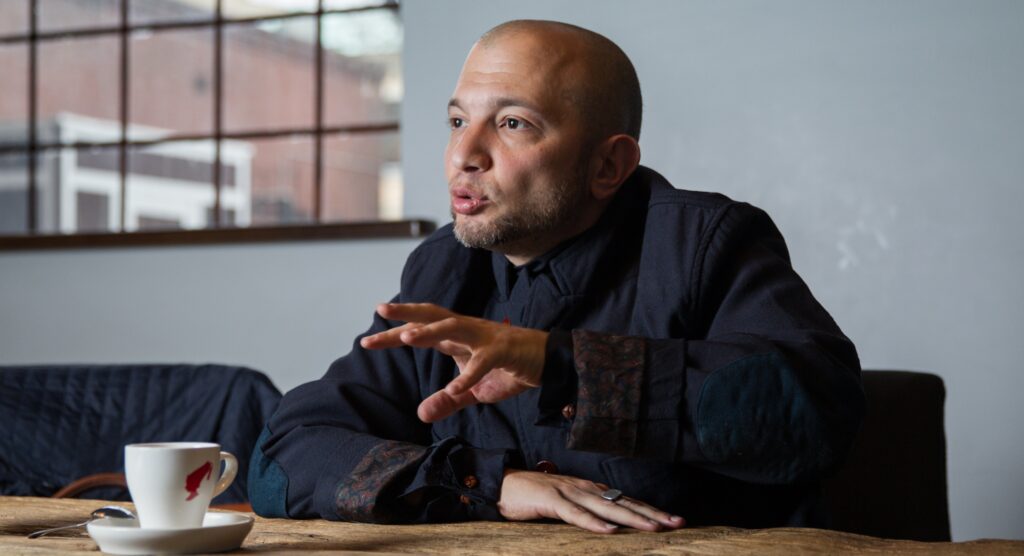
- The saga began in 2015 when media manager Demyan Kudryavtsev and his partners bought Vedomosti for about €10 million ($11 million) from three foreign investors: Pearson (the publisher of the Financial Times), Dow Jones (the U.S. publisher of The Wall Street Journal) and Finnish publishing giant Sanoma. A month later, Kudryavtsev passed Vedomosti holding company Business News Media from Cypriot company Delovoi Standard to Russian company Akran Investments to comply with a new law limiting foreign ownership of media assets. But this transfer was no mere formality: for the purposes of the switch Business News Media was valued at €24.2 million, more than double what Kudryavtsev paid just weeks earlier.
- Akran Investments’ purchase appears to have been financed by a loan — and it’s not clear what happened to the difference in price. A key role was played by Kudryavtsev’s friend, billionaire Dmitry Bosov, who, a source said, helped Kudryavtsev negotiate a 1.8 billion ruble credit line from state-owned Gazprombank to buy Vedomosti (in an apparently unconnected development, Bosov committed suicide earlier this month). Bosov also helped Kudryavtsev get informal political approval from the Kremlin for his acquisition of the media asset.
Demyan Kudryavtsev
- The first sign of ties to Rosneft appeared in 2017. Shares in Arkan Investment, the holding company that owned Vedomosti, were pledged as collateral to a new company, Konstant. Documents show that — just two months after being set-up — Konstant received a loan of 1.85 billion roubles from the Russian Regional Development Bank (RRDB), which is owned by Rosneft. In effect, this meant that RRDB now controlled Vedomosti via a chain of debt (none of the companies involved had sufficient cash flow to pay back the money).
- Evidence of Rosneft influencing Vedomosti emerged quickly. By 2018, Kudryavtsev and Bosov were looking for new buyers for the newspaper — and so, apparently, was former TV presenter and Rosneft press secretary Mikhail Leontiev. He never hid Rosneft’s relationship with Vedomosti’s owners, according to two of his close acquaintances. Earlier this year it was revealed that financier Aleksei Golubovich and publisher Konstantin Zyatkov had bought Vedomsti. Their choice as editor-in-chief, Aleksei Shmarov, an old acquaintance of Leontiev, was immediately embroiled in a censorship dispute, accused of editing articles in Rosneft’s favor.
- Kudryavtsev has rejected (Rus) the version of events in the investigation, denying he pocketed loan money and claiming the differing prices for Vedomosti were explained by an end to licensing payments. Rosneft’s Leontiev has denied he was involved in negotiations over Vedomosti.
Why the world should care For more than two decades, Vedomosti was not only the country’s most important business daily but a beacon of independent and impartial journalism, read by both regime critics and Kremlin officials. But the evidence of ties to Rosneft in this investigation at best tarnishes Vedomosti’s reputation, at worst destroys it.