
Оригинал материала
Highly toxic, but unreliable
‘Meduza’ answers key questions about Novichok-type nerve agent poisoning
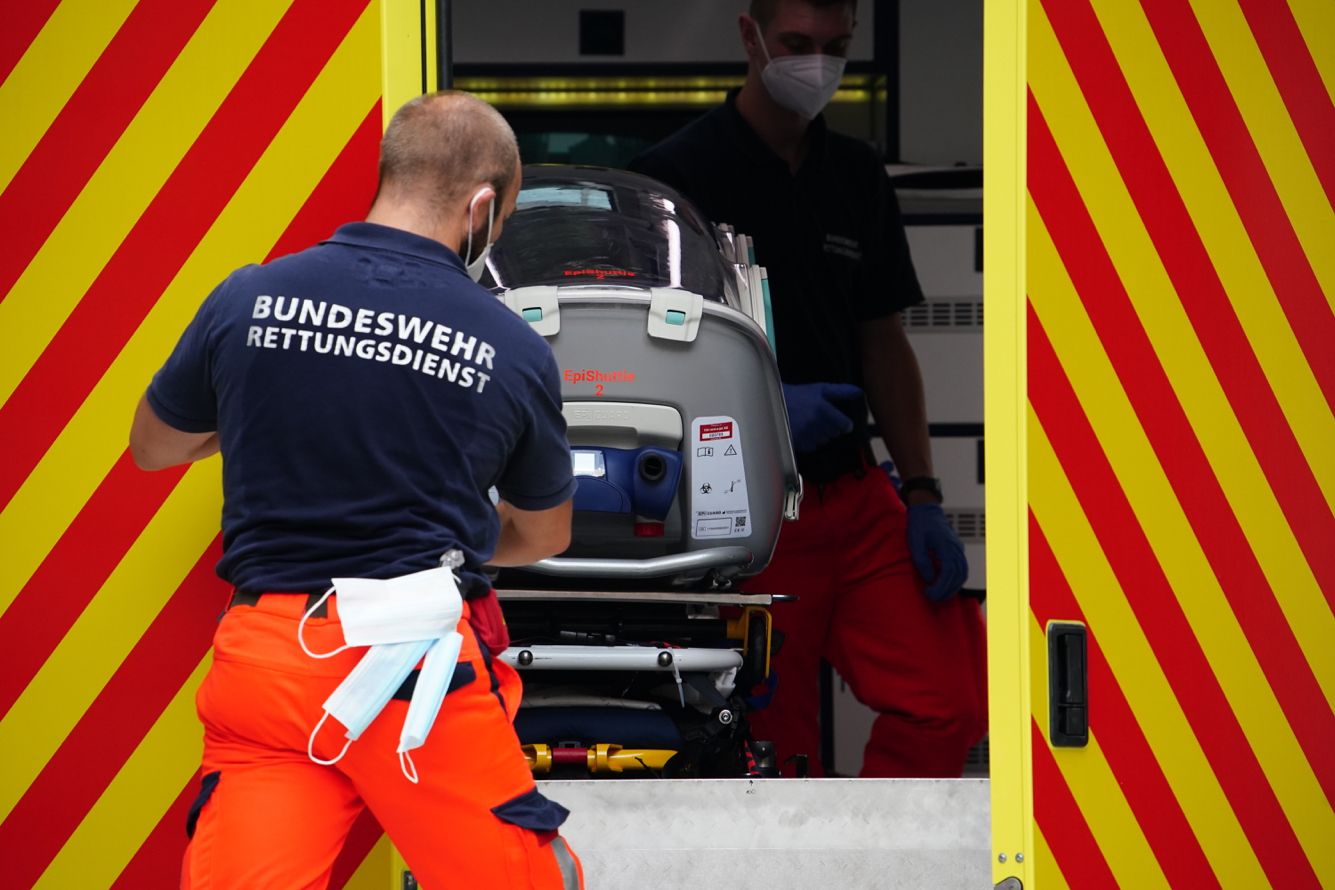
On September 2, German officials announced that prominent opposition figure Alexey Navalny had been poisoned in Russia with a substance from the Novichok group of nerve agents. Traces of the poison were found through tests conducted at a toxicology lab run by Germany’s armed forces (the Bundeswehr), at the request of doctors from the Charité Hospital in Berlin, where Navalny is being treated in intensive care. German Chancellor Angela Merkel said there are no doubts about the accuracy of the test results. “This is shocking information about the attempted murder by poison of one of Russia’s main oppositionists,” Merkel said. This announcement from the German government provoked a number of new questions about Navalny’s poisoning — “Meduza” answers some of the main ones.
This translation has been edited and abridged for length and clarity.
What kind of substances are included in the Novichok group?
In 2019, the common formulas of four new chemical compounds were added to Schedule 1 of the Annex on Chemicals to the Chemical Weapons Convention — these formulas represent groups of substances, rather than a specific substance. All chemicals that fall under these general formulas were added to the list maintained by the International Organization for the Prohibition of Chemical Weapons (OPCW), the implementing body for the convention.
Three of these four formulas belong to the Novichok group of substances. They resemble “classic” chemical warfare agents (otherwise known as chemical weapons, or CWs). It was Russia that proposed adding these formulas to the convention’s list of chemical weapons; why this happened remains unclear.
These substances aren’t called “Novichok” in the document, however, the amendments to the convention were initially suggested by the United States and the Netherlands in response to the poisoning of former Russian spy Sergey Skripal and his daughter Yulia in England in 2018 — the world’s most famous case of the use of a Novichok-type nerve agent.
Relatively similar formulas were published by Soviet chemist Vil Mirzayanov in the early 1990s — revealing their link to a Novichok nerve agent development programme. Mirzayanov, who later left Russia for the United States, claimed that he was among the leaders of the Novichok development programme in the 1980s. Mirzayanov assured Interfaxthat the formulas on the OPCW’s list refer specifically to Novichok-type nerve agents.
After the amendments were added to the convention, none of its signatories, including Russia, are allowed to produce, stockpile, or transfer substances with similar chemical formulas (except for scientific research purposes, which must be reported to the OPCW). Already in 2018, Igor Morozov, a member of Russia’s Federation Council and an FSB colonel in reserve, said that Russia had not only stopped developing and producing these chemical warfare agents, but had also destroyed its stockpiles.
How does this kind of poisoning happen?
Nerve agents can enter the body in many ways, including through intact skin, mucus membranes, or inhalation. Chemical warfare agents are usually stored and applied in the form of a liquid and/or its vapor. But, as chemist Vil Mirzayanov explained, there were also plans to create a Novichok group agent in solid form.
As a rule, coming into contact with even a few milligrams of these substances is enough for severe poisoning (in the case of a liquid, it only takes a few microlitres, which is approximately the volume of a single drop).
It’s theoretically possible to use this type of substance to poison someone imperceptibly: the majority of poisonous agents don’t have a scent. However, people handling chemical warfare agents have to ensure their own safety, which means their behavior can make them stand out from the crowd. For example, in the video of the fatal poisoning of Kim Jong-nam — the half-brother of North Korean leader Kim Jong-un — one of his attackers can be seen acting strangely: she runs to a bathroom immediately after putting a cloth over the victim’s face, presumably to wash her hands, since the cloth was poisoned with the extremely toxic nerve agent VX. The prosecution later used this behavior as evidence that she knowingly took part in the poisoning.
How come no one else became ill?
Even though Navalny fell ill while on board a plane, no one else was affected: neither the other passengers, nor his colleagues travelling with him, and not even the doctors who treated him Omsk. It’s therefore likely that the poisonous substance was handled very carefully. In the case of Kim Jong-nam’s poisoning, which took place at the Kuala Lumpur International Airport in Malaysia, no one else was hurt. That said, you can’t exclude the possibility that the people around Navalny at the time of his poisoning were simply lucky: all other known cases of attempted murder by Novichok-like substances resulted in “collateral” victims:
- During the 1995 murder of banker Ivan Kivelidi, his secretary Zara Ismailova was also killed, as well as the coroner who examined his body.
- Following the poisoning of Bulgarian arms dealer Emilian Gebrev in Sofia in 2015, his son and a director from his company were also treated for poisoning symptoms.
- In addition to ex-spy Sergey Skripal, his daughter Yulia, a police officer, and two bystanders — Charlie Rowley and Dawn Sturgess — were also poisoned in Salisbury, England in 2018. The two bystanders came in contact with a bottle containing the remains of the poisonous substance; Sturgess died as a result.
Intensive care specialist Boris Teplykh, who was called in to consult on Navalny’s treatment in Omsk, told Meduza that in terms of personal protective equipment, the Russian doctors who treated the opposition figured used just surgical masks and gloves — not Hazmat suits.
How did the German doctors find traces of poison in Navalny’s system when the Russian doctors said there were none?
The doctors who treated Navalny in Omsk maintained that no traces of poison were found in his system, but the doctors at Berlin’s Charité Hospital were quick to announce that he was poisoned by a cholinesterase inhibitor (military toxicologists later confirmed that it was a substance from the Novichok group). So was someone lying? Not necessarily. But it’s possible that it was a lie by omission:
- In their August 24 press release, issued two days after Navalny was evacuated from Omsk to Berlin, the Charité Hospital’s doctors confirmed “clinical findings indicating poisoning with a substance from the group of cholinesterase inhibitors” (Meduza has an explainer on these types of substances, which you can read here). The specific poisonous substance remained unknown at that time. It took the German doctors another week and a half to identify it.
- The Russian toxicologists reported that in the time Navalny spent at the hospital in Omsk (about two days), they were unable to find traces of a poisonous agent. On August 24, the Omsk Region’s chief toxicologist, Alexander Sabaev, said that “upon admission to the hospital, Navalny was tested for a wide-range of substances, including cholinesterase inhibitors — the results were negative.” There are even photographs of the medical forms from the tests, where it says that “no cholinesterase inhibitors were detected in the blood,” and specifies the techniques used for the analysis: ELISA (enzyme-linked immunosorbent assay) and GC-MS (gas chromatography–mass spectrometry).
In other words, as of August 24, the doctors in Omsk and Berlin were talking about two different things: the German doctors affirmed clinical evidence of poisoning, while the Russian doctors said they hadn’t identified the cause of Navalny’s illness. And it’s possible that there was no contradiction at this point. The Russian doctors said that they didn’t find cholinesterase inhibitors in Navalny’s system, but we don’t know if they used a reliable test to back up this claim.
Toxicologists rely on a variety of different methods when it comes to testing for nerve agent poisoning (here’s a good book, if you’d like to read more about this). The particularities of three of them are relevant in this context:
- Analyzing cholinesterase activity. This method gives you two main options: testing the blood or the plasma. They differ in accuracy and sensitivity, but either method can be used to identify severe poisoning from cholinesterase inhibitors — and can even give an accurate result weeks after the person in question came in contact with the poison. Whether or not this testing method was used on Navalny in Russia remains unknown.
- A blood or urine test for the most poisonous substances. This can be carried out using methods like ELISA, chromatography, mass spectrometry, or a combination of the two (GC-MS). That said, it’s important to note that many poisons breakdown in the body rather quickly (due to their high reactivity), and the breakdown products are excreted in the urine within several days. As such, even if the poisoning symptoms persist, it’s possible that the toxic substance itself won’t be detected during testing, especially if you don’t know what you’re looking for. If the leaked medical documents about Navalny’s test results are to be believed, the GC-MS test conducted in Russia didn’t identify “any cholinesterase inhibitors” in his system. That said, mass spectrometry can only confirm the presence of a compound with a specific formula — if a compound doesn’t have a known formula, then it can’t be identified through mass spectrometry.
- Analyzing the substance’s toxic residue, irreversibly bound to the cholinesterase molecules. This kind of testing involves fragmenting the “poisoned” enzyme and checking for a change in the fragments’ mass through mass spectrometry. This method is also effective several days after the poisoning itself. A sample of the poisonous substance in question is typically needed for additional confirmation — mixing it with a sample of uncontaminated blood allows for comparing the mass spectrometry results. It looks like this how the German chemists confirmed that Navalny was poisoned with a substance from the Novichok group.
As such, it’s entirely possible that a toxic substance won’t show up in its “pure” form during blood and urine tests, especially if the chemical compound’s exact formula is unknown. On the other hand, failure to detect severe poisoning by cholinesterase inhibitors is highly unlikely (especially if you analyze cholinesterase activity in the blood). However, we aren’t sure whether or not Navalny underwent such tests in Russia — and in the event that he didn’t, we don’t know why.
The researchers at the German military’s toxicology lab specifically identified a Novichok-type substance in Navalny’s system. Are their tests accurate?
The short answer is yes, their tests are accurate. While the Bundeswehr didn’t disclose the details of their work themselves, the analytical approach used in such cases is well documented in the scientific literature. In addition, biochemist Marc-Michael Blum — a longtime employee of the Organization for the Prohibition of Chemical Weapons — spoke in detail about these testing methods in an interview with Meduza (you can read it here).
It’s worth repeating that these analytical methods are most accurate when the chemical formula of the poisonous substance in question is known. Once the substance has been confirmed using a reference chemical there can be no doubt — modern mass spectrometry has such high accuracy that it’s easy to distinguish molecules that differ in a single atom of their composition.
The common formula for the group of substances that were developed under the Novichok programme in the USSR is known: in the past few decades, these substances have been synthesized outside of Russia and the Soviet Union. That said, the methods described above can’t identify the complete chemical formula of a specific poisonous substance, since part of the original poisonous substances “leaves” when it reacts with an enzyme. In this context, scientists are only able to identify a group of substances made up of similar compounds that differ in their “missing” parts, but they aren’t able to narrow down a specific compound with a particular formula.
How long does it take for this type of poisoning to take effect?
This depends on the substance itself, the amount of it that gets into the victim’s system, and how long the victim is exposed to it. The spread of chemical warfare agents (like Sarin, Cyclosarin, VX, and others) can take anywhere from a minute to few hours. There isn’t exact data on how long substances from the Novichok group need to take effect, but it’s most likely that the spread would be approximately the same as other chemical warfare agents.
Does identifying the specific poison change the course of treatment?
According to chemist Vil Mirzayanov, when the main work on the Novichok programme was being done in the 1980s and 1990s, there wasn’t a specific antidote for this particular poison. They relied on the same medications used to treat poisoning symptoms from all other chemical warfare nerve agents: first and foremost, large doses of atropine (the medication used to treat Navalny).
But another typical antidote for nerve agent poisoning turned out to be an ineffective treatment for exposure to Novichok-type substances: apparently oxime compounds don’t work well in these situations. This includes oxime nerve-agent antidotes like pralidoxime and obidoxime (among others), which are typically used to restore cholinesterase function (nerve agents inactivate acetylcholinesterase enzymes, but oxime compounds can reactivate them by causing the poison to split away).
As biochemist Marc-Michael Blum told Meduza, in this context, the main goal of the treatment is to keep the victim's body functioning until they are able to synthesize a sufficient amount of cholinesterase on their own (Blum says this could take several weeks).
Why do so many Novichok-type nerve agent poisoning victims live?
According to Blum, the use of chemical warfare agents always constitutes attempted murder. These substances can’t be used for “intimidation” because they’re highly likely to kill their victim. There’s no such thing as a relatively “safe” dose: the severity of the poisoning mostly depends on the amount of time between exposure and treatment (specifically, how soon the antidote is administered and how quickly the victim receives intensive care).
“For each poison you can imagine a concentration curve, where the first symptoms occur at a particular concentration, after which they grow, and then the person dies. But in this case [poisoning by chemical warfare agents] the difference between these points — the first symptoms and a fatality — is very small,” Blum explained.
However, chemical warfare agents are poorly suited for killing one, specific person, Blum says: these substances are designed for the mass destruction of enemy personnel during war. Therefore, the developers behind these agents are primarily concerned with ensuring that these substances have a sufficiently damaging effect at a low mass, remain stable in the environment, can spread over a large area, aren’t sensitive to changes in the weather, and can bypass personal protective equipment.
As such, chemical warfare agents are too toxic for anyone to count on the victim surviving an attack — but not reliable enough for the perpetrator to be sure their victim will definitely die.
Then why use this type of poison? And does this confirm that the Russia’s security services poisoned Navalny?
Blum suggests that whoever poisoned Navalny (and previously, the Skripals) used a substance from the Novichok group as a deliberate way of drawing attention to the assassination attempt. It’s difficult to say how exactly this “statement” should be interpreted. On the one hand, the fact that Soviet chemists were working on a group of Novichok substances — moreover, doing so under the control of the Soviet KGB and by order of the Defense Ministry — is obviously leads to the assumption that the Russian “heirs” to the USSR’s security services are behind these attacks. On the other hand, the use of a substance from this group doesn’t prove anything on its own. Russia’s security services don’t have a monopoly on Novichok, which makes it possible to endlessly insist that someone else did it (Russia’s Foreign Ministry used this tactic after the Skripals’ poisoning).
After Mirzayanov published the formulas for Novichok group substances, they were repeatedly synthesized outside of Russia: for example, there is unequivocal evidence that this was done in Iran and the Czech Republic. What’s more, this substance is believed to have been stolen at least once, and used for a non-political murder — the aforementioned assassination of banker Ivan Kivelidi (that said, there are doubts that a poison from the Novichok group was used in the case).
Blum points out that it will be nearly impossible for Western experts to find direct evidence that the substance used to poison Navalny was produced in Russia. They only have access to the chemical residue excreted from the victim’s body, which can’t be used to study the substance’s complete structure and the impurities indicative of a specific manufacturer.
What long-term effects can Navalny expect when he regains consciousness?
There are very few studies of the effects of chemical weapons that involve a sufficient sample size: simply because mass poisonings that can be freely investigated rarely happen. There were studies following the Tokyo subway Sarin attack in 1995, as well as work with the victims of Iraqi chemical attacks in Iran in the 1980s. The victims of several sarin leaks have also been studied, as have the effects of poisoning from pesticides, which have a similar structure to nerve agents but are much less toxic.
The bad news is that the long-term effects are known to be worse depending on the severity of the initial poisoning. Generally speaking, when it comes to nerve agent poisoning, the central nervous system (that is, the brain) is less affected than the peripheral nervous system; severe brain damage is rare, but the victim could suffer from nightmares, memory loss, muscle weakness, and depression.
However, the long-term effects of exposure to substances from the Novichok group can be more severe than those of other chemical warfare agents: some argue that they inhibit the function of not only cholinesterase, but also other enzymes, creating the risk of severe long-term consequences.
In late 1990, Andrey Zheleznyakov — one of the researchers who developed the A-232 agent under the Novichok project — was accidentally poisoned. He was saved, but his boss Vil Mirzayanov maintains that he continued to suffer effects of poisoning: he developed liver cirrhosis, neurological symptoms, and depression. Zheleznyakov died in 1992. Another victim, Major Vladimir Petrenko, volunteered as a living test subject for a promising poisonous substance (believed to be a Novichok-type) in 1982. The major acquired a disability and sued the defense ministry in the 1990s.
Text by Dmitry Kuznets and Alexander Ershov
Translation by Eilish Hart